Whether a Pomsky Breeder Can Guarantee Adult Size
One of the biggest questions on every prospective Pomsky owner's mind, right after "How much does a Pomsky cost?", is almost always about size. You’ve fallen in love with those adorable pictures, but then a tiny seed of worry sprouts: what if your fluffy mini-Husky turns into a much larger dog than you anticipated? It’s a very real concern, and many people are disappointed to find that a Pomsky breeder's ability to "guarantee" adult size is far more complex than a simple promise. This guide will delve deep into why pinning down a Pomsky's adult size is such a challenge, what breeders can realistically offer, and what you, as a future owner, need to understand.
The Allure and the Reality of Pomsky Size Expectations
It’s completely understandable why size is such a crucial factor for anyone considering a Pomsky. We all have visions of the perfect dog for our living situation, our activity level, and our budget for things like food, gear, and even potential vet bills. The Pomsky, being a designer crossbreed, often comes with a specific image in mind, which can lead to some common misconceptions.
Why Size Prediction Is So Appealing to Buyers
Let's be honest, part of the immense appeal of the Pomsky is the idea of a miniature Siberian Husky. People dream of those striking blue eyes and wolf-like markings, all wrapped up in a compact, apartment-friendly package. You might be envisioning a dog that's perfect for city living, or one that’s robust enough for adventures but still small enough to cuddle on the couch without taking up the whole sofa. This desire for a specific size isn't just about aesthetics; it’s about practicality. A 15-pound dog has different needs and considerations than a 35-pound dog, from the size of their crate and harness to how much food they consume daily. When you're making such a significant, long-term commitment, having a clear expectation of your dog's adult size feels like a crucial piece of information.
The Genetic Lottery of a Hybrid Breed
Here's where the rubber meets the road: Pomskies are a hybrid, a cross between a Siberian Husky and a Pomeranian. This isn't like breeding two purebred Golden Retrievers, where generations of selective breeding have established a relatively predictable size range. With a first-generation (F1) Pomsky, you're essentially combining two very different genetic blueprints. The Husky genes carry instructions for a medium-to-large dog, while the Pomeranian genes are all about small stature. When these two mix, the outcome can be a true "genetic lottery."
Think of it like mixing paints. You know you have blue and yellow, but predicting the exact shade of green can be tricky, especially if the "blue" and "yellow" aren't always consistent in their exact pigment strength. Some puppies in the same litter might inherit more of the Husky's size genes, while others might lean more towards the Pomeranian's diminutive stature. This inherent variability is one of the biggest reasons why "Whether an F1 Pomsky Is Healthier Than an F2" is such a hot topic, as later generations attempt to stabilize traits.
Understanding "Miniature Husky" Versus "Large Pomeranian" Outcomes
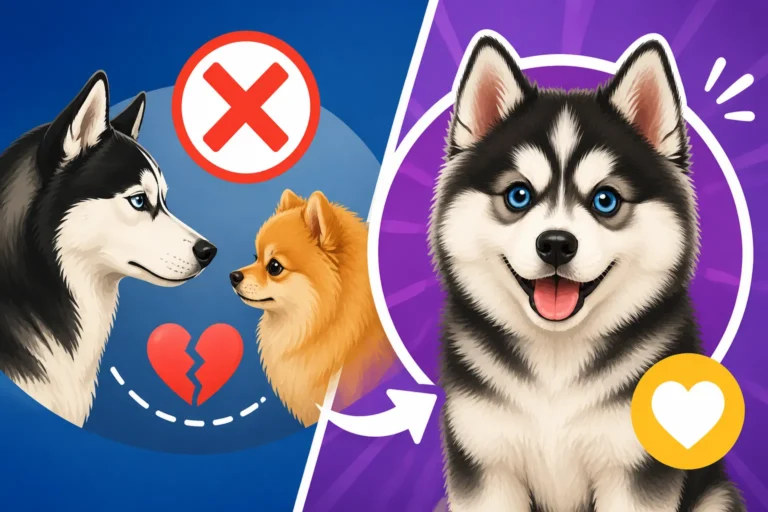
The internet, bless its heart, gave us that iconic image of the "miniature Husky," and that's often what people envision. But the reality is, a Pomsky can truly fall anywhere on the spectrum between its two parent breeds. You could end up with a dog that looks very much like a Husky, but on a smaller scale, perhaps weighing around 20-25 pounds. This is the dream for many.
However, it's just as possible to get a Pomsky that, while undeniably adorable, looks more like a larger, stockier Pomeranian, perhaps with a more robust build and a weight closer to 15-20 pounds. And then there are the "surprises" – puppies that mature into much larger dogs, sometimes hitting 30-35 pounds, which can be quite a shock if you were expecting a small lap dog. This wide range means that the visual appeal and size you're hoping for might not always materialize exactly as imagined.
Factors Influencing a Pomsky's Adult Size
While a breeder cannot guarantee an exact adult size, they can certainly provide estimates based on several key factors. Understanding these elements can help you make a more informed decision and manage your expectations.
The Impact of Parent Genetics
The most significant predictor of a Pomsky's size will always be the size of its parents. A breeder will typically use a female Husky (for safety reasons, due to the size difference and the need for artificial insemination) and a male Pomeranian. The size of these specific parent dogs offers the first clue. If the Husky dam is on the smaller side of her breed standard and the Pomeranian sire is also on the lighter end of his, there's a higher probability that their offspring will be smaller. Conversely, if the Husky dam is quite large for her breed, and the Pomeranian sire is also robust, you might anticipate a larger Pomsky.
However, even within purebred lines, there's always a range, and genes can skip generations. A small Pomeranian might have a larger ancestor a few generations back whose genes unexpectedly express themselves in a Pomsky puppy. This genetic mosaic means that even with careful parent selection, there's still a degree of unpredictability that breeders cannot fully control. It's a prime example of "Whether Parent Weights Predict a Pomsky's Size," which is helpful but not absolute.
Generational Breeding F1, F2, and Multigen and Predictability
The generation of the Pomsky plays a huge role in size predictability.
- F1 Pomskies: These are the direct offspring of a purebred Husky and a purebred Pomeranian. As discussed, these puppies have the most genetic variability. They are the least predictable in terms of size, appearance, and temperament because it's the first time these two distinct genetic pools have mixed. You might have one puppy in an F1 litter that matures into a 15-pound dog and another that reaches 30 pounds. This is why you hear so much about "Why an F1 Pomsky Varies So Much."
- F2 Pomskies: These are the offspring of two F1 Pomskies. While there's still variability, breeding two F1s together often starts to 'average out' some of the extreme size differences seen in F1 litters. Breeders aiming for more consistency will often work with F2 and subsequent generations.
- Multigen Pomskies: These are Pomskies bred from two F2 or later generation Pomskies, or sometimes an F1 bred back to an F2, and so on. The goal with multigen breeding is to stabilize the breed's characteristics, including size. Reputable breeders aiming for a more consistent outcome will track lines and phenotypes over several generations. While still not a 100% guarantee, "Whether a Multigen Pomsky Is More Predictable" is generally true, offering a tighter range of expected adult sizes. However, even with multigen, there can always be outliers.
Nutritional Influences During Puppyhood
While genetics are the primary driver of adult size, a puppy's nutrition during its crucial growth phases can certainly influence its development, though it won't fundamentally change its genetic potential. Overfeeding a puppy, especially with high-calorie diets meant for larger, faster-growing breeds, can lead to excessively rapid growth. This isn't necessarily about making a genetically small dog grow large, but it can put undue stress on developing joints and bones, potentially contributing to issues like hip or elbow dysplasia later in life.
Conversely, underfeeding a puppy or providing a nutritionally inadequate diet can stunt growth and impact overall health. Responsible breeders will guide new owners on appropriate feeding for their Pomsky puppy, often recommending high-quality small to medium breed puppy formulas that support steady, healthy growth without overdoing it. A good quality dog food, perhaps even a fresh food option like those offered by Ollie, ensures your puppy gets the nutrients it needs to grow according to its genetic blueprint.
How Breeders Estimate Adult Size and Their Limitations
Given the unpredictability, how do breeders even go about giving an estimate? It's a combination of science, experience, and careful observation, but it's crucial to understand where the estimates end and guarantees become impossible.
Examining Parent Weights and Sizes
As mentioned, the most reliable starting point is always the parents. A reputable breeder will be able to show you the dam (Husky) and sire (Pomeranian), or at least provide clear photos and their weights. They should also be able to tell you about the sizes of previous litters from those same parents. If a particular pairing consistently produces Pomskies in the 20-pound range, it's a reasonable assumption that future litters will follow a similar pattern. However, as breeders strive for consistency, they'll often track "Whether Parent Weights Predict a Pomsky's Size" over multiple litters.
It's also important to consider the overall build of the parents. A lanky, tall Husky dam and a petite Pomeranian sire might produce a different outcome than a stockier Husky and a more robust Pomeranian. These observations contribute to the breeder's educated guess.
The Puppy Growth Chart Method
Many breeders use puppy growth charts as a tool to estimate adult size. These charts often involve tracking a puppy's weight at specific milestones, such as 8 weeks, 12 weeks, or 16 weeks, and then extrapolating their likely adult weight. For example, some common rules of thumb suggest that a puppy's weight at four months can be roughly doubled to get its adult weight, or that a puppy grows after a year up to 80-90% of its adult size by six months.
While these charts can offer a rough projection, they are not infallible for a hybrid breed like the Pomsky, especially with its wide genetic potential. A puppy might have a growth spurt early on and then plateau, or grow steadily before having a late surge. These charts are more accurate for established purebreds with predictable growth curves. For a Pomsky, it's an estimate, not a crystal ball. So, while you might find a breeder referring to "The Age a Pomsky Reaches Full Size," remember there can be individual variations.
Why Guarantees Are Problematic
This is the core of the issue: a breeder cannot genuinely "guarantee" an adult size for a Pomsky. Anyone who offers a firm guarantee (e.g., "This puppy will be exactly 18 pounds at maturity, guaranteed!") is likely being unrealistic or disingenuous. Here’s why:
- Genetic Variability: We've already discussed the profound genetic mix. Even within the same litter, puppies can vary significantly in size, temperament, and appearance.
- Environmental Factors: While less impactful than genetics, diet, exercise, and general health during growth can slightly influence the final size. A breeder has no control over these once the puppy leaves their care.
- Ethical Constraints: Ethically, a breeder can only offer their best educated estimate based on past experience and parentage. To offer a guarantee implies a level of control over genetics that simply doesn't exist in hybrid breeding.
If you encounter a breeder offering a precise size guarantee, it's a significant red flag. They might be trying to make a sale by promising something they can't deliver, which can lead to heartbreaking situations like "What Happens When a Pomsky Grows Bigger Than Sold."
| Factor | Predictability for Pomsky Size | Notes |
|---|---|---|
| Parent Size & Weight | High (for range) | Best indicator, but individual puppy expression varies |
| Parental Line History | Moderate | Past litters from same parents offer insights, but not guarantees |
| Generation (F1, F2, Multigen) | Increasing Predictability | F1 is least predictable, Multigen aims for more consistency |
| Puppy Growth Charts | Low to Moderate (for hybrids) | Useful as a rough guide, less precise than for purebreds |
| Early Puppy Weight | Low | Early weight doesn't always scale linearly to adult weight |
| DNA Testing | Emerging, but not definitive | Some tests can predict size ranges, but not an exact weight |
The Breeder's Perspective on Size Guarantees
A good breeder isn't trying to trick you. They understand the desire for a specific size and often work hard to produce Pomskies within certain parameters. However, their ethical obligations prevent them from making unrealistic promises.
Ethical Breeding Practices and Transparency
Responsible Pomsky breeders are transparent about the challenges of predicting size. They will openly discuss the genetic variability, the size range of their parent dogs, and the typical outcomes from previous litters. They will emphasize that they are breeding for health and temperament first, with size and appearance being secondary, albeit important, considerations. An ethical breeder will:
- Provide parent information: Show you the parents, their weights, and often their genetic health clearances.
- Discuss generation: Explain the difference between F1, F2, and multigen Pomskies and how that impacts predictability.
- Set realistic expectations: Honestly tell you that while they aim for a certain size range, there's always a possibility for variation.
- Offer a health guarantee: This is far more critical than a size guarantee. A good breeder prioritizes "The Health Tests a Pomsky Breeder Should Show" and ensures puppies are sound.
They understand that the goal isn't just to make a sale, but to ensure that their puppies go to homes where they will be loved, regardless of whether they hit a specific weight target. This commitment extends to lifetime support for their puppies and owners.
What a Responsible Breeder Can Promise
While an exact size guarantee is out of the question, a responsible breeder can offer a robust estimate based on their breeding program. They might say, "Based on our lines, we typically see our puppies mature between 18 and 25 pounds, but there's always a chance for an outlier on either side." They may also try to match puppies to homes based on observable traits at a young age, if they feel confident about a puppy's trajectory. For instance, a breeder might identify the smallest puppy in a litter at 8 weeks and suggest that puppy for someone specifically wanting a petite companion, while clearly stating that no promise is absolute.
They can also assure you of the health and care that has gone into the puppy's early life, providing you with a puppy that has the best possible start. This includes proper nutrition, socialization, and initial veterinary care. They might even recommend certain puppy foods, like those available through Chewy, to ensure consistent, healthy growth.
Red Flags for Unrealistic Size Claims
Be very wary of breeders who:
- Guarantee exact sizes: This is the biggest red flag. As discussed, it's simply not possible.
- Promise "Teacup" or "Micro" Pomskies: While a very tiny Pomsky might occasionally occur, breeding specifically for extremely small sizes can lead to serious health problems, as seen in other breeds. Often, these terms are used to inflate prices without regard for the puppy's well-being. If a breeder is selling a puppy and says "Whether a Pomsky Sold as Toy Reaches Thirty Pounds," and then the puppy grows much larger, it highlights the issue with such marketing terms.
- Cannot provide parent information: If they can't show you the parents or provide their background, you have no way to assess their genetic contribution to size.
- Rush you into a decision or deposit: High-pressure sales tactics are never a good sign, especially when dealing with a living creature whose long-term well-being is at stake. Be particularly cautious if they demand payment without allowing you to meet the puppy or its parents, or refuse to answer detailed questions about size predictions.
What to Do If Your Pomsky Exceeds Size Expectations
Despite all the best intentions and careful estimates, sometimes a Pomsky just grows bigger than expected. It's a surprisingly common scenario and one that new owners should be prepared for.
Re-evaluating Your Expectations and Focusing on the Dog
If your Pomsky starts to outgrow the size you anticipated, the first step is a deep breath and a shift in perspective. Remember why you wanted a dog in the first place: for companionship, love, and joy. While size might have been a practical consideration, the bond you form with your dog is far more important. An oversized Pomsky is still a Pomsky, full of personality, intelligence, and affection.
Instead of focusing on the discrepancy, concentrate on embracing your dog for who they are. They didn't choose their genes, and their love for you is unconditional, regardless of their weight on the scale. Many owners who initially felt disappointed find that their slightly larger Pomsky fits perfectly into their lives, and the initial size hang-up fades as the dog's unique personality shines through. If you are experiencing this, you might be considering "Whether an Oversized Pomsky Is Worth Less" but remember, their value in your life is immeasurable.
Understanding Breeder Contracts and Recourse
Before you ever bring a puppy home, thoroughly review the breeder's contract. Reputable breeders often include clauses regarding health guarantees, but explicit size guarantees are rare, and for good reason. Some contracts might have a general clause about "What a Pomsky Health Guarantee Covers," but usually not specific to size.
If a contract did include a size guarantee (which, again, is highly unusual and a potential red flag in itself), it would likely outline any recourse, such as a partial refund or the option to return the dog. However, returning a dog purely for size is a heartbreaking scenario for everyone involved, especially the dog. It's far better to have realistic expectations from the outset. Understanding "Whether a Contract Covers an Oversized Pomsky" is crucial before you sign anything. Open communication with your breeder is always key; if you have concerns, discuss them respectfully and see what solutions, if any, they might be willing to offer.
Adjusting Care for a Larger Pomsky
A larger Pomsky simply means slightly different care considerations, which you can absolutely adapt to.
- Food: They will naturally eat more. You might need to adjust your food budget and purchase larger bags of kibble or more substantial portions of fresh food if you use a service like Ollie. Ensure you're feeding them a diet appropriate for their size and activity level.
- Exercise: A larger Pomsky often has more energy and needs more exercise. While "The Exercise a Pomsky Needs Every Day" is considerable no matter the size, a bigger dog might require longer walks, more vigorous play sessions, or even activities like hiking. This can also influence decisions like "Whether a Pomsky Should Jump Off Furniture" to protect their joints, especially if they are larger and heavier.
- Gear: Collars, harnesses, crates, and beds will need to be sized up. What might have been a small harness for a 15-pound Pomsky won't fit a 30-pound one.
- Vet Care: Larger dogs often require slightly higher doses of medications, preventatives, and anesthesia, which can impact veterinary costs. While a plan with Healthy Paws pet insurance can help manage unexpected vet bills for any size dog, it's something to be aware of.
Ultimately, embracing your Pomsky for the wonderful individual they are, regardless of their final size, is the most rewarding approach. The love and companionship they offer will far outweigh any initial disappointment about an extra few pounds.
Disclaimer
This article is for general informational purposes only and does not constitute professional advice. Laws, prices and regulations vary by location and change over time. Consult a qualified professional for guidance on your specific situation.