Whether a Pomsky Should Be Walked on a Long Line
The desire to give your adventurous Pomsky more freedom to explore, sniff, and stretch their legs without the constant tug of a short leash is a completely natural one. Many of us dream of that picture-perfect moment where our Pomsky bounds through an open field, only to come galloping back at a single call. But the reality for most Pomsky owners is a nagging fear that if that leash ever came off, our beloved, intelligent, and often independent little escape artist would be gone in a flash. This guide will delve into why a long line is often the safest and most effective bridge to giving your Pomsky that longed-for sense of freedom, all while keeping them secure and working on that all-important recall.
The Lure of Off-Leash Freedom Versus Pomsky Reality
It's easy to look at social media and see dogs frolicking off-leash and think, "My Pomsky could do that!" But the truth is, Pomskies are a unique blend of two very different, yet equally strong-willed, breeds: the Siberian Husky and the Pomeranian. Both contribute traits that make off-leash reliability a significant challenge, not a given.
Why the Dream of a "Perfect Recall" is Often Just That
Let's be honest, Huskies are renowned for their independent spirit and their love of exploration, often with a "what's in it for me?" attitude when it comes to recall. They were bred to run for miles, making their own decisions, and that deep-seated desire to explore is often very present in their Pomsky descendants. Pair that with the cleverness and sometimes stubborn nature of a Pomeranian, and you have a dog that’s incredibly smart but can also decide that a fascinating smell or a scampering squirrel is far more interesting than your urgent pleas to "Come!"
This isn't a flaw in your Pomsky; it's part of their genetic makeup. They possess a keen prey drive that can instantly override even the best-trained commands when something catches their eye. A squirrel darting up a tree or a distant bird could trigger an instinctual chase response, and suddenly, your carefully trained recall goes out the window. This independent streak and prey drive are why many Pomsky owners struggle with off-leash scenarios, constantly worrying about their dog bolting. You can read more about Recall on a Pomsky Bred From a Dog That Runs.
The Dangers of an Unreliable Recall
The consequences of an unreliable recall can be absolutely devastating, and it’s a fear that haunts many Pomsky parents. Imagine a beautiful park with walking trails near a busy road. Your Pomsky, usually so responsive, catches sight of a rabbit and takes off like a rocket. In that split second, the danger isn't just about losing your dog; it's about them running into traffic, getting into a fight with an aggressive dog, or simply getting lost in an unfamiliar area.
Beyond immediate physical dangers, a lost Pomsky can lead to immense emotional distress for you and your family. They might get picked up by someone else, end up in a shelter, or worse, never be found. Even if they are recovered, the experience can be traumatic for the dog, making them more fearful or wary in the future. This is why tools like the long line are so crucial for breeds like the Pomsky, offering a safety net that protects them while still allowing for a semblance of freedom that a short leash can't provide. The impulse to run is strong, which makes understanding The Pomsky Escape Artist in a Twenty Pound Body so vital.
What Exactly is a Long Line and Why Does it Help a Pomsky?
When we talk about walking a Pomsky on a long line, it's important to clarify exactly what kind of tool we're discussing. This isn't just any old leash; it's a specific piece of equipment with a specific purpose, designed to bridge the gap between complete tethering and full off-leash freedom.
Demystifying the Tool: Not Just a Longer Leash
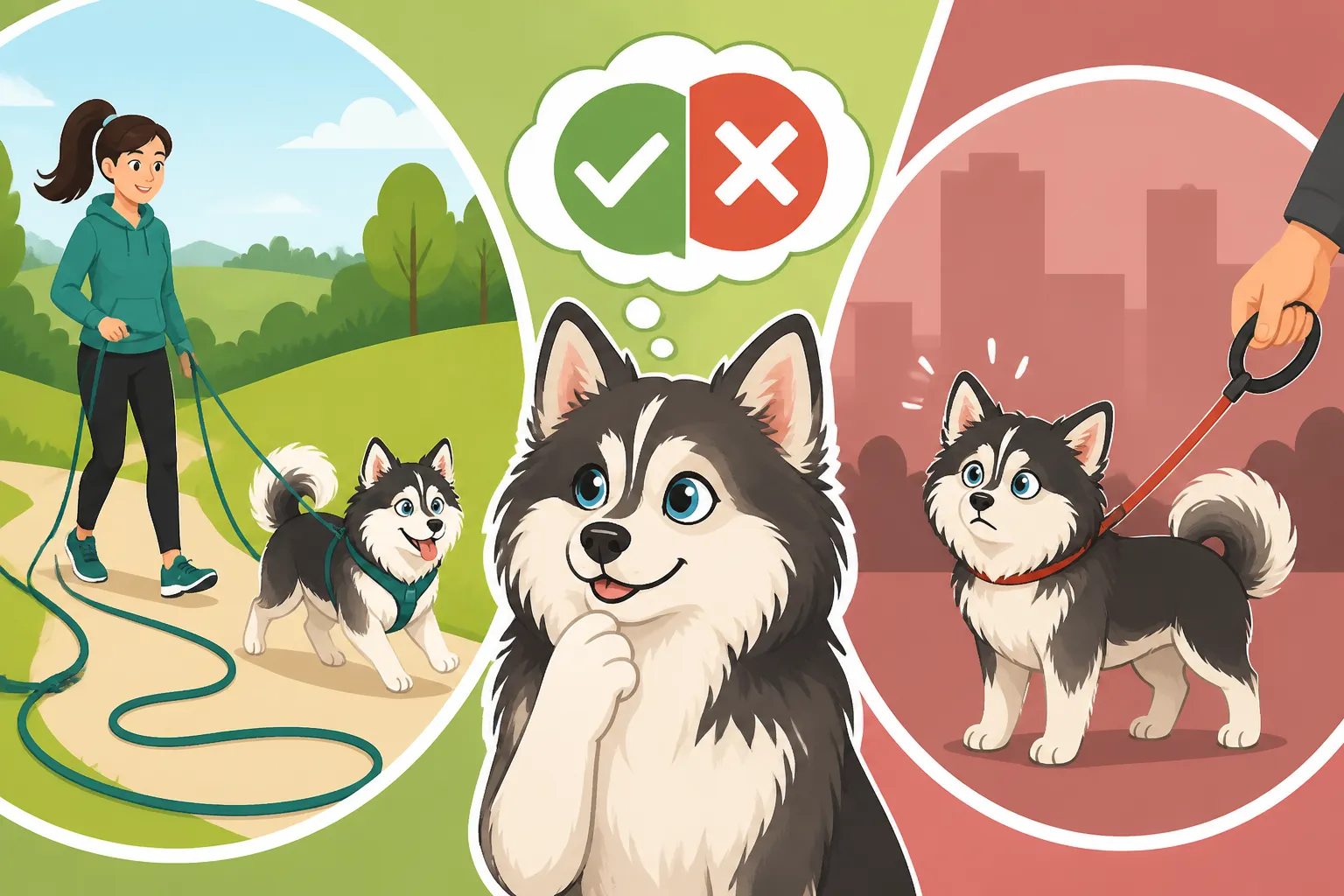
A long line is essentially a very long leash, typically ranging from 15 to 50 feet in length, made from durable, lightweight materials like nylon webbing or biothane. It's not a retractable leash. This distinction is paramount. Retractable leashes maintain tension, which actually teaches a dog to pull, and they offer very little control in an emergency. They can also cause severe rope burns or injuries if a dog bolts or the leash snags.
A long line, by contrast, is a fixed length of line that you manage. It's meant to be used in open, safe spaces where your Pomsky can roam a distance from you while still being physically connected. You let the line drag, gathering and releasing it as needed, providing a sense of freedom without the inherent dangers of an uncontrolled off-leash situation. Think of it as an invisible tether that only becomes apparent when you need to gently guide them back or prevent them from venturing too far.
Bridging the Gap: Safety and Training in One
The primary benefit of a long line for a Pomsky is that it offers a critical safety net while simultaneously providing a powerful training aid. For a breed with a strong prey drive and a tendency to bolt, the long line allows them to practice their recall in a realistic, distracting environment without the risk of them truly escaping.
Here’s how it works: your Pomsky gets to explore, sniff, and run without the constraint of a 6-foot leash. When you call their name, if they hesitate or get distracted, you have the ability to gently guide them back with the line. This physical reinforcement, coupled with positive praise and treats, helps them understand that "Come!" means returning to you, even when there are fascinating distractions. It builds confidence in both you and your dog, slowly habituating them to the idea that returning to you is always the best option, without you having to panic about them disappearing over the horizon. This supervised freedom is essential for their mental and physical well-being.
Practical Considerations for Walking Your Pomsky on a Long Line
To make the most of a long line, you need to think about the equipment itself, where you practice, and how you integrate it into your training routine. It’s not just about clipping it on and hoping for the best; it’s a deliberate strategy.
Choosing the Right Long Line for Your Pomsky
Selecting the perfect long line for your Pomsky involves a few key factors:
- Length: For initial training, a 15-20 foot line is often manageable. As your Pomsky gains confidence and you move to more open spaces, you might graduate to a 30-50 foot line. Remember, the longer the line, the more challenging it can be to manage, especially with a speedy Pomsky.
- Material:
- Nylon webbing is common, affordable, and lightweight. However, it can absorb water and get heavy, and if it drags through mud, it can be quite messy. It can also cause rope burn more easily if pulled quickly.
- Biothane is a fantastic synthetic material that looks and feels like leather but is waterproof, easy to clean, and doesn't absorb odors. It's more durable and less prone to tangles than nylon, making it an excellent choice for Pomskies who love to get dirty. It's usually a bit more expensive but worth the investment.
- Width/Thickness: A wider, thicker line is more durable but heavier. For a twenty-pound Pomsky, you don't need a heavy-duty climbing rope, but something sturdy enough to withstand their bursts of speed. A width around 1/2 to 3/4 inch is usually sufficient.
You can find a wide variety of long lines on Amazon, with options in different materials, lengths, and colors to suit your preferences and your Pomsky's needs. Always opt for a sturdy clip that can withstand sudden tugs.
Here's a quick comparison of common long line materials:
| Feature | Nylon Webbing | Biothane |
|---|---|---|
| Durability | Good, but can fray over time | Excellent, very resistant to wear and tear |
| Weight | Lightweight, but heavy when wet | Consistent, moderately lightweight |
| Waterproof | No, absorbs water | Yes, completely waterproof |
| Maintenance | Can get dirty, harder to clean | Very easy to clean, just wipe down |
| Tangle Factor | Can tangle, especially when wet | Less prone to tangling, smoother feel |
| Grip | Good, but can cause rope burn if wet | Excellent, even when wet, less friction burn |
| Cost | Generally more affordable | Higher initial cost, but lasts longer |
Where and How to Practice Safely
The key to successful long line training is choosing the right environment and introducing the tool gradually.
- Location: Start in a very low-distraction, securely fenced area, even if you don't need the fence for security (like a large, empty dog park during off-peak hours). This allows both of you to get used to the line without too many external triggers. Once comfortable, you can move to more open spaces like large fields, quiet hiking trails, or expansive parks, always keeping safety in mind, especially regarding nearby roads or other unpredictable elements. Make sure the area is free of sharp objects or dense undergrowth that the line could snag on.
- Introduction:
- Attach to a Harness: Always attach the long line to a well-fitting harness, not a collar. A sudden yank on a collar, especially on a running Pomsky, could cause neck or tracheal injury. Pomskies can be prone to The Collapsing Trachea a Pomsky Gets From the Pomeranian, so a harness is always the safer choice.
- Let Them Drag It: Initially, just let your Pomsky drag the line around a safe, contained space. This gets them used to the feel without you actively managing it. Supervise closely to prevent tangling.
- Hold and Manage: Once they're comfortable, start holding the line, letting it trail behind them or gently gathering it as they get closer. Practice managing the slack, ensuring there's enough give for them to move freely but not so much that you can't quickly gather it if needed.
- No Tension Rule: The goal is for your Pomsky to feel like they are off-leash. Avoid keeping constant tension on the line. Only apply gentle tension when you need to guide them or prevent them from going too far.
Integrating the Long Line into Recall Training
This is where the long line truly shines as a training tool. It creates a "fail-safe" for your recall efforts, making every recall a success, which is crucial for building a reliable command.
- Positive Reinforcement is Key: Arm yourself with high-value treats and enthusiastic praise. Every time your Pomsky responds to your call, whether they come all the way or you need a slight reel in, reward them immediately and generously.
- Call, Reel, Reward: Call your Pomsky's name with a happy, inviting tone. If they hesitate or get distracted, gently and smoothly reel in the line. As soon as they start moving toward you, stop reeling and let them come the rest of the way on their own. When they reach you, it's a party! Treats, belly rubs, enthusiastic praise – make it the best decision they ever made.
- Randomness and Variety: Don't just call your Pomsky when they're about to run off. Call them when they're already close, when they're sniffing something interesting, or even mid-play. This teaches them that "Come!" can happen at any time and it always leads to good things.
- Increase Distractions Gradually: Start in quiet areas, as mentioned above. As your Pomsky's recall improves on the long line, gradually introduce more distractions – other people, distant dogs, or new smells. The long line ensures that even if they're tempted, they can't fully give in to the urge to run.
- Professional Guidance: If you're finding challenges, consider enrolling in a virtual or in-person training program. Platforms like BAXTER & Bella offer comprehensive online training resources and live support that can guide you through recall training with a long line, tailoring advice to your Pomsky's specific needs and personality. Their structured approach can be a game-changer for building consistent behavior.
Potential Pitfalls and How to Avoid Them
While incredibly beneficial, long lines aren't without their challenges. Knowing what to look out for and how to mitigate risks will make your training sessions much smoother and safer for both you and your Pomsky.
Entanglement and Safety Risks
A long line, by its very nature, can create entanglement hazards if not handled correctly.
- For Your Pomsky: Your adventurous Pomsky can easily get tangled around trees, bushes, or even their own legs. This isn't just an inconvenience; it can cause injury. Always ensure you're in an open space with minimal obstacles. If they do get tangled, calmly approach and untangle them, reinforcing good behavior rather than scolding.
- For You: The line can wrap around your legs, arms, or hands, leading to rope burn, trips, or falls, especially if your Pomsky makes a sudden dash. Always wear appropriate footwear, and if your Pomsky is known for sudden bursts of speed, consider wearing gloves to protect your hands. Never wrap the line around your hand or wrist; instead, hold it with a firm, open grip that allows you to release it quickly if needed to prevent injury.
- For Other Dogs and People: A long line can be a tripping hazard for unsuspecting passersby or get tangled with other dogs. Always be aware of your surroundings. If another dog approaches, shorten your line and keep your Pomsky close until the other dog has passed. It's common courtesy and a matter of safety to manage your dog and their equipment responsibly.
Avoiding Frustration for Both You and Your Pomsky
Long line training, like any training, takes patience. It's easy for both human and dog to get frustrated, which can hinder progress.
- Keep Sessions Short and Positive: Pomskies, with their high intelligence but sometimes short attention spans, respond best to shorter, more engaging training sessions. Aim for 10-15 minute bursts of focused work rather than long, drawn-out sessions that lead to boredom or fatigue. End on a high note, even if it's just for a simple, successful recall from a short distance.
- Manage Your Expectations: Your Pomsky isn't going to have perfect recall after a few sessions. This is a journey, not a sprint. Some days will be better than others. Understand that consistency and patience are your best friends. Don't compare your Pomsky's progress to other dogs you see; every dog is an individual. The journey to a reliable Building a Recall a Pomsky Answers takes time.
- Don't Use it as Punishment: The long line should never be associated with negative experiences. If you're constantly yanking your Pomsky back or getting angry when they don't respond, they will learn to associate the line (and you) with unpleasantness, making them less likely to return. Keep it positive, keep it encouraging, and remember that you're a team working towards a common goal of safe exploration.
Walking your Pomsky on a long line is a fantastic way to offer them more freedom and mental stimulation while building a solid foundation for recall in a controlled manner. It acknowledges their innate desire to explore while prioritizing their safety and your peace of mind. While it requires attention to detail and consistent effort, the benefits of seeing your Pomsky confidently roam, knowing they are safe, are immeasurable.
Disclaimer
This article is for general informational purposes only and does not constitute professional advice. Laws, prices and regulations vary by location and change over time. Consult a qualified professional for guidance on your specific situation.