Whether Small Pets Are Safe Around a Pomsky
Bringing a Pomsky into a home that already has smaller, more delicate pets can feel like navigating a minefield. You adore your fluffy Pomsky, but you also cherish your guinea pig, your beloved parrot, or even your quiet fish. The fear is real: will their natural instincts kick in, turning your peaceful multi-pet household into a stressful, or even dangerous, environment? It's a completely valid concern, and one that requires thoughtful planning and diligent management, which this guide will help you understand.
Understanding the Pomsky's Instinctual Drives
When you welcome a Pomsky into your life, you're essentially getting a beautiful blend of two distinct breeds: the Siberian Husky and the Pomeranian. Both contribute unique traits, and while their small size might make some assume less risk, it's crucial to remember the deep-seated instincts that still run through their veins. These aren't just cute mannerisms; they're primal drives that dictate how they perceive and react to other, smaller creatures in their environment. Ignoring these instincts, or hoping they simply won't manifest, is a recipe for potential heartache.
The Siberian Husky's Prey Drive Heritage
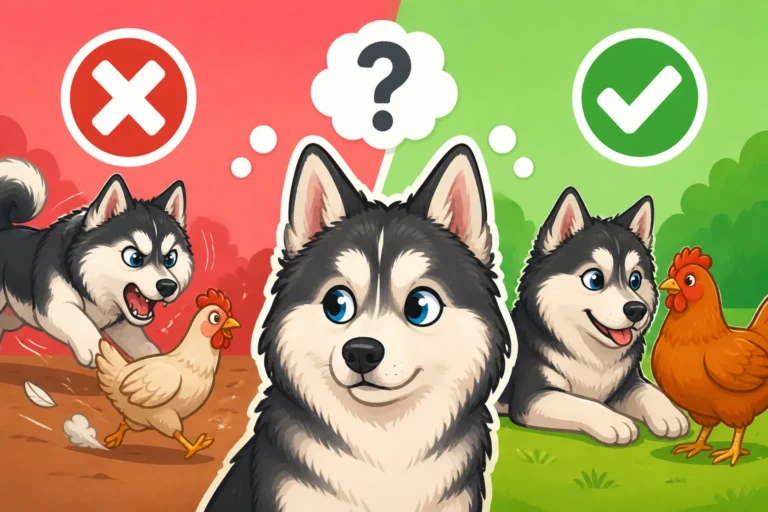
The Siberian Husky, one half of the Pomsky equation, was originally bred for pulling sleds across vast, icy landscapes. But they also had to be intelligent and resourceful, often needing to hunt small game to supplement their diet or for survival. This historical role has ingrained a strong, undeniable prey drive in the breed. A prey drive isn't about aggression or malice; it's a hardwired instinct to chase, capture, and sometimes, unfortunately, kill anything that resembles small prey. Think squirrels darting across the yard, rabbits hopping through the brush, or even the quick, scuttling movements of a mouse.
For a Pomsky, this can translate into a sudden, intense interest in anything small and fast-moving. That quick flick of a cat's tail, the flutter of a bird's wings, or the rapid squeak of a hamster can trigger this innate response. It's not a sign of a "bad" dog; it's simply a strong genetic predisposition. Even the most well-behaved Husky, given the right set of circumstances, might find it challenging to resist this urge. Therefore, understanding this heritage means accepting that your Pomsky might possess a similar, powerful drive, even if it's currently masked by their charming personality.
The Pomeranian's Terrier-Like Tenacity
On the other side of the family tree is the Pomeranian. While tiny and often seen as a lapdog, many Poms still carry the tenacious, bold spirit of their larger Spitz ancestors. Historically, smaller Spitz-type dogs were often used for hunting small game or varmint control. They might not have the long-distance chase of a Husky, but they often have a high level of alertness, a surprisingly strong bark (as many Pomsky owners discover!), and a quick, darting movement. This can sometimes manifest as a persistent, sometimes incessant, interest in smaller animals. They might not be looking to kill in the same way a Husky might, but their intense curiosity, nipping, or constant "herding" can still be incredibly stressful, and potentially harmful, to a delicate small pet.
Imagine a Pomeranian, full of bluster and confidence, persistently trying to "play" with a small cage-bound hamster. While their intent might not be lethal, their excitement, sharp barks, and attempts to get at the animal could cause extreme stress, leading to fear-based injuries or even heart attack in a tiny creature. It's the combination of these two genetic legacies—the Husky's hunt-and-kill instinct and the Pomeranian's assertive, sometimes bossy nature—that creates the unique challenge of managing a Pomsky with smaller pets.
Early Socialization and Its Limits
Many new Pomsky owners hear about the importance of early socialization, and rightly so. Exposing a puppy to a wide variety of sights, sounds, people, and other animals from a young age is crucial for developing a well-adjusted dog. For a Pomsky destined for a multi-pet household, this means introducing them to your smaller animals carefully and positively. However, it's vital to understand that socialization, while incredibly important, cannot entirely erase deeply ingrained prey drive.
You can teach a Pomsky to be tolerant of a cat, to ignore a rabbit, or to be gentle around a guinea pig through careful training and positive reinforcement. But you cannot truly train out a primal instinct. Socialization helps them learn appropriate behaviors and boundaries, but it doesn't remove the underlying drive. It's like teaching a human not to be afraid of spiders—you can manage the fear, but the initial, gut-level reaction might always be there. Therefore, even a well-socialized Pomsky should never be fully trusted unsupervised with small pets, especially prey animals. Raising a Pomsky Puppy is a critical time for these lessons, but always with realistic expectations.
Assessing the Risk to Different Small Pets
The level of risk a Pomsky poses depends heavily on the type of small pet you have. It's not a one-size-fits-all situation; some pets are inherently more vulnerable due to their size, behavior, and how a Pomsky's natural instincts might perceive them. It's a sad truth that some combinations are far riskier than others, and being honest about those risks is the first step in ensuring everyone's safety.
Cats: A Common but Complex Coexistence
Cats are probably the most common "small pet" that coexists with dogs, and for good reason—they're often large enough to defend themselves or escape, and their body language can be quite clear. Many Pomskies can live peacefully with cats, especially if they are introduced properly as puppies. The success often hinges on a few factors: the cat's personality (a confident, dog-savvy cat is a huge advantage), the Pomsky's individual prey drive, and the owner's commitment to careful introductions and ongoing management.
A young Pomsky might initially try to chase a cat out of playful curiosity, or because the cat's sudden movements trigger that latent prey drive. A confident cat will often stand its ground, hiss, or even swat the puppy, teaching it boundaries. If the Pomsky learns to respect these signals and associates the cat with positive experiences (like treats when the cat is calm nearby), a truce can often be formed. However, even with a good relationship, a cat running wildly through the house might still trigger a chase instinct, and a Pomsky's strong jaws, even in play, could accidentally cause injury. Providing your cat with vertical spaces, escape routes, and dog-free zones (like a room with a baby gate that the cat can jump over) is absolutely essential. Whether a Pomsky Chases Cats delves deeper into this specific dynamic.
Pocket Pets and Birds: High-Risk Scenarios
This is where the risk factor skyrockets. Pets like hamsters, guinea pigs, gerbils, mice, rats, rabbits, ferrets, and birds (parakeets, cockatiels, finches) are, to a dog with prey drive, essentially small, scurrying, squeaking, or fluttering targets. Their size, rapid movements, and often fragile bodies make them incredibly vulnerable. The risk of injury or death from a Pomsky is extremely high, even if the Pomsky seems to be "just playing."
A Pomsky's instinct to chase and capture a small, fast-moving creature is very powerful. Even if they don't intend to kill, a single playful pounce or mouth grab can easily crush a small animal. Birds are equally at risk; their fluttering wings and chirping can excite a Pomsky, and a cage is often seen as a challenge rather than a barrier. Housing these pets in robust, secure cages is non-negotiable, and these cages should be in rooms where the Pomsky is never allowed unsupervised. Placing cages on high shelves or in separate, securely closed rooms is paramount. The goal is complete physical separation at all times.
Reptiles and Fish: Unique Considerations
Reptiles like lizards, snakes, or turtles, and fish in aquariums, present a different kind of risk. While a Pomsky is unlikely to view a fish in a tank as direct prey (though they might be fascinated by the movement), the primary danger comes from accidental damage or stress. A curious Pomsky might knock over a fishbowl, or even a larger tank if it's unstable. They might paw at the glass, causing undue stress to the aquatic inhabitants. Similarly, a Pomsky might try to play with or investigate a reptile enclosure, potentially damaging it or startling the resident.
For these pets, the risk isn't necessarily direct predation, but rather the potential for destruction, accidental injury, or chronic stress. Ensuring aquariums are on sturdy, dog-proof stands and reptile enclosures are securely latched and perhaps even located in rooms inaccessible to the Pomsky is the best approach. Even a Pomsky that just intently stares at a tank can be a source of stress for the fish or reptile inside.
Mitigation Strategies for a Multi-Pet Household
Living with a Pomsky and smaller pets requires proactive strategies. You can't just hope for the best; you need to actively manage the environment, train your dog, and establish clear boundaries to keep everyone safe and happy. This is a commitment for the lifetime of your Pomsky and your smaller animals.
Training for Impulse Control and Recall
Training is a cornerstone of safety in a multi-pet home, but it must be realistic. Focus intensely on impulse control and a rock-solid Recall on a Pomsky Bred From a Dog That Runs. Commands like "leave it," "drop it," and "stay" are absolutely vital. Start practicing these commands in low-distraction environments, then gradually introduce distractions. For instance, have your Pomsky "leave it" with a toy on the floor, then a treat, then perhaps a small, harmless object that resembles a toy mouse. The goal is to build a strong association that "leave it" means disengage from that object immediately, no matter how tempting.
A reliable recall is equally critical. If your Pomsky ever gets too close to a small pet, or if a small pet inadvertently wanders into an unsafe area, a swift and immediate recall can avert disaster. Practice recall in various settings, making it the most rewarding command your dog knows. Use high-value treats and enthusiastic praise. Consider working with a professional trainer, or an online program like those offered by BAXTER & Bella, to hone these skills, as they can provide structured lessons and personalized feedback. Remember, consistency is key, and every interaction is a training opportunity. Whether a Pomsky Can Be Trained Off Prey Drive provides further insights into managing this innate instinct.
Environmental Management and Separation
The most effective way to prevent incidents is through strict environmental management. This means creating physical barriers and designated safe zones for all your pets.
- Secure Enclosures: All small pets (hamsters, birds, rabbits, etc.) must be housed in robust, escape-proof cages or enclosures. These need to be strong enough to withstand curious paws, nudges, or even attempts to chew through them. Position cages on high surfaces that your Pomsky cannot reach, or in rooms that are consistently off-limits to your dog.
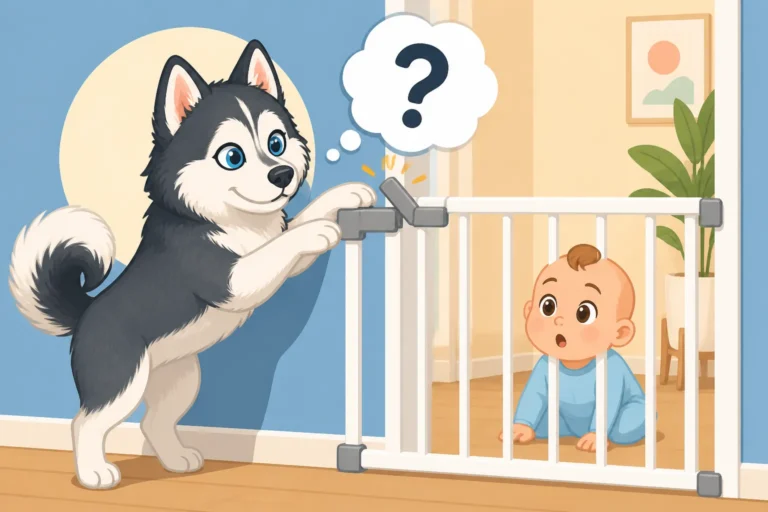
- Baby Gates and Doors: Use sturdy baby gates to block off rooms where small pets reside, or where you want to create a dog-free sanctuary for your cat. Make sure these gates are tall enough that your Pomsky can't jump over them and secure enough that they can't be easily knocked down.
- Vertical Spaces for Cats: Cats benefit immensely from cat trees, shelves, and other high perches where they can escape a curious or overzealous Pomsky. This gives them a sense of security and control over their environment, reducing stress.
- Outdoor Safety: If small pets, like rabbits, have outdoor enclosures, ensure they are incredibly secure, with buried wire mesh to prevent digging, and sturdy locks. Never leave a Pomsky unsupervised near an outdoor hutch or pen. The Fence a Pomsky Actually Needs for secure containment in general, highlights the importance of robust barriers.
Utilizing Crates and Playpens Safely
Crates and playpens are invaluable tools for managing a multi-pet household, offering safe, contained spaces for your Pomsky when you can't provide direct supervision.
- Crate Training: Your Pomsky should be comfortably crate-trained. This provides a secure "den" for them, and allows you to confidently leave the house knowing they aren't roaming freely, potentially getting into trouble with smaller pets. The crate should be a positive place, associated with comfort and treats, not punishment. It's a fantastic way to ensure the safety of your small pets while you're busy or away.
- Indoor Playpens: For times when you want your Pomsky contained but not necessarily crated, a sturdy indoor playpen can be useful. It allows them more space than a crate but still keeps them away from vulnerable pets. These are particularly good for puppies or young dogs who need confinement during periods of high energy. You can enrich the playpen with toys and chew items. Many options are available on Amazon, from wire pens to fabric ones, depending on your Pomsky's chew habits and strength.
- Rotating Access: Consider a schedule where pets have "alone time" in common areas. For example, your small pets might have the run of a specific room in the morning, while your Pomsky is crated or in another part of the house. In the afternoon, roles could reverse. This ensures all pets get freedom and stimulation without direct, unsupervised interaction.
Introduction and Supervision Protocols
Even with extensive training and environmental management, the way you introduce your Pomsky to smaller pets, and the level of supervision you maintain, are absolutely critical. Rushing these steps or becoming complacent can have dire consequences.
Structured, Controlled First Meetings
When you first bring your Pomsky home, particularly if it's a puppy, the initial introductions to existing small pets must be highly controlled and positive.
- Puppy Introductions to Cats: For a puppy meeting a cat, keep the puppy on a leash. Allow them to see each other from a distance, rewarding calm behavior from both animals. Don't force interactions. Let the cat approach on its own terms. Keep sessions short and positive, ending before either animal shows signs of stress. Never allow the puppy to chase or harass the cat. If the cat swats or hisses, allow it; this teaches boundaries. Treats and praise (from BAXTER & Bella’s training philosophy, positive reinforcement is key) should flow for both pets when they are calm in each other's presence.
- Adult Pomsky Introductions: If introducing an adult Pomsky to a cat, the same leash control applies, but you might need to be even more vigilant. An adult's prey drive is already established. Focus on teaching the Pomsky that cats are part of the family and are to be ignored or treated gently, not chased. High-value treats should be given every time the Pomsky looks at the cat without reacting, or chooses to look away.
- No Direct Introductions to Prey Animals: For pocket pets, birds, or other highly vulnerable creatures, direct introductions are generally not recommended. The risk is simply too high. Your goal is for your Pomsky to learn that these animals exist, but they are not accessible. Allow your Pomsky to see the secure cage from a distance, on a leash, rewarding calm curiosity (looking, sniffing) and redirecting any intense staring, whining, or pawing. The physical barrier must always remain firmly in place.
Constant Supervision and Intervention
Until you have established a very long history of absolute, unwavering calm and indifference between your Pomsky and your small pets (and for true prey animals, this might never happen), constant supervision is non-negotiable. "Constant" means exactly that: if you cannot actively watch them, they should be separated.
- Active Monitoring: Don't just be in the same room; be actively observing. Learn your Pomsky's body language. A stiff posture, intense stare, low growl, or sudden twitch of the ears can all indicate a shift in interest that could escalate.
- Swift Intervention: Be ready to intervene immediately. This means having a leash or long line handy, or being able to give a sharp, clear command like "leave it" or "come" (with an immediate reward). The moment you see an unwanted behavior, redirect it. This isn't about punishment, but about managing the situation and reinforcing what is acceptable.
- Never Leave Them Alone: This cannot be stressed enough. Even if your Pomsky and cat seem to be the best of friends, a moment of excited play can turn disastrous if you're not there to supervise. A sudden noise, a dropped object, or a quick movement could trigger an instinctual reaction that an unsupervised Pomsky cannot be expected to override. When you leave the room, even for a moment, separate them. Crate your Pomsky, put the cat in a separate room, or close off access to the small pet's enclosure.
Recognizing and Interpreting Body Language
Being able to read your Pomsky's body language, as well as that of your smaller pets, is a critical safety skill. Dogs communicate primarily through their posture, facial expressions, and movements.
- Pomsky Warning Signs: Look for a hard stare, tensed body, lowered head, stiff tail wag (not a loose, happy wag), dilated pupils, lip licking, or direct movement towards the small pet. Any of these signals indicate heightened arousal and potential danger. Conversely, a relaxed posture, soft gaze, loose wag, yawning, or voluntarily looking away from the small pet are all good signs.
- Small Pet Stress Signals: Your smaller pets will also tell you if they're stressed. A cat might flatten its ears, hiss, puff up its tail, or try to hide. A rabbit might thump its foot, freeze, or try to bolt. A guinea pig might freeze or let out high-pitched squeals. These are distress calls, and they mean you need to intervene and create more distance immediately. Understanding these subtle cues allows you to prevent escalation and ensure everyone feels as safe as possible.
Long-Term Management and Safety
Successfully integrating a Pomsky into a home with small pets isn't a one-time event; it's an ongoing commitment to management, reinforcement, and vigilance. Your vigilance must extend throughout their lives, adapting as your pets age and their dynamics potentially change.
Maintaining Boundaries and Reinforcement
Even after years of peaceful coexistence, the boundaries and training you established must be consistently reinforced. This isn't just about preventing incidents; it's about maintaining a low-stress environment for all your animals.
- Consistency is Key: Every family member must be on the same page regarding rules and boundaries. If one person allows the Pomsky to get too close to the guinea pig's cage, it undermines all the training and management efforts.
- Continue Training: Keep up with your Pomsky's obedience training, especially "leave it," "stay," and recall. Regular practice keeps these commands sharp and reinforces your role as the leader who dictates interactions. Consider refresher courses or new challenges to keep your Pomsky mentally stimulated. BAXTER & Bella offers ongoing support and new training modules that can help keep skills polished.
- Positive Reinforcement: Continuously reward your Pomsky for calm, indifferent behavior around smaller pets. If your cat walks by and your Pomsky barely glances, offer a treat and praise. If they choose to lie down instead of staring at the bird cage, that's a win. These small, consistent reinforcements build strong positive associations with ignoring the small pets.
Enrichment for Your Pomsky
A bored Pomsky is a Pomsky looking for something to do, and sometimes, that "something" might be a small, vulnerable pet. Providing ample mental and physical enrichment is crucial for managing their energy and predatory instincts.
- Physical Exercise: Pomskies, with their Husky heritage, need significant daily exercise. This isn't just a quick walk around the block. They need opportunities to run, play, and burn off energy. Long walks, hikes (on leash, of course!), fetch in a secure yard, or dog sports can all help. A tired Pomsky is less likely to be looking for trouble.
- Mental Stimulation: These intelligent dogs also need their minds engaged. Puzzle toys, snuffle mats, chew items, and training sessions can provide excellent mental workouts. If your Pomsky is focused on figuring out how to get treats out of a KONG, they're not focused on the hamster cage. Amazon offers a vast array of interactive dog toys that can help with this.
- Chew Items: Provide plenty of appropriate chew toys. Chewing is a natural canine behavior that helps relieve stress and boredom. Ensure the chew items are safe and durable for your Pomsky's size and chewing style.
Here's a quick comparison of risk levels for different small pets:
| Small Pet Type | Typical Risk Level to Pomsky | Management Strategy |
|---|---|---|
| Cats | Moderate to Low | Careful introductions, vertical escape routes, consistent supervision |
| Rabbits | High | Strict separation, secure enclosures, Pomsky never unsupervised |
| Guinea Pigs | Very High | Airtight separation, robust cages on high surfaces, Pomsky never unsupervised |
| Hamsters/Gerbils | Very High | Airtight separation, robust cages in dog-free rooms, Pomsky never unsupervised |
| Birds | Very High | Airtight separation, secure cages in dog-free rooms, Pomsky never unsupervised |
| Reptiles/Fish | Low (Accidental) | Secure enclosures/tanks, stable stands, Pomsky access restricted to prevent damage |
When Coexistence Isn't Possible
Despite your best efforts, training, and management, there might be situations where a safe coexistence simply isn't possible. This is a heartbreaking reality for many pet owners, but it’s crucial to prioritize the safety and well-being of all animals involved.
- Persistent Prey Drive: Some Pomskies have an exceptionally strong, unrelenting prey drive that cannot be reliably managed with training or barriers. If your Pomsky consistently tries to get at a small pet, showing intense focus and disregard for commands, the risk remains too high.
- High-Stress Environment: If the presence of the Pomsky causes chronic stress to your smaller pets (they are always hiding, showing fear, or ill from stress), it's not a healthy environment for them. Similarly, if the constant management and worry are causing significant stress to you, the pet owner, it's also not sustainable.
- Accidents Happen: Even with the best intentions and management, accidents can occur. A moment of distraction, a gate left open, or a cage compromised could lead to tragedy. If the risk of such an accident is always looming, it might be time to consider difficult choices.
In such cases, rehoming one of the animals (either the Pomsky or the small pet, if you can find a suitable, safe home) or ensuring permanent, separate living arrangements within the home might be the only responsible solutions. This is never an easy decision, but the welfare and safety of all creatures must come first. Sometimes, the kindest thing you can do is acknowledge that certain pairings simply aren't meant to be, ensuring a peaceful life for each animal in an environment where they can thrive without fear. What Pomskies Are Most Often Put to Sleep For and Why Pomskies Reach Rescue at Two tragically underscore the realities when compatibility issues arise.
Disclaimer
This article is for general informational purposes only and does not constitute professional advice. Laws, prices and regulations vary by location and change over time. Consult a qualified professional for guidance on your specific situation.