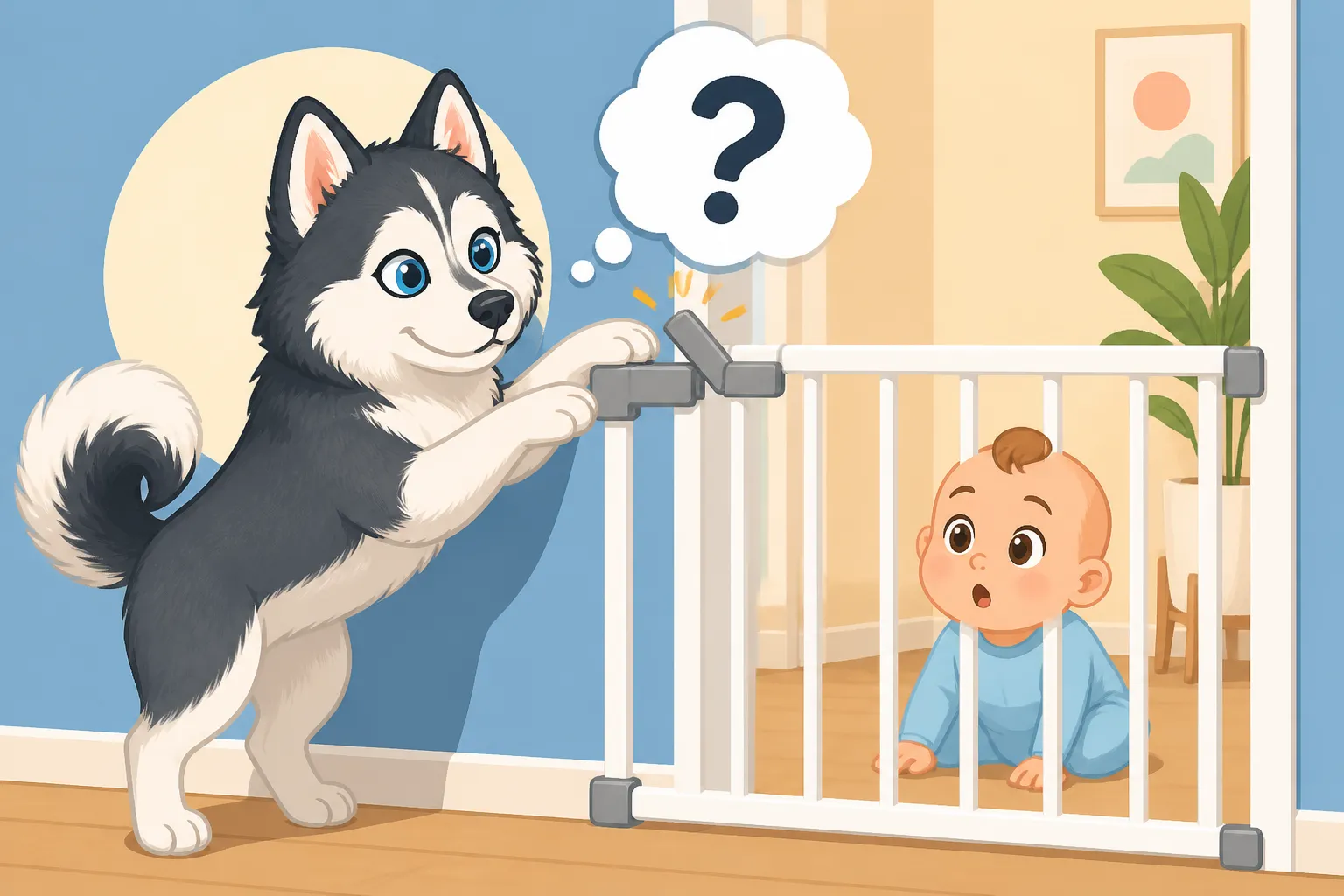
Whether a Pomsky Opens a Baby Gate
It's incredibly frustrating when you think you've secured an area, only for your clever Pomsky to outsmart the barrier you've put in place. Many Pomsky owners find themselves scratching their heads, wondering how their furry escape artist managed to open yet another baby gate. This guide dives deep into why these intelligent dogs are so adept at defeating what seem like perfectly good containment solutions, and more importantly, how you can secure your home effectively against their wily ways.
The Pomsky's Clever Mind: Why They Test Boundaries
Pomskies are a fascinating blend of two highly intelligent and, let's be honest, often mischievous breeds: the Siberian Husky and the Pomeranian. This combination results in a dog that is not only smart but also highly motivated by curiosity and a desire for companionship. When you put a gate up, they don't just see a barrier; they see a puzzle to solve or an obstacle to overcome to get to where they want to be, which is usually right by your side.
The Husky and Pomeranian Influence on Escape Artistry
From the Siberian Husky side, Pomskies inherit a formidable intellect and a drive to explore. Huskies are known for their ability to escape enclosures, whether by jumping, digging, or figuring out latches. They are problem-solvers by nature, and a baby gate can sometimes present itself as an intriguing challenge rather than an impenetrable wall. They often have a high prey drive and an independent streak, making them less inclined to simply accept being confined if something more interesting lies beyond. The Pomsky Escape Artist in a Twenty Pound Body details just how inventive these dogs can be.
On the other hand, the Pomeranian contributes a healthy dose of tenacity and agility in a smaller package. While not typically known for grand escapes like a Husky, Pomeranians are alert, quick-witted, and surprisingly nimble. This means a Pomsky might combine the Husky's problem-solving brain with the Pomeranian's compact size and agility, allowing them to squeeze through gaps, climb where you wouldn't expect, or use their front paws with surprising dexterity to manipulate latches. It's this unique combination that makes containing them with standard methods a real challenge.
How Their Curiosity Drives Gate Challenges
A Pomsky's inherent curiosity is a powerful motivator for testing boundaries. They want to know what's happening on the other side of that gate. Is someone getting a treat? Is there a new person to greet? Is a fun game happening without them? Their strong desire to be part of the family unit means that being separated, even by a simple gate, can feel like a punishment or an exclusion. They're not being "naughty" intentionally; they're simply following their instincts to seek out interaction and stimulation.
Boredom can also play a huge role. A Pomsky left alone without adequate mental and physical stimulation might view a baby gate as the ultimate enrichment toy. They'll poke, prod, chew, and push until they find a weakness. If they've successfully opened a gate once, even by accident, they quickly learn that it's a viable strategy to get what they want. This reinforces the behavior, making them even more determined the next time. It's a testament to their intelligence, even if it drives you absolutely wild.
Types of Baby Gates and a Pomsky's Ability to Defeat Them
Not all baby gates are created equal, and a Pomsky's ability to "defeat" them often depends on the type of gate in question. What might work for a less intelligent or less determined dog often proves to be merely a suggestion for a Pomsky. Understanding the weaknesses of different gate designs is key to choosing a more robust solution.
Pressure-Mounted Gates: The Easy Target
Pressure-mounted gates are often the first choice for quick, temporary barriers, especially in rental homes or areas where drilling isn't an option. They rely on tension against the doorframe or wall to stay in place. While convenient for keeping human toddlers contained, they are frequently an easy target for a determined Pomsky. Their biggest weakness is their reliance on friction; a strong enough push or lean, especially from a dog eager to get to you, can dislodge them.
Beyond brute force, Pomskies can also exploit the design of pressure-mounted gates. Many have a step-over bar at the bottom, which is fine for people but can be an uncomfortable obstacle for a dog, or worse, a pivot point if they try to squeeze underneath. They might chew on the plastic components, loosening the tension, or simply push their nose into the gaps until the pressure gives way. For a Pomsky, these gates often act more as a suggestion than a firm boundary.
Hardware-Mounted Gates: More Secure, But Not Impenetrable
Hardware-mounted gates are generally considered much more secure because they are screwed directly into the wall or doorframe. This eliminates the "push-over" problem common with pressure-mounted gates. However, even these come with their own set of challenges when dealing with a clever Pomsky. The main vulnerability here lies in the latching mechanism itself. Many gates designed for children have simple lever handles or squeeze-and-lift latches that, with enough observation and paw dexterity, a smart Pomsky can figure out. Whether a Pomsky Learns to Open a Door Handle discusses similar behaviors.
A Pomsky might stand on their hind legs and use their paws to bat at the latch, or even try to bite and pull at it. Some have observed their dogs learning to mimic human actions, watching how we operate the gate before attempting it themselves. The height of the gate is another critical factor. While a standard 30-inch gate might deter a small Pomeranian, a Pomsky with Husky lineage can often jump surprisingly high. If they can get their front paws over the top, or find a toe-hold in the gate's design, they can often leverage themselves over.
The Limitations of Standard Pet Gates for a Pomsky
Standard pet gates, whether pressure- or hardware-mounted, often fall short for Pomskies due to a combination of factors. Their average height is simply not enough for many Pomskies, who can easily clear 36-inch barriers if motivated. The material is another issue; many standard gates are made of plastic or wood slats that a persistent chewer can quickly damage or break, especially if suffering from Whether a Pomsky Suffers Separation Anxiety.
Furthermore, the spacing of the bars can be a problem. If the gaps are too wide, a smaller or particularly slender Pomsky might manage to squeeze through. If they're too narrow, a Pomsky might still get a leg or their head stuck, leading to panic and further attempts to force their way out. The ultimate limitation is that most standard gates are designed for average pets, not for the unique blend of intelligence, agility, and determination that defines a Pomsky.
Here's a quick comparison of common gate types and their effectiveness against a typical Pomsky:
| Gate Type | Installation Method | Typical Height | Common Weaknesses for a Pomsky | Overall Effectiveness |
|---|---|---|---|---|
| Pressure-Mounted | Tension-based | 28-36 inches | Easy to dislodge by pushing/leaning; chews plastic | Low |
| Hardware-Mounted | Screwed into wall | 28-36 inches | Latch manipulation; can be jumped if too short | Medium |
| Extra Tall (HW) | Screwed into wall | 38-48+ inches | Still vulnerable to latch manipulation if simple | Medium-High |
| Heavy-Duty Metal | Hardware-mounted | Variable | Stronger, but latch still matters; gaps for small dogs | High |
| Playpen/Exercise Pen | Free-standing or linked | 24-48 inches | Can be pushed over, climbed, or chewed through mesh | Low-Medium |
Strategies for Pomsky-Proofing Your Home's Barriers
If you're tired of finding your Pomsky on the wrong side of the gate, it's time to re-evaluate your strategy. Effective Pomsky-proofing involves not just choosing the right equipment but also implementing smart training and environmental adjustments. It’s a multi-faceted approach to outsmarting your little genius.
Choosing the Right Gate: Height, Material, and Locking Mechanisms
When it comes to gates for a Pomsky, think "industrial strength." You need something that addresses their unique blend of brains and brawn. Firstly, height is paramount. Forget standard baby gates. You'll likely need an extra-tall pet gate, often 40 inches or more, to prevent them from jumping over. Measure your Pomsky's standing height and add a good buffer, considering their jumping ability. Look for gates explicitly marketed for large breeds or escape artists.
Secondly, material matters. Opt for sturdy metal gates over plastic or wooden ones. Metal is far more resistant to chewing and general wear and tear from a dog testing its limits. Some gates have vertical bars, which are harder to climb than horizontal slats. If you can find gates with narrow bar spacing, that's a bonus, especially for smaller Pomskies who might try to squeeze through. You can find a wide variety of these specialized gates on platforms like Amazon, often with reviews from other pet owners facing similar challenges.
Lastly, pay close attention to the locking mechanism. Look for gates with double-locking or child-proof latches that require more complex actions to open (e.g., sliding a button and lifting a lever simultaneously). These are much harder for a dog to accidentally (or intentionally) manipulate with a paw or muzzle. Some gates even have automatic closing features, ensuring the gate is always secure behind you, which is a great safeguard against human error.
Training Your Pomsky to Respect Boundaries
Even the best gate can be undermined if your Pomsky doesn't understand or respect boundaries. This is where consistent training comes in. Start by teaching a strong "stay" or "wait" command. Practice this near the gate, rewarding them generously when they remain on their side while you pass through. Make it a positive experience, not a punishment. Building a Recall a Pomsky Answers can give you a lot of insight into the methods that work for these intelligent but independent dogs.
Desensitize them to the gate itself. Don't just put it up and expect them to understand. Spend time near the gate, rewarding calm behavior. If they bark, jump, or try to escape, calmly redirect them or ignore the behavior until they settle. Never make going through the gate a big exciting event. You can also use a valuable resource like BAXTER & Bella's online puppy school for structured training modules that cover boundary setting and impulse control. Their program can help you build a solid foundation of obedience, which is critical for a dog as smart as a Pomsky.
Environmental Enrichment to Reduce Escape Attempts
A bored Pomsky is a mischievous Pomsky. If your dog is consistently trying to escape a gate, it might be a cry for more mental and physical stimulation. Ensure they are getting adequate exercise daily. For a Pomsky, this often means vigorous walks, playtime, and perhaps even activities like fetch or scent work. The Exercise a Pomsky Needs Every Day is a must-read for understanding their energy requirements. A tired dog is generally a well-behaved dog.
Beyond physical exercise, mental enrichment is crucial. Puzzle toys, KONGs stuffed with frozen treats, and chew toys can keep them occupied for extended periods. Rotate these toys to keep things interesting. Consider enrichment feeders that make them "work" for their meal rather than just gobbling it down. If they are left alone for long stretches, providing a variety of engaging activities can reduce their motivation to defeat gates out of sheer boredom. A Pomsky with a satisfied mind is less likely to become an escape artist.
When a Baby Gate Isn't Enough: Alternative Containment Solutions
Sometimes, despite your best efforts with gates, a particularly persistent Pomsky might still find a way. For these super-smart escape artists, or for situations where gates aren't practical, exploring alternative containment solutions becomes essential for their safety and your peace of mind.
Secure Crating and Playpens
For periods when you cannot directly supervise your Pomsky, a secure crate or a heavy-duty playpen can be an invaluable tool. Crates, when introduced properly and made into a comfortable den, can be a safe haven for your dog. They prevent destructive behaviors and keep your Pomsky contained when you're out or busy. However, the crate must be robust enough to withstand their attempts. Look for metal crates with secure latches, not flimsy plastic carriers. Ensure the crate is appropriately sized – large enough for them to stand, turn around, and lie down comfortably, but not so large that they can soil one end and sleep in the other. Whether a Pomsky Needs a Crate at Night offers more insights into making crate training successful.
Playpens can offer a larger, still-contained space, which is great for short periods. Again, choose a heavy-duty metal playpen that can't be easily pushed over or climbed. Some multi-panel playpens can even be configured to act as a barrier across wider openings, or to create a contained 'yard' within a larger room. Just be sure the height is sufficient, and the panels are linked securely. Always ensure there are no sharp edges or pinch points, and fill the playpen with safe toys and a comfortable bed to make it a positive experience.
Professional Consultation and Advanced Training
If your Pomsky continues to outsmart every gate and containment method you try, it might be time to call in the professionals. A certified professional dog trainer or a veterinary behaviorist can assess your Pomsky's specific behaviors, identify underlying motivations (like severe separation anxiety, which How Many Hours a Pomsky Can Be Left touches upon), and develop a tailored training plan. They can teach you advanced techniques for boundary training, impulse control, and how to properly manage a highly intelligent and driven breed.
Sometimes, what appears to be simple mischief is actually a symptom of an unmet need or an anxiety issue. A professional can help differentiate between a clever dog seeking entertainment and a distressed dog trying to escape discomfort. They might suggest specific training exercises, modifications to your daily routine, or even behavior modification protocols to help your Pomsky feel more secure and less compelled to breach every barrier in their path. Investing in this kind of expertise can not only save your gates but also significantly improve your Pomsky's overall well-being and your relationship with them.
Disclaimer
This article is for general informational purposes only and does not constitute professional advice. Laws, prices and regulations vary by location and change over time. Consult a qualified professional for guidance on your specific situation.