Raising a Pomsky Puppy
Bringing home a Pomsky puppy is an incredibly exciting time, but let's be honest, it can also feel like diving headfirst into a whirlwind of unknowns. You've seen those adorable photos, but now you're faced with a tiny fluffball that embodies the spirited independence of a Husky and the sassy intelligence of a Pomeranian, often leading to behaviors that can be challenging for even seasoned dog owners. This comprehensive guide is here to walk you through the real-world journey of raising a Pomsky puppy, offering practical, empathetic advice to help you navigate their unique needs and build a strong, lasting bond.
Understanding Your Pomsky Puppy's Unique Blend
One of the biggest joys and simultaneous head-scratchers of owning a Pomsky is understanding the incredible genetic lottery you've won (or perhaps, inherited!). These aren't just cute designer dogs; they're a fascinating mix of two very distinct breeds, each bringing its own strong personality traits to the table. Trying to predict exactly which traits will shine through in your particular puppy is often a guessing game, which can leave new owners feeling a bit unprepared for the delightful quirks and occasional stubbornness that arise. It’s vital to approach their training and development with an open mind, recognizing that you’re working with a complex and intelligent animal.
The Dual Nature: Husky Independence Meets Pomeranian Sass
Imagine the proud, free-spirited nature of a Siberian Husky, known for its endurance and sometimes selective hearing, combined with the bold, often boisterous personality of a Pomeranian, a small dog with a giant-dog attitude. That’s your Pomsky. They might inherit the Husky's incredible energy and desire to explore, leading to behaviors like constantly testing boundaries or having a wanderlust that makes you fear for their safety. At the same time, they can possess the Pomeranian's cleverness and tendency to use their voice (or rather, their wide range of vocalizations) to get what they want, demanding attention or protesting perceived injustices.
This dual nature means you could end up with a highly independent dog that loves its own company, or a Velcro dog that wants to be involved in everything you do. More often than not, it's a dynamic mix of both, changing with their mood, the weather, or simply because a leaf blew past the window in a particularly interesting way. Preparing for this means understanding that consistency, patience, and a healthy sense of humor will be your best friends. Don't expect a dog that fits neatly into one box; embrace the beautiful unpredictability of your Pomsky.
Early Influences: What to Expect from Those First Weeks
Those first few weeks with your Pomsky puppy are a whirlwind of discovery, both for you and for them. This is a critical period for shaping their future behavior and temperament. Everything they experience, from the sounds of your home to the people they meet and the routines you establish, contributes to their understanding of the world. It’s during this time that you'll start to see glimpses of their adult personality emerge, whether it's their playful nipping, their curious sniffing, or their first attempts at a characteristic Pomsky howl.
It’s completely normal for a puppy to feel a bit overwhelmed when they first arrive. They've just been removed from their littermates and mother, a world they understood, and placed into a strange new environment. Expect some crying, especially at night, as they adjust to sleeping alone. This isn't them being difficult; it's a natural expression of fear and loneliness. Establishing a predictable routine quickly will help them feel secure, as will gentle, reassuring interactions. This initial bonding period sets the stage for trust and cooperation in all your future training efforts.
Setting Up for Success: Puppy-Proofing and Essential Supplies
Bringing a new Pomsky puppy home is exciting, but it's also a serious commitment that requires careful preparation. You wouldn't bring a newborn human home without a bassinet and baby-proofing the house, and a puppy is no different in its vulnerability and capacity for mischief. Many new owners underestimate just how resourceful and curious a Pomsky puppy can be. They have a knack for finding the most dangerous or valuable items to chew, and their small size means they can squeeze into tight spaces you never even considered. Setting up your home correctly from day one can prevent countless headaches, costly repairs, and even emergency vet visits down the line. It creates a safe environment where your puppy can explore and learn without constantly being corrected, fostering a sense of security and confidence.
Creating a Safe Haven: Crate Training from Day One
Crate training is one of the most invaluable tools for raising a Pomsky puppy, often misunderstood as a punishment rather than a safe den. For breeds with a tendency towards independence and separation anxiety, a crate provides a secure, personal space where they can feel safe and contained. It taps into their natural denning instincts, offering a quiet retreat from the bustling household. When introduced correctly, the crate becomes their bedroom, a place they willingly go to rest, rather than a prison.
Starting crate training the moment your puppy arrives is crucial. Make the crate a positive experience from the outset, with comfy bedding, a favorite chew toy, and praise. Never use the crate for punishment, or your Pomsky will quickly associate it with negativity. Initially, your puppy might whine or cry, which is tough to hear, but consistency is key. Gradually increase the time they spend in it, first with you nearby, then for short periods when you're out. This not only aids in How Long a Pomsky Puppy Takes to House Train but also provides a safe space when you can't supervise them directly, preventing destructive behaviors and teaching them to settle down independently. You can find excellent crates and accessories on platforms like Amazon, offering a variety of sizes and styles to suit your Pomsky's eventual adult size, remembering that What a Pomsky Actually Weighs can vary widely.
Puppy-Proofing Your Home: Protecting Your Belongings (and Your Pomsky)
A Pomsky puppy views the world as one giant chew toy and an obstacle course waiting to be conquered. Their small size allows them access to areas larger dogs might ignore, and their intelligence means they’re constantly looking for new challenges. This can lead to them gnawing on electrical cords, ingesting small objects, or "redecorating" your furniture. Puppy-proofing isn't just about protecting your possessions; it's fundamentally about protecting your puppy from hazards that could cause injury or illness.
Before your Pomsky arrives, get down on their level and scan your home. Remove or secure anything valuable, dangerous, or tempting. This includes electrical cords, toxic plants, medications, small objects that could be swallowed, and anything you don't want chewed. Use baby gates to restrict access to certain rooms or areas. Consider investing in durable chew toys and rotate them regularly to keep your puppy interested in appropriate chewing outlets. Remember, a bored Pomsky is a destructive Pomsky. The better you puppy-proof, the less you'll have to say "no," which fosters a more positive relationship and helps them learn what is and isn't acceptable in your home environment.
The Foundation of Training: Early Socialization and Basic Commands
Training a Pomsky puppy is less about breaking their spirit and more about channeling their intelligence and energy into appropriate behaviors. It’s an ongoing conversation, not a one-time lesson. Many owners get frustrated because their Pomsky seems to understand a command one day and completely ignores it the next. This isn't necessarily stubbornness; it's often a blend of their independent nature, high prey drive, and sheer cleverness that can make them test boundaries. Starting early with socialization and basic commands provides the crucial framework for a well-behaved adult dog, preventing common issues that can escalate if left unaddressed.
Beyond the Basics: Building a Reliable Recall
If there's one command you absolutely must nail with a Pomsky, it's recall. These dogs have a strong heritage of independent hunting and roaming, especially from their Husky lineage. Recall on a Pomsky Bred From a Dog That Runs is a monumental task, but not an impossible one. Their instinct to explore or chase a perceived 'prey' can easily override any command, putting them in danger. A reliable recall isn't just a party trick; it's a safety net that could save your Pomsky's life, preventing them from running into traffic or getting lost.
Start practicing recall in a low-distraction environment, like your living room, using high-value treats and enthusiastic praise. Make coming to you the most rewarding thing in the world. Gradually introduce more distractions, always ensuring success before moving to a new environment. Never punish your Pomsky for a slow recall; always praise them when they finally come to you, even if it took a while. Consider using a long line in a secure area to practice, giving them a sense of freedom while still maintaining control. For advanced training and troubleshooting, online platforms like BAXTER & Bella offer comprehensive resources and live support that can be invaluable in tackling a challenging recall with a breed as smart and independent as a Pomsky.
Navigating the World: Puppy Classes and Socialization
Socialization is arguably one of the most critical aspects of raising a well-adjusted Pomsky puppy, even more so than just teaching commands. A poorly socialized Pomsky can develop fear, anxiety, or aggression towards strangers, other dogs, or novel situations. Given their naturally cautious Pomeranian side and their sometimes aloof Husky demeanor, exposing them to a wide variety of positive experiences during their critical socialization window (roughly 3-16 weeks) is paramount. This period profoundly shapes how they perceive and react to the world around them for the rest of their lives.
Enroll your Pomsky puppy in a reputable puppy class as soon as they are old enough and have received their initial vaccinations. These classes provide a controlled environment for positive interactions with other puppies and people, helping them learn appropriate canine social etiquette. Beyond classes, expose them to different sights, sounds, textures, and smells. Take them on car rides, walk them in busy (but safe) areas, let them meet friendly strangers, and introduce them to different types of flooring. The goal isn't to force interactions, but to create positive associations with new experiences, helping them grow into confident, resilient adult dogs. Remember, the more positive experiences they have as a puppy, the more likely they are to be calm and adaptable later in life.
Housetraining and Chewing: Tackling Common Puppy Challenges
Two of the most immediate and often frustrating challenges new Pomsky puppy owners face are housetraining accidents and destructive chewing. It's easy to feel defeated when you find another puddle on the rug or a chewed-up shoe. However, these are completely normal puppy behaviors, not signs of malice or defiance. Puppies have small bladders and an innate need to explore the world with their mouths, especially during teething. Understanding the "why" behind these behaviors is the first step towards effectively managing them and establishing good habits from the start.
The Art of Housetraining: Consistency is Key
Housetraining a Pomsky puppy requires an immense amount of patience and unwavering consistency. Their small size means they simply cannot hold it for very long, and any lapse in your attention can lead to an accident. The goal is to prevent accidents indoors entirely, as each accident reinforces the idea that it's okay to relieve themselves inside. This isn't a quick fix; it's a dedicated process of constant supervision, frequent potty breaks, and positive reinforcement.
Establish a strict potty schedule: first thing in the morning, last thing at night, after waking from naps, after playing, and after eating or drinking. Take them to the same designated potty spot each time. When they go, praise them enthusiastically and reward them with a high-value treat immediately. If you catch them having an accident indoors, interrupt them gently with a clap or a noise, then immediately take them outside. Clean up accidents thoroughly with an enzymatic cleaner to eliminate odors that might attract them back to the same spot. Crate training is a powerful ally here, as dogs are naturally reluctant to soil their sleeping area. With consistent effort, your Pomsky will quickly learn that outside is the only acceptable place to go. Whether a Male Pomsky Marks Indoors is a separate consideration that often resolves with neutering and consistent training.
Managing Puppy Nipping and Destructive Chewing
Pomsky puppies, like all puppies, explore their world through their mouths. During teething, this urge to chew becomes even more intense as their adult teeth emerge. Combine this with the Husky's tendency to "mouth" or "talk" with their teeth, and the Pomeranian's sometimes nippy nature, and you've got a recipe for a puppy that constantly wants to put its mouth on you and everything you own. This isn't aggression; it's natural puppy behavior that needs careful redirection and management to prevent it from becoming a problem as they grow. Whether a Pomsky puppy stops biting depends largely on how consistently you address it.
The key is to teach bite inhibition early. When your puppy nips too hard during play, let out a high-pitched "ouch!" and immediately disengage from play for a few seconds. This mimics how littermates teach each other. Redirect their chewing to appropriate toys. Always have a variety of chew toys readily available—different textures, sizes, and durability. Interactive puzzle toys can also be excellent for mental stimulation and occupy their mouths. If they're chewing on something inappropriate, calmly remove it and replace it with an acceptable toy. Providing plenty of opportunities for supervised chewing on appropriate items will help satisfy their innate urge and save your furniture (and fingers!).
Exercise and Mental Stimulation: Keeping a Pomsky Puppy Happy and Tired
Owning a Pomsky means embracing their need for both physical and mental engagement. These are not couch potato dogs. Their Husky heritage blesses them with incredible stamina and an instinct to move, while the Pomeranian contributes a sharp mind that thrives on challenges. Many behavioral problems, from destructive chewing to excessive barking and anxiety, stem from insufficient exercise and mental boredom. Simply letting them out in the yard isn't enough; they need purposeful activity that challenges both their bodies and their brains. Understanding this fundamental need is crucial for a well-adjusted and happy Pomsky.
Daily Exercise Requirements: More Than Just a Walk
While they are smaller than a Husky, Pomskies often carry a surprising amount of energy. A short stroll around the block won't cut it for most. They need outlets for their boundless enthusiasm. Think of it this way: a tired Pomsky is a well-behaved Pomsky. Without adequate physical exercise, they will invent their own entertainment, which often manifests in ways you won't appreciate, like tearing up cushions, digging holes in your yard (a classic Husky trait!), or developing a constant case of "the zoomies" indoors.
As a puppy, be mindful of over-exercising young joints, but ensure they get several short, energetic play sessions throughout the day. As they grow, their stamina will increase. Adult Pomskies often thrive on at least an hour to two hours of active exercise daily, broken into multiple sessions. This could include brisk walks, supervised play in a secure yard, fetch, or even short runs (once their growth plates have closed). Consider activities that tap into their natural instincts, like flirt poles for chasing or controlled off-leash play in a safely enclosed area. Remember, The Exercise a Pomsky Needs to Stay Sane is significant, and skipping it often leads to unwanted behaviors.
Engaging Their Clever Minds: Enrichment and Puzzle Toys
Physical exercise alone is often not enough for a Pomsky. Their intelligence and problem-solving abilities, particularly from the Pomeranian side, mean their brains need a workout just as much as their bodies. A mentally bored Pomsky is just as likely to get into trouble as a physically under-exercised one. Enrichment activities challenge their cognitive skills, preventing boredom and providing a constructive outlet for their cleverness. This is where you can truly appreciate Whether a Pomsky Outsmarts Its Owner – they'll keep you on your toes!
Invest in a variety of puzzle toys that dispense treats, requiring your Pomsky to figure out how to get the reward. Rotate these toys to keep them novel and exciting. Scent work, even simple hide-and-seek games with treats around the house, can be incredibly stimulating and tap into their hunting instincts. Training sessions that teach new tricks or reinforce commands also double as mental exercise. Even meal times can become enrichment opportunities by using slow-feeder bowls or dispensing meals in puzzle toys rather than a regular bowl. Engaging their minds prevents them from seeking out "self-employment" in destructive ways and strengthens your bond as you work together to solve challenges.
Grooming and Handling: Getting Them Used to the Routine
The Pomsky coat, a beautiful legacy from both parent breeds, is often one of their most admired features. However, it also comes with significant grooming demands. Many new owners are completely unprepared for the sheer volume of fur, especially during seasonal "blowouts," or the intricacies of maintaining a double coat. More importantly, getting your Pomsky puppy accustomed to regular handling and grooming sessions from an early age is absolutely non-negotiable. Without this early desensitization, grooming can become a battle, causing stress for both you and your dog, and potentially leading to painful matting or behavioral issues at the groomer or vet.
Early Introduction to Brushing and Bathing
Your Pomsky puppy needs to learn that grooming isn't something to fear or fight; it's a normal part of life. Their double coat, whether it's more Husky-like or leaning towards the wooly Pomeranian side, requires consistent attention to prevent mats and manage shedding. Starting early and making these experiences positive is crucial. If you wait until they're older and already matted, it will be a much more difficult and unpleasant process for everyone involved.
Begin with short, gentle brushing sessions using a soft puppy brush. Introduce the brush slowly, letting them sniff it, and reward them with treats and praise for calm behavior. Gradually increase the duration and intensity, focusing on making it a positive bonding experience rather than a chore. Similarly, introduce baths calmly. Use warm water and puppy-safe shampoo. Don't force them into the tub; use treats and praise to encourage them. The goal is to build a positive association, so they learn to tolerate or even enjoy the process. Regular brushing, even when they're not actively shedding, helps build this tolerance and reduces the intensity of The Grooming Bill on a Double Coated Pomsky by preventing severe matting that might require professional intervention.
Desensitizing to Nail Trims and Vet Visits
Beyond brushing and bathing, your Pomsky puppy needs to be comfortable with having their paws handled, their ears checked, and their mouth examined. These are essential for routine health checks, both at home and at the veterinary clinic. Many dogs develop a strong aversion to nail trims or vet visits because these experiences were scary or painful in their youth. For a breed that can be as opinionated as a Pomsky, early desensitization is paramount to preventing lifelong struggles.
Start by simply touching your puppy's paws, gently separating their toes, and briefly touching their nails, always followed by a treat and praise. Do this daily, gradually introducing nail clippers or a dremel by letting them see and hear the tool without actually using it. The aim is to create a positive association with the sight and sound before you ever attempt a trim. Similarly, make vet visits positive experiences. If possible, take your puppy to the vet's office for "happy visits" where they just get treats and praise from the staff, with no pokes or prods. This helps them associate the clinic with good things, reducing anxiety during actual examinations. Remember, Teaching a Pomsky to Give a Foot is not just a trick; it's a foundational skill for essential care.
Addressing Specific Pomsky Behaviors
While every Pomsky is an individual, certain behaviors are commonly observed due to their unique genetic makeup. These aren't necessarily "bad" behaviors, but rather instinctual actions that, left unmanaged, can become problematic in a domestic setting. Understanding the roots of these tendencies—whether it's the Husky's vocal nature or the Pomeranian's alertness—empowers you to address them proactively and guide your puppy towards more acceptable outlets. Frustration often arises when owners expect a Pomsky to act like a different breed; instead, we need to meet them where they are and provide appropriate direction.
The Soundtrack of Your Home: Managing Pomsky Vocalizations
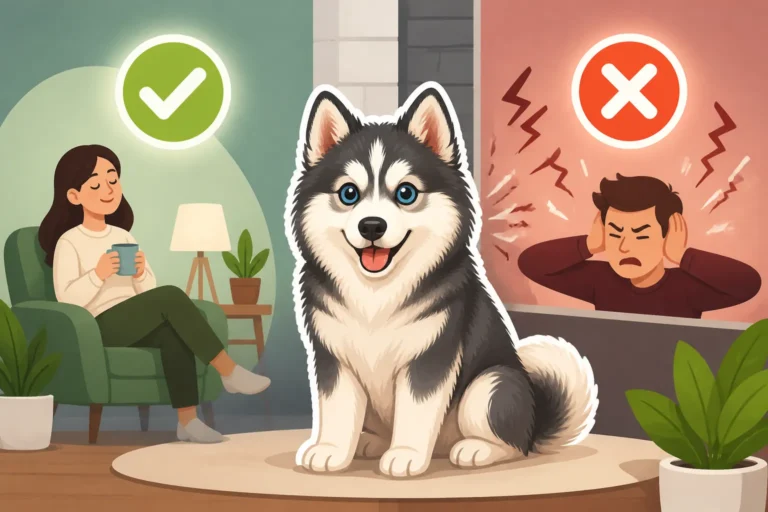
If you're looking for a quiet, demure canine companion, a Pomsky might surprise you. They are often incredibly vocal dogs, inheriting a rich repertoire of sounds from both sides of their family tree. From the dramatic "woo-woo" of a Husky to the sharp, alert bark of a Pomeranian, your Pomsky puppy is likely to be quite the conversationalist. Why a Pomsky Talks Instead of Barking (or barks and talks) is deeply ingrained, and while you can't eliminate their voice, you can teach them when it's appropriate to use it.
Early intervention is key. Acknowledge their vocalizations, but reward quiet behavior. If they bark for attention, ignore it until they are quiet, then reward them. Teach them a "quiet" command by associating it with a treat when they stop barking on cue. Identify triggers for excessive barking: are they bored? Do they see something outside? Are they seeking attention? Address the root cause. For instance, if it's boredom, increase mental stimulation; if it's alert barking, teach them to "check in" with you rather than continually barking at the window. Consistency is vital to ensure they understand that not every sound or sight warrants a full vocal performance.
Understanding the Urge to Dig and Chase
The instinct to dig and chase is deeply embedded in the Pomsky's DNA, particularly from their Husky lineage. Huskies were bred to work, and part of that work involved scent-tracking and occasionally digging for shelter or prey. Pomeranians, too, can have a surprisingly strong prey drive and enjoy digging. This means your Pomsky puppy might arrive with an innate desire to excavate your garden or pursue anything that moves, from squirrels to dust bunnies. These behaviors are not performed out of malice, but from a strong, natural drive that needs a constructive outlet.
For digging, consider providing a designated "digging pit" in your yard. Bury safe, interesting toys or treats in a specific area and encourage your Pomsky to dig there. This satisfies their natural urge without destroying your prize-winning roses. For the chase drive, focus on controlled, supervised play that allows them to use their energy. Flirt poles are excellent for this, mimicking the chase and capture of prey in a safe, interactive way. Always keep your Pomsky on a leash or in a securely fenced area when outdoors, especially when their recall is still developing, due to The Prey Drive a Pomsky Gets From the Husky. Regular, structured play and mental stimulation will help channel these instincts into appropriate activities, preventing them from becoming frustrating habits. Remember, a securely The Fence a Pomsky Actually Needs is crucial to prevent escape due to these strong drives.
Disclaimer
This article is for general informational purposes only and does not constitute professional advice. Laws, prices and regulations vary by location and change over time. Consult a qualified professional for guidance on your specific situation.