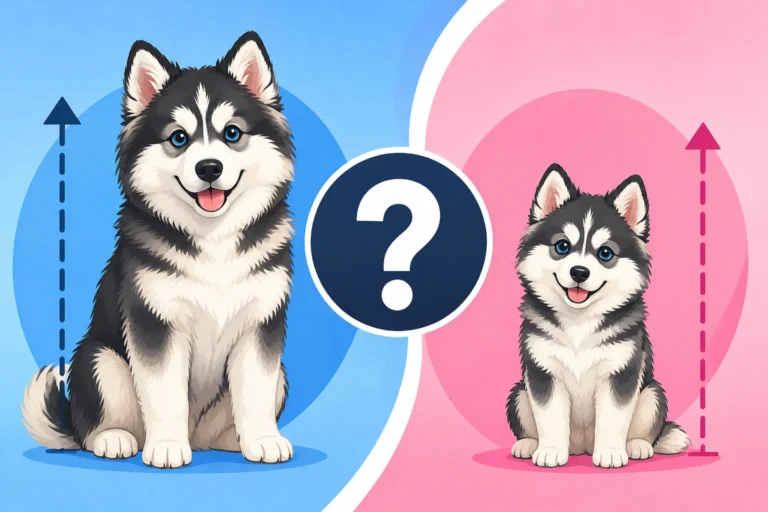
What a Pomsky Actually Weighs
One of the most common anxieties for prospective Pomsky owners is truly understanding how big their adorable fluffball will get. Many fall in love with photos of tiny, wolf-like puppies, only to be surprised when their adult Pomsky far exceeds the "miniature husky" vision. This comprehensive guide is here to cut through the confusion and provide realistic expectations about what a Pomsky actually weighs, from puppyhood to their senior years.
Understanding Pomsky Size Expectations: The Reality Versus the Dream
When you first start looking into Pomskies, the internet is awash with images of dogs that look like pint-sized Huskies. These captivating pictures often fuel a specific expectation: a tiny dog with all the striking features of a Siberian Husky, but in a much more manageable, apartment-friendly package. It’s a compelling dream, isn’t it? However, the reality of Pomsky size can be quite different from these idealized images, leading to significant surprises for many first-time owners.
The 'Miniature Husky' Myth and Buyer Disappointment
Let's be honest, the initial allure of the Pomsky stemmed largely from the desire for a "miniature Husky." People envisioned a dog that would weigh under 15 pounds, perfectly mimicking the majestic appearance of its larger parent breed. This vision, unfortunately, was heavily influenced by some very early, and often misleading, viral photos. Remember The Pomsky the Internet Ordered Before It Existed? Those images often depicted Alaskan Klee Kais, a distinct breed that naturally comes in miniature sizes, rather than actual Pomsky puppies. This created a strong, but often unachievable, expectation in the minds of eager buyers.
The disappointment hits when a Pomsky puppy, purchased with the expectation of a petite companion, begins to grow, and grow, and grow. Instead of topping out at 10-15 pounds, they might easily reach 25, 30, or even 40 pounds. This isn't a failure on the dog's part, but a clash with the buyer's initial, often unrealistic, size expectations. This discrepancy can be a significant source of frustration, especially for those living in smaller spaces or who specifically wanted a very small dog. It's crucial to prepare yourself for a range of possibilities rather than fixating on a specific tiny outcome.
Why Pomsky Size is a Moving Target
Unlike purebred dogs with generations of documented pedigrees and established breed standards, the Pomsky is a relatively new designer crossbreed. This means there's a much wider spectrum of outcomes when it comes to predicting an individual puppy's adult size. The genetic lottery is very real with Pomskies. You're combining the genetics of a Siberian Husky, which can weigh anywhere from 35 to 60 pounds, with a Pomeranian, typically weighing a mere 3 to 7 pounds. That's a huge difference!
Think about it: imagine a tall parent and a short parent having a child. That child could be anywhere in between, or even lean towards one side more heavily. The same principle applies, but with more variables, in a Pomsky. Factors like which genes from each parent are dominant, the specific lineage of the Husky and Pomeranian parents, and even the generation of the Pomsky itself (F1, F2, F1b, etc.) all play a significant role. This genetic variability is precisely why reliable size prediction is so challenging and why breeders often provide a wide estimated weight range, if they provide one at all.
The Role of Genetics: Parents, Generations, and Predictability
The weight your Pomsky ultimately reaches is fundamentally a roll of the genetic dice, heavily influenced by its parent breeds and the specific generation it belongs to. Understanding these genetic factors is key to setting realistic expectations and appreciating the beautiful variability within the Pomsky breed. It's not as simple as averaging the parents' weights; there's a complex interplay at work.
The Husky Mother and Pomeranian Father Influence
When it comes to Pomsky breeding, the Husky is almost always the mother, and the Pomeranian the father. This isn't an arbitrary choice; it's a critical safety measure due to the significant size difference between the breeds. A small Pomeranian mother attempting to carry Husky-sized puppies would be incredibly dangerous, likely resulting in severe complications or even death. This is why you'll find that Why a Pomsky Cannot Be Bred Naturally delves into the intricacies of artificial insemination and why the Husky is almost always the dam.
The Husky mother, being the larger breed, contributes a substantial genetic blueprint for size. However, the Pomeranian father still brings its compact genes to the table. The outcome is not simply a halfway point. Some puppies might inherit more of the Husky's robust frame and muscle mass, even if scaled down, while others might lean more towards the Pomeranian's delicate bone structure. It's common to see siblings in the same litter grow to vastly different adult sizes, highlighting the unpredictable nature of hybrid vigor and gene expression. You might have one puppy that looks distinctly like a small Husky and another that could almost pass for a large Pomeranian, all from the same parents.
F1, F2, and Multigenerational Pomsky Weight Tendencies
The "generation" of a Pomsky refers to its breeding lineage, and it can offer some clues about potential size, though it's still not a crystal ball.
- F1 Pomskies: These are first-generation crosses, meaning one parent is a purebred Husky and the other is a purebred Pomeranian. F1 Pomskies tend to have the widest range of sizes, often due to the initial genetic blend. You might see puppies in the same litter mature from 15 pounds to 40 pounds or more. This generation is often where you see the most surprise in terms of size because the genetic contribution from each parent is less diluted. This is why Why an F1 Pomsky Is Not the One Breeders Want often discusses their unpredictability.
- F2 Pomskies: An F2 Pomsky results from breeding two F1 Pomskies together. The idea here is to try and achieve more consistency in traits, including size. While there can still be considerable variation, F2s might show a slightly narrower size range compared to F1s, as some of the extreme genetic variations might have been "bred out." However, it's not a guarantee. You're still dealing with a mixed genetic pool, just one step removed from the purebred parents.
- Multigenerational (F3+ or F1b): These Pomskies involve further generations of Pomsky-to-Pomsky breeding (F3, F4, etc.) or a backcross (F1b), where an F1 Pomsky is bred back to one of the original parent breeds (usually a Pomeranian to reduce size). The aim of multi-generational breeding is to achieve greater predictability in size, temperament, and appearance. Breeders working with F3 and beyond often have a more consistent "look" and size range in their lines. An F1b Pomsky bred back to a Pomeranian would typically be expected to be smaller than an F1, but again, genetics always have a way of surprising us.
Despite these generational distinctions, the fundamental takeaway remains: individual variation is paramount. A responsible breeder will emphasize that even within these generations, predictions are still estimates, not guarantees.
Debunking the "Toy" and "Micro" Pomsky Claims
This is where expectations often collide with reality. You'll frequently see breeders advertising "Toy Pomskies" or even "Micro Pomskies," implying a dog that will remain exceptionally small, perhaps under 10 pounds. While some Pomskies do mature to a smaller size, it's important to approach these labels with extreme caution.
The terms "Toy" or "Micro" are not recognized breed standards for Pomskies, as the breed itself is not recognized by major kennel clubs. These are marketing terms often used to attract buyers seeking the smallest possible dog. While it's possible for a Pomsky to be on the smaller end of the spectrum, consistently breeding for "micro" sizes can sometimes lead to unhealthy practices, such as breeding runts or dogs with conformation issues that are then exacerbated by their tiny size. Extremely small dogs, regardless of breed, can be prone to specific health concerns. Therefore, if you see a breeder heavily emphasizing "Toy" or "Micro" Pomskies, ensure they are also prioritizing health testing and openly discussing potential health risks associated with extremely small stature. Whether a Toy Pomsky Exists explores this in more detail, revealing the careful considerations necessary.
Average Weight Ranges for Adult Pomskies
So, what is a "normal" weight for an adult Pomsky? This is the million-dollar question, and the answer, as we've established, isn't a single number but a range. It's crucial to understand this spectrum to avoid disappointment and to properly prepare for the size your furry friend might become. The goal is to provide a loving home, regardless of whether your Pomsky is 15 pounds or 40 pounds.
Standard Pomsky Weight (15-30 lbs)
For many, the 15 to 30-pound range is considered the "sweet spot" for an adult Pomsky. This is where a lot of them comfortably land, offering a dog that's small enough to be portable and suitable for many living situations, yet sturdy enough to handle active adventures.
Within this range, you'll see a lot of variation in body type. A 15-pound Pomsky might be quite lean and fine-boned, perhaps inheriting more of the Pomeranian's delicate structure but with Husky markings and coat. On the other hand, a 30-pound Pomsky in this "standard" range might have a more athletic build, closely resembling a miniature Husky, complete with a powerful gait and a full double coat. They are often incredibly robust for their size, capable of long walks and spirited play. This weight class often appeals to people seeking a dog that still feels substantial but isn't as large or demanding as a full-sized Husky.
Larger Pomskies: When They Exceed Expectations (30-45 lbs)
It's not uncommon for Pomskies to grow beyond the 30-pound mark, sometimes reaching 35, 40, or even 45 pounds. These are often the individuals that surprise their owners most, especially if they were expecting something much smaller. These larger Pomskies are typically still shorter than a Siberian Husky but can have similar bulk and muscle. How Big a Pomsky Gets further emphasizes this wide potential size range.
When a Pomsky reaches this weight, they often display a strong resemblance to a Husky in miniature, often with the same proud carriage and striking features. While they might be heavier than anticipated, they are typically healthy and well-proportioned. The key here is to adjust your expectations and embrace the magnificent dog you have. A 45-pound Pomsky might require a bit more space, more robust training, and a larger dog bed than originally planned for, but they offer just as much love and companionship. The frustration often comes from the mismatch between the initial expectation and the reality, rather than any inherent flaw in the dog itself.
Factors Influencing Individual Weight
Beyond genetics and generation, several other factors can influence an individual Pomsky's final adult weight.
- Sex: Generally, male Pomskies tend to be slightly larger and heavier than females. This is a common biological trend across many dog breeds and holds true for Pomskies as well. While not a strict rule, if you have a male puppy, it's a good idea to factor in the potential for him to be on the higher end of the estimated weight range. Whether a Male Pomsky Outgrows a Female often confirms this observation.
- Diet and Nutrition: Proper nutrition during puppyhood and adulthood plays a massive role. Overfeeding a puppy can lead to excessive growth and put stress on developing joints, while underfeeding can stunt growth. As adults, a balanced diet appropriate for their activity level is crucial for maintaining a healthy weight. Just like humans, a sedentary Pomsky fed too much can become overweight, regardless of its genetic predisposition. Brands like Chewy offer a vast selection of dog foods tailored to different life stages and activity levels, making it easier to manage your Pomsky's dietary needs.
- Exercise Levels: An active Pomsky that gets plenty of exercise will naturally be leaner and more muscular than one that leads a more sedentary lifestyle. Huskies are known for their endurance, and even scaled-down, a Pomsky still often inherits a good portion of that energy. Consistent, appropriate exercise helps build muscle and keeps excess fat at bay.
- Overall Health: Underlying health conditions can also impact weight. Hormonal imbalances, metabolic issues, or even chronic pain can lead to either unexplained weight gain or loss. Regular veterinary check-ups are essential to monitor your Pomsky's overall health and catch any issues early. The Two Opposite Disease Lists a Pomsky Inherits highlights the importance of being aware of potential health predispositions.
Tracking Your Pomsky's Growth: Puppy to Adult
Watching a Pomsky puppy grow is an exciting journey, filled with rapid changes and milestones. However, it can also be a source of anxiety if you're trying to gauge their final adult size. Understanding the typical growth curve and when they reach their full stature can help manage expectations.
Puppy Growth Stages and Milestones
Pomsky puppies grow at a fairly rapid rate in their first few months, much like other small to medium-sized breeds.
- Birth to 8 Weeks: At birth, Pomskies are tiny, often weighing just a few ounces to a pound or so. By 8 weeks, when they typically go to their new homes, they can range from 3-8 pounds, sometimes more, depending on the litter size and genetic predisposition. This initial weight gives a very rough idea, but it's far too early for definitive predictions.
- 3-6 Months: This is a period of significant growth. You'll notice rapid increases in both height and weight. They'll start to shed their puppy fluff and develop a denser adult coat. Many puppies in this stage will resemble awkward teenagers, all legs and ears, as their bodies disproportionately lengthen before filling out.
- 6-12 Months: Growth starts to slow down, but they're still gaining weight and muscle mass. Most of their height will be achieved by 8-10 months, but they will continue to fill out and broaden in the chest for several more months.
- Weight Charts: While there isn't an official Pomsky growth chart like there is for purebreds, some breeders will provide their own estimated charts based on their lines. You can also look at general small to medium breed growth charts as a loose guide, but always remember the unique hybrid variability of the Pomsky. Many breeders might give you an estimated adult weight range for your puppy based on the parents' sizes, but this is still just an educated guess. Whether a Pomsky Puppy's Size Can Be Predicted goes into more detail about the limitations of early predictions.
When a Pomsky Reaches Full Adult Size
Most Pomskies reach their full adult height by around 10 to 12 months of age. However, they will often continue to fill out and gain muscle mass for another 6 to 12 months, sometimes even longer for larger individuals.
- Height Completion: You'll likely notice that their legs seem to reach their final length around their first birthday. At this point, they might still look a bit lanky or "gangly."
- Weight & Muscle Maturation: The real filling out happens between 1 and 2 years old. Their chest will broaden, their musculature will develop, and they will lose some of that puppyish awkwardness. This is why a Pomsky might still gain several pounds during its second year, solidifying its adult physique. Don't be surprised if your Pomsky weighs a bit more at 18 months than it did at 12 months, even if it hasn't grown taller. The Age a Pomsky Reaches Full Size discusses these developmental stages.
- Slowing Growth: By two years of age, most Pomskies have reached their full adult weight and size. Any significant weight changes after this point are usually due to diet, exercise, or health issues, rather than natural growth. Of course, individual dogs can be exceptions, with some taking a little longer to fully mature, particularly if they are on the larger side. Whether a Pomsky Grows After a Year elaborates on this filling-out phase.
Recognizing an Oversized Pomsky
Sometimes, a Pomsky simply grows larger than expected, even beyond the higher end of the typical range. An "oversized" Pomsky isn't necessarily unhealthy or problematic, but it does mean adjusting your expectations and plans. This can lead to some difficult conversations, especially if a buyer had specific size guarantees from a breeder, though such guarantees are rare and often unreliable.
- Beyond Expected Range: If your Pomsky, even after two years, is still weighing significantly more than the breeder's original estimate or the typical 15-30 pound range, they would be considered oversized. For example, if you were told 20 pounds and they hit 40 pounds, that's a considerable difference. What Happens When a Pomsky Grows Bigger Than Sold addresses this common scenario.
- Physical Characteristics: An oversized Pomsky will look like a larger, more robust version of the breed. They might have a more pronounced Husky build, with strong bone structure and a powerful presence. They are typically well-proportioned for their size, just larger than initially envisioned.
- Impact on Ownership: A larger Pomsky means higher food bills, potentially more demanding exercise requirements, and a greater need for space. If you planned for a lap dog for an apartment, a 40-pound Pomsky might challenge those assumptions. It's important to differentiate between an oversized Pomsky (which is usually a healthy, well-proportioned dog that is simply larger than average for the breed) and an overweight Pomsky (which implies an unhealthy accumulation of fat due to diet and lack of exercise).
Managing Your Pomsky's Weight: Health and Lifestyle
Regardless of your Pomsky's genetic predisposition to be small or large, maintaining a healthy weight throughout its life is absolutely paramount for its well-being. An appropriate weight prevents undue stress on joints, reduces the risk of certain diseases, and ensures your Pomsky can live its happiest, most active life.
The Importance of a Balanced Diet
Feeding your Pomsky correctly is the cornerstone of weight management. Just like us, what they eat has a direct impact on their energy levels, coat health, and overall physique.
- High-Quality Food: Always choose a high-quality commercial dog food that is appropriate for your Pomsky's life stage (puppy, adult, senior) and size. Look for ingredients lists that prioritize real meat as the first ingredient, and avoid excessive fillers. Brands like Chewy offer a wide array of premium foods, often with detailed nutritional breakdowns to help you make informed choices. Consulting with your veterinarian can also help you select the best food formulation.
- Portion Control: This is perhaps the most critical aspect. Follow the feeding guidelines on the dog food bag, but always use them as a starting point. Your Pomsky's individual metabolism, activity level, and age will dictate the precise amount. It's easy to overfeed, especially with such appealing dogs, so measure out meals accurately. If your dog seems to be gaining or losing weight, adjust the portion size incrementally.
- Treats in Moderation: Treats are wonderful for training and bonding, but they add calories! Factor them into your Pomsky's daily caloric intake. Opt for low-calorie options or use small pieces of their regular kibble as rewards.
- Avoiding Table Scraps: Human food, especially fatty or sugary items, can quickly lead to weight gain and even health problems in dogs. Stick to dog-specific treats and foods. Keeping a Pomsky's Weight in Range discusses these nutritional considerations in depth.
Exercise Needs for a Healthy Weight
Pomskies are an energetic breed, combining the boundless stamina of a Husky with the spirited nature of a Pomeranian. Adequate exercise is vital for both their physical health and mental well-being, directly impacting their ability to maintain a healthy weight.
- Daily Activity: A Pomsky typically needs at least 60 minutes of vigorous exercise daily, often broken into two sessions. This isn't just a leisurely stroll around the block; it means brisk walks, jogging, active playtime in a secure yard, or dog park visits.
- Mental Stimulation: Exercise isn't just physical. Mental stimulation, through puzzle toys, training sessions, or scent work, can also burn calories and prevent boredom-induced destructive behaviors, which can sometimes lead to excessive eating.
- Variety is Key: Rotate activities to keep your Pomsky engaged. Hiking, running, fetch, or even agility training can be excellent outlets for their energy. Remember, a bored Pomsky is often a destructive Pomsky, or one that lies around and gains weight. The Exercise a Pomsky Needs to Stay Sane offers more ideas for keeping your Pomsky active.
- Consider Climate: Be mindful of the weather. In hot climates, exercise needs to be adjusted to cooler times of the day to prevent overheating. Conversely, in cold weather, their double coat makes them quite resilient, but still ensure their paws are protected from ice and salt.
The Impact of Spay/Neuter on Weight
Spaying or neutering your Pomsky is a routine procedure, but it can have an impact on their metabolism and, subsequently, their weight.
- Metabolic Slowdown: After spaying or neutering, many dogs experience a slight decrease in their metabolic rate. This means they burn calories a little less efficiently. If their food intake isn't adjusted, this can easily lead to weight gain.
- Hormonal Changes: The removal of reproductive organs changes hormone levels, which can also influence appetite and fat storage. Some dogs may feel hungrier, or their bodies may be more prone to storing fat.
- Proactive Management: It's essential to be proactive. After your Pomsky is spayed or neutered, monitor their weight closely. You might need to slightly reduce their daily food portion or increase their exercise to compensate for the metabolic shift. Your veterinarian can offer specific guidance on dietary adjustments post-surgery. Many owners don't realize this metabolic change, leading to gradual weight creep over several months or years.
What to Do If Your Pomsky's Weight Is Unexpected
It's a scenario many Pomsky owners face: your puppy grows up, and its adult weight isn't what you anticipated. This can be disappointing, especially if you had a clear picture in your mind. However, it's crucial to navigate this situation with a focus on your dog's well-being and your own commitment to responsible pet ownership.
Adjusting Expectations and Embracing the Dog You Have
The first, and often hardest, step is to acknowledge that your Pomsky may not fit the exact "miniature husky" mold you imagined. If your Pomsky is larger than you expected, it's not a flaw in the dog; it's simply a testament to the genetic diversity inherent in a crossbreed.
- Shift in Perspective: Instead of focusing on the discrepancy, try to appreciate your dog for who they are. They are still your loving, playful companion, regardless of whether they weigh 15 pounds or 45 pounds. Their personality, quirks, and bond with you are what truly matter.
- Practical Adjustments: An "oversized" Pomsky might require practical adjustments. This could mean a larger crate, a bigger car harness, or a more robust leash. You might need to reconsider certain activities or types of housing you had in mind. For example, a 40-pound Pomsky might feel cramped in a tiny apartment, whereas a 20-pound one might be perfectly content. This isn't a problem with the dog, but a re-evaluation of your living situation and capabilities.
- Focus on Health: As long as your Pomsky is a healthy weight for its size (meaning well-proportioned and not overweight), then its larger stature is simply part of its unique genetic expression. This is important to distinguish from an obese Pomsky, which would require veterinary intervention.
Consulting Your Veterinarian for Weight Management
If you're concerned about your Pomsky's weight, whether they are significantly over or under the typical range, or if you suspect they might be unhealthy, your veterinarian is your best resource.
- Health Check-up: A vet can perform a thorough physical examination to assess your Pomsky's body condition score, muscle mass, and overall health. They can rule out any underlying medical conditions that might be contributing to unusual weight, such as thyroid issues or other metabolic disorders. This is especially important for The Twelve to Fifteen Years a Pomsky Lives, as early intervention can prolong their healthy years.
- Dietary Guidance: Your vet can provide tailored advice on diet and nutrition, helping you choose the right food and portion sizes for your individual Pomsky's needs. They can also advise on appropriate treats and supplements, if necessary. Many pet parents find it helpful to have a professional eye on their dog's diet, especially when navigating the vast options available at retailers like Chewy.
- Exercise Plan: They can also help you devise an appropriate exercise plan that matches your Pomsky's age, weight, and energy levels, taking into account any joint considerations, such as Slipping Kneecaps in a Pomsky, which are common in smaller breeds.
- Managing Oversized Dogs: If your Pomsky is simply larger than expected but healthy, your vet can reassure you and help you focus on maintaining that healthy condition. They can help you differentiate between being "oversized" and being "overweight."
Dealing with an "Oversized" Pomsky: Rehoming Considerations
This is a difficult topic, but it's one that unfortunately arises when size expectations are not met. If a Pomsky grows to a size that an owner genuinely cannot accommodate, rehoming might become a consideration. Whether an Oversized Pomsky Can Be Returned highlights the complexity of such situations.
- Honest Self-Assessment: Before considering rehoming, conduct an honest self-assessment. Are you truly unable to cope with a larger dog, or is it primarily disappointment and a need to adjust expectations? Have you explored all options for managing a larger dog in your current environment, such as hiring a dog walker, utilizing doggy daycare, or making changes to your living space?
- Breeder Contract Review: If you purchased your Pomsky from a reputable breeder, review your contract. Some breeders include clauses regarding size guarantees or rehoming assistance if the dog exceeds a certain weight. While rare, it's worth checking. Whether a Contract Covers an Oversized Pomsky is a good reference point for understanding these agreements.
- Ethical Rehoming: If rehoming is truly unavoidable, prioritize your dog's welfare.
- Contact the Breeder: A responsible breeder will often have a take-back clause in their contract or offer assistance in finding a new suitable home. This is often the best first step.
- Rescue Organizations: Seek out Pomsky-specific rescues or general husky/Pomeranian rescues. They are equipped to properly vet potential adopters and find suitable homes.
- Avoid "Free to Good Home": Never give away a dog for free online. This can put your dog at risk of falling into the wrong hands.
- Transparency: Be completely transparent with any potential new owners about your Pomsky's actual size, energy levels, and any behavioral quirks. This ensures a better match and a higher chance of a successful rehome. Whether Size Is Why Pomskies Get Rehomed delves into the reasons these dogs sometimes end up needing new families.
| Age / Stage | Typical Weight Range (Estimate) | Key Developmental Notes |
|---|---|---|
| Newborn | 0.5 – 1.5 lbs | Tiny, helpless. |
| 8 Weeks | 3 – 8 lbs | Often when puppies go home; highly variable. |
| 3 Months | 8 – 15 lbs | Rapid growth phase, gaining height quickly. |
| 6 Months | 12 – 25 lbs | Reaching much of their height, filling out begins. |
| 12 Months | 15 – 35 lbs | Most height achieved, still gaining muscle/weight. |
| 18-24 Months (Adult) | 15 – 45 lbs | Full adult size and weight, body fully matured. |
Note: These are general estimates. Individual Pomskies can fall outside these ranges.
Common Misconceptions and Red Flags About Pomsky Weight
The popularity of the Pomsky has, unfortunately, led to some misinformation and even unethical practices, particularly when it comes to size. Being aware of these red flags can help you make a more informed and responsible decision when seeking a Pomsky companion. It's about protecting yourself and, more importantly, the welfare of the dogs.
The Illusion of "Teacup" Pomskies
Just like "Micro" or "Toy" Pomskies, the term "Teacup Pomsky" is a marketing label, not a recognized size category. The idea of a Pomsky fitting into a teacup is endearing but largely unrealistic and potentially harmful.
- Genetic Impossibility (Mostly): Given the Husky's genetics, breeding a Pomsky that reliably stays "teacup" sized (under 5-7 pounds) without severe health consequences is incredibly difficult, if not impossible, to do ethically. While an occasional runt might be very small, marketing an entire line as "teacup" often suggests questionable breeding practices.
- Health Risks: Extremely small dogs, especially if bred indiscriminately for size, can suffer from a host of health issues. These might include fragile bones, hypoglycemia (especially as puppies), hydrocephalus, heart defects, and difficulty regulating body temperature. A legitimate breeder would prioritize health over extreme miniature size. Whether the Smallest Pomskies Are Healthy warns against the potential pitfalls of breeding for unnaturally small sizes.
- Distinguishing from Natural Variation: It's important to distinguish a genuinely small but healthy Pomsky that naturally falls on the lower end of the weight spectrum from a dog bred specifically to be "teacup" at all costs. The former is a natural outcome; the latter can be a concerning red flag.
Unscrupulous Breeding Practices and Weight Guarantees
While many Pomsky breeders are responsible and dedicated to the health of their dogs, the high demand for the breed has also attracted individuals focused solely on profit. This can lead to misleading claims, particularly regarding size.
- False Guarantees: Be very wary of breeders who offer absolute guarantees on adult weight, especially for a specific, very small number. As we've discussed, Pomsky genetics are too variable for such precise predictions. A responsible breeder will provide a range based on parent weights and their lines, and emphasize that it's an estimate. If a breeder promises your puppy will be "exactly 12 pounds" as an adult, that's a major red flag. Whether a Pomsky Breeder Can Guarantee Adult Size explores the challenges and ethical considerations around such promises.
- Misrepresentation: Some breeders might intentionally misrepresent the parent dogs' sizes or even use other small Husky-like breeds (like Alaskan Klee Kais or even smaller Husky mixes) and market them as "Pomskies" to promise a smaller adult size. Always ask to see both parents, or at least extensive documentation and photos, and be cautious if something feels off.
- Lack of Health Testing: Any breeder focusing heavily on extreme size or specific cosmetic traits without also emphasizing comprehensive health testing for their parent dogs is a cause for concern. Health should always come before aesthetics or a specific weight.
The Health Implications of Extreme Sizes
Pushing for either extremely small or disproportionately large sizes in Pomskies can have significant health implications that buyers need to be aware of.
- For Extremely Small Pomskies: As mentioned, unnaturally small sizes can lead to fragility, metabolic issues, and a higher risk of injury. Their tiny bodies may struggle with organ development or simply lack the robustness needed for a healthy, active life. The Two Opposite Disease Lists a Pomsky Inherits is a vital resource for understanding the genetic health considerations of Pomskies, many of which can be exacerbated by extreme size.
- For Disproportionately Large Pomskies: While a healthy, well-proportioned 40-pound Pomsky is generally fine, a dog that is much larger than typical for the breed and has inherited structural problems from either parent can face issues. For example, a larger, heavier Pomsky might be more prone to conditions like Hip Dysplasia in a Twenty Pound Pomsky or Slipping Kneecaps in a Pomsky if its joints are not robust enough to support its weight, especially if those conditions are prevalent in the parent lines.
- Dental Issues: Regardless of size, Pomskies often inherit crowded mouths from their Pomeranian side, leading to Dental Crowding in a Pomsky's Small Mouth. This can be even more pronounced in smaller individuals or if the jaw structure doesn't align well with the number of teeth.
- Overall Well-being: The goal is always a healthy, happy dog. When weight is prioritized over health, the dog ultimately pays the price. A responsible owner prioritizes a well-bred, healthy Pomsky, even if its adult weight is a little different from what they initially envisioned. What matters most is a sound, robust dog that can enjoy a full and active life.
Disclaimer
This article is for general informational purposes only and does not constitute professional advice. Laws, prices and regulations vary by location and change over time. Consult a qualified professional for guidance on your specific situation.