Whether a Toy Pomsky Exists
One of the biggest dreams many potential Pomsky owners hold is the vision of a tiny, miniature husky, a fluffy companion that fits neatly into a tote bag. This enchanting idea often leads to the question of whether a true "Toy Pomsky" actually exists, and unfortunately, the reality is far more nuanced and, at times, heartbreaking than the internet photos might suggest. This guide aims to thoroughly explore the concept of a "Toy Pomsky," delving into the genetics, breeder practices, and health considerations, so you can make an informed and realistic decision about bringing one of these wonderful dogs into your life.
The Allure and Misconception of the "Toy Pomsky"
The term "Toy Pomsky" conjures up images of an impossibly small, perfectly formed miniature version of a Siberian Husky, perhaps weighing just a few pounds. This idealized image is a significant driver of demand, but it often clashes with the fundamental biology and breeding realities of the Pomsky. Understanding this gap between expectation and reality is crucial for anyone considering this charming crossbreed.
What "Toy" Implies in the Dog World
In the formal world of dog breeds, the term "toy" isn't just a cute descriptor; it refers to a specific group of breeds, often small in stature, bred for companionship. Think of breeds like the Pomeranian, Chihuahua, or Toy Poodle. These breeds have a well-established size standard, meaning their adult weight and height typically fall within a predictable, small range. When someone asks about a "Toy Pomsky," they’re usually hoping for a Pomsky that consistently fits into this "toy" category, perhaps under 10-12 pounds as an adult, with all the charming Husky features scaled down.
However, the Pomsky is not a recognized breed with a strict size standard. It's a hybrid, a cross between a Siberian Husky and a Pomeranian. While one parent (the Pomeranian) is decidedly a toy breed, the other (the Husky) is a medium-to-large working dog. This fundamental genetic disparity makes creating a consistently "toy-sized" offspring a challenging and often unpredictable endeavor. The expectation of a consistently tiny Pomsky, much like a Pomeranian, is a misconception born from a desire for the aesthetic without fully grasping the genetic lottery at play.
The Vision Versus Reality of Pomsky Size
The initial viral photos that sparked the Pomsky craze often depicted puppies or even fully grown Alaskan Klee Kai, a distinct breed, passed off as "miniature Huskies" or "Pomskies." These images cemented a vision of a compact, wolf-like dog that many prospective owners now seek. The reality for most Pomskies, however, is a dog that typically falls into a small to medium range, much larger than a traditional "toy" breed. While some Pomskies might be on the smaller end, say around 10-15 pounds, the vast majority grow to be between 15-30 pounds, and sometimes even larger, especially in the first generation.
This discrepancy often leads to disappointment for owners who anticipated a dog that would forever remain puppy-sized or fit neatly into a small carrier without issue. It's not uncommon for a "toy" labeled Pomsky puppy to quickly outgrow its early estimation. This can be a shock, and it’s a significant reason why some Pomskies end up in rescues when their adult size doesn't match the initial promise. Understanding What a Pomsky Actually Weighs Full Grown is vital for managing these expectations from the outset.
Understanding Pomsky Genetics and Size Prediction
The size of a Pomsky is one of the most unpredictable traits due to its unique genetic makeup. Unlike purebred dogs where generations of selective breeding have established predictable size ranges, the Pomsky is a relatively new crossbreed, and its parentage dictates a much wider spectrum of possibilities.
The Husky-Pomeranian Mix: A Wide Spectrum
At its core, a Pomsky is a first-generation (F1) cross between a female Siberian Husky and a male Pomeranian. This immediately presents a challenge for size prediction. You have a dam that might weigh 40-60 pounds and a sire that might weigh 5-10 pounds. When these two breeds combine, the resulting puppies are a genetic toss-up. They could inherit more of the Husky's robust build and size, more of the Pomeranian's delicate frame, or, most commonly, a mix somewhere in between.
This means that within a single litter, you might have puppies that mature into vastly different sizes. One puppy might take after the Pomeranian and stay under 15 pounds, while another littermate might lean heavily towards its Husky lineage and reach 30-35 pounds, or even more. This genetic lottery is what makes a truly consistent "Toy Pomsky" difficult to achieve and ethically problematic to guarantee. It's a beautiful breed, but one must embrace its inherent variability.
Why Size is So Unpredictable in F1 Pomskies
First-generation (F1) Pomskies are the most genetically diverse, meaning their physical traits, including size, are the most unpredictable. Each puppy in an F1 litter receives a random assortment of genes from its Husky mother and Pomeranian father. This "hybrid vigor" can lead to incredible variety, but it also means that trying to predict an adult weight from a tiny puppy is often a guessing game. A breeder might estimate a size based on the parents and previous litters, but there's no exact science.
Imagine trying to predict a child's adult height perfectly when one parent is very tall and the other very short; there's a wide range of possibilities. The same applies to F1 Pomskies. The genetic combination is simply too broad to consistently produce a "toy" size. While a puppy might be born small, its growth spurt could easily see it shoot past the "toy" threshold. This unpredictability is a defining characteristic of F1 crosses and something every potential owner should be aware of.
The Role of Subsequent Generations F2, Multigen in Size
As Pomskies move into F2 (Pomsky bred to Pomsky) or multigen (multiple generations of Pomsky-to-Pomsky breeding) generations, breeders aim to create more consistency in size, appearance, and temperament. The idea is that by breeding Pomsky to Pomsky, you can start to "fix" desired traits, including a more predictable size range. However, this doesn't automatically mean you'll consistently get "toy" Pomskies.
Breeders focusing on smaller sizes might selectively breed the smallest Pomskies from F1 or F2 litters. While this can trend towards a smaller average size over generations, it doesn't guarantee a "toy" size for every puppy, nor does it eliminate the possibility of larger outliers. Furthermore, breeding for extreme smallness can introduce its own set of health challenges, which we'll discuss shortly. The predictability sought in later generations is more about narrowing the range of sizes, not necessarily shrinking the entire breed into a "toy" category. For more on this, consider reading Whether an F1 Pomsky Is Healthier Than an F2.
Breeder Practices and Size Guarantees (or Lack Thereof)
The demand for "Toy Pomskies" has led to various breeding practices and marketing tactics. It's crucial for prospective owners to understand the difference between a breeder's earnest estimate and an unrealistic guarantee, and what to expect from ethical breeding programs.
Marketing Terms vs. Genetic Realities
In the competitive world of designer dog breeds, breeders sometimes use appealing, though often unofficial, terms like "Teacup Pomsky," "Mini Pomsky," or "Toy Pomsky" to attract buyers. While these terms sound delightful and promise the exact tiny dog many people envision, they are largely marketing labels and do not represent recognized categories within any formal breed standard. There is no official "Toy Pomsky" classification.
An ethical breeder will openly discuss the genetic variability and provide a realistic estimated adult weight range based on the parent dogs' sizes, their past litters, and the growth patterns observed in the puppies. They won't promise a specific "toy" weight, because they know genetics simply don't allow for such precise guarantees in a crossbreed. Be wary of any breeder who unequivocally guarantees a specific, very small adult weight. They might be either misinformed, or worse, willing to mislead for a sale.
The Ethical Breeder's Approach to Size Estimates
Reputable Pomsky breeders prioritize the health and temperament of their dogs above all else. When it comes to size, they will be transparent about the potential range. They will share the weights of both the Husky dam and the Pomeranian sire, and ideally, show you photos or provide information about previous offspring from the same pairing to give you a better idea of the adult size potential. They understand that while a small Pomeranian sire might lead to smaller puppies, the Husky genetics are always present and can assert themselves.
A good breeder will also explain that a puppy's size at 8 weeks is not a definitive indicator of its adult weight. While there are growth charts and formulas used for purebreds, they are less accurate for a hybrid like the Pomsky. They will encourage you to focus on the overall health and well-being of the puppy rather than fixating solely on a "toy" size. They might direct you to resources like Chewy for appropriate food sizes and accessories, reminding you that all Pomskies, regardless of their eventual size, need proper care. For guidance on what to ask a breeder, consider The Health Tests a Pomsky Breeder Should Show.
What Happens When a Pomsky Grows Bigger Than Sold
One of the most unfortunate scenarios occurs when a "Toy Pomsky" puppy grows much larger than anticipated or promised by a breeder. This isn't rare. A puppy marketed as a potential 10-pound adult might easily reach 25-30 pounds. This can lead to owner dissatisfaction, and in severe cases, the dog being rehomed because it no longer fits the owner's lifestyle or housing situation, which might have been chosen specifically for a very small dog.
Ethical breeders will often have clauses in their contracts addressing size estimates. They might offer a partial refund or other compensation if the dog significantly exceeds the stated range, but typically, they will have already set realistic expectations from the beginning. It's vital to read any contract carefully and understand what happens if your Pomsky puppy doesn't stay "toy-sized." This specific concern is detailed further in What Happens When a Pomsky Grows Bigger Than Sold. Remember, love for your dog should transcend its exact size, but it's understandable for owners to be frustrated if they feel misled.
Health Implications of Chasing "Toy" Size
The desire for extremely small "Toy Pomskies" can inadvertently encourage breeding practices that put the health and well-being of the dogs at risk. Prioritizing miniature size above all else can lead to a host of inherited health problems and conditions that diminish a dog's quality of life.
The Risks of Breeding for Extreme Smallness
When breeders specifically aim for tiny sizes, particularly "teacup" or extremely small Pomskies, they often rely on breeding the smallest individuals from litters, sometimes even those that are naturally runts. While these smaller dogs may produce small offspring, they can also carry genetic predispositions for fragility, weak bones, and other health complications. Moreover, responsible breeders know that breeding from undersized or weak individuals can concentrate genetic flaws, rather than dilute them.
The Pomsky inherits potential health issues from both the Husky and the Pomeranian lines, known as The Two Opposite Disease Lists a Pomsky Inherits. When you start selecting for extreme smallness, you might inadvertently exacerbate some of these issues or introduce new ones related to delicate constitutions. For instance, tiny dogs can be more prone to conditions like hypoglycemia (low blood sugar), especially as puppies, and their bones and joints can be more fragile.
Common Health Issues in Very Small Dogs
While any dog can face health challenges, dogs bred for extreme smallness are particularly susceptible to certain conditions. These can include:
- Patellar Luxation (Slipping Kneecaps): Very small dogs often have shallower knee grooves, making it easier for the kneecap to slip out of place. This can lead to pain and lameness, sometimes requiring costly surgery. Slipping Kneecaps in a Pomsky is a concern for the breed in general, but especially for those on the smaller end.
- Dental Crowding: Small mouths don't always mean small teeth. Many tiny dogs suffer from severe dental crowding, where their teeth are packed too tightly, leading to food impaction, gum disease, and early tooth loss. This is a common issue for the Pomeranian parent and can be passed to the Pomsky. Dental Crowding in a Pomsky's Small Mouth can be a lifelong concern.
- Hypoglycemia: Particularly in very tiny puppies, maintaining stable blood sugar levels can be a challenge. Hypoglycemia can be life-threatening if not managed properly.
- Tracheal Collapse: The Pomeranian is known for collapsing trachea, a condition where the windpipe weakens and flattens, leading to a chronic cough and breathing difficulties. While not exclusively limited to tiny dogs, it can be more prevalent or severe in those bred for smaller structures.
- Fragile Bones: Accidents that might result in a minor bruise for a larger dog could lead to a fracture for a very small, delicate Pomsky. Jumping off furniture or being accidentally stepped on can have more severe consequences.
When considering a very small Pomsky, it's essential to research these potential health issues and ensure that the breeder has performed all recommended health screenings on the parent dogs to minimize these risks.
Prioritizing Health Over Miniature Size
The most responsible approach for any prospective Pomsky owner is to prioritize health and temperament over an arbitrary size goal. A healthy, well-adjusted Pomsky, even if it grows to be 20-30 pounds, will bring far more joy and fewer veterinary bills than a fragile "toy" Pomsky prone to chronic health problems. Focus on finding a breeder who emphasizes genetic health testing, proper nutrition, and early socialization, rather than solely marketing tiny puppies.
A reputable breeder will not shy away from discussing potential health concerns or the realistic size range of their puppies. They will be proud of their healthy, robust Pomskies, regardless of whether they fit into a "teacup" definition. Your best bet is to understand the general size range of Pomskies and select a puppy based on its overall health, pedigree, and the breeder's dedication to responsible practices. You can get quality supplies like food designed for small breeds, interactive toys, and cozy beds from reputable retailers like Chewy, ensuring your Pomsky thrives at whatever size it becomes.
What to Expect from a Truly Small Pomsky
While a true "Toy Pomsky" in the sense of a consistently breeding, officially recognized miniature version doesn't exist, some Pomskies do mature into a smaller adult size. It's important to understand what this means realistically and how to approach finding such a dog responsibly.
The Smallest End of the Pomsky Spectrum
It's certainly possible to find Pomskies that mature on the smaller side of the breed's typical range, perhaps in the 10-15 pound range. These dogs often inherit more of the Pomeranian's stature and build while still retaining some Husky characteristics, such as coat type, eye color, or facial markings. They are typically still larger than a purebred Pomeranian but significantly smaller than an average Husky.
These smaller Pomskies can be wonderful companions, offering many of the desired traits of the breed in a more compact package. However, remember that even within this smaller range, there's variation, and predicting the exact adult weight of a puppy is still an estimation. A breeder might present a "petite" or "mini" Pomsky that they anticipate will stay on the smaller end, but a guarantee for an exact tiny weight is still largely unachievable. You can also explore Whether a Pomsky Puppy's Size Can Be Predicted for more details.
Living with a Petite Pomsky
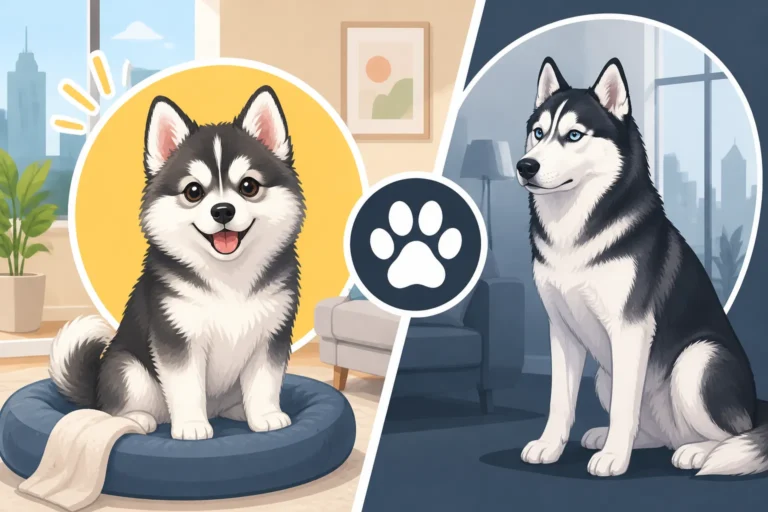
A Pomsky that matures around 10-15 pounds will indeed feel and look more like a "miniature" version of a Husky than a larger Pomsky. This size can be ideal for apartment living, easier for travel, and generally more manageable for some individuals. However, even a smaller Pomsky retains the energetic, intelligent, and sometimes mischievous temperament of its parent breeds. They will still require regular exercise, mental stimulation, and consistent training. Don't let their small size fool you into thinking they are less demanding than their larger counterparts.
For example, a petite Pomsky will still have a double coat that needs regular grooming, especially during shedding seasons. They will likely have the famous Pomsky "talkativeness" and a strong prey drive. They also still require a secure yard or diligent leash walking to prevent escapes. Despite their size, they are not fragile lapdogs who will be content to sit around all day. You'll still need to invest in quality food (perhaps small breed specific formulas from retailers like Chewy), durable toys, and a secure harness. For consideration on suitability for different living arrangements, check out Whether a Pomsky Suits an Apartment.
Finding a Reputable Breeder Who Values Health
If you are set on a smaller Pomsky, your best course of action is to seek out a reputable breeder who prioritizes health testing and transparent communication. Look for breeders who:
- Health Test: They should screen both parent dogs for genetic conditions common to Huskies and Pomeranians, such as Slipping Kneecaps in a Pomsky and The Eyes a Pomsky Gets From the Husky.
- Are Transparent: They should openly discuss the estimated adult size range based on the parents and previous litters, rather than making false guarantees.
- Show Parents: You should be able to see both the Husky dam and Pomeranian sire, and observe their temperament and size.
- Provide a Contract: A clear contract outlining health guarantees and what to expect regarding size is essential.
- Don't Charge Extra for "Toy" Size: Ethical breeders typically price puppies based on general quality, health, and lineage, not on a supposed "toy" size which is inherently unpredictable. Be wary of inflated prices for "Teacup" or "Toy" labels; often, The Fifteen Hundred to Five Thousand a Pomsky Costs is a reflection of overall breeding quality, not just size.
By focusing on these criteria, you increase your chances of finding a healthy Pomsky, even if its ultimate size isn't precisely "toy."
Managing Expectations and Embracing Your Pomsky's True Size
Ultimately, the most fulfilling experience with a Pomsky comes from embracing the dog you get, regardless of its exact size. While the initial vision of a "Toy Pomsky" is captivating, adapting your expectations to the reality of this unique crossbreed is key to a happy companionship.
Adjusting Your Home and Lifestyle
If you end up with a Pomsky that grows larger than your initial "toy" expectation, it's not the end of the world – it just means some adjustments might be needed. This could involve:
- Space: A larger Pomsky, even at 25-30 pounds, generally adapts well to most homes, but it might feel a bit more substantial than anticipated in a very small apartment.
- Exercise: A larger Pomsky might naturally have more energy and require slightly longer or more vigorous walks and playtime. The Exercise a Pomsky Needs Every Day remains crucial, regardless of its ultimate size.
- Supplies: You'll need appropriately sized crates, beds, collars, harnesses, and food bowls. Retailers like Chewy offer a wide range of products for all dog sizes, so finding what you need won't be an issue.
- Training: All Pomskies, regardless of size, benefit immensely from consistent training and socialization. A larger Pomsky might feel a bit more powerful on the leash, making early training even more important.
These adjustments are typically minor compared to the joy and companionship a Pomsky brings. It's about being prepared for the potential range rather than fixating on one specific outcome.
The Importance of Love, Regardless of Size
The most important takeaway is that the love and bond you share with your Pomsky are not dependent on its size. Whether your Pomsky is a dainty 12 pounds or a sturdy 35 pounds, it will be a loyal, intelligent, and often hilarious companion. They will still have those captivating Husky eyes, the playful Pomeranian antics, and the fluffy double coat that you fell in love with.
Focusing too heavily on a specific "toy" size can detract from appreciating the individual personality and unique charm of your actual dog. Many owners who initially sought a "Toy Pomsky" find themselves completely smitten with their 20 or 30-pound companion, realizing that the dog's character far outweighs its dimensions. What Happens When a Pomsky Grows Bigger Than Sold often leads to a delightful surprise, rather than disappointment, for owners who embrace the journey.
Where to Find Support and Resources
Should you find yourself with a Pomsky that doesn't fit your initial size expectations, or if you simply need advice on caring for your Pomsky at any size, there are abundant resources available. Online Pomsky communities, local dog trainers, and your veterinarian can provide invaluable support. Embrace these communities and professionals who understand the breed and can offer practical, realistic advice.
Remember, the goal is a healthy, happy dog and a harmonious relationship. By understanding the realities of Pomsky breeding, appreciating the genetic diversity, and prioritizing health over an elusive "toy" label, you can set yourself up for a truly rewarding experience with this wonderful crossbreed.
| Feature | "Toy Pomsky" (Idealized) | Typical Pomsky (Realistic) |
|---|---|---|
| Adult Weight Range | Under 10-12 lbs | 15-35 lbs (average) |
| Breeding Goal | Extreme smallness | Health, temperament, balanced features |
| Genetic Basis | Unpredictable/Risky | Diverse Husky-Pomeranian mix |
| Health Risks | Higher (e.g., patella, dental) | Managed by reputable breeders |
| Formal Recognition | No official standard | Hybrid, no breed standard |
| Availability | Rare, often mislabeled | Common for ethical breeders |
| Primary Focus | Size aesthetic | Overall well-being and companionship |
Disclaimer
This article is for general informational purposes only and does not constitute professional advice. Laws, prices and regulations vary by location and change over time. Consult a qualified professional for guidance on your specific situation.