Whether a Pomsky Looks More Pomeranian Than Husky
One of the biggest dreams for prospective Pomsky owners is getting that picture-perfect miniature husky look. You've seen the viral photos, the stunning blue eyes, the thick coat, and the wolf-like markings, all in a more compact size. But the reality is, Pomskies are a true genetic blend, and predicting whether your puppy will lean more towards its Siberian Husky or Pomeranian parent in appearance can be one of the most exciting — and sometimes frustrating — mysteries of bringing one home. This guide will help you understand the factors at play in a Pomsky's appearance, so you can set realistic expectations and appreciate the unique dog you get.
The Genetic Lottery of Pomsky Appearance
It’s easy to look at the adorable pictures online and assume every Pomsky will be a tiny replica of a Siberian Husky. However, the truth is that genetics are a bit like a lottery, especially in first and second-generation crossbreeds. You're taking two very distinct breeds, each with their own set of dominant and recessive traits, and mixing them. The result is a wonderfully unpredictable spectrum of appearances.
Understanding F1, F2, and Multigenerational Pomskies
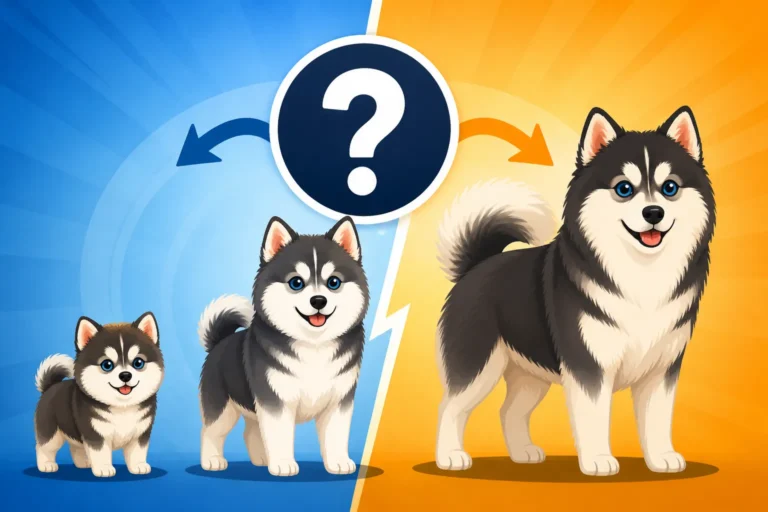
When we talk about Pomsky generations, we're really talking about how far removed they are from the original Husky-Pomeranian pairing. An F1 Pomsky is a direct first-generation cross: one parent is a purebred Siberian Husky, and the other is a purebred Pomeranian. These are often the most unpredictable in terms of appearance and size because there's a 50/50 genetic split, but how those genes express themselves is entirely up to chance. You might get a pup that looks quite Husky-like, another that's a spitting image of a Pomeranian, and others somewhere in between, all from the same litter! If you're curious about the specifics of this first generation, you might find more insight in What an F1 Pomsky Is.
Then you have F2 Pomskies, which are the result of breeding two F1 Pomskies together. This is where things can start to get a little more consistent, but still with plenty of variation. Breeders often aim for F2 and later generations to try and 'fix' certain desired traits, working towards a more uniform look that resembles the original "miniature husky" ideal. However, it's still a mix, and the genes from both grandparents are still very much in play. For a deeper dive into this, take a look at What an F2 Pomsky Is. Multigenerational Pomskies (F3 and beyond) are bred from F2s or other multigens, with the goal of increasing predictability, but each generation still carries that underlying genetic variability.
Why Predictability is a Moving Target
The main frustration for many hopeful Pomsky owners comes from this unpredictability. You might envision a specific look, but your puppy could develop quite differently. This is why it’s so important to choose a breeder who is transparent about their lines and provides photos of both parents and previous litters. Even then, an individual puppy's adult appearance isn't guaranteed. The genes for coat length, ear set, eye color, and body structure all play independently. One pup might inherit the Husky's striking blue eyes but the Pomeranian's fluffy, stand-off coat, while a littermate could have brown eyes and a sleek, more Husky-like fur texture. This wide range of outcomes is precisely Why an F1 Pomsky Varies So Much. It's less about a sliding scale from one parent to the other, and more like a mix-and-match lottery.
Deconstructing the "Miniature Husky" Ideal
The enduring image of a Pomsky is often that of a Siberian Husky, scaled down to a more manageable size. This ideal has driven much of the breed's popularity, stemming from those captivating early internet photos.
The Appeal of the Husky Look in a Smaller Package
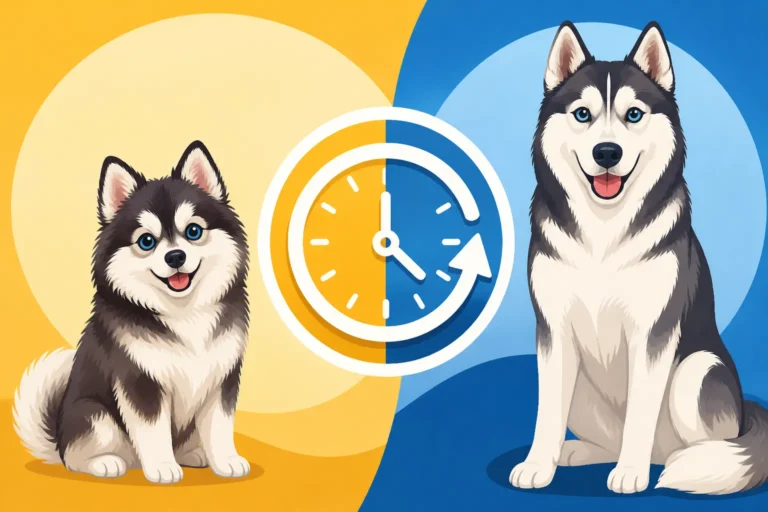
Who can resist the allure of those piercing blue eyes, the striking facial mask, and the athletic build of a Husky? Many people adore the Husky's appearance but find their size, energy levels, and vocal nature a bit too much for their living situation. The idea of a "miniature Husky" offers the best of both worlds: a visually stunning dog with a more compact frame. When a Pomsky leans heavily towards its Husky parent, it will typically have those upright, triangular ears, a thick double coat that might be sleeker than a Pomeranian's, and perhaps a more slender, muscular body. The tail might still curl over the back, but perhaps with a slightly less dramatic plume. Owners often delight in seeing the distinctive Husky markings, like the "eyeliner" or "goggles," appear on their smaller companion. It's a truly beautiful combination that captures the hearts of many.
When the Pomeranian Traits Take Center Stage
Conversely, many Pomskies end up looking more like a large Pomeranian, or a fluffy Spitz-type dog, which can surprise those who were expecting a miniature Husky. This is a common outcome, and it’s actually Why Most Pomskies Look Like Large Pomeranians. If your Pomsky inherits more from its Pomeranian side, you'll likely see a more rounded, teddy-bear-like face, perhaps with slightly softer features. The ears might be smaller and more rounded, standing upright but not quite as sharp as a Husky's. The most defining Pomeranian trait is often the coat: a very dense, fluffy double coat that stands off the body, creating that characteristic round silhouette. These Pomskies can still have stunning colors and even blue eyes, but their overall shape and coat texture scream "Pomeranian." While perhaps not the "miniature Husky" some initially imagined, these dogs are incredibly charming, adorable, and have a unique appeal all their own.
Key Features: Eyes, Ears, and Tail
Beyond the general body shape and coat, specific features like the eyes, ears, and tail are huge indicators of which parent breed a Pomsky favors. These small details can drastically alter the overall impression of the dog.
Eye Color: Blue, Brown, or Bi-Eyed?
Eye color is often one of the most talked-about traits in a Pomsky, largely due to the Husky's famously striking blue eyes. It's certainly what many prospective owners are hoping for when they look at pictures of Pomsky puppies. A Pomsky can inherit clear blue eyes, deep brown eyes, or even heterochromia (bi-eyes), where one eye is blue and the other is brown, or marbled eyes with splashes of both colors. The presence of blue eyes is a strong indicator of Husky influence, as it's a prominent trait in the Siberian Husky breed. However, it's not a guarantee, even if both Husky parents carry the gene. Some Pomskies with otherwise very Husky-like features might have brown eyes, and conversely, a very Pomeranian-looking Pomsky could surprise you with bright blue peepers. Many people are specifically drawn to The Blue Eyes People Buy a Pomsky For, making it a highly desirable, and often sought-after, characteristic.
Ear Set and Tail Curl: Defining Characteristics
The way a Pomsky carries its ears and tail also offers big clues about its genetic leanings. Siberian Huskies typically have medium-sized, triangular ears that stand erect on top of their head, giving them an alert, wolf-like appearance. Pomeranians also have erect ears, but they are usually smaller and more rounded, set slightly lower on the head. A Pomsky's ears can fall anywhere on this spectrum. Some will have those classic Husky upright ears that might even be a bit large for their head when they're puppies, eventually settling into that alert stance. Others might have smaller, fluffier ears that stand up, but perhaps aren't as prominent or sharply pointed, leaning more towards the Pomeranian side. For more on this, you might check out Whether a Pomsky's Ears Stand Up.
The tail is another dead giveaway. Huskies carry a brushy tail that typically forms a graceful curve over their back, but it's not usually a tight curl and rarely touches the back. Pomeranians, on the other hand, are known for their high-set, heavily plumed tail that curls tightly over their back and often rests on it. You'll see Pomskies exhibiting both types. Those with a stronger Husky influence might have a more relaxed curve, while those leaning Pomeranian will likely have a tightly curled, fluffy tail that often looks like a feathery fan resting on their spine.
Coat Type and Color Variations
The Pomsky's coat is arguably its most defining feature, and it's where the blend of the two parent breeds becomes incredibly apparent. From texture to thickness and color patterns, the coat provides a visual narrative of its mixed heritage.
The Double Coat: Texture and Density
Both Siberian Huskies and Pomeranians are double-coated breeds, meaning they have a soft, dense undercoat for insulation and a longer, coarser outer coat (guard hairs) that protects against the elements. The key difference lies in the volume and texture. A Husky's coat is generally medium length, dense, and relatively smooth-lying, though it still has significant fluff, especially in the undercoat. A Pomeranian's coat, however, is much more profuse, with a very thick, soft undercoat and longer, harsher guard hairs that stand straight out from the body, giving them their characteristic fluffy, round appearance.
Pomskies can inherit a wide range of coat types. You might get a "standard" coat, which is a lovely blend, often slightly longer and softer than a Husky's, but not as excessively fluffy as a Pomeranian's. Then there are "wooly" coats, which lean heavily towards the Pomeranian's density, resulting in an incredibly thick, long, and luxurious coat that requires significant grooming. On the other end of the spectrum, some Pomskies might have a "short" coat, closer to a sleek Husky coat, though this is less common and often a surprise to owners expecting more fluff. Each type has its own beauty and its own grooming requirements. If you're pondering the different coat types, The Three Pomsky Coat Types offers a more detailed explanation. Regardless of the type, remember that this double coat means they will shed, sometimes quite dramatically during seasonal "blowouts." You'll want to be prepared with grooming tools, perhaps even a force dryer, which you can often find great deals on at pet retailers like Chewy.
Color Patterns and Markings: Husky Influence
When it comes to colors and markings, the Husky influence is usually quite strong and very desirable. Huskies come in a stunning array of colors and patterns, including black and white, gray and white, red and white, sable, and pure white, often with distinctive facial masks or "snow nose" patterns. Pomeranians also come in many colors, but their patterns are usually less defined than a Husky's.
A Pomsky can inherit any of these colors and patterns. Many Pomskies proudly display the classic Husky mask – that striking pattern of color around the eyes and on the forehead that truly evokes the wolf-like charm. They can be black and white, gray and white, or red and white. Some might even have the "agouti" pattern, which is a wilder, multi-tonal fur that adds to their unique appeal. The distribution of these colors and patterns can vary wildly, even within the same litter. You might see a full mask, a partial mask, or no mask at all. Some might have "saddle" markings on their back, while others are solid colors with white points. It's truly a lottery, and each combination is unique. To learn more about the full spectrum, check out The Colors and Masks a Pomsky Comes In. Getting the right grooming brushes and shampoos for these varied coats is essential, and sites like Chewy offer a wide selection to help you keep your Pomsky looking its best.
| Trait | More Husky-like | More Pomeranian-like | Mixed/Variable |
|---|---|---|---|
| Overall Build | Athletic, lean, agile | More compact, stocky, rounded | Anywhere in between |
| Facial Shape | Longer muzzle, defined stops | Shorter muzzle, broader forehead | Varies |
| Eyes | Almond-shaped, often blue | Rounder, usually brown | Bi-eyed, marbled |
| Ears | Medium-large, triangular, erect | Small, rounded, erect | Varies in size and set |
| Tail | Brushy, curled gently over back | High-set, plumed, curled tightly over back | Varies in plume and curl |
| Coat Texture | Medium length, dense, lies relatively flat | Long, very dense, stands off body | Standard, Wooly, Short |
| Coat Patterns | Distinct masks, clear color blocks | Less defined patterns, often solid/sable | All combinations, unpredictable |
| Legs/Paws | Longer legs, medium-sized paws | Shorter legs, smaller paws | Varies |
Size and Proportion: The Ultimate Indicator
Beyond the individual features, the overall size and proportion of a Pomsky are perhaps the most significant factors in determining whether it looks more like a Husky or a Pomeranian. This is where many prospective owners grapple with expectations versus reality.
The Spectrum of Pomsky Sizes
Siberian Huskies are medium-to-large dogs, typically weighing between 35-60 pounds, while Pomeranians are toy-sized, usually weighing 3-7 pounds. This vast difference in parent size means a Pomsky can fall anywhere in that broad spectrum. Many people dream of a Pomsky that lands on the smaller side of the Husky scale, perhaps 15-25 pounds, giving them that truly "miniature" feel. However, it's not uncommon for Pomskies to reach 30-40 pounds, especially if they are F1 generation or if the Husky parent was on the larger side.
The reality is that predicting a Pomsky's adult size from puppyhood can be incredibly difficult. While breeders often provide weight estimates based on the parents, genetics can still surprise everyone. You might bring home a tiny fluffball only to find it continues growing well beyond the "toy" range. For a detailed breakdown of what to expect, consider reading What a Pomsky Actually Weighs Full Grown. It’s important to remember that even if your Pomsky grows larger than anticipated, they are still a beloved member of your family, just with a bit more dog to love! Don't be swayed by breeders advertising "toy" or "mini" Pomskies without clear explanations, as true predictability in size is still developing within the breed. On that note, Whether a Toy Pomsky Exists provides a realistic look at these claims.
Body Build: Stocky vs. Lean
The overall body build also plays a crucial role in the Pomsky's appearance. Huskies are built for endurance and speed; they are lean, athletic, and muscular, with long legs and a graceful gait. Pomeranians, conversely, are more compact and stocky, with shorter legs, a broader chest, and a typically more cobby body under all that fluff.
A Pomsky might inherit the leaner, more athletic build of the Husky, with longer legs and a more streamlined body, or it could take on the stockier, more compact frame of the Pomeranian. The head-to-body proportion also matters. A Pomsky with a more Husky-like head on a more Pomeranian-like body can look a bit mismatched, and vice-versa. Generally, Pomskies that lean towards the Husky build will appear more elegant and agile, while those with a more Pomeranian build will seem sturdier and more substantial for their height. This is another area where the genetic lottery can create fascinating and often adorable variations. Regardless of their build, all Pomskies benefit from good nutrition, and you can find a wide variety of quality dog food and treats suitable for different activity levels on Chewy.
Managing Expectations: What to Expect from Your Pomsky's Look
Given the wide range of appearances possible in a Pomsky, it's truly essential for prospective owners to manage their expectations. Falling in love with an ideal image can lead to disappointment if your dog doesn't perfectly match it.
Embracing the Unique Blend
The most rewarding approach to owning a Pomsky is to embrace their individuality. Each Pomsky is a unique blend of its two parent breeds, and that's part of their charm! Instead of focusing on getting a "miniature Husky," try to appreciate the beautiful combination of traits your particular dog inherits. You might get a Pomsky with the playful personality of a Husky and the cuddly nature of a Pomeranian, wrapped up in a slightly fluffy, bi-eyed package that looks like nothing else. This celebration of uniqueness is far more fulfilling than chasing an elusive ideal. The unexpected twists and turns in their appearance often make them even more special to their owners. Remember that those viral photos that started it all, like those detailed in The 2011 Photos That Were Not Pomskies, were often misidentified or highly curated, setting up an unrealistic benchmark for a breed that was still truly in its infancy.
The Importance of Reputable Breeders (and Avoiding False Promises)
Because of the high demand for Pomskies and the desire for a particular look, it's crucial to seek out reputable breeders who prioritize health and temperament over aesthetics. A good breeder will be transparent about the potential variations in their puppies, will show you both parent dogs, and ideally, photos of past litters so you can see the range of outcomes. They won't guarantee a specific eye color or an exact adult weight, because they understand the unpredictability of genetics.
Be wary of breeders making grand claims about "micro" or "teacup" Pomskies, or promising an exact miniature Husky replica. These claims are often unrealistic and can sometimes indicate irresponsible breeding practices focused solely on appearance rather than the health and well-being of the dogs. A responsible breeder will focus on health clearances for the parent dogs, early socialization for the puppies, and finding the right homes, ensuring that you're well-prepared for whatever wonderful characteristics your Pomsky ends up displaying. It's not about getting a designer dog that looks exactly like a miniature version of one parent, but about getting a healthy, well-adjusted companion that showcases the best of both worlds.
Disclaimer
This article is for general informational purposes only and does not constitute professional advice. Laws, prices and regulations vary by location and change over time. Consult a qualified professional for guidance on your specific situation.