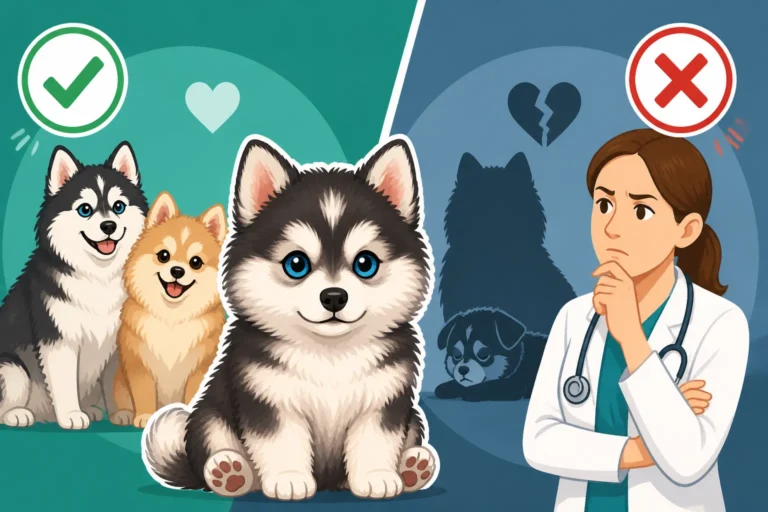
The 2011 Photos That Were Not Pomskies
Oh, the internet! It’s a wonderful place for sharing adorable animal pictures, but sometimes, those viral sensations create a bit of a mixed-up reality. Many people fell head over heels for the "miniature Husky" photos that flooded social media around 2011, imagining a perfect small version of their favorite sled dog. The only problem? Those dogs weren't Pomskies at all. This guide will walk you through the truth behind those iconic, yet misleading, early images and explain what a real Pomsky truly is.
The Digital Spark and the Miniature Husky Dream
Back in the early 2010s, before most people even knew what a Pomsky was, a few captivating images started circulating online. These pictures showed stunning, small, Husky-like dogs with striking blue eyes and beautiful markings. They were perfectly proportioned, looked like they could fit into a handbag, and quickly became the "it" dog that everyone desperately wanted. The problem was, these weren't actually Pomskies. They were often other, more established breeds that happened to resemble a downsized Siberian Husky.
How a Few Photos Ignited a Craze
It was pure viral gold. Imagine scrolling through your social feed and seeing a tiny dog with all the majestic features of a Siberian Husky – the piercing blue eyes, the thick double coat, the wolf-like markings – but in a compact, apartment-friendly package. For many dog lovers, it felt like a dream come true. These images spread like wildfire, capturing the imagination of thousands, if not millions, of prospective pet owners who started asking, "What is that dog? Where can I get one?" The demand was instantaneous and overwhelming, fueled by the sheer cuteness and novelty of what appeared to be a brand-new, impossibly perfect breed. People started to believe that a The Viral Post That Invented Pomsky Demand really was showing them a genuine miniature Husky.
The early discussions online were a mixture of awe and confusion. Pet forums and social media groups buzzed with questions about the breed's origins, temperament, and availability. Without much factual information to go on, people filled in the blanks with their own desires, envisioning a dog that was both stunningly beautiful and incredibly convenient. This created a massive, pre-existing demand for a dog that, in many cases, didn't quite exist in the form people were imagining from those specific photos. It set the stage for breeders, both responsible and less so, to try and meet this burgeoning market.
The Allure of a Pint-Sized Sled Dog
There’s an undeniable charm to miniature versions of larger breeds. The Husky, with its striking appearance and spirited personality, has always been a beloved breed. However, its substantial size, high energy levels, and often demanding exercise requirements can be a challenge for many households, especially those in urban environments or with smaller living spaces. The idea of a "miniature Husky" offered a solution to this dilemma, promising all the aesthetic appeal without the practical constraints. It suggested a dog that could embody the wild beauty of the Arctic sled dog but be perfectly content with a shorter walk or a romp in a city park.
This allure was not just about size; it was also about lifestyle. Many people romanticize the idea of owning a Husky, but few are truly prepared for the commitment. A smaller version seemed to mitigate those challenges, implying less shedding (a common misconception for double-coated breeds of any size), less food, and a more manageable force on the leash. It presented the best of both worlds – exotic looks and a more domesticated scale. The reality, as we'll explore, was a bit more complex, both in terms of the actual appearance and the care requirements of a true Pomsky.
Unmasking the Identity of the Viral "Pomskies"
So, if those captivating 2011 photos weren't Pomskies, what were they? The answer often involved two distinct breeds, both beautiful in their own right, but neither being a cross between a Pomeranian and a Siberian Husky. The online world, hungry for novelty, had stumbled upon existing breeds that simply looked like what people imagined a "mini Husky" should be.
The Alaskan Klee Kai: The Original Impostor
One of the most common breeds featured in those viral images was the Alaskan Klee Kai. This breed, developed in Alaska in the 1970s and 80s, was specifically created to be a companion dog resembling a miniature Husky. They typically weigh between 10 and 20 pounds, have the characteristic Husky mask, upright ears, and often those mesmerizing blue eyes. Their size, markings, and overall aesthetic perfectly matched the public's mental image of a "mini Husky." It’s no wonder they were so easily mistaken for the mythical Pomsky!
The Alaskan Klee Kai is a recognized breed with a long history and established breed standards. They are known for being intelligent, active, and can be reserved with strangers. Unfortunately, their striking resemblance to the desired "mini Husky" meant that many early Pomsky enthusiasts were actually looking at Klee Kai pictures, believing them to be the new crossbreed. This led to a lot of confusion and, sometimes, disappointment when people realized the actual Pomsky puppy they were considering didn't quite match the elegant, perfectly formed miniature Huskies they'd seen online. Indeed, many articles now cover Whether the First Pomsky Photos Showed Lapphunds, a common confusion with the Klee Kai.
The Finnish Lapphund: Another Case of Mistaken Identity
While the Alaskan Klee Kai was perhaps the most frequent culprit, another breed sometimes found its way into those early viral photo sets: the Finnish Lapphund. These beautiful dogs are medium-sized herding dogs from Finland, known for their plush double coats, expressive eyes, and often a very "fluffy", Nordic appearance. While they don't always have the distinct facial mask or piercing blue eyes as consistently as the Klee Kai or some Huskies, certain individuals, particularly puppies, could easily be mistaken for a smaller, fluffier Husky-type dog.
Finnish Lapphunds are known for their calm and friendly temperament, as well as their intelligence. They are often larger than what people imagined for a "mini Husky," typically ranging from 33 to 50 pounds, but their striking beauty and thick coats contributed to the overall impression that "this must be it!" when people encountered their photos. These instances further blurred the lines between genuine breeds and the emergent "Pomsky" concept, creating an even greater challenge for those trying to understand what they were truly looking for.
Why They Looked So Convincing
The convincing nature of these mistaken identities boils down to a few key factors. First, both the Alaskan Klee Kai and, to a lesser extent, the Finnish Lapphund, share distinct characteristics with the Siberian Husky, primarily their thick double coats, erect ears, and often curled tails. The Klee Kai, in particular, was bred to look like a Husky, just smaller. Second, the internet excels at amplifying appealing images without always providing accurate context. A pretty picture is shared far and wide, often stripped of its original caption or source, leading to widespread misidentification.
Finally, there was a strong desire for a dog that fit the "mini Husky" mold. When people saw a dog that looked the part, their wishful thinking often did the rest. It was easier to believe these were the new, designer crossbreeds than to question the images or delve into the nuances of established Nordic breeds. This perfect storm of aesthetics, viral sharing, and public demand created a narrative that heavily influenced the early perception of what a Pomsky "should" look like, often setting unrealistic expectations for future owners.
| Breed | Typical Weight (lbs) | Key Husky-like Features | Origin Breed Purpose |
|---|---|---|---|
| Alaskan Klee Kai | 10-20 | Distinct mask, upright ears, blue eyes, double coat | Companion, miniature Husky appearance |
| Finnish Lapphund | 33-50 | Plush double coat, upright ears, expressive eyes | Herding reindeer, companion |
| Actual Pomsky | 15-30 | Variable mask, upright/floppy ears, various eye colors, double coat | Companion, designer cross |
| Siberian Husky | 35-60 | Distinct mask, upright ears, blue/bi eyes, double coat | Sled dog, endurance |
The Genesis of the Actual Pomsky Breed
Despite the initial confusion, the viral demand for a "miniature Husky" did eventually lead to the intentional creation of the Pomsky. This wasn't an accidental mix; it was a deliberate crossbreeding effort by individuals who saw the potential for a popular companion dog. The journey from viral photo to actual breed creation is a fascinating one, rooted in specific breeding practices.
The First Deliberate Crossings in North America
While the exact "first" Pomsky is a point of some debate, many credit the true birth of the breed to deliberate efforts in the United States around 2012. It was then that dedicated breeders, responding to the immense online interest, began to systematically cross Siberian Huskies with Pomeranians. These weren't backyard experiments; these were often carefully planned pairings, recognizing the significant size difference between the parent breeds. The goal was to create a smaller dog with the striking appearance of a Husky, but the more manageable size and affectionate nature of a Pomeranian.
Early breeders quickly realized the complexities involved. The reproductive challenges, the genetic variability in first-generation offspring, and the sheer unpredictability of size and appearance made it a far cry from simply mixing two dogs. It required dedication, investment, and a lot of learning on the fly. This initial period was crucial in establishing the Pomsky as a distinct hybrid, moving it beyond mere internet speculation into a tangible, albeit developing, reality. If you're curious about the earliest days, you might find articles on The 2012 Litter That Made the Pomsky Real quite insightful.
The Husky Dam Requirement and Artificial Insemination
One of the most critical aspects of Pomsky breeding, and why it cannot happen naturally, is the vast size disparity between a female Pomeranian and a male Siberian Husky. For the safety of the mother and the puppies, the female parent must be the larger breed – the Siberian Husky. A Pomeranian female would face severe, life-threatening complications trying to carry or birth puppies sired by a Husky, even if conception were somehow possible. This means that a Pomsky's mother must always be the Husky.
Even with a Husky as the dam, natural breeding is often impractical or unsafe due to the size difference of the parents and the potential for injury. Therefore, artificial insemination (AI) is the standard and safest practice for creating a Pomsky litter. This process, which involves veterinary intervention to collect semen from the male Pomeranian and insert it into the female Husky, adds significantly to the cost and complexity of breeding. Why a Pomsky Cannot Be Bred Naturally goes into more detail about these challenges. This sophisticated approach ensures the safety of the dogs involved and allows breeders to carefully time the breeding, contributing to the higher cost associated with Pomsky puppies.
The Role of Early Breeders in Defining the Pomsky
The pioneers of Pomsky breeding faced a monumental task: to take a concept born from internet hype and mold it into a consistent, healthy, and predictable companion animal. Without an established breed standard or generations of careful selection, early breeders were essentially writing the rulebook as they went along. They had to observe which traits were dominant, how size and appearance varied in first-generation (F1) puppies, and what temperament combinations emerged.
These individuals played a crucial role in shaping what the Pomsky would become. They championed health testing for parent breeds, worked to establish ethical breeding practices, and began the arduous process of documenting lineages. Their efforts laid the groundwork for organizations like the International Pomsky Association (IPA), which now seeks to unify breeders and establish clear guidelines. It was a period of intense experimentation and dedication, all aimed at creating a stable foundation for this burgeoning designer breed.
The Chasm Between Online Hype and Canine Reality
The early viral photos painted a picture of perfectly miniaturized Huskies, but the reality of breeding a Pomsky is far less predictable. The gap between the imagined ideal and the actual outcome became a significant challenge for both breeders and new owners. Understanding this chasm is crucial for anyone considering adding a Pomsky to their family.
The Unpredictability of First Generation Crosses
When you cross two distinct breeds like the Pomeranian and the Siberian Husky, especially in a first-generation (F1) cross, the genetic lottery is very much at play. Unlike purebred dogs where generations of selective breeding lead to predictable traits, an F1 Pomsky can inherit a wide range of characteristics from either parent. This means that out of a single litter, you might have puppies that look predominantly like a Husky, others that resemble a large Pomeranian, and some that are a true mix. Their coat type, ear set, eye color, and even facial structure can vary dramatically.
This unpredictability directly contrasted with the uniform "mini Husky" image that had gone viral. Owners who bought an F1 Pomsky expecting a carbon copy of those internet photos often found themselves with a dog that was unique, but not necessarily what they had envisioned. While this variability is part of the charm for some, for others, it became a source of disappointment, highlighting the need for extensive research and realistic expectations before committing to a Pomsky puppy.
Size and Appearance: Managing Buyer Expectations
Perhaps the biggest disconnect between the viral fantasy and Pomsky reality centered on size and appearance. Those internet images often depicted dogs that weighed under 10 pounds, perfectly proportioned like a Husky. In truth, a Pomsky's adult weight can range significantly, typically falling between 15 to 30 pounds, though some can be smaller or larger. It's rare to find a genuine Pomsky that consistently stays as tiny as those initial photos suggested, especially without compromising health. What a Pomsky Actually Weighs Full Grown is a topic many prospective owners need to understand.
Furthermore, the "Husky mask" and piercing blue eyes, while common, are not guaranteed. Some Pomskies inherit the Pomeranian's more rounded head and foxy face, while others get brown eyes or mismatched eyes. Their double coats can be more plush like a Pomeranian or sleek like a Husky, or anywhere in between. Responsible breeders spend a lot of time educating prospective owners that what they see in a puppy may not be exactly what they get in an adult, emphasizing the beauty in the breed's diverse expressions rather than a singular ideal.
Health and Temperament: Beyond the Cute Photos
Beyond looks, the viral photos gave no indication of the health or temperament traits that a Pomsky would inherit. Both parent breeds contribute their own predispositions to certain health conditions. For example, Pomeranians are known for patellar luxation and collapsing trachea, while Huskies can be prone to hip dysplasia and certain eye conditions. A Pomsky can inherit any of these. Therefore, responsible breeders perform thorough health screenings on both parent dogs to minimize the risk of passing on genetic issues. The Two Opposite Disease Lists a Pomsky Inherits is a crucial read for any prospective owner.
Temperament is equally varied. Huskies are known for being independent, high-energy, and sometimes stubborn. Pomeranians are often lively, alert, and can be vocal. A Pomsky can be a delightful blend, inheriting the Husky's playful nature and the Pomeranian's affectionate side, but they can also manifest the Husky's tendency to wander and the Pomeranian's potential for yappiness. These are traits that cute photos simply cannot convey, and they require active training and socialization from an early age. You can find many useful training tools and resources on sites like Chewy to help manage these traits.
Navigating the World of Pomsky Breeding and Registration
The Pomsky is a relatively new hybrid, which means its journey to potential recognition and standardization is still very much in progress. Unlike purebred dogs with centuries of documented history, the Pomsky world operates a little differently, making it important for prospective owners to understand the landscape.
The Lack of Kennel Club Recognition
One of the most significant differences between a Pomsky and a purebred dog is its status with major kennel clubs like the American Kennel Club (AKC) or The Kennel Club (UK). These organizations do not recognize the Pomsky as a distinct breed because it is a hybrid, or a "designer dog." This means there are no universally accepted, rigid breed standards for appearance, temperament, or health testing requirements enforced by these traditional bodies. This lack of formal recognition means that Pomsky breeding is currently self-regulated by dedicated breeders and emerging breed clubs.
While some might see this as a negative, it simply means that the responsibility falls more heavily on the individual breeder to maintain high standards. Without the overarching structure of a kennel club, buyers must be even more diligent in researching breeders, asking for health clearances, and understanding the genetic background of their potential puppy. It emphasizes the importance of transparency and ethical practices within the Pomsky community itself.
The Emergence of Breed Associations and Standards
In response to the growing popularity and the need for some form of regulation and standardization, several Pomsky breed associations have emerged. The most prominent among these is the International Pomsky Association (IPA). These organizations aim to document pedigrees, establish ethical breeding guidelines, promote health testing, and work towards a more consistent breed type. They essentially act as informal "kennel clubs" for the Pomsky.
These associations are vital for the future of the breed. They provide a framework for breeders to collaborate, share best practices, and collectively work towards a more predictable and healthy Pomsky. For instance, What the International Pomsky Association Does includes efforts to define acceptable coat types, sizes, and temperament traits, slowly moving the breed towards greater uniformity. While their standards are not legally binding or universally recognized by all canine organizations, they represent a significant step in the right direction for the breed's development and reputation.
Verifying a Pomsky's Heritage
Given the lack of traditional kennel club registration, verifying a Pomsky's heritage requires a different approach. Reputable breeders affiliated with associations like the IPA will provide documentation showing the parentage of their puppies, including photos and often health testing results for both the Siberian Husky dam and the Pomeranian sire. This typically includes OFA (Orthopedic Foundation for Animals) clearances for hips and patellas, and often eye certifications from organizations like CERF (Canine Eye Registry Foundation).
In addition to breeder-provided documentation, DNA testing services are available that can confirm the parentage of a Pomsky. These tests can accurately identify the breeds present in a mixed-breed dog, providing peace of mind for buyers who want to ensure their puppy is indeed a Husky-Pomeranian mix. This transparency is key to distinguishing responsible breeders from those who might misrepresent their puppies or engage in unethical breeding practices. A good breeder will be happy to share all this information, ensuring you know exactly what you're bringing home. For instance, Chewy offers various DNA testing kits that can help verify your dog's breed makeup.
Understanding the True Pomsky Appearance and Temperament
After debunking the myths of the viral photos, let's dive into what a real Pomsky looks and acts like. It's a spectrum, not a single mold, and understanding this diversity is key to appreciating this delightful hybrid breed.
The Range of Pomsky Looks
Forget the idea of a single, cookie-cutter "mini Husky." A true Pomsky can vary quite a bit in appearance, even within the same litter. While many do inherit that desirable Husky look, it's not a guarantee. You'll find Pomskies with a wide array of features:
- Size: As mentioned, they generally range from 15 to 30 pounds, but some can be smaller, resembling a large Pomeranian, or larger, closer to a small Husky. This makes What a Pomsky Actually Weighs Full Grown a common question.
- Coat: They all have a double coat, but the texture and density can lean more towards the fluffy, stand-off coat of a Pomeranian or the sleeker, dense coat of a Husky. Both require significant grooming, especially during shedding seasons. You can find quality grooming tools and deshedding shampoos on sites like Chewy to help manage this.
- Ears: While many have the upright, triangular ears of a Husky, some Pomskies retain the slightly floppier or more rounded ears of a Pomeranian.
- Eyes: Blue eyes are highly sought after, but brown, amber, or even heterochromatic (one blue, one brown) eyes are also common and equally beautiful. Whether a Pomsky's Eye Color Predicts Problems is a common misconception that needs to be clarified.
- Markings: The classic Husky mask is popular, but Pomskies can come in a multitude of colors and patterns, including solid colors, sables, merles (though merle is controversial due to potential health issues if not bred carefully), and various white markings. Whether Most Pomskies Look Like Big Pomeranians touches on this variability.
This diversity is part of the Pomsky's unique charm, allowing for a wide range of beautiful individuals rather than a strict conformity.
Personality Traits: A Blend of Two Strong Breeds
A Pomsky's temperament is truly a blend, and often a delightful one, of its two parent breeds. They often inherit the intelligence and energy of the Husky, combined with the playfulness and loyalty of the Pomeranian. However, this blend also means they can possess traits that require patience and consistent training:
- Intelligent and Trainable: Pomskies are smart, often picking up commands quickly. However, this intelligence can be paired with a Husky-like stubbornness, meaning they might know what you want but choose whether or not to comply! Positive reinforcement and short, engaging training sessions work best.
- Energetic and Playful: Don't let their smaller size fool you; Pomskies have significant energy reserves. They thrive on daily exercise, mental stimulation, and play. A bored Pomsky is often a destructive Pomsky.
- Vocal: They often inherit the Husky's tendency to "talk" – howling, whining, and "woo-wooing" – rather than bark. While charming, this can be loud. Some may also inherit the Pomeranian's alert barking.
- Affectionate but Independent: Many Pomskies are very loving and form strong bonds with their families, enjoying cuddles and being close. However, they can also have an independent streak from their Husky lineage, meaning they might not be Velcro dogs and will appreciate some alone time.
- Prey Drive: Both parent breeds can have a prey drive, so a Pomsky might be inclined to chase small animals. This means secure fencing and leash walks are generally non-negotiable.
What a Real Pomsky Owner Experiences
Owning a Pomsky is an adventure! It's a commitment that goes beyond just loving their cute looks. Real Pomsky owners often share similar experiences:
- Grooming Demands: That gorgeous double coat sheds, and when they "blow coat" twice a year, it's intense. Regular brushing, often daily during shedding season, is essential to prevent mats and keep your home from being covered in fluff. Many owners invest in powerful force dryers to aid in deshedding.
- Exercise Requirements: These aren't couch potatoes. A Pomsky needs significant daily exercise – walks, playtime in a secure yard, dog parks (if socialized well), or even doggy daycare. Mental stimulation through puzzle toys or training sessions is also vital.
- Training Consistency: Their intelligence and potential stubbornness mean that consistent, positive reinforcement training is a must from a young age. Early socialization with other dogs and people is also crucial.
- The Escape Artist Tendency: Just like Huskies, many Pomskies are master escape artists. They can jump, dig, and even figure out gates or latches. Secure fencing, potentially with coyote rollers or dig guards, is often necessary. A good quality harness, not just a collar, is essential for walks to prevent them from slipping out. If you're wondering what kind of fence you need, The Pomsky Escape Artist in a Twenty Pound Body is a must-read.
- Unique Vocalizations: Get ready for conversations! Their wide range of howls and "talking" can be endearing, but also loud. Teaching a "quiet" cue can be helpful.
Ultimately, owning a Pomsky means embracing a dynamic, intelligent, and often vocal companion who will keep you on your toes but reward you with endless affection and entertainment. They truly are an amazing blend, but they come with specific needs that differ from the simple image of a "mini Husky."
The Lasting Impact of Misinformation on Pomsky Popularity
The initial viral photos, while misleading, undeniably launched the Pomsky into the public consciousness. However, this early misinformation has had a lasting impact, creating both challenges and opportunities for the breed and its community.
The Challenge of Educating Prospective Owners
One of the biggest ongoing challenges for responsible Pomsky breeders and owners is correcting the persistent misconceptions born from those early viral images. Many prospective buyers still arrive with the expectation of a perfectly miniaturized Siberian Husky, identical to the photos they saw years ago. This often leads to disappointment if their puppy grows to be a different size, has different markings, or displays a temperament that doesn't match their idealized vision.
Responsible breeders now dedicate considerable effort to educating potential buyers. This means providing honest information about the variability in size and appearance, the significant grooming and exercise needs, and the potential for a strong prey drive or vocal nature. It's about managing expectations, ensuring that future owners are prepared for the reality of a Pomsky, not just the dream. This educational effort is crucial for the welfare of the dogs and the satisfaction of their families. Articles like What Nobody Warns a Pomsky Buyer About aim to help with this.
Why Pomskies Still End Up in Rescue
Sadly, the gap between expectation and reality often leads to Pomskies being surrendered to shelters or rescues. Why Pomskies Are Surrendered highlights various reasons, and many of them can be traced back to those initial misleading photos and the lack of understanding about the breed's true nature. Owners might find that their "mini Husky" grew larger than anticipated, sheds far more than they imagined, or possesses an energy level and vocal tendencies that they simply cannot manage in their living situation.
The Husky-like traits of needing secure containment and having a strong desire to run can lead to escape attempts, which can also be a reason for surrender. While Pomsky rescues and Husky/Pomeranian rescues work tirelessly to rehome these dogs, it underscores the importance of thorough research before bringing a puppy home. A responsible owner understands that an animal is a long-term commitment, not a disposable item that can be returned if it doesn't meet aesthetic preferences.
The Responsibility of the Pomsky Community
Ultimately, the lasting impact of the 2011 viral photos places a significant responsibility on the entire Pomsky community – breeders, owners, and enthusiasts alike. It's up to us to continue to share accurate information, promote responsible breeding practices, and support Pomsky-specific rescues. By doing so, we can help ensure that this delightful hybrid breed thrives and that every Pomsky finds a loving, prepared home.
Educating others about the breed's true characteristics, temperament, and care requirements helps set realistic expectations, reducing the likelihood of future disappointments and surrenders. It's about celebrating the Pomsky for what it truly is – a unique, intelligent, and affectionate companion – rather than clinging to a fictionalized image. The breed has come a long way since those first misleading photos, and with continued dedication, its future looks bright.
Disclaimer
This article is for general informational purposes only and does not constitute professional advice. Laws, prices and regulations vary by location and change over time. Consult a qualified professional for guidance on your specific situation.