Whether Most Pomskies Look Like Big Pomeranians
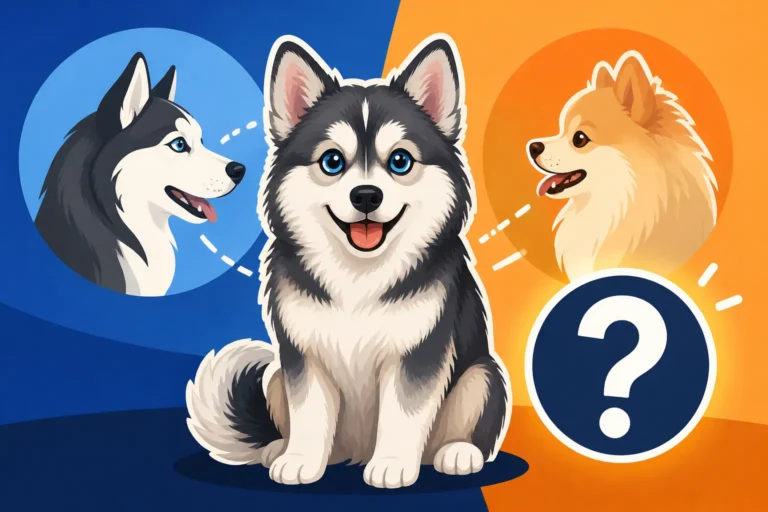
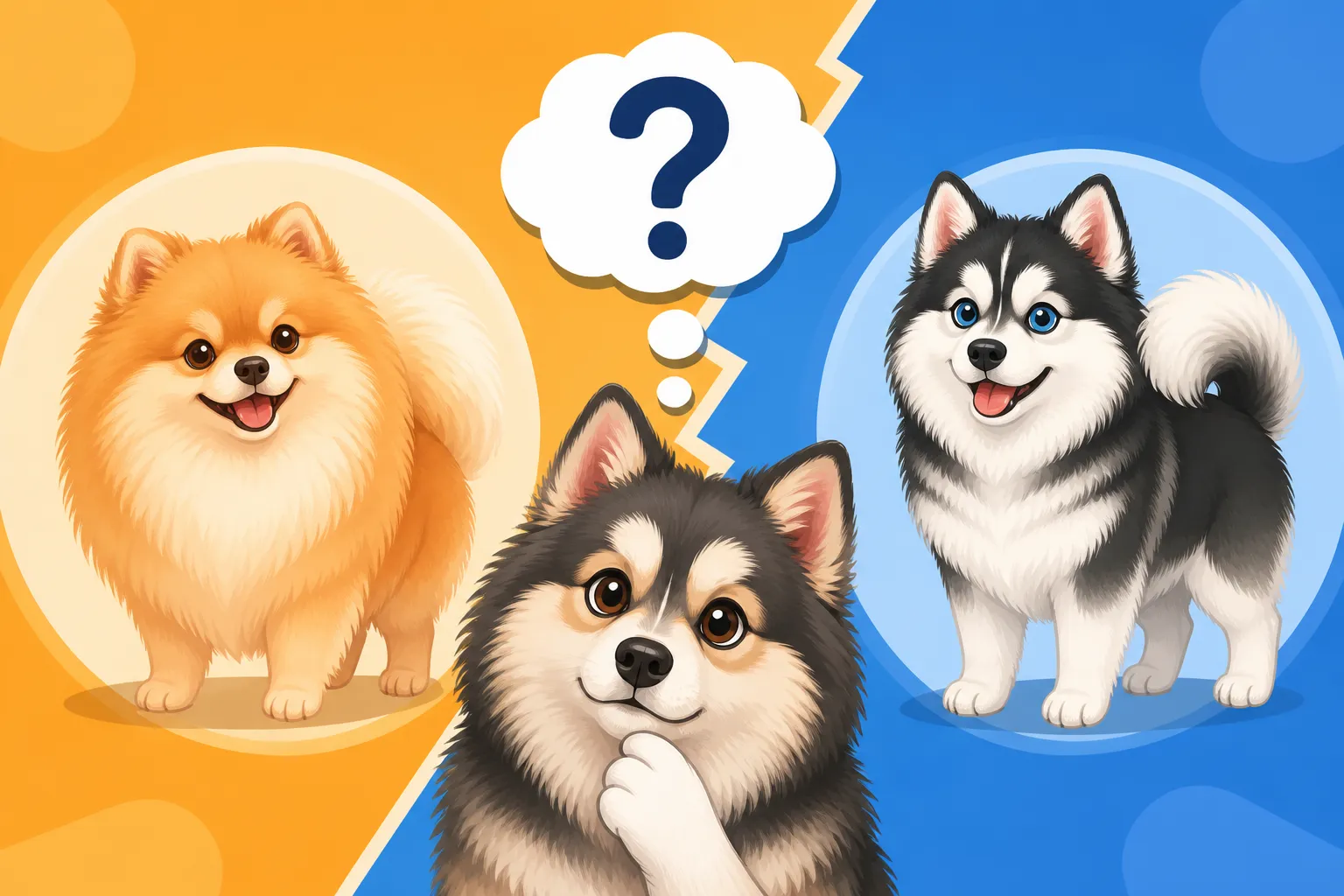
A Pomsky can look like a big Pomeranian, a small Husky, or a blend that seems to change as it grows. That uncertainty is frustrating when puppy photos make a particular look seem guaranteed. This guide explains why many Pomskies have a Pomeranian-like outline, which features come from either parent, and what to expect when a puppy matures.
Why many Pomskies look like larger Pomeranians
A compact, fluffy outline can read as Pomeranian
When people say a Pomsky looks like a big Pomeranian, they’re often noticing the overall silhouette rather than one exact feature. A small-to-medium dog with a plush coat, short-looking legs, a curled tail, and a foxlike face can bring a Pomeranian to mind—even if its coloring or eyes look distinctly Husky.
Coat volume has a lot to do with that impression. Fluff can make a dog’s body look rounder and its legs look shorter than they are. A Pomsky with a dense undercoat may appear especially compact when its coat is fully grown, then look slimmer during a seasonal shed. That change can surprise owners who thought their dog’s shape had permanently shifted.
Face shape matters, too. A shorter muzzle and rounded expression can make a Pomsky seem more Pomeranian-like, while a longer muzzle, sharper facial lines, or a more pronounced mask can create a Husky impression. Those features don’t always arrive as a matching package. A dog might have a fluffy Pomeranian-style outline but a Husky-like mask and eyes.
For a fuller explanation of the common look, see Why Most Pomskies Look Like Large Pomeranians. It’s also useful to compare the overall impression with Whether a Pomsky Looks More Pomeranian Than Husky, because “looks like” can mean different things to different people: body shape, coat, face, coloring, or size.
A Pomsky is not a miniature Husky in a predictable package
Some prospective owners picture a Husky reduced neatly to a smaller size. But a Pomsky is a cross between a Pomeranian and a Siberian Husky, and puppies can inherit different combinations of their parents’ traits. A smaller adult size does not automatically mean the dog will have a miniature Husky’s proportions or face.
The Pomeranian side may show in a compact build, a fluffy coat, a narrower frame, or a tail carried over the back. The Husky side may show in a more athletic body, a stronger muzzle, facial markings, or blue eyes. A single dog can show traits from both breeds, and two Pomskies can look quite different from one another.
That variation is one reason it helps to think in terms of a range of possible appearances rather than a promised look. A puppy’s coat may be especially soft and plush, while the adult coat and body proportions become clearer over time. Even then, a Pomsky may not settle neatly into either a “big Pomeranian” or “small Husky” category.
The features that shape a Pomsky’s appearance
Coat, body shape, and tail
The coat can dominate a first impression. A thick, fluffy coat often gives a Pomsky a rounded, teddy-bear outline. A shorter or less voluminous coat may make the dog look more athletic and Husky-like, even if its body is small. Coat length, texture, and density vary, so two dogs of similar weight can look very different.
A curled tail can add to the Pomeranian impression, particularly when it rests over the back. But tail carriage varies, and a curled tail alone doesn’t tell you which parent a Pomsky resembles most. The same is true of upright ears: they’re common in both breeds, so they may contribute to a spitz-like look without making the dog clearly one or the other. See Whether a Pomsky's Tail Curls Over Its Back and Whether a Pomsky's Ears Stand Up for more on those traits.
Body proportions also affect the silhouette. A dog with a relatively short body and abundant coat may appear stockier than a leaner Pomsky of similar size. When assessing a dog, look at its structure underneath the fur rather than relying only on how broad or rounded it appears in a photo. A groomed or recently shed coat can change the outline considerably.
Face, eyes, and markings
Facial markings can make a Pomsky look strongly Husky-like, especially when the dog has a contrasting mask. Blue eyes may reinforce that impression, but eye color does not determine the rest of the dog’s appearance. Some Pomskies have brown eyes, some have blue eyes, and some have one of each. Read Whether a Pomsky Has the Husky Mask for a closer look at how facial markings contribute to the breed’s familiar image.
The muzzle and head shape can be just as noticeable as markings. A shorter muzzle and rounded head may suggest a Pomeranian, while a longer muzzle and more angular expression may suggest a Husky. But these are tendencies, not a reliable checklist. A Pomsky might have a compact head with Husky markings, or a longer face under a fluffy coat.
Photos can make these differences look more definite than they are. Lighting, camera angle, coat condition, and the dog’s age all affect how features appear. A front-facing puppy portrait, for example, can make the head look rounder, while a side view may reveal a longer muzzle. If you’re comparing puppies, look at several images and videos in different positions rather than treating one flattering photo as a prediction.
How age, generation, and size affect the look
Puppy fluff is not a dependable adult forecast
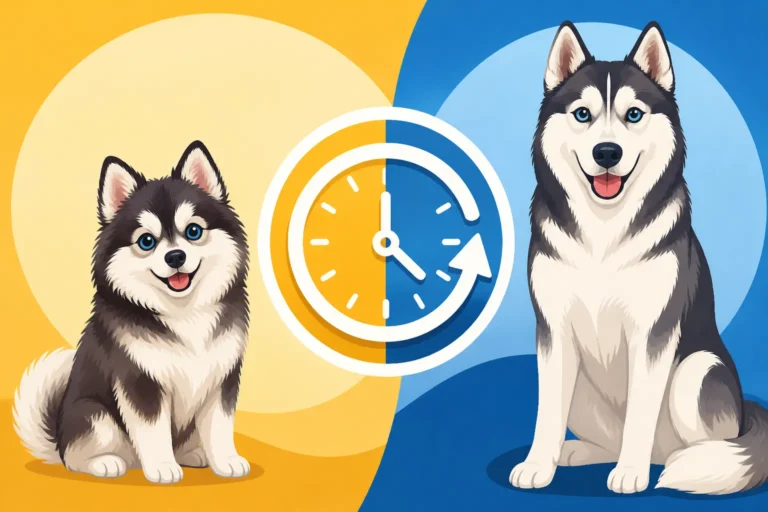
A Pomsky puppy’s softness can make it seem like a tiny, extra-fluffy Pomeranian. As the puppy grows, its legs lengthen, its body proportions change, and its coat develops. The adult may look leaner than the puppy did, or the coat may grow fuller and make the dog appear more compact. Either way, puppy appearance is only one stage of development.
Size can be difficult to predict precisely, too. Parent size and family history offer clues, but they cannot guarantee an individual puppy’s adult weight or build. A Pomsky may also continue filling out after its height has mostly settled. For more detail, see What a Pomsky Actually Weighs Full Grown and Whether a Pomsky Puppy's Size Can Be Predicted.
Generation may be part of a breeder’s description, but it doesn’t make appearance perfectly predictable. A label can tell you something about a dog’s ancestry; it does not ensure that a puppy will have a particular face, coat, or body shape. If appearance matters to you, ask to see the parents and, where available, adult relatives from the same line. Those examples can help you understand the range, though they still cannot promise the exact result.
It can help to write down which traits you care about most. For instance, you might prefer a compact adult, a Husky-like mask, or a coat that is less dense. Then ask the breeder which traits are visible in the puppy and which are uncertain. A responsible answer should make room for variation rather than presenting a specific adult look as guaranteed.
Littermates can have different proportions and expressions
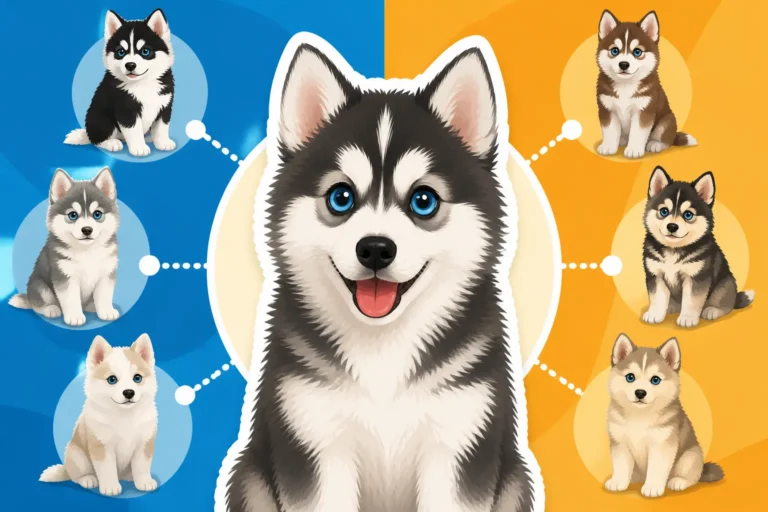
Even puppies from the same litter can differ in coat density, coloring, eye color, muzzle shape, and body structure. One may look like a small Husky, while another looks like a fluffy, larger Pomeranian. That difference is not unusual in a mixed-breed litter: puppies inherit different combinations of traits rather than copies of one idealized appearance.
This is why a sibling’s adult photos are helpful but not conclusive. They can show you what the family line may produce, but they don’t prove that the puppy you’re considering will mature into the same look. Whether Two Pomsky Littermates Look Alike explores this point in more detail.
When reviewing breeder photos, ask whether the images show puppies, adolescents, or adults. Ask how old the dogs were when photographed and whether their coats were in a seasonal shed. If you’re choosing between puppies, prioritize health, temperament, and the breeder’s transparency over a subtle difference in facial markings that may look different later.
What to expect when choosing a Pomsky
Look beyond the “big Pomeranian” label
There is no single appearance every Pomsky must have. Many do have a compact, fluffy outline that resembles a larger Pomeranian, but others look more like small Huskies or show a balanced mix. The phrase can be a useful shorthand, but it shouldn’t be treated as a promise about adult size, coat, or face.
A practical way to compare appearances is to look at several features together:
| Feature | May create a Pomeranian-like impression | May create a Husky-like impression |
|---|---|---|
| Coat and outline | Dense, fluffy coat and compact silhouette | Sleeker outline or more athletic proportions |
| Face | Shorter muzzle and rounded expression | Longer muzzle and sharper facial lines |
| Tail | Tail carried in a prominent curl over the back | Tail shape and carriage that appear less curled |
| Markings | Less contrasting facial pattern | Pronounced mask or contrasting facial markings |
| Overall build | Shorter-looking legs beneath a full coat | Leaner build with a more substantial-looking frame |
Use the table as a way to describe what you notice, not as a scoring system. Pomskies can mix features across both columns, and no single trait establishes how “Pomeranian” or “Husky” a dog looks.
If you’re meeting a puppy in person, watch it move as well as stand. A fluffy coat can obscure the body, while movement may offer a clearer sense of the dog’s proportions. Ask to see the puppy’s parents, and be realistic about the fact that the puppy may not grow into a smaller version of either one.
Match the dog’s care needs to the real coat
The appearance people love in a fluffy Pomsky often comes with regular coat care. Dense fur can trap loose undercoat and form tangles, particularly behind the ears, around the collar, and where the legs meet the body. Ask what grooming routine suits that puppy’s coat rather than assuming every Pomsky needs the same tools or schedule.
If you’re buying a brush, comb, or harness, use the dog’s measurements and coat type instead of shopping based on a “mini Husky” or “big Pomeranian” label. Retailers such as Chewy may list product sizing guidance, but check the specific maker’s measurements and fit instructions before choosing. A harness that fits a narrow puppy may become uncomfortable as the chest and coat change.
For grooming supplies, Chewy can be one place to compare options such as combs and brushes, but the tool should match the coat and be used gently. A brush that works well on one dog may not reach through another Pomsky’s undercoat. If you’re unsure, ask a groomer to demonstrate how to part the coat and check the skin beneath it.
Food and everyday equipment should be selected for the individual dog, not its appearance. A fluffy dog may look larger than it is, so use body condition and veterinary guidance when deciding whether its weight is appropriate. If you’re browsing food options through Chewy, compare the feeding guidance on the product label with your veterinarian’s advice, especially for a growing puppy.
The most realistic expectation is a range: many Pomskies can look like big Pomeranians, but that resemblance is only one possible combination of inherited features. Focus on the individual dog’s health, temperament, and care needs, and enjoy its particular mix rather than expecting a puppy photo to predict every detail of the adult.
Disclaimer
This article is for general informational purposes only and does not constitute professional advice. Laws, prices and regulations vary by location and change over time. Consult a qualified professional for guidance on your specific situation.