Whether Two Pomsky Littermates Look Alike
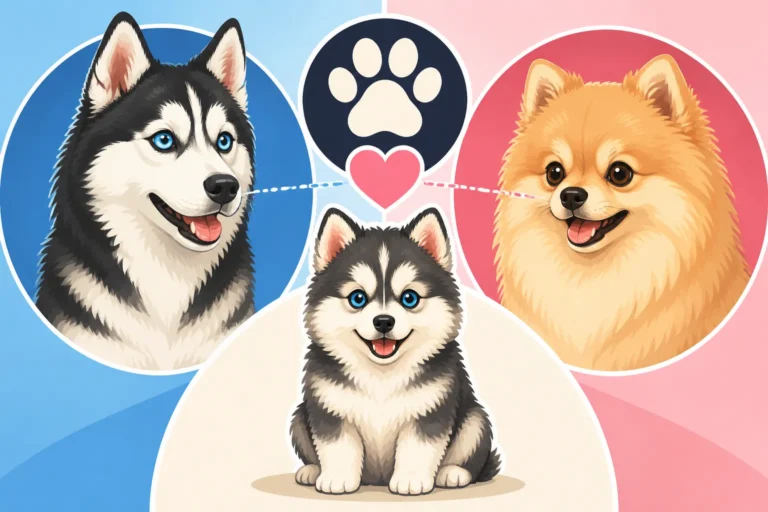
Two Pomsky puppies from the same litter can look like they came from different breeds, even when they share the same parents. One may have a Husky-like mask and blue eyes, while another has a fluffy Pomeranian-style coat and brown eyes. This guide explains why littermates vary, what traits may change as they grow, and how to compare them fairly.
Why Pomsky littermates can look so different
Siblings share parents, not identical genes
Each puppy inherits a different mix of genetic material from its parents. Even puppies born in the same litter do not receive matching combinations, so one may inherit more visible traits associated with the Husky parent while another resembles the Pomeranian parent more strongly. That variation can show up in coat texture, markings, eye color, ear shape, tail carriage, and adult size.
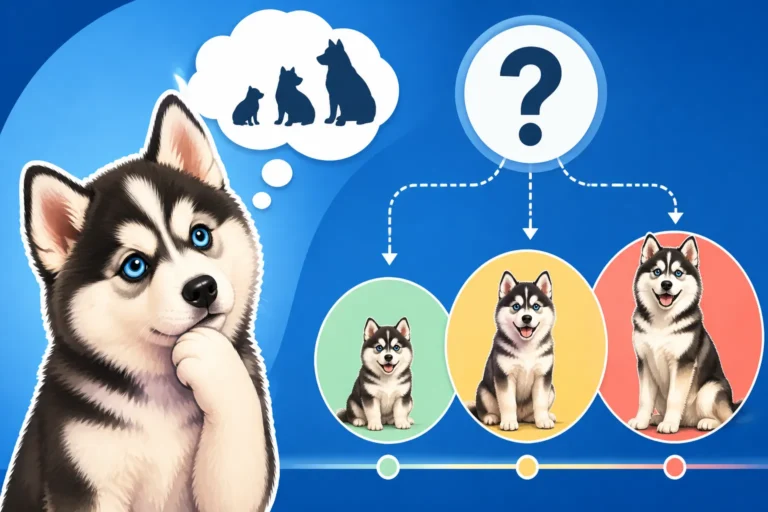
This is one reason a litter photo can be misleading. At eight weeks, two pups may both look like round, fluffy teddy bears, but their adult coats and proportions can develop quite differently. One might keep a compact, plush appearance; another may grow longer legs or a narrower muzzle. For a closer look at the role of inheritance, see Why an F1 Pomsky Varies So Much.
A littermate’s appearance is therefore not a reliable template for predicting another puppy’s adult look. Shared parents offer useful context, but they do not guarantee matching traits. Even pups that look nearly identical in their first weeks may become easier to tell apart as their faces lengthen, coats change, and bodies grow.
Generation can influence predictability, but it is not a guarantee
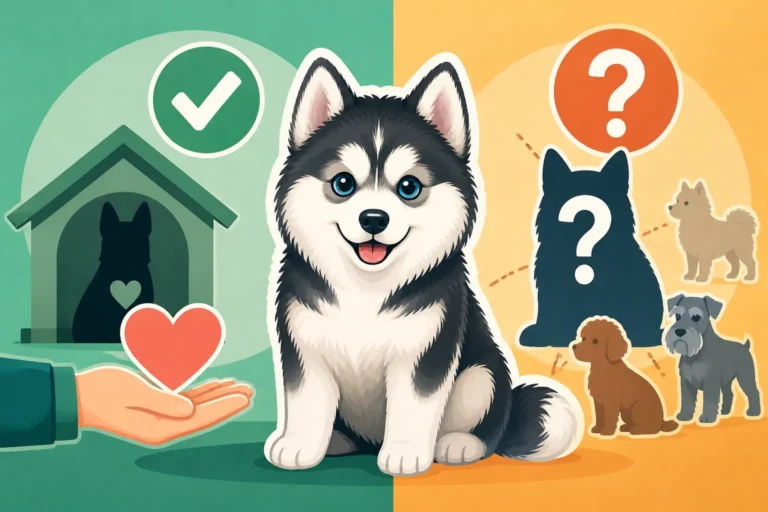
The generation of a Pomsky may help explain why a litter looks varied, but it cannot promise that every puppy will have a particular appearance. First-generation Pomskies, often called F1, have a Pomeranian parent and a Husky parent. Their puppies can inherit a wide range of combinations from those two breeds. Later-generation Pomskies may have more generations of Pomsky ancestry, but a shared label still does not mean every puppy will look alike.
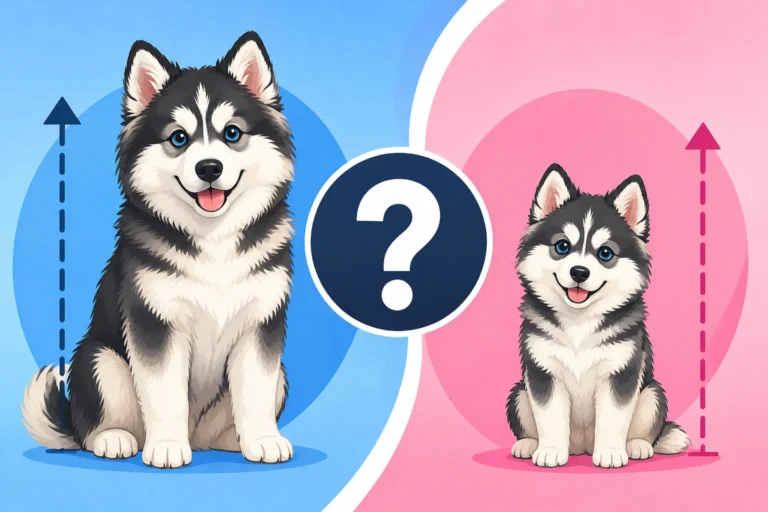
Breeders may describe a litter as multigenerational or give each puppy an estimated adult size. Those details can help you ask better questions, but they are not a crystal ball. Even littermates with the same generation designation can mature differently. For more background on size variation, read Whether Generation Changes a Pomsky's Size and Whether a Pomsky Puppy's Size Can Be Predicted.
When comparing siblings, ask what their parents look like and whether the breeder has records or photographs of older relatives. Those clues may help you understand the range of traits in the family. They still cannot tell you exactly which puppy will inherit which combination.
Which features are most likely to differ
Coats and markings can vary within one litter
Coat color and markings are among the most noticeable differences between littermates. A litter might include puppies with gray-and-white coloring, darker masks, cream or red tones, or different amounts of white. Even siblings with broadly similar coloring may have markings arranged differently, such as a narrow blaze on one pup and a wider facial marking on another.
Coat type can vary, too. Some Pomskies have a dense double coat that looks plush, while others have a shorter or less full coat. Puppy fluff does not always show exactly what the adult coat will be like. As the puppy grows, its coat can change in length, texture, and density, so the differences between two siblings may become more obvious rather than less. See The Colors and Masks a Pomsky Comes In and Whether a Pomsky's Coat Type Shows at Eight Weeks for more on those changes.
Try to compare puppies in natural light and from several angles rather than relying on edited photos or a single snapshot. A coat can appear warmer, darker, or more silver depending on the lighting. If you are choosing between siblings, ask for recent photos and, if possible, a chance to meet them in person.
Eye color and facial features may not match
Two littermates can have different eye colors, including brown, blue, or eyes that differ from one another. Blue eyes are a recognizable Husky-associated trait, but they are not a promise that every puppy in a Pomsky litter will have them. A puppy’s eyes may also look different as it matures, so very early photos should not be treated as a final record of adult eye color. For more detail, see Whether a Pomsky Has Blue Eyes.
Faces can vary just as much. One puppy may have a pronounced mask, upright-looking ears, or a more Husky-like expression, while a sibling may have a shorter muzzle or a rounder, fluffier face. Ear position can also be hard to judge in very young puppies; ears may change as they grow, and a photo taken at one moment does not necessarily show their eventual carriage.
If two puppies seem similar at first, look for smaller distinguishing details: a white patch on the chest, a darker ear, a particular blaze, or a difference in eye color. These can help you tell them apart, but appearance alone is not a dependable way to identify dogs in every situation. Keep their identification and records separate from the beginning.
| Feature | Why littermates may differ | What to keep in mind |
|---|---|---|
| Coat color and markings | Puppies inherit different combinations of traits | Lighting and puppy coat changes can affect how color appears |
| Coat length and density | Coat traits can vary between siblings | Puppy fluff does not guarantee the adult coat |
| Eye color | Eye traits are not necessarily shared by every sibling | Early appearance may not be final |
| Face and ears | Head shape and ear carriage can develop differently | A single photo is only a snapshot |
| Adult size and build | Puppies inherit different combinations of growth-related traits | Estimates are not guarantees |
How to compare Pomsky littermates fairly
Look beyond one photo or one puppy milestone
When you are trying to picture what littermates may look like as adults, use a range of observations rather than a single photo. Compare pictures taken at different ages, ask for images of both parents, and look for adult relatives if the breeder can provide them. This gives you a broader sense of the family’s appearance without pretending that any puppy is a miniature copy of a parent.
It also helps to compare siblings at the same age and in similar conditions. A puppy photographed right after a bath may look fluffier or less fluffy than one photographed with a damp coat. A sibling photographed outside in bright sun may appear lighter than one pictured indoors. These small differences can make a litter seem more varied, or less varied, than it really is.
Ask the breeder what they know about each puppy’s current weight, growth, coat, and markings, and how they arrived at any adult-size estimate. A careful breeder should be able to explain what is known and where uncertainty remains. For general context on appearance and proportions, What a Pomsky Actually Weighs Full Grown may also be useful.
Expect puppy coats and proportions to change
A Pomsky puppy’s appearance is not fixed at the moment you bring it home. As it grows, its proportions change, and its coat can shift in texture, length, and color. A puppy that looks especially compact and plush may become leggier, while a face that looks strongly masked early on may appear different as the coat develops around it.
This is why choosing a puppy solely because it looks most like a particular photo can lead to disappointment. If you love the idea of a blue-eyed, gray-and-white Pomsky, for example, make sure you are prepared to love the actual dog even if its appearance changes or its adult traits differ from your expectations. Looking at parents and relatives can set reasonable expectations, but it cannot guarantee a specific result.
You can also take consistent photos at home as your puppy grows. Use similar lighting and angles every few weeks, and note the puppy’s age in each picture. That makes it easier to see gradual changes and compare your own dog with earlier images without relying on a breeder’s old listing photos.
Choosing or raising two siblings
Decide based on care needs, not matching looks
Some families consider bringing home two Pomsky littermates because they want a matching pair. It is worth thinking beyond appearance first. Two puppies mean separate training, socialization, veterinary care, grooming practice, and one-on-one time. Their different temperaments and needs may become more important to daily life than whether they share a coat color or facial marking.
If you are considering two puppies, read Whether Two Pomskies Are Easier Than One before deciding. It may also help to consider how carefully you can introduce each puppy to new people, places, sounds, and animals. Even puppies raised together benefit from individual experiences, training sessions, and time apart, so each can build confidence without relying entirely on the other.
Practical planning matters, too. Two dogs may need separate collars, harnesses, food bowls, beds, and records. A retailer such as Chewy can be one place to compare basic supplies, but choose items for each puppy’s size and fit rather than assuming siblings need identical gear. If the pups differ in build, the same collar or harness may not fit both comfortably.
Make identification and individual routines easy
When two littermates look alike, small mix-ups are understandable. Keep their veterinary paperwork, medication instructions, microchip information, and training notes clearly separated. If their markings are hard to distinguish, take close-up photos of any unique features and ask your veterinarian about the best way to confirm each puppy’s identity during appointments.
A simple, comfortable color-coded setup can help at home. For example, one puppy might have a blue leash and bowl, while the other has a green set. Chewy or another pet-supply retailer may carry different colors and sizes, but check that every item fits safely and does not rub or restrict movement. The goal is easy identification, not making the puppies look like a coordinated set.
Give each puppy individual attention even if they live together. Practice short training sessions separately, take each dog on occasional solo outings, and make sure both can settle independently. If one sibling is bolder or learns faster, the other should still get patient, individual opportunities to explore and practice. For more on introducing dogs thoughtfully, see Introducing a Pomsky to the Dog You Already Have.
Two Pomsky littermates may look strikingly alike, somewhat alike, or surprisingly different. Their shared parents make them siblings, not copies. Genetics, development, coat changes, and individual growth all shape the adult dog, so focus on the puppy’s health, temperament, and fit for your household rather than expecting a matching appearance. If you bring home two, separate records and individual routines will make everyday care much easier. Chewy may be one option for finding color-coded everyday supplies, but fit and safety should come first.
Disclaimer
This article is for general informational purposes only and does not constitute professional advice. Laws, prices and regulations vary by location and change over time. Consult a qualified professional for guidance on your specific situation.