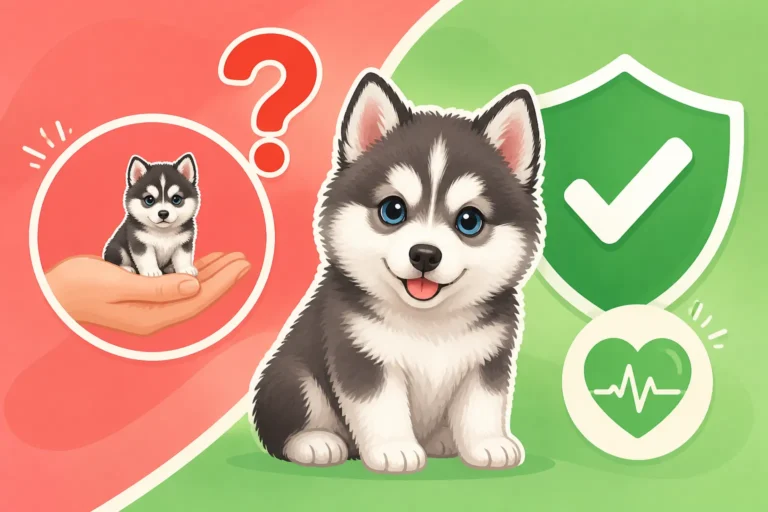
Whether a Pomsky Is Healthier Than a Husky
A Pomsky is not automatically healthier than a Husky just because it is a crossbreed. Its health depends on the individual dog, the inherited traits from both parents, and the care and screening behind its breeding. This guide compares the two, explains where a Pomsky may face different risks, and shows what to check before choosing a puppy or planning routine care.
Are Pomskies healthier than Huskies
Why a crossbreed is not a health guarantee
A Pomsky combines Pomeranian and Siberian Husky ancestry, but it does not receive a predictable, balanced share of each parent’s health risks. Puppies in the same litter can inherit different traits, and dogs with similar appearances may have very different underlying health profiles. A smaller body or a Husky-like face does not tell you whether a dog is healthier.
People often hear about “hybrid vigor,” the idea that mixing breeds can reduce the chance of some inherited problems. It can be relevant in some breeding situations, but it is not a guarantee. A Pomsky can inherit a condition found in either parent breed, and related dogs in a breeding line may share risks even when they belong to different breeds. The quality of health screening and the dogs’ family history matter more than the crossbreed label alone. For a closer look at the limits of the idea, see Whether Hybrid Vigor Is Real in a Pomsky.
A comparison with a purebred Husky also needs context. A responsible Husky breeder may screen for known breed concerns, while a poorly planned Pomsky pairing may involve little useful health information. The reverse can also be true: a carefully screened Pomsky’s parents may have better documented health than an individual Husky’s parents. “Purebred” and “mixed breed” describe ancestry, not a personal health forecast.
What the comparison can and cannot tell you
Huskies and Pomskies can share some inherited concerns, but they are not interchangeable. A Husky is a more established breed with a generally more consistent adult size and a longer history of breed-specific health screening. Pomskies vary more in size, structure, coat, and inherited traits, particularly across generations. That variation makes it harder to predict an individual dog’s needs from the breed name alone.
A Pomsky’s smaller size may mean different practical considerations, such as monitoring dental crowding or protecting a small puppy from accidental injury. It does not mean the dog is immune to joint or eye problems. Huskies, meanwhile, are not free from health concerns simply because they are a distinct breed. A thoughtful comparison looks at the parents, screening records, veterinary history, and the dog’s current condition—not a general claim that one category is healthier.
| Health question | Pomsky | Siberian Husky |
|---|---|---|
| Can breed alone predict health? | No. Inherited traits can vary widely between dogs and generations. | No. Individual health still depends on family history, screening, and care. |
| Can joint problems occur? | Yes. Small-dog knee concerns and hip problems may be relevant. | Yes. Hip health is one consideration, though risk varies by dog. |
| Are eye checks useful? | Yes. A Pomsky may inherit eye concerns from either side. | Yes. Eye screening and veterinary checks remain important. |
| Does size guarantee easier care? | No. A smaller dog may have distinct dental, injury, or weight-management needs. | No. A larger, active dog has its own exercise and health considerations. |
| What matters most when choosing a puppy? | Parent health records, appropriate screening, and a transparent breeder. | Parent health records, appropriate screening, and a transparent breeder. |
For an overview of the conditions a Pomsky might inherit from either side, read The Two Opposite Disease Lists a Pomsky Inherits. It is also worth understanding how generation labels affect variation: Whether an F1 Pomsky Is Healthier Than an F2 explains why an F1 or later-generation label does not by itself establish better health.
Health concerns to consider in a Pomsky
Joint and dental issues
Patellar luxation, where a kneecap moves out of its normal position, is a concern to discuss for a small or small-to-medium dog. A Pomsky may also inherit hip-related risks from its Husky ancestry. These conditions do not affect every Pomsky, and a limp does not automatically mean a dog has a particular diagnosis. Still, recurring skipping, stiffness, reluctance to jump, or difficulty rising are good reasons to contact a veterinarian rather than assuming the dog is being stubborn.
Small dogs can also have crowded teeth, which may make cleaning harder and allow plaque to build up. In a Pomsky, the size and shape of the mouth can vary, so routine oral checks are useful even when the dog seems comfortable. Bad breath, red or bleeding gums, chewing on one side, or dropping food can point to a problem that deserves veterinary attention. Daily tooth brushing with a dog-safe product is often more useful than relying on treats alone. For more detail, see Dental Crowding in a Pomsky's Small Mouth and Slipping Kneecaps in a Pomsky.
Eyes, breathing, and other inherited risks
Pomskies may inherit eye conditions from either parent breed, and eye color does not reliably indicate whether a dog can see well or will develop a problem. Cloudiness, redness, squinting, discharge, or a sudden change in vision should not be written off as a normal feature of a blue-eyed or light-eyed dog. A veterinarian can examine the eye and advise whether additional screening is appropriate. More background is available in The Eyes a Pomsky Gets From the Husky.
A Pomsky may also have a small dog’s susceptibility to certain airway or windpipe concerns, while a Husky’s size and structure create a different set of practical considerations. A persistent cough, noisy breathing, fainting, or breathing difficulty calls for veterinary advice; a collar pulling on the neck can be especially unhelpful in a dog with coughing or airway symptoms. Use a well-fitted harness for walks if your veterinarian recommends avoiding pressure on the throat, and have recurring symptoms assessed rather than trying to diagnose them at home. See The Collapsing Trachea a Pomsky Gets From the Pomeranian for more about that particular concern.
These examples are not a checklist of conditions every Pomsky will develop. A dog’s symptoms, examination, and medical history matter. Avoid adding supplements or changing food to treat a suspected inherited disorder without veterinary guidance. For instance, skin or coat changes can have several possible causes, and guessing at a nutritional deficiency may delay the right diagnosis.
How to assess a Pomsky’s health before choosing one
Ask about both parents and their health screening
A breeder should be able to explain which health checks were performed on both parents, what the results showed, and how those checks relate to the breeds in the pedigree. Ask to see records rather than relying on a verbal assurance that the dogs are “healthy.” A family history can be useful too: ask about recurring joint, eye, dental, breathing, or other medical issues among close relatives.
The exact screening plan depends on the individual dogs and their breeding lines. A DNA panel may identify certain inherited variants, but it does not replace physical examinations or every relevant health evaluation. Likewise, registration paperwork is not the same thing as proof that parents were screened. A careful buyer can review the broader questions in The Health Tests a Pomsky Breeder Should Show and Whether an Untested Pomsky Litter Is Worth Buying.
Pay attention to how the breeder responds. A thoughtful breeder should welcome reasonable questions, explain uncertainty honestly, and be willing to discuss what they would do if a puppy developed a health problem. Be cautious if you are pressured to decide quickly, offered guarantees that no dog will ever become ill, or given no way to review parent records. A puppy’s photos, coat color, or advertised size cannot substitute for health information.
Arrange veterinary care and keep useful records
Once a Pomsky comes home, schedule a veterinary visit and bring any records supplied by the breeder or rescue. The veterinarian can assess the puppy’s growth, teeth, joints, eyes, vaccination needs, parasite prevention, and overall condition. Keep a simple record of weight, symptoms, medications, and questions between visits. It can be surprisingly helpful to note when a cough occurs, how often a dog skips meals, or whether a limp follows activity.
For routine care, ask the veterinarian what is appropriate for your dog rather than selecting products based only on breed claims. If you use Chewy or another retailer to reorder basic supplies, follow your veterinarian’s instructions for products such as dental-care items or parasite prevention. Chewy may also be a convenient place to keep track of recurring food and care purchases, but a retailer’s product listing is not a substitute for advice about a dog’s diagnosis or treatment. If a prescription diet or medication is recommended, confirm the exact product and directions with the veterinary team before ordering; Chewy is one option some owners use to fill or reorder veterinarian-authorized items.
Food and weight management are part of preventive care, too. A Pomsky’s ideal body condition depends on its frame and age, not just the number on a scale or a seller’s size estimate. Ask the veterinarian how to judge body condition and how to adjust portions as the dog grows or becomes less active. Store food safely, measure portions consistently, and keep treats in the overall feeding plan. If using Chewy for regular food deliveries, check that the formula matches the veterinarian’s recommendation and your dog’s life stage rather than choosing a diet based on a marketing label.
What a Pomsky owner can reasonably expect
Lifespan and quality of life depend on the individual
A Pomsky may live a long life, but no breed label can promise a particular lifespan. Genetics, body condition, dental health, preventive care, activity, and timely treatment all play a role. Some inherited disorders can be managed, while others may require specialist evaluation or ongoing care. A diagnosis does not automatically mean a poor quality of life; the dog’s comfort and response to treatment are central.
Huskies also vary in health and longevity. Comparing a typical lifespan for one breed with a single Pomsky’s outcome can be misleading, because individual dogs and their care differ. Instead, ask whether the breeder has documented health information, whether your dog receives regular veterinary care, and whether you know what changes should prompt a call to the clinic. For a wider discussion of lifespan, see The Twelve to Fifteen Years a Pomsky Lives.
Practical signs that deserve attention
Call a veterinarian about a new or recurring limp, persistent cough, difficulty breathing, eye changes, trouble eating, or a sudden shift in energy. Seek urgent help for severe breathing distress, collapse, major injury, or other sudden symptoms that seem serious. You do not need to identify the cause before asking for help; describing what you observed and when it began is enough to get the conversation started.
Routine checks at home can make changes easier to notice. Look at the teeth and gums when your dog is relaxed, watch how it moves after rest and exercise, and keep an eye on appetite and weight. These observations are not a replacement for an examination, but they give your veterinary team practical details. If a Pomsky is already diagnosed with a condition, follow the care plan and ask before changing medication, exercise, food, or supplements.
The fairest answer is that a Pomsky is not inherently healthier than a Husky. Some Pomskies may be healthy throughout life, while others inherit medical concerns; the same individual variation exists among Huskies. A responsible breeder, transparent records, preventive veterinary care, and attention to early symptoms are more useful guides than assuming a crossbreed has fewer health problems.
Disclaimer
This article is for general informational purposes only and does not constitute professional advice. Laws, prices and regulations vary by location and change over time. Consult a qualified professional for guidance on your specific situation.