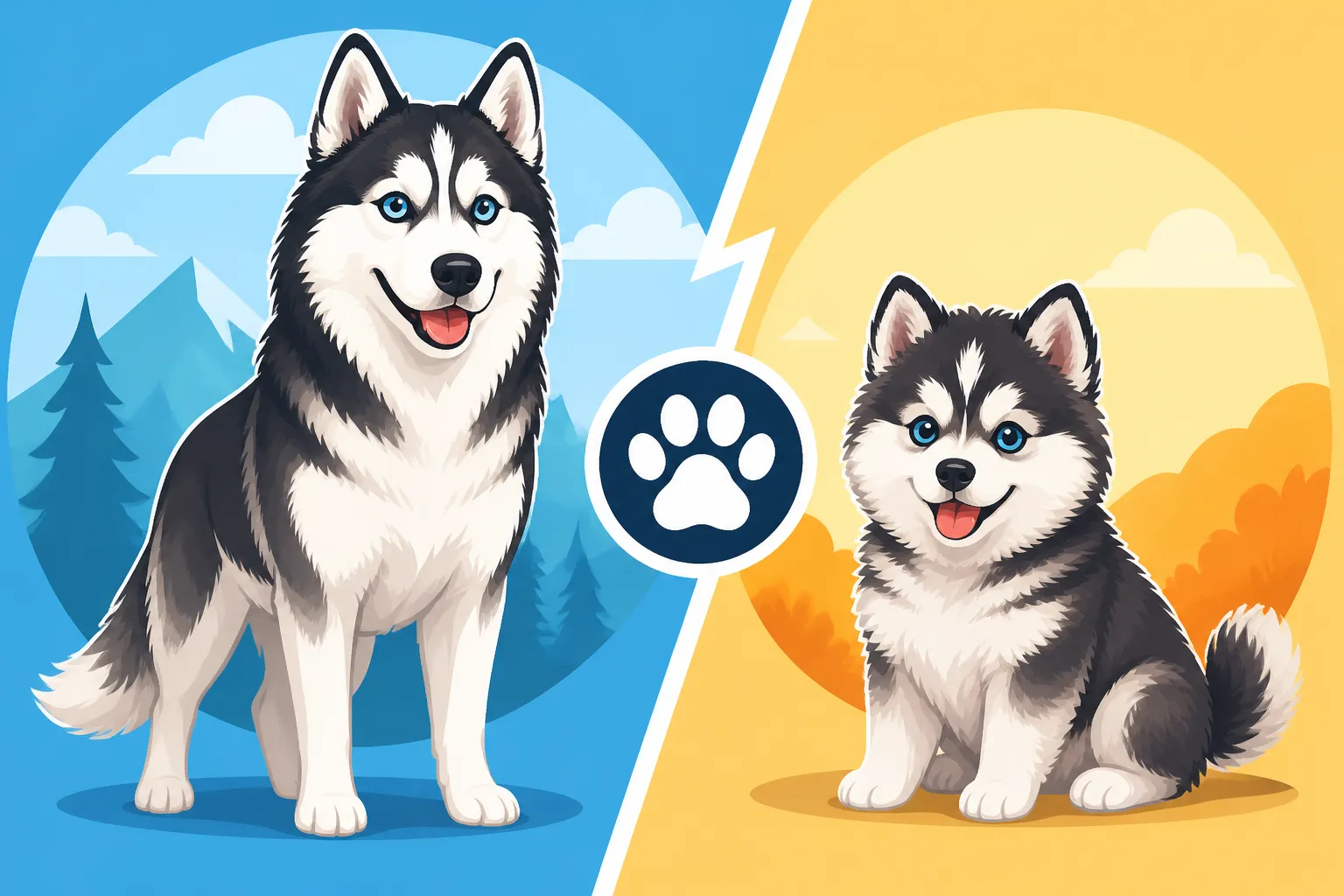
Whether a Pomsky Looks Like a Miniature Husky
A Pomsky can look strikingly like a miniature Husky, but that resemblance is never guaranteed. One puppy may have a Husky-style mask, upright ears, and a fluffy curled tail; another may look much more like a small Pomeranian. This guide explains which features create the “mini Husky” look, how much appearance varies, and what to check before choosing a puppy.
What makes a Pomsky look like a miniature Husky
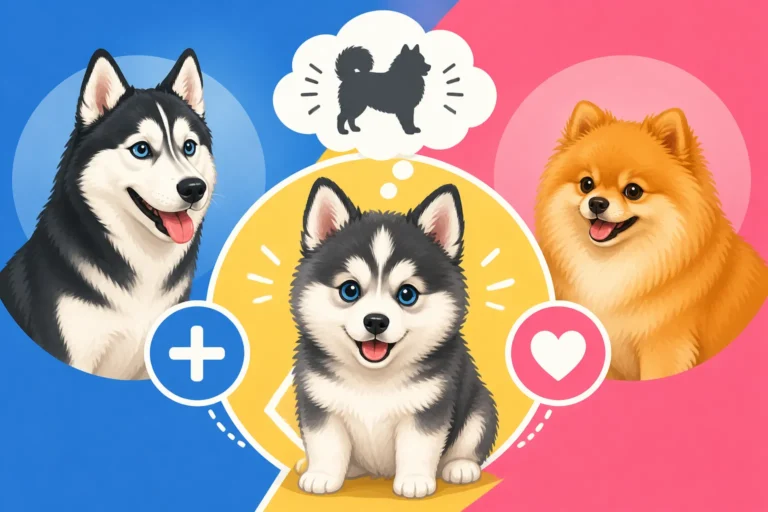
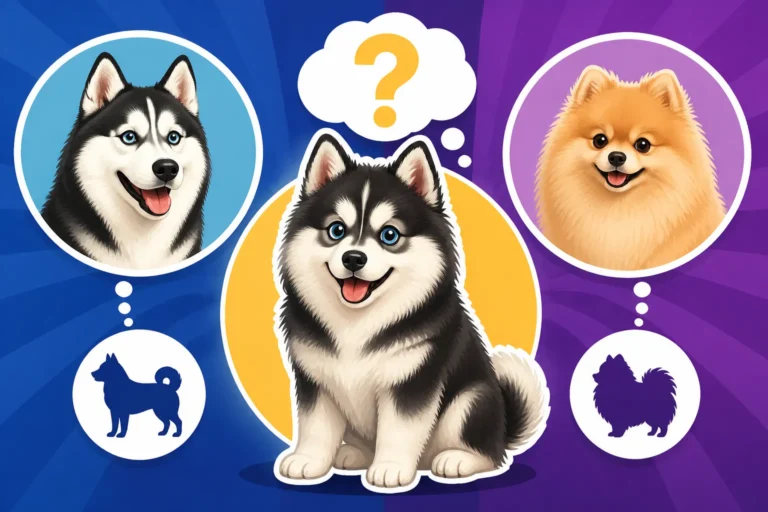
A Pomsky is a cross between a Siberian Husky and a Pomeranian. Because those parent breeds differ in size and appearance, their puppies can inherit a mix of traits rather than a predictable, smaller copy of a Husky. Some Pomskies strongly resemble Huskies at a glance, while others have a compact, foxlike look that leans more toward the Pomeranian.
The phrase “miniature Husky” describes an impression, not a reliable promise about a Pomsky’s adult appearance, size, or temperament. Even puppies from the same litter can look noticeably different. For a closer look at how the two sides can show up in one dog, see Whether a Pomsky Looks More Pomeranian Than Husky.
Face, mask, and expression
The Husky-like impression often starts with the face. A Pomsky may inherit a dark facial mask, contrasting markings around the eyes, and a pointed muzzle that recalls a Husky. Upright ears can add to the resemblance, especially when they appear proportionate to the puppy’s head.
But these features are not a package deal. A Pomsky may have a pale or irregular mask, a shorter muzzle, or a softer, rounder expression. The Pomeranian’s smaller face and dense ruff can make a dog look more like a plush toy than a scaled-down sled dog. Even a puppy with Husky markings may develop a face that looks less Husky-like as its adult coat and proportions come in.
Eye color also shapes people’s first impression. Blue eyes can make a Pomsky look especially Husky-like, but many Pomskies have brown eyes, and some have one eye of each color. Eye color alone does not tell you what the dog will look like overall, nor does it predict the dog’s health or vision. For more on that distinction, read The Blue Eyes People Buy a Pomsky For.
Coat, coloring, and tail
A thick double coat, gray-and-white or black-and-white coloring, and a plume-like tail may all contribute to a miniature-Husky appearance. Yet Pomsky coats vary in length, texture, density, and pattern. A dog can have Husky-like coloring with a more Pomeranian-shaped body, or a fluffy Pomeranian-style coat with a Husky mask.
The tail can be another strong visual clue. Some Pomskies carry a fluffy tail curled over the back, while others have a looser or less tightly curled tail. Coat color and markings may also shift as a puppy matures. A photograph of a very young puppy is therefore only a snapshot, not a dependable preview of its final look. The Colors and Masks a Pomsky Comes In explores how broad that variation can be.
| Feature | What may look Husky-like | Why it is not a guarantee |
|---|---|---|
| Face | Dark mask, contrasting markings, pointed muzzle | The muzzle, mask, and expression vary between puppies |
| Ears | Upright, triangular ears | Ear shape and proportions can differ |
| Eyes | Blue eyes or two different eye colors | Many Pomskies have brown eyes, and color does not define the whole appearance |
| Coat | Dense double coat, gray-and-white or black-and-white pattern | Coat length, texture, and color vary |
| Tail | Fluffy tail carried over the back | Tail shape and carriage are not identical in every Pomsky |
| Overall outline | Compact dog with a Husky-like silhouette | Body proportions and adult size are not standardized |
Why Pomsky appearances are so unpredictable
It is easy to see a photo of a Husky-looking Pomsky and assume that another puppy from the same cross will turn out similarly. In reality, mixed-breed puppies inherit different combinations of traits. A litter can include puppies with clear similarities to both parent breeds, and some may favor one side much more strongly than the other.
That uncertainty matters if you are picturing a specific dog: perhaps a small Husky with a mask and bright eyes, or a fluffy companion that stays compact. A Pomsky may have some of those traits, but the breed name cannot promise a particular combination. Why an F1 Pomsky Varies So Much explains why puppies from the same kind of cross can still differ.
Parent looks offer clues, not certainty
Looking at both parents can help you understand the range of features a puppy might inherit. If one parent has a pronounced mask, erect ears, or a particular coat pattern, you may wonder whether a puppy will share those traits. That is a reasonable question, but it is not a guarantee: appearance is shaped by multiple inherited traits, and puppies do not simply average their parents’ looks.
Photos of the parents can also be misleading if they are carefully posed, taken from a flattering angle, or show only one side of the dog. If meeting the parents is possible, observe their build and coat in person and ask the breeder to explain which traits are common in that line. A thoughtful answer should make room for variation rather than promise that every puppy will look like a miniature Husky.
Puppy photos do not settle the question
A puppy’s coat, face, and proportions change as it grows. The fluffy coat that looks especially Husky-like in one photo may not predict the adult coat texture or outline. Markings may appear more or less prominent as the coat changes, and a puppy’s ears can look oversized before the rest of its body catches up.
Ask for photos taken at different ages, ideally of related puppies as well as the parents. They can provide useful context, but even a collection of family photos cannot tell you exactly how an individual puppy will mature. If adult size is part of the picture in your mind, Whether a Pomsky Puppy's Size Can Be Predicted is worth reading alongside appearance information.
Is a Pomsky actually a miniature Husky
Not in the strict sense. A Pomsky is a crossbreed, not simply a Siberian Husky bred down to a smaller scale. That distinction is more than a technicality: it means you should not assume that a Pomsky will have a Husky’s exact build, coat, behavior, or adult size in a smaller body.
People sometimes use “miniature Husky” as shorthand for a dog that looks Husky-like but is smaller. That phrase can set expectations that a particular puppy may not meet. Pomskies do not have one uniform appearance, and the label does not make every dog a predictable miniature version of either parent.
How a smaller Husky-like dog differs from a Pomsky
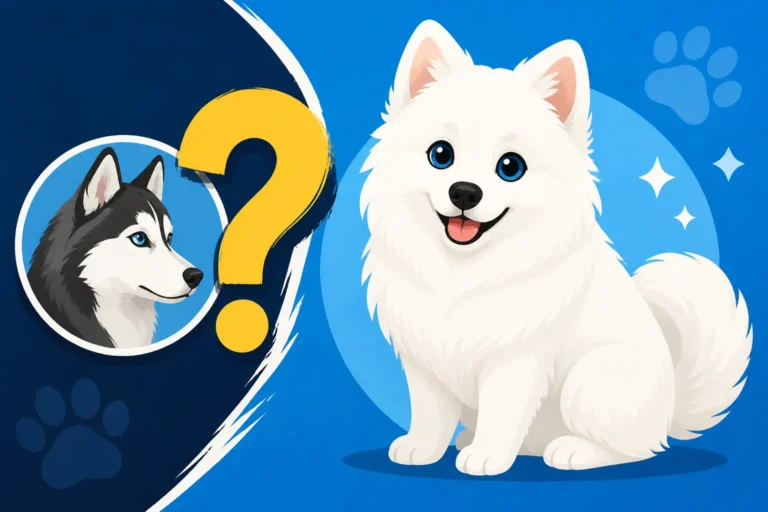
Some people interested in a compact Husky appearance also compare Pomskies with the Alaskan Klee Kai. These are different dogs, and one is not simply another name for the other. If the distinction matters to your search, look into the breeds separately and compare their characteristics rather than relying on a photo caption or informal seller description. Choosing Between a Pomsky and a Klee Kai can help frame that comparison.
A useful question is not only “Does this puppy look like a miniature Husky?” but also “What kind of adult dog am I prepared to care for if its appearance differs from what I pictured?” That keeps the decision grounded in the individual puppy rather than a visual ideal. A Pomsky that looks more Pomeranian-like is still a Pomsky; it is not a failed version of a Husky.
Size and appearance are separate questions
A dog that looks small in a photo may be at an unusual angle, still young, or simply built differently from the dog beside it. Appearance and adult size are related only in the broadest sense: a puppy’s face, coat, or markings cannot tell you exactly how large it will become. The same caution applies to labels such as “mini,” “toy,” or “micro,” which can create expectations without resolving the uncertainty of a mixed-breed dog’s adult size.
Ask what the puppy’s parents weigh, whether the breeder has information about adult relatives, and how the estimate was reached. Treat any estimate as an estimate, not a guarantee. For broader context, see What a Pomsky Actually Weighs and What a Pomsky Actually Weighs Full Grown.
How to choose a Pomsky without relying on the photo
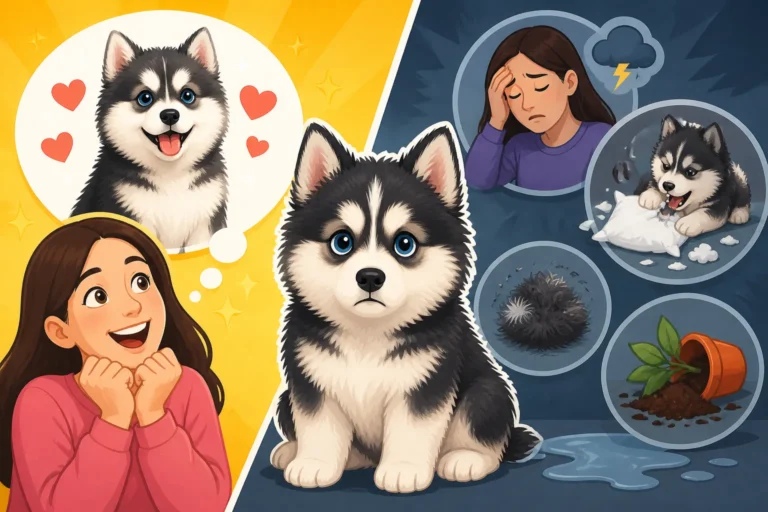
It is completely understandable to be drawn to the miniature-Husky look. Photos can make it feel as though the right puppy will come with a specific mask, coat, or eye color already decided. The frustrating part is that a photo tells you what a puppy looks like at that moment, not exactly how its appearance will develop or whether it will fit your household in other important ways.
A better approach is to use appearance as one part of a broader decision. Look at the puppy in person when possible, ask clear questions, and consider whether you would still welcome the dog if its adult coat or proportions turned out differently than you expected.
Questions to ask about appearance
Ask the breeder what is known about the puppy’s parents and relatives, and whether there are photos of adult dogs from previous litters. Find out whether coat and eye color descriptions refer to the puppy’s current appearance or are presented as predictions. Be cautious of claims that a puppy is guaranteed to stay a certain size or develop an exact look.
You can also ask how the breeder describes differences between puppies in the litter. A responsible explanation should acknowledge that siblings may mature differently. If every puppy is described as a guaranteed miniature Husky, ask what that assurance is based on and how the breeder handles the possibility that an adult dog looks different.
Think about everyday fit as well as looks
A fluffy coat can be lovely, but it may require regular brushing and careful coat care. Before bringing home a dog, consider whether you are ready for loose fur, grooming sessions, and the time involved in keeping a dense coat free of tangles. When comparing brushes or other basic supplies on Chewy or at a local pet shop, match the tool to the coat you are actually caring for, rather than choosing based only on a puppy photo.
The same practical thinking applies to equipment. A harness should fit the dog’s body, not an imagined adult version of it. If you are browsing Chewy, use the product’s measurement guidance and recheck fit as the puppy grows; a harness that fits today may need adjustment later. A comfortable, properly fitted piece of gear matters more than whether it looks like something made for a tiny Husky.
Finally, take time to meet the individual dog and learn about its needs. Ask how the puppy responds to handling and everyday sounds, and what support the breeder provides after placement. Chewy and other retailers can help you compare supplies once you know what your dog needs, but shopping choices cannot make an uncertain adult appearance certain. For a wider view of the trade-offs, What Nobody Warns a Pomsky Buyer About is a useful companion read.
Disclaimer
This article is for general informational purposes only and does not constitute professional advice. Laws, prices and regulations vary by location and change over time. Consult a qualified professional for guidance on your specific situation.