Whether a Pomsky Can Happen by Accident
The idea of two dogs falling in love and producing a litter of adorable puppies is a heartwarming thought, but when it comes to a Pomsky, the reality is a little more complicated, and frankly, far less romantic. Many aspiring Pomsky owners wonder if these charming miniature Huskies could ever happen purely by chance. The honest answer is that a "Pomsky by accident" is virtually impossible and, if attempted, would be fraught with serious, life-threatening risks for both parent dogs. This guide will delve into the specific biological and practical reasons why Pomsky breeding requires careful planning and veterinary intervention, dispelling the myth of the accidental Pomsky.
The Biology of Breeding: Size Matters Most
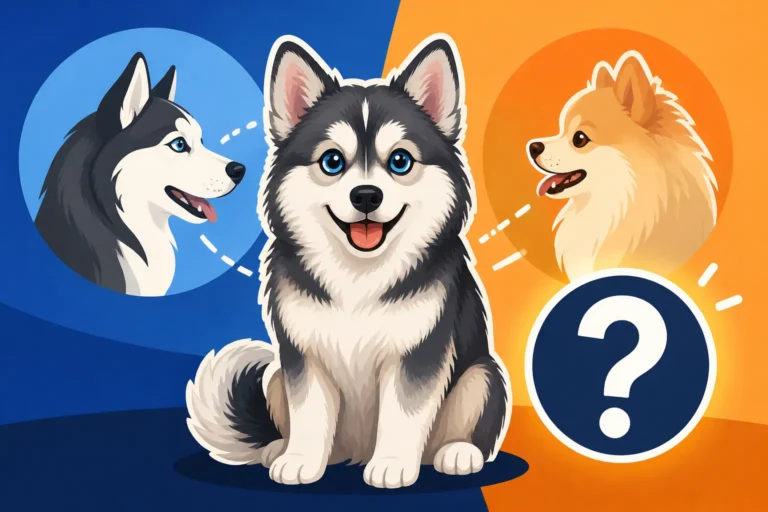
When you think about the vast size difference between a Siberian Husky and a Pomeranian, it quickly becomes clear why natural breeding between these two breeds presents insurmountable challenges and grave dangers. This isn't just about awkward logistics; it's about fundamental biological safety.
The Husky Dam Requirement
For a Pomsky litter to safely exist, the mother must always be the larger Siberian Husky. This isn't a preference; it's a critical safety measure. The Husky female's reproductive anatomy is simply built to carry and deliver a litter of puppies that could potentially inherit the larger size genes from her side. Even if the puppies are smaller due to the Pomeranian father, her body is capable of handling the pregnancy and birth.
Conversely, imagine the distress and danger if the mother were the tiny Pomeranian. A Pomeranian female's uterus and birth canal are far too small to comfortably, let alone safely, carry puppies sired by a Husky. The risk of devastating complications, including uterine rupture, extreme dystocia (difficult birth), and even death for both the mother and puppies, would be astronomical. It's a fundamental biological incompatibility that cannot be overcome, making a Pomeranian dam carrying a Pomsky litter an absolute non-starter for any responsible breeder or even a casual owner. This is why you'll often hear breeders state unequivocally Why a Pomsky's Dam Must Be the Husky.
Risks of Natural Mating Between Such Disparate Sizes
Beyond the dangers of pregnancy and birth, the act of natural mating itself between a large male Husky and a small female Pomeranian, or even more dangerously, a small male Pomeranian and a large female Husky, is incredibly problematic. In the extremely unlikely scenario that a male Pomeranian could even successfully mount a female Husky, the size difference means he could suffer severe injury. Internal damage to the male dog or strain on his joints and back are very real concerns.
If the roles were reversed, with a large male Husky attempting to breed a tiny female Pomeranian, the consequences would be catastrophic. The male Husky's size and weight could cause severe internal injuries to the female, potentially rupturing organs or causing spinal damage. Even if some form of mating occurred, the likelihood of a safe conception and gestation is practically zero, leading to almost certain tragedy. This profound physical mismatch is why responsible breeders would never allow such a pairing to occur naturally. The welfare of both dogs is paramount, and these are not risks any ethical individual would take. You can learn more about the specifics of why this is such an issue here: Why a Pomsky Cannot Be Conceived Naturally.
The Necessity of Artificial Insemination (AI)
Given the inherent risks and biological impossibilities of natural breeding between a Husky and a Pomeranian, artificial insemination (AI) isn't just a convenient option; it's the only safe and responsible method for creating Pomsky puppies. This is a deliberate, carefully managed process that requires significant veterinary expertise.
Why AI is Standard for Pomsky Breeding
Artificial insemination bypasses the physical dangers associated with natural mating between two dogs of such dramatically different sizes. For a Pomsky, semen is collected from the male Pomeranian and then carefully introduced into the reproductive tract of the female Husky by a veterinarian. This procedure eliminates any risk of physical harm during the breeding process itself. It ensures that the female Husky is not subjected to undue stress or injury, and the male Pomeranian is also kept safe from potential harm.
This isn't something that can be done casually in a backyard. It requires precise timing, sterile conditions, and a clear understanding of canine reproduction. Responsible breeders invest heavily in this process because it prioritizes the health and safety of their breeding stock. Without AI, the Pomsky breed as we know it simply wouldn't exist in a safe or ethical manner. You can delve into the financial side of this necessary procedure in What Artificial Insemination Costs a Pomsky Breeder.
The Veterinary Involvement Required
The entire AI process is highly dependent on professional veterinary involvement. It begins with careful timing of the female Husky's ovulation cycle, often using progesterone testing to pinpoint the optimal breeding window. This blood work is crucial and needs to be done regularly as the female approaches estrus. Once the timing is right, the male Pomeranian's semen is collected. This collection often involves a trained professional to ensure the male is comfortable and the sample is viable.
Finally, the collected semen is introduced into the Husky's uterus using specialized equipment. This procedure can range from a vaginal insemination, which is less invasive, to a surgical insemination, which is more involved but can have higher success rates. Each step requires a vet's expertise, from understanding the reproductive cycle to performing the insemination itself and monitoring the subsequent pregnancy. This level of medical oversight makes any "accidental" Pomsky virtually impossible because accidents don't come with veterinary supervision and scheduled appointments. For more on this, consider What a Vet Charges to Inseminate a Pomsky Litter.
The Unlikely "Accident" Scenario
When people talk about a dog breeding "by accident," they usually envision two dogs meeting, falling in love, and a litter of puppies appearing a couple of months later. For Pomskies, this romantic notion simply doesn't align with reality.
Defining an "Accidental" Cross
An "accidental" cross in the dog world typically means an unplanned mating that occurs when two intact dogs, usually of similar or compatible sizes, are left unsupervised. Think of a curious Labrador escaping a yard to meet the neighbor's Poodle, or two farm dogs of mixed parentage finding a window of opportunity. The key here is the ability to mate naturally and safely, even if unintentionally. For a Pomsky, this fundamental physical compatibility is absent.
Given the extreme size disparity between a male Pomeranian and a female Husky, a truly accidental breeding is almost beyond the realm of possibility. The physical act of mating would be incredibly difficult, if not impossible, without significant human intervention to assist the smaller male. This isn't just about a height difference; it's about weight, strength, and anatomical alignment. Even if a highly determined Pomeranian somehow managed to initiate contact, the chances of a successful "tie" – which is crucial for conception – are incredibly slim, and the risk of injury for both parties would be immense.
Why Strict Management Prevents It
Responsible dog ownership, especially with intact animals, involves strict management to prevent unwanted pregnancies. Owners of an intact male Pomeranian and an intact female Husky, living in the same household, would need to be incredibly negligent to allow any opportunity for an "accidental" natural breeding attempt. Dogs are usually supervised, kept in separate areas, or spayed/neutered to prevent such occurrences.
Even if somehow, against all odds, these two breeds were to be in a situation where they could attempt to mate naturally, the physical challenges are so profound that a successful "accident" would be a statistical anomaly. The female Husky would likely resist a male so small, and the male Pomeranian would struggle immensely to reach or position himself correctly. It's not like two similarly sized dogs where a moment of distraction can lead to an unplanned litter. The mechanics of a Husky-Pomeranian natural breeding are so fundamentally flawed that prevention is almost inherent in their physical makeup. Whether a Pomsky Litter Is Ever Accidental provides more context on this topic.
What About Other "Accidental" Husky-Pomeranian Mixes?
While a deliberate Pomsky breeding requires artificial insemination, it's fair to wonder if dogs resembling Pomskies might turn up in shelters or rescues as genuinely "accidental" mixes. This distinction is important when understanding the breed.
The Reality of Mixed Breed Litters
Mixed breed dogs, often affectionately called "mutts," are indeed the result of accidental breedings all the time. Shelters are full of wonderful dogs that are a blend of various breeds, and their existence often stems from unplanned pairings where intact dogs were allowed to roam or interact unsupervised. Sometimes these mixes might even involve one parent who looks like a Husky and another who looks like a Pomeranian.
However, the key difference here is the intentionality and the method of breeding. An accidental mix of a Husky and a Pomeranian would typically imply a natural mating event. As established, the physiological barriers to a natural breeding between these two breeds are immense. Therefore, while you might find a shelter dog with Husky-Pomeranian heritage, it's far more likely to be an F2 or later generation Pomsky that has been rehomed, or perhaps a mix of a Pomsky with another breed, rather than a direct, first-generation accidental coupling of a purebred Husky and Pomeranian. You might even find dogs that were misrepresented, such as an Alaskan Klee Kai, as a "Pomsky" in such scenarios. Whether a Shelter Mix Can Be Called a Pomsky explores this further.
Identifying a True Pomsky vs. a Random Mix
A "true" Pomsky, particularly an F1 (first generation) Pomsky, is a product of a very specific, deliberate, and expensive breeding process involving artificial insemination. This process ensures the parentage is known and health screenings can be performed. When you acquire a Pomsky from a reputable breeder, you're getting a dog with a verifiable lineage and a known method of conception.
A random mix, even if it has Husky and Pomeranian DNA, would rarely be the direct result of an accidental natural breeding between these two purebreds. If you were to find a dog in a rescue that looks like a Pomsky, it could be a later generation (F2, F3) where the size difference in previous generations was less extreme, or perhaps a mix that incorporates other breeds. DNA testing can help confirm the genetic makeup of such a dog, but it won't necessarily tell you how that breeding occurred. The point remains: the specific challenges of breeding an F1 Pomsky mean it's nearly impossible for one to occur accidentally in the traditional sense of an unplanned natural mating.
Ethical Considerations and Responsible Breeding
Understanding why Pomskies require artificial insemination brings forth important ethical considerations for anyone interested in the breed. It highlights the vast difference between responsible, health-conscious breeding and casual, opportunistic pairings.
The High Costs and Commitment of Responsible Pomsky Breeding
Responsible Pomsky breeding is anything but cheap or easy. It involves a substantial financial and time commitment. From the initial health testing of both parent dogs – looking at hips, elbows, eyes, and patellas – to the specialized veterinary services for artificial insemination, progesterone testing, and potentially even C-sections if complications arise during whelping, the costs add up significantly. Breeders also invest in high-quality nutrition for the pregnant dam and puppies, proper socialization, and early veterinary care for the litter.
This extensive investment means that reputable Pomsky breeders are highly unlikely to be allowing "accidental" breedings. Their entire operation is built on control, planning, and meticulous care. The higher price tag of a well-bred Pomsky often reflects these significant upfront costs and the responsible practices employed, ensuring the health and safety of their dogs. It’s a far cry from a casual backyard breeding setup, where health screenings and professional veterinary involvement might be minimal or non-existent. You can explore Whether Pomsky Prices Reflect Real Breeding Costs to understand this further.
The Dangers of Unplanned Crosses
The dangers associated with attempting an unplanned or "accidental" breeding between a Husky and a Pomeranian cannot be overstated. Beyond the ethical concerns, it poses severe welfare risks. An unmanaged, natural breeding could result in debilitating injuries for the male Pomeranian or fatal complications for the female Husky. Even if, by some incredible stroke of luck, a pregnancy resulted, the lack of prenatal veterinary care could endanger the dam and her puppies.
The existence of the Pomsky breed is a testament to scientific advancement and responsible breeding practices that allow two physically incompatible breeds to produce offspring safely. It’s a deliberate human endeavor, not a natural phenomenon. Therefore, anyone considering a Pomsky must understand that these dogs are the product of careful planning, not chance. If you're looking for dog supplies, food, or general pet care products, reputable online retailers like Chewy offer a wide range of options to support responsible pet ownership, including everything from specialized diets to grooming tools. However, when it comes to the complex process of breeding, professional veterinary services are absolutely non-negotiable.
Table: Planned vs. Accidental Pomsky Scenarios
To further illustrate the points discussed, here's a comparison of a planned, responsible Pomsky breeding versus the highly improbable and dangerous accidental scenario:
| Feature | Planned Pomsky Breeding (Responsible) | Accidental Husky/Pomeranian Mix (Highly Improbable/Dangerous) |
|---|---|---|
| Mating Method | Artificial Insemination (AI) exclusively | Natural breeding (unsupervised, unlikely due to size) |
| Parent Roles | Female = Husky, Male = Pomeranian | Any combination, but always high risk dueensize mismatch |
| Veterinary Involvement | Extensive (progesterone testing, AI procedure, prenatal care) | None or minimal |
| Risks to Parents | Minimal to none from mating; C-section risk managed if needed | Severe injury/death to male; severe injury/death to female (if Pomeranian) |
| Puppy Outcome | Health-tested parents, controlled environment, planned genetics | Unknown parentage, high risk of complications, potentially unhealthy |
| Ethical Standing | Adheres to welfare standards, responsible | Highly unethical, negligent, dangerous |
| Cost Implications | High due to vet fees, health tests, careful rearing | Potentially none initially, but massive emergency vet bills likely |
This table highlights just how far removed the intentional creation of a Pomsky is from the concept of an "accidental" litter.
Understanding the Pomsky's Unique Origin
The Pomsky is a relatively new designer crossbreed, and its very existence is thanks to human ingenuity and advances in veterinary science. It's not a breed that evolved naturally or commonly occurs by happenstance. The internet certainly played a massive role in sparking demand for these dogs, with early, often misidentified, photos going viral and creating an almost immediate desire for "miniature Huskies." You can read more about how this breed came into the public consciousness here: The Pomsky the Internet Ordered Before It Existed.
The careful, deliberate steps involved in bringing Pomskies into the world underscore the importance of choosing a reputable breeder. These aren't dogs that should be bred without extensive knowledge, resources, and a deep commitment to the welfare of both the parent dogs and the puppies. Understanding their unique origin helps future owners appreciate the effort and responsibility involved, and why you simply won't find a true Pomsky that "happened by accident."
Disclaimer
This article is for general informational purposes only and does not constitute professional advice. Laws, prices and regulations vary by location and change over time. Consult a qualified professional for guidance on your specific situation.