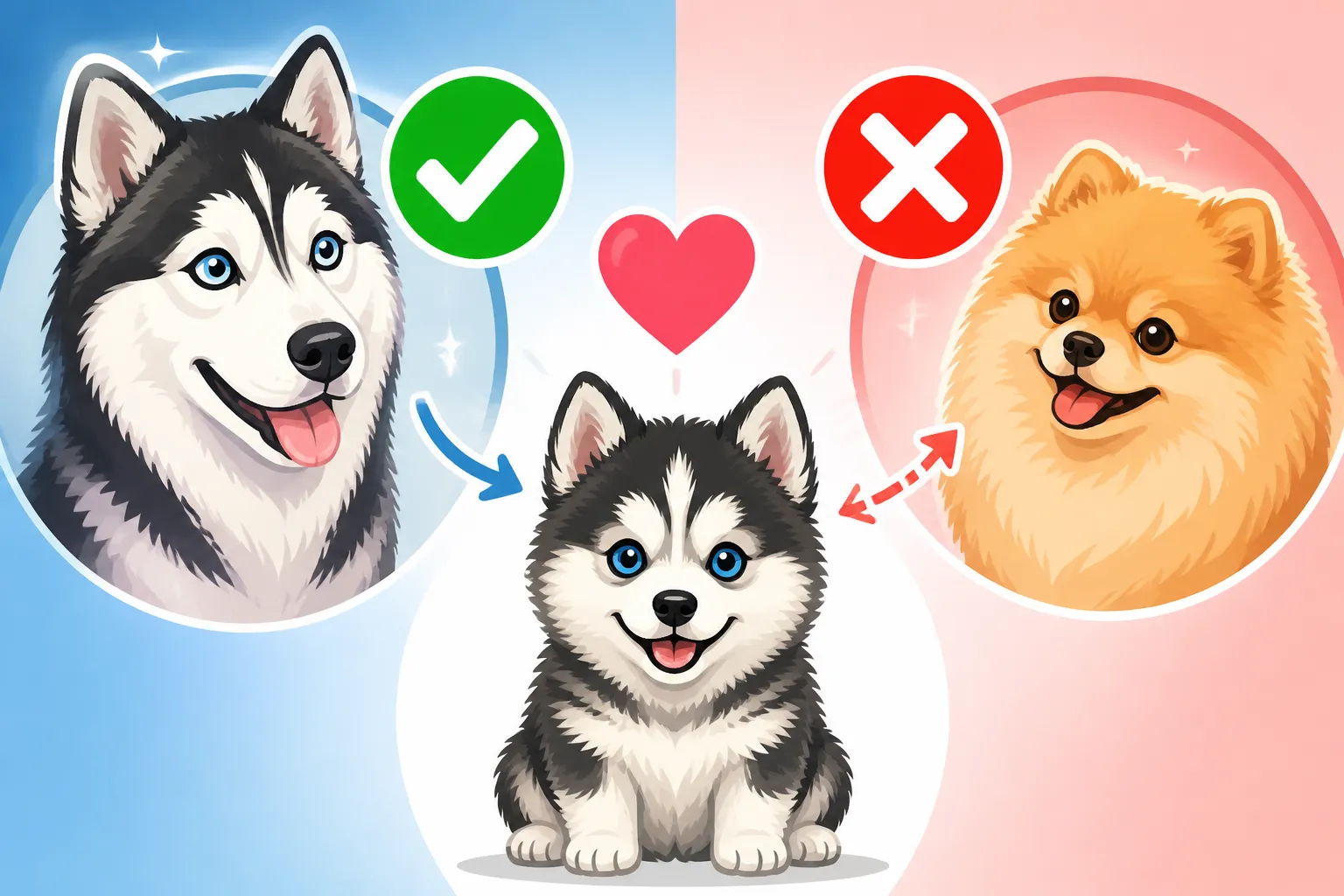
Why a Pomsky’s Dam Must Be the Husky
It's a common thought when first looking into Pomskies: "They're a mix of a Pomeranian and a Husky, so either breed can be the mother, right?" The truth, however, is far more complex and critically important for the health and safety of both parent dogs and puppies. This guide will meticulously explain why a Pomsky's dam must always be the Siberian Husky, detailing the biological realities, the ethical responsibilities of breeders, and the profound health implications that necessitate this specific breeding practice.
The Biological Reality: Why a Pomeranian Cannot Be the Dam
When we talk about the mechanics of creating a Pomsky, it’s not as simple as putting two dogs of different breeds together. The sheer difference in size between a petite Pomeranian and a substantial Siberian Husky dictates a very strict rule for safe breeding. This isn't just a preference; it's a non-negotiable biological imperative that directly impacts life and death.
The Size Discrepancy and Its Dangers
Imagine trying to fit a watermelon through an opening designed for an apple. That's a crude but apt analogy for what would happen if a Pomeranian were to carry Husky-sized puppies. Pomeranians typically weigh between 3 to 7 pounds, while Siberian Huskies can range from 35 to 60 pounds, sometimes even more. This isn't just about weight; it's about skeletal structure, uterine capacity, and the size of the birth canal. Even if a Pomeranian were somehow to become pregnant with a Husky's sperm, her tiny body is simply not equipped to handle the gestation or birth of fetuses that would be significantly larger than those from a Pomeranian sire. The risks are astronomical and entirely preventable.
The puppies, being half Husky, would inherit genes for a much larger size than a purebred Pomeranian puppy. This genetic predisposition means they would grow substantially during gestation, quickly outstripping the mother's internal capacity. The uterus, ligaments, and overall internal structure of a Pomeranian are simply not designed to stretch and support such a heavy and large litter. It would be a constant strain on her body, akin to a human woman carrying multiple full-term elephant calves. The ethical implications of putting a small dog through such an ordeal are immense, and any responsible breeder would never even consider it.
The Risks of Carrying Large Fetuses
For a Pomeranian dam carrying Pomsky puppies, the risks begin long before birth. During pregnancy, her tiny organs would be severely compressed, leading to potential complications such as respiratory distress, digestive issues, and extreme discomfort. The nutritional demands of growing much larger puppies would also place an unsustainable burden on her small body, potentially leading to her own health deteriorating rapidly. This isn't just about making her uncomfortable; it's about systemic failure and potential death.
As the pregnancy progresses, the increasing size of the fetuses poses a severe threat of uterine rupture, a catastrophic event that would almost certainly be fatal for both mother and puppies. If she were to even make it to full term, a natural birth would be virtually impossible. The puppies' heads and shoulders would be far too large to pass through her narrow birth canal. This would necessitate an emergency Cesarean section, a major surgical procedure that carries its own risks, especially for a dog already weakened by an unsustainable pregnancy. Even with the best veterinary care, the odds of a positive outcome for both mother and puppies would be incredibly slim. This is precisely Why the Size Gap Makes a Pomsky Breeding Dangerous.
The Unsuitability of Natural Breeding
Given the dramatic size difference, natural breeding between a male Husky and a female Pomeranian is physically impossible and inherently dangerous for the female. A male Husky is simply too large to safely mount and breed with a tiny Pomeranian female without causing severe physical injury. This physical barrier is nature's way of preventing such a perilous pairing.
Therefore, for Pomsky breeding to occur at all, artificial insemination (AI) is the only viable method. However, even with AI, the rule of the Husky as the dam must be upheld. AI bypasses the physical act of mating but does not alter the biological realities of gestation and birth. The Husky female, being the larger breed, has the appropriate uterine capacity and a sufficiently large birth canal to safely carry and deliver a litter of puppies sired by a smaller Pomeranian male. This fundamental understanding is at the core of responsible Pomsky breeding, ensuring that the health and well-being of the dogs are never compromised for the sake of creating a designer breed.
The Mechanics of Pomsky Breeding: Artificial Insemination
Since a natural pairing between a male Husky and a female Pomeranian is simply not feasible or safe, the creation of a Pomsky relies entirely on advanced reproductive techniques. This isn't just a convenience; it's a necessity that adds significant cost and complexity to the breeding process, highlighting the commitment required from responsible breeders.
The Role of Artificial Insemination (AI)
Artificial insemination is the cornerstone of Pomsky breeding. It's the controlled process of collecting semen from the Pomeranian sire and introducing it into the reproductive tract of the Siberian Husky dam. This method completely bypasses the physical size disparity that makes natural breeding impossible and dangerous. A skilled veterinarian or experienced reproductive specialist is crucial for this procedure, ensuring that it's done correctly and safely. The timing of AI is incredibly precise, often requiring progesterone testing to pinpoint the exact window of ovulation for the Husky dam. Without AI, the Pomsky breed simply wouldn't exist in a safe and ethical manner.
The AI process allows breeders to carefully select healthy parents and manage the genetic outcome as much as possible, though the genetic lottery always plays a part in what a Pomsky puppy will look like. It’s a deliberate, scientific approach to breeding that contrasts sharply with accidental or backyard breeding, where such precautions are often ignored. This dedication to technique is part of why Pomskies command their price point, reflecting the significant veterinary involvement and expertise required.
Surgical vs. Transcervical AI for Pomskies
There are generally two main types of artificial insemination used in canines: transcervical insemination (TCI) and surgical insemination. For Pomskies, transcervical insemination is often the preferred method when possible. In TCI, a specialized endoscope is used to guide a catheter directly into the uterus through the cervix, depositing the semen precisely. This method is less invasive than surgery and typically requires less recovery time for the Husky dam. It’s crucial that the dam is calm and cooperative for TCI to be successful, and a skilled hand is paramount.
However, sometimes surgical insemination is deemed necessary, especially if semen quality is marginal or previous TCI attempts have been unsuccessful. In a surgical AI, the dam is anesthetized, and an incision is made in her abdomen to directly inject the semen into the uterus. This is a more invasive procedure and carries the inherent risks of anesthesia and surgery, but it offers the highest success rate. Regardless of the method chosen, the primary goal is always the health and safety of the Husky dam. Breeders often factor in What Artificial Insemination Costs a Pomsky Breeder and What Progesterone Testing Adds to a Pomsky Litter when calculating overall breeding expenses, further underscoring the specialized nature of Pomsky creation.
The Breeder's Ethical Responsibility
A responsible Pomsky breeder understands that the well-being of their dogs is paramount. This means making informed, ethical decisions at every stage of the breeding process. It starts with selecting healthy parent dogs, both the Pomeranian sire and, critically, the Husky dam, who have undergone comprehensive health screenings to rule out genetic conditions. The purpose of this meticulous process is to ensure that the puppies inherit the best possible genetic foundation and that the dam is physically fit enough for pregnancy. This involves careful consideration of The Health Tests a Pomsky Breeder Should Show.
Ethical responsibility also extends to providing excellent prenatal care for the Husky dam, working closely with a reproductive veterinarian throughout the pregnancy, and ensuring a safe and stress-free whelping environment. Any deviation from the Husky-as-dam rule is a red flag, indicating a breeder who prioritizes profit over animal welfare. Owners looking for a Pomsky should always inquire about the breeding practices, ask to see health clearances for both parents, and verify that the dam is indeed a Husky. This transparency is a hallmark of a breeder committed to ethical standards.
Health Implications for the Dam and Puppies
The decision of which breed serves as the dam for a Pomsky litter is not just about avoiding immediate physical trauma during mating; it’s deeply rooted in preventing severe health complications throughout the entire gestational period and birth for both the mother and her offspring.
Maternal Health Risks in Detail
If a Pomeranian were to be used as the dam, the maternal health risks would be catastrophic. The significant size disparity between the Pomeranian and the Husky means that puppies, even with a Pomeranian father, would still be too large for a Pomeranian mother. This could lead to a host of life-threatening issues for the dam. Her small uterus would be stretched beyond its capacity, leading to severe discomfort, potential tearing, and even uterine prolapse. The sheer weight of the growing fetuses could also compromise her cardiovascular and respiratory systems, leading to organ failure.
Beyond gestation, the most immediate danger lies in parturition, or birth. Dystocia, or difficult birth, would be almost guaranteed. The puppies' large size relative to the Pomeranian’s narrow birth canal would prevent natural passage, necessitating an emergency Cesarean section. This surgery, already risky, becomes even more so for a tiny dog under immense strain. Complications like hemorrhaging, infection, and retained placentas are much more likely. Even if the dam survived, her long-term health could be severely compromised. In contrast, a Husky dam is robust enough to carry a litter from a Pomeranian sire, reducing the likelihood of these severe maternal complications, though C-sections are still sometimes necessary for Pomsky litters, as discussed in Whether a Pomsky Dam Needs a Cesarean.
Puppy Health and Development Considerations
The health of the puppies is also directly tied to the dam’s breed. If a Pomeranian were to carry a Pomsky litter, the cramped uterine environment could lead to developmental issues. There might not be enough space for the puppies to grow properly, potentially causing stunted growth, deformities, or even stillbirths. The restricted blood flow and nutrient supply to the fetuses in an overstretched uterus could further complicate their development, leading to weaker, less viable puppies.
Conversely, a Husky dam provides an optimal environment for growth and development. Her larger uterus allows ample space for the Pomsky puppies to grow to their full potential, benefiting from adequate blood flow and nutrient exchange. This ensures that the puppies have the best possible start in life, developing strong bones and organs. While every pregnancy carries some risk, choosing the Husky as the dam significantly minimizes the risks related to the physical mismatch of mother and offspring. This foundation of proper early development contributes to the overall health and vitality of the adult Pomsky.
The Importance of Veterinary Oversight
Given the complexities and potential risks, comprehensive veterinary oversight is not just recommended but absolutely essential for Pomsky breeding. This begins well before conception with thorough health screenings of both parents. For the Husky dam, this includes checks for Hip Dysplasia in a Pomsky and Slipping Kneecaps in a Pomsky, and ensuring she is in peak physical condition. The vet plays a critical role in monitoring the dam's heat cycle, performing the artificial insemination, and providing prenatal care throughout the pregnancy.
During gestation, regular veterinary check-ups for the Husky dam are crucial to monitor her health and the development of the puppies. Ultrasounds and X-rays can help assess the puppies' growth and confirm litter size, which helps the vet anticipate any potential birthing difficulties. When it comes to whelping, having a veterinarian on standby, or even choosing a planned C-section in certain cases, can be life-saving. This continuous professional guidance is what elevates responsible Pomsky breeding from a risky endeavor to a carefully managed process that prioritizes animal welfare. The vet's involvement ensures that any complications, however rare, can be addressed quickly and effectively, providing peace of mind to both the breeder and ultimately, the future Pomsky owner.
Beyond the Biology: Breed Standards and Responsible Practices
While the biological necessity of having a Husky dam is the primary driver, understanding the broader context of breed standards and responsible practices is equally important for anyone interested in Pomskies. This isn't a recognized purebred dog, but ethical breeders still strive for consistent health and temperament through careful practices.
The International Pomsky Association (IPA) Guidelines
Since Pomskies are a relatively new designer crossbreed, they aren't recognized by major kennel clubs like the AKC. However, organizations like the International Pomsky Association (IPA) have stepped in to establish guidelines and promote responsible breeding practices. These guidelines are crucial for safeguarding the health and integrity of the breed, as well as the welfare of the individual dogs. A foundational tenet of the IPA's recommendations is the absolute requirement for the Husky to be the dam. This isn't just a suggestion; it’s a non-negotiable standard aimed at preventing the severe health risks we've discussed.
The IPA works to educate breeders and prospective owners about the unique considerations of Pomsky breeding, including the mandatory artificial insemination and the specific health screenings appropriate for both parent breeds. They aim to foster a community of breeders committed to ethical practices, transparency, and the continuous improvement of the Pomsky crossbreed. Familiarizing yourself with The International Pomsky Association and What It Sets can provide valuable insight into what constitutes responsible breeding within the Pomsky world. They often advocate for clear communication between breeders and buyers, ensuring everyone understands the realities of Pomsky lineage and care.
What to Look for in a Responsible Pomsky Breeder
Choosing a Pomsky puppy from a responsible breeder is paramount. A reputable breeder will always be transparent about their breeding practices and should be able to clearly articulate why the Husky is always the dam. They will gladly show you the Husky mother of the litter and provide evidence of health testing for both the Husky dam and the Pomeranian sire. This typically includes orthopedic evaluations (hips, elbows, knees), eye certifications, and genetic panels relevant to both parent breeds. They should also be open about the artificial insemination process used. You can often find a good selection of quality food and health products for your potential Pomsky at retailers like Chewy, which responsible breeders often recommend.
A responsible breeder will also prioritize the temperament of their breeding dogs, ensuring they are well-socialized and have good dispositions. They will often have a waiting list and a thorough screening process for potential owners, as they want to ensure their puppies go to suitable homes. Beware of breeders who cannot provide health clearances, are evasive about their breeding methods, or who claim to have naturally bred a Pomsky – these are major red flags. A truly ethical breeder focuses on the long-term health and happiness of their dogs, not just quick sales. When looking at puppies, don't forget to stock up on essentials at a place like Chewy to be ready for your new arrival.
Understanding Pomsky Generations and Health
The concept of Pomsky generations (F1, F2, F1b, etc.) is important, but it doesn't change the fundamental rule of the Husky dam. An F1 Pomsky, for example, is a direct cross between a purebred Siberian Husky (dam) and a purebred Pomeranian (sire). Subsequent generations, like an F2 (Pomsky x Pomsky) or F1b (F1 Pomsky x purebred Pomeranian/Husky), still trace their lineage back to that initial pairing where the Husky was the mother. The reason breeders prefer to breed beyond F1 generations is often to achieve more predictable size, coat type, and temperament, as F1s can have wide variations. This is why Why an F1 Pomsky Is Not the One Breeders Want is an important topic for further research.
Regardless of the generation, the health screening of parent dogs remains critical. While hybrid vigor can sometimes offer a health advantage, Pomskies are still susceptible to conditions found in both parent breeds, such as The Collapsing Trachea a Pomsky Gets From the Pomeranian or The Eyes a Pomsky Gets From the Husky. Responsible breeders will use health testing to minimize the risk of passing on these genetic predispositions. This careful approach to breeding, always with the Husky as the dam, is what helps ensure that Pomskies are as healthy and robust as possible. Many new owners turn to Chewy for their first health supplies, knowing that even with the best breeding, ongoing care is vital.
| Breeding Role | Siberian Husky | Pomeranian | Outcome for Pomsky Breeding (if used as Dam) |
|---|---|---|---|
| Dam (Mother) | SAFE & REQUIRED | EXTREMELY DANGEROUS | Husky Dam: Large enough uterus and birth canal for safe gestation and delivery of Pomsky puppies. |
| Pomeranian Dam: Too small, high risk of uterine rupture, dystocia, death for mother and puppies. | |||
| Sire (Father) | POSSIBLE (via AI) | POSSIBLE (via AI) | Husky Sire: Can provide semen via AI for a Pomeranian dam (if it were possible, which it isn't). |
| Pomeranian Sire: Can provide semen via AI for a Husky dam. | |||
| Natural Mating | Physically possible between purebreds, but not across these size differences. | Physically possible between purebreds, but not across these size differences. | Husky Male x Pomeranian Female: Impossible and dangerous due to size difference. Pomeranian Male x Husky Female: Physically impossible due to size difference. |
| AI Necessity | Required for Husky x Pomeranian pairing to collect semen. | Required for Pomeranian x Husky pairing to implant semen in Husky dam. | Artificial Insemination (AI) is the only safe method to create a Pomsky, with the Husky always being the dam. |
Disclaimer
This article is for general informational purposes only and does not constitute professional advice. Laws, prices and regulations vary by location and change over time. Consult a qualified professional for guidance on your specific situation.