The Year the Pomsky Photos Went Viral
Oh, the early days of the Pomsky! It’s easy to look back now and think everyone always knew what a Pomsky was, but for a solid period, there was so much confusion and outright bewilderment. Many prospective dog owners fell head over heels for an adorable "mini Husky" they saw online, only to discover that the dog they envisioned either didn't exist, or was a completely different breed altogether. This guide dives deep into that pivotal moment when those alluring photos exploded across the internet, dissecting the hype, the reality, and how that viral sensation ultimately shaped the Pomsky breed we know today.
The Spark That Ignited a Phenomenon: Early Viral Pomsky Photos
Imagine scrolling through your feed, minding your own business, when suddenly, there it is: a dog that looks exactly like a Siberian Husky, with those piercing blue eyes and that striking coat, but impossibly small. It’s captivating, adorable, and you immediately think, "I need one!" This was the collective experience for countless people when the first "Pomsky" photos started making the rounds. It wasn't just a casual interest; it was an instant, overwhelming obsession that felt like it came out of nowhere.
The Internet's Instant Obsession with "Mini Huskies"
The allure of a "miniature Husky" is undeniable. Huskies are majestic, beautiful, and full of personality, but their size, energy levels, and need for vast outdoor spaces can be daunting for many households. The idea of having all that Husky charm in a more manageable, smaller package was a dream come true for city dwellers, apartment residents, or simply those who loved the look but not the sheer scale. The photos that went viral played directly into this desire, showcasing dogs that appeared to perfectly fit this niche. These images spread like wildfire, shared millions of times across platforms, each share deepening the conviction that these perfect little creatures were readily available. People started searching for "miniature Huskies" and "Pomsky puppies" with a fervor that breeders were simply not equipped to handle, because, well, the dog in the picture wasn't always what people thought it was.
The Year the Images Broke the Internet
It's widely accepted that around 2011 was the year these captivating images truly broke through the noise and started their viral ascent. Before this, the concept of a "Pomsky" was mostly a whispered idea among a few dedicated mixed-breed enthusiasts, if it existed at all. The photos, often professionally shot and perfectly edited, depicted dogs that were small, fluffy, and undeniably Husky-like, sometimes with those iconic ice-blue eyes. They weren't just cute; they were aspirational. What made them so potent was the lack of concrete information accompanying them. There was no real context, no breeder names, no clear explanations—just stunning visuals that led everyone to believe this was a legitimate, established breed just waiting to be adopted. This vacuum of information allowed the public's imagination to fill in the blanks, often leading to unrealistic expectations about size, temperament, and availability. The sheer speed and scale of their dissemination created an almost mythical status around these "mini Huskies," making them the 'must-have' dog for a generation of pet lovers. Many people found themselves asking, are these dogs even real? Was this some sort of clever Photoshop trick? The mystery only added to the frenzy. You might wonder, The 2011 Photos That Were Not Pomskies if what you saw was even a true Pomsky.
The Reality Behind the Viral Images: What People Thought They Saw
While those early viral photos were undeniably gorgeous, they often painted a picture that was, shall we say, a bit of a mirage. Many prospective owners were under the impression they were looking at actual Pomskies, a ready-made miniature version of a Siberian Husky. The truth, however, was a little more complicated, and sometimes, a lot more disappointing for those eagerly seeking their dream dog.
The Mystery of the "Mini Husky" Breeds
One of the biggest revelations for many was that a significant number of the dogs in those viral photos were not Pomskies at all. Often, they were another distinct breed entirely: the Alaskan Klee Kai. These incredible dogs are themselves a smaller, Spitz-type breed developed to resemble miniature Huskies, right down to their markings, erect ears, and often, stunning blue eyes. They are a recognized breed, but they come with their own unique set of characteristics, and importantly, a much higher price point due to their rarity and the extensive breeding efforts behind them. Other times, the images might have been of particularly small purebred Huskies, or even just photoshopped images designed to capture attention.
The confusion was understandable. To the untrained eye, an Alaskan Klee Kai looks remarkably similar to what most people imagined a Pomsky to be. This led to a wave of inquiries to Klee Kai breeders from people asking for a "Pomsky," only to be gently informed that the dog they admired was, in fact, an Alaskan Klee Kai, a breed with its own history and breeding standards. This moment of realization could be quite a letdown for individuals who had already envisioned a life with their internet-famous "mini Husky." It highlighted how easily visual information, devoid of proper context, can lead to widespread misunderstanding. If you're curious about the differences, take a look at The Pomsky Against the Alaskan Klee Kai.
The Unforeseen Demand for a Non-Existent Dog
The viral explosion created an unprecedented demand for a dog that, in many ways, didn't really exist yet, at least not in the consistent, predictable form the internet was showcasing. Breeders who had perhaps dabbled in the Pomeranian-Husky cross on a very small, experimental scale suddenly found themselves inundated with inquiries from people who were ready to put down deposits sight unseen. This put immense pressure on reputable breeders and, unfortunately, opened the door for less scrupulous individuals to capitalize on the hype.
The core issue was that the images created a fantasy that was difficult to replicate consistently. A true Pomsky, especially an F1 (first generation) Pomsky, could inherit any combination of traits from its two very different parents. This meant that while some might indeed look like a perfect "mini Husky," others could lean much more heavily towards the Pomeranian in size, coat type, or facial features. The internet promised a uniform product, but genetics rarely work that way. This unforeseen demand forced serious breeders to begin the arduous process of intentionally and carefully developing the Pomsky, moving it from a hypothetical crossbreed to a deliberate breeding effort.
From Viral Sensation to Breeding Efforts: The Birth of the Pomsky
The internet's sudden infatuation with the "mini Husky" didn't just cause confusion; it served as a powerful catalyst. It essentially laid down a gauntlet for breeders: if people wanted this dog so badly, could it be created responsibly? This moment marked the transition from viral fantasy to actual, albeit challenging, breeding endeavors.
Responding to the Internet's Call: Legitimate Breeding Begins
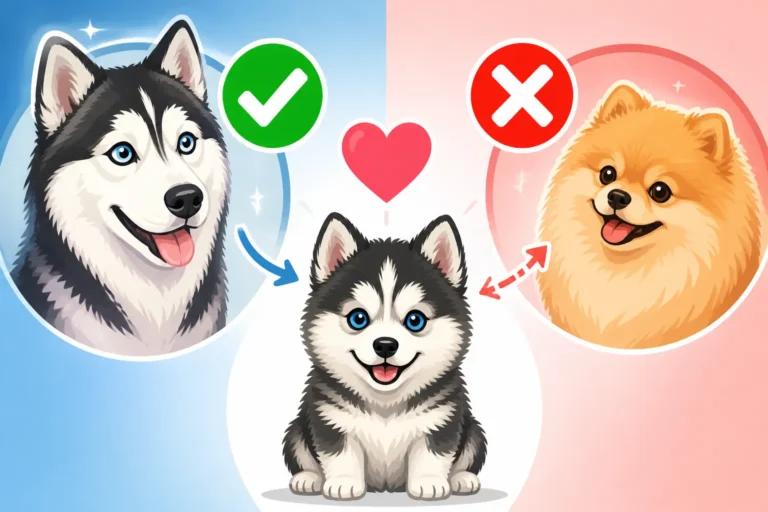
Seeing the overwhelming public interest, a handful of dedicated and ethical breeders began to explore the possibility of intentionally crossing Siberian Huskies and Pomeranians. This wasn't a simple task. The vast size difference between the two breeds immediately presented significant challenges. It meant that a Pomeranian female could never safely carry a litter sired by a Husky male; the risks to both mother and puppies would be far too great. Therefore, the mother always had to be the larger Siberian Husky, and the father, the smaller Pomeranian.
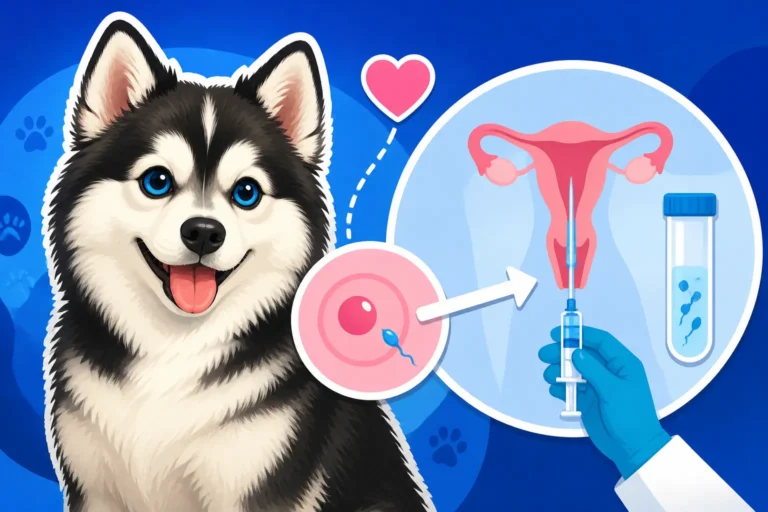
Furthermore, natural breeding between such disparate sizes is often impossible or dangerous. This led to the necessity of artificial insemination (AI). This veterinary procedure is more costly and complex than natural breeding, requiring careful timing and expertise. Breeders focused on ensuring the health and welfare of both parent dogs, conducting extensive health screenings, and prioritizing temperament above all else. They understood they weren't just creating a cute dog; they were laying the groundwork for a new type of companion animal, and responsibility was paramount. The efforts of dedicated individuals in the year 2012 helped bring about The 2012 Litter That Made the Pomsky Real, marking a significant milestone. Understanding the complexities helps explain Why a Pomsky Can Only Be Made One Way and Why a Pomsky Cannot Be Bred Naturally.
The Early Generations and Their Unpredictability
Once legitimate breeding efforts began, the reality of genetics quickly became apparent. The first generation, known as F1 Pomskies, were often highly unpredictable in appearance, size, and temperament. While some F1s did indeed hit that sweet spot of looking like a miniature Husky, many others inherited a more Pomeranian-like appearance, a mix of both, or even features that didn't quite match the viral images. Their sizes could range dramatically, from a small Pomeranian weight to something closer to a medium-sized Husky. What an F1 Pomsky Is helps explain this variability.
This unpredictability could be a source of frustration for early adopters who had fallen in love with a specific "look" from the internet photos. They might have envisioned a compact, blue-eyed dog with perfect Husky markings, only to receive a puppy that matured into a fluffy, tan, medium-sized dog with brown eyes. This is why many reputable breeders today aim for later generations (F2, F3, etc.) through Pomsky-to-Pomsky breedings, to achieve greater consistency in traits. It’s a painstaking process, but it’s how the breed slowly, painstakingly evolves towards a more recognizable standard, moving beyond the initial wild variation. This journey is often why whether an F1 Pomsky is not the one breeders want is a common sentiment among those striving for predictability.
| Feature | Viral Photo Expectation (Often Alaskan Klee Kai) | Early F1 Pomsky Reality (Variable) |
|---|---|---|
| Size (Adult) | Consistently small (10-20 lbs) | Highly variable (8-35+ lbs), could be larger than expected |
| Appearance | Consistent "mini Husky" look | Wide range; some Husky-like, some Pomeranian-like, many a blend |
| Coat Type | Dense double coat, often short/standard | Can be standard, wooly (longer), or even shorter; double coat always |
| Eye Color | Often striking blue | Blue, brown, bi-eyed, amber; brown is very common |
| Temperament | Perceived as calmer, apartment-friendly Husky | Mix of Pomeranian sass and Husky independence; high energy is common |
| Availability | Seemed readily available | Limited, often long waitlists for reputable breeders |
The Lasting Impact of Viral Fame on the Pomsky Breed
The internet is a powerful force, and while it helped launch the Pomsky into public consciousness, it also set some incredibly high, and sometimes unrealistic, expectations. Even today, years after those initial photos went viral, their shadow still influences how people perceive and approach the breed.
Setting Expectations: The Ongoing Challenge for Breeders
One of the biggest legacies of the viral photos is the enduring image of the "perfect" miniature Husky. Many prospective owners still walk into the process with that exact picture in their mind, sometimes overlooking the natural variability that comes with a developing crossbreed. Breeders constantly face the challenge of educating people about what a Pomsky truly is—a vibrant mix of two distinct breeds, capable of inheriting a wide spectrum of traits. It’s a delicate balance to manage excitement while also instilling realism.
Breeders spend a significant amount of time discussing potential adult size, coat type, and personality tendencies, explaining that while a blue-eyed, Husky-marked, 15-pound Pomsky is certainly possible, it's not a guaranteed outcome for every puppy. They emphasize the importance of genetic testing and responsible breeding practices over superficial aesthetics. This education often extends to advising on the best products for Pomskies, from nutrition to grooming. For instance, reputable breeders might guide new owners to trusted retailers like Chewy for high-quality food or specialized grooming tools needed for a double-coated dog. The aim is to ensure future owners understand that What a Pomsky Actually Weighs Full Grown can differ greatly from their initial hopes, and that a responsible approach values health and temperament above all. Many often ask about whether most Pomskies look like large Pomeranians, which speaks to this expectation vs. reality gap.
The Evolving Pomsky and Responsible Ownership
Thankfully, the Pomsky breed has come a long way since its early, often unpredictable, F1 days. Through careful, intentional breeding efforts by dedicated individuals, later generations (F2, F3, and beyond, often called "multigens") are starting to exhibit more consistent traits. While there will always be some degree of genetic variation, breeders are working towards a more predictable outcome in terms of size, appearance, and temperament. This means that while the dream of a "mini Husky" fueled the initial spark, the reality is a wonderful, unique companion dog with its own emerging characteristics.
For prospective owners, this means shifting focus from the initial viral fantasy to understanding the real needs of a Pomsky. These are intelligent, energetic dogs that require consistent training, ample exercise, and dedicated grooming. Their double coats, whether standard or wooly, demand regular maintenance, and their intelligent, sometimes stubborn, personalities benefit from early socialization and positive reinforcement. They need an owner committed to their well-being for their entire lifespan, which can be The Twelve to Fifteen Years a Pomsky Lives. Providing a stimulating environment, quality nutrition, and plenty of activity, like The Exercise a Pomsky Needs Every Day, is far more important than achieving a specific "look." Companies like Chewy offer a vast array of enrichment toys, durable leashes, and training aids that can be incredibly helpful for keeping a Pomsky happy and healthy. Ultimately, embracing the Pomsky for who they are—a lively, affectionate, and sometimes challenging companion—is the most rewarding approach, far surpassing the fleeting allure of a viral photo.
Disclaimer
This article is for general informational purposes only and does not constitute professional advice. Laws, prices and regulations vary by location and change over time. Consult a qualified professional for guidance on your specific situation.