What an F1 Pomsky Is
One of the most common questions new Pomsky enthusiasts have when they first dive into this wonderful world of miniature Huskies is about all those confusing "F" numbers. You see "F1," "F2," "F1b," and it can feel like you need a genetics degree just to understand what kind of pup you're looking at. This guide is here to demystify what an F1 Pomsky truly is, helping you understand the unique characteristics and sometimes surprising unpredictability that comes with this first-generation cross.
Decoding the "F1" – What It Actually Means for Your Pomsky
When you hear "F1," it simply refers to the first filial generation. In the world of designer dog breeds, this designation carries a specific and very important meaning, especially for a cross as unique as the Pomsky. It's the starting point, the initial creation of the breed, and understanding it is key to setting realistic expectations for your future furry family member.
The Basics of F-Generations in Designer Dogs
To put it simply, an F1 cross is the direct result of breeding two purebred dogs of different breeds. Think of it as the original mix. If you have a purebred Golden Retriever and a purebred Poodle, their puppies would be F1 Goldendoodles. The "F" stands for filial, referring to offspring, and the "1" signifies it's the very first generation. This initial cross means that each puppy in an F1 litter receives exactly 50% of its genetic material from one parent breed and 50% from the other. There's no mixing or matching from prior generations of the cross; it's a direct, unadulterated blend of the two foundational breeds. This genetic simplicity is what gives F1 crosses their distinct characteristics, both in terms of potential advantages and potential variations. They carry the full genetic blueprint of both original breeds, ready to be expressed in a sometimes surprising array of traits.
The Specifics for the Pomsky: Husky to Pomeranian
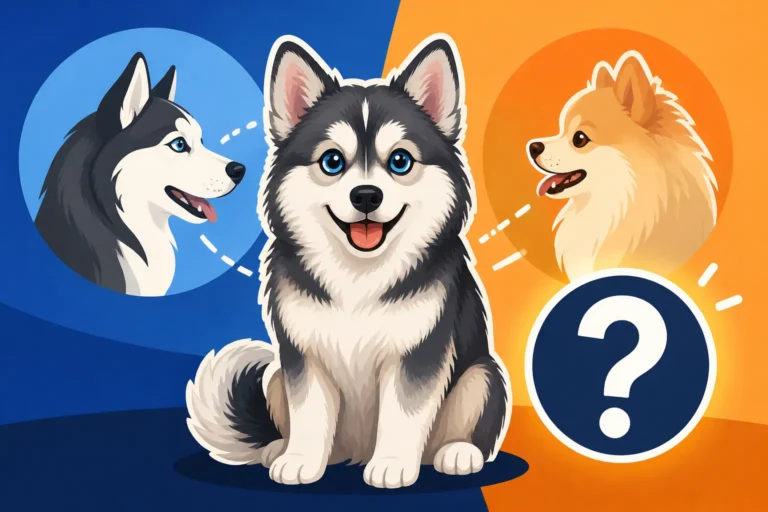
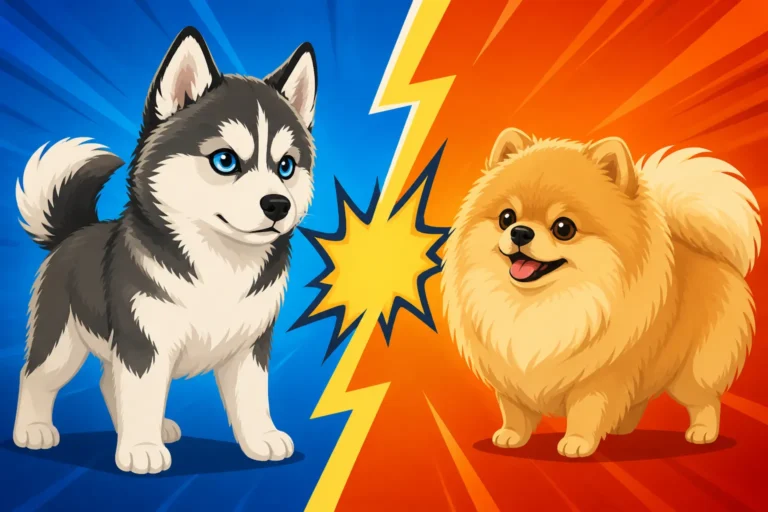
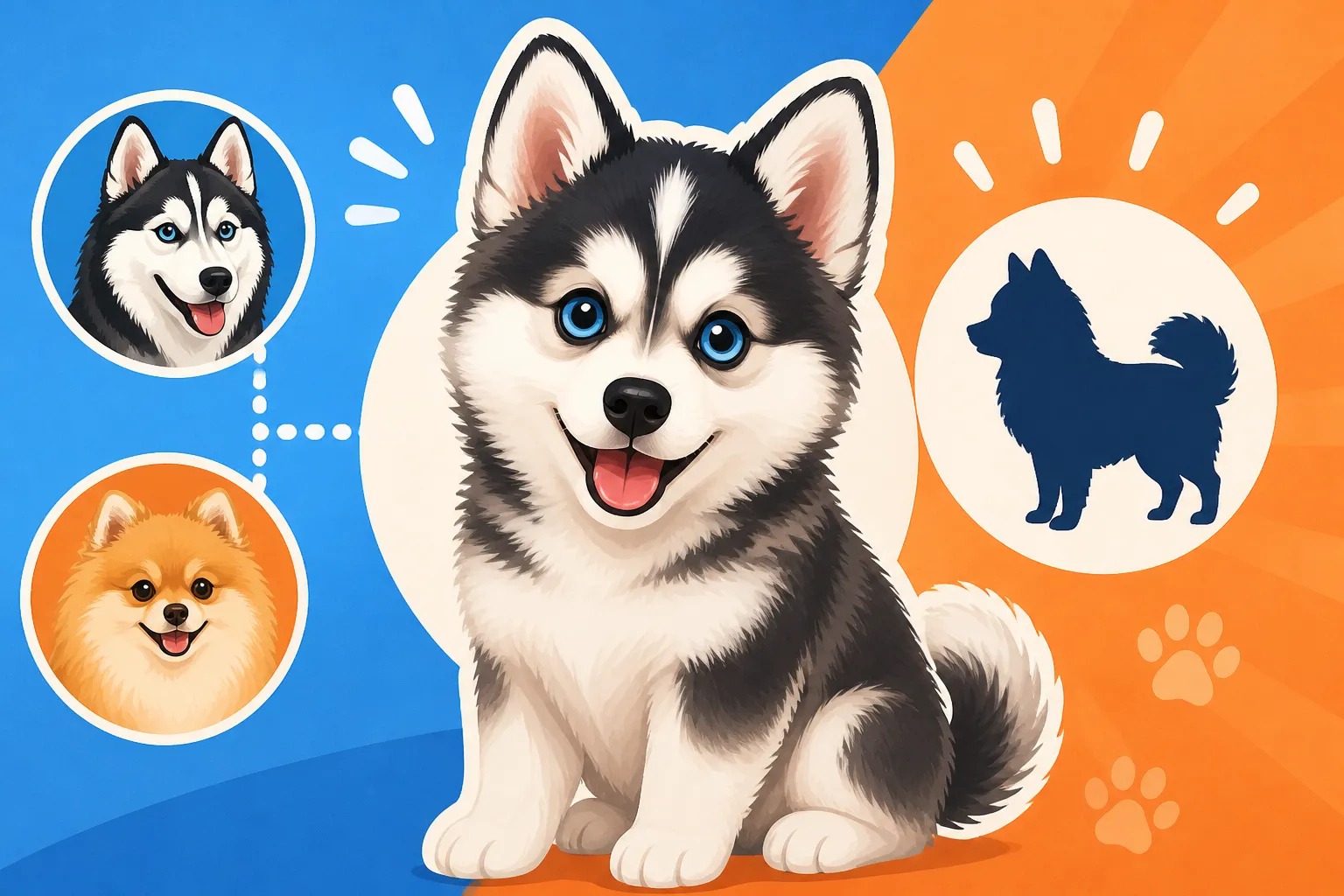
For our beloved Pomskies, an F1 designation means your puppy is the direct offspring of a purebred Siberian Husky and a purebred Pomeranian. Specifically, the mother, or dam, must be the Siberian Husky, and the father, or sire, must be the Pomeranian. This isn't just a preference; it's a critical safety measure. Due to the significant size difference between the two breeds, a Pomeranian female carrying Husky-sized puppies would be extremely dangerous, if not impossible, for her health and the puppies' survival. Therefore, every legitimate F1 Pomsky starts with a Husky mom and a Pomeranian dad. These breedings are typically done through artificial insemination to ensure safety and precision. The resulting puppies are a true 50/50 genetic split, inheriting a complete set of genes from each distinct purebred parent. This immediate blend is why What an F1 Pomsky Is is so fascinating – it’s a living testament to the genetic lottery at play, as genes from two very different looking dogs combine for the very first time.
Why the F1 Pomsky is a Roll of the Genetic Dice
While the idea of a "miniature husky" is incredibly appealing, the reality of an F1 Pomsky is often a delightful, but sometimes unexpected, surprise. Because you're blending two breeds with such distinct physical and temperamental traits, the outcome can be quite varied. It's not like baking a cake where you know exactly what the finished product will look and taste like; it's more like a genetic lottery, where each puppy in a litter can draw a different combination of traits. This unpredictability is a defining characteristic of the F1 generation and something potential owners need to understand and appreciate.
Unpredictable Traits: Size, Coat, and Appearance
The most striking aspect of an F1 Pomsky is the incredible range of physical traits you can see, even within the same litter. You might have one puppy that looks almost exactly like a miniature Siberian Husky, complete with the piercing blue eyes, curled tail, and mask, while another sibling might lean heavily towards the Pomeranian side, sporting a fluffier coat and a more compact build.
- Size: This is perhaps the biggest variable. While both parents contribute to the genetic makeup, there's no guarantee your F1 Pomsky will hit a specific weight. Some might stay quite small, resembling a larger Pomeranian in stature, perhaps around 10-15 pounds. Others might grow significantly larger, surprising their owners by reaching 30, 35, or even 40 pounds – truly a mid-sized dog! This wide range makes predicting adult weight and height challenging, even for experienced breeders. The ideal "toy" or "mini" size many buyers envision isn't a given in the F1 generation; rather, it’s about a vast spectrum of possibilities.
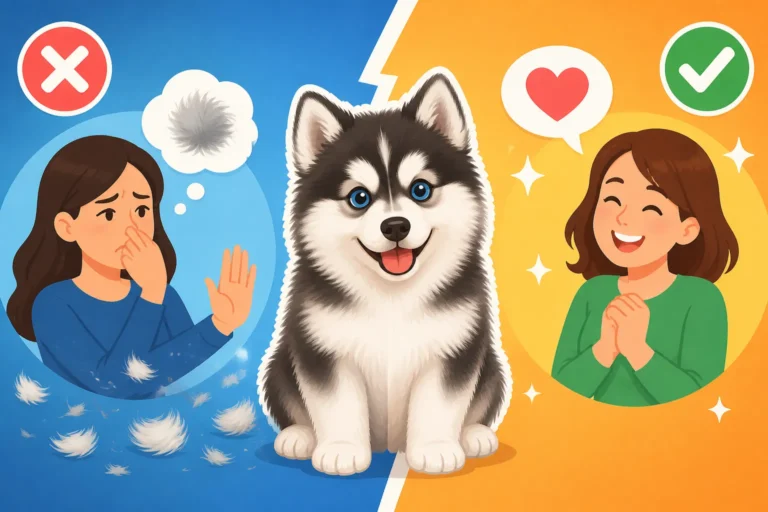
- Coat Type and Color: Both Huskies and Pomeranians have dense double coats, but their texture and length differ. An F1 Pomsky could inherit a shorter, denser Husky-like coat, a longer, fluffier Pomeranian-like coat (often called a "wooly" coat in Pomskies), or a blend somewhere in between. Shedding is guaranteed, but the amount can vary greatly. Colors and markings are also a complete toss-up. You might get classic black and white, agouti, red, sable, or even merle (though merle is usually introduced through careful breeding, not typically a direct Husky-Pomeranian F1). Eye color is another famous variable; blue eyes are highly desired, but brown, bi-colored, or even amber eyes are all possibilities. This is why whether an F1 Pomsky varies so much is such a crucial topic for prospective owners.
Temperament and Personality: A Mixed Bag
Just as physical traits can vary wildly, so too can an F1 Pomsky's temperament and personality. You're getting a blend of the highly independent, sometimes stubborn, and adventurous Siberian Husky with the intelligent, playful, and sometimes feisty Pomeranian. The specific cocktail of these traits that your F1 puppy inherits is entirely up to chance.
- Energy Levels: Both parent breeds are active, but a Husky's need for extensive exercise might manifest more strongly in some F1s, leading to a dog that needs long runs and vigorous play. Others might be content with moderate daily walks and indoor play, more akin to a Pomeranian's needs. Expecting a low-energy dog from an F1 Pomsky is generally setting yourself up for disappointment; they will almost certainly be active and require mental and physical stimulation.
- Vocalization: Huskies are known for their "talking" – howling, whining, and generally being very vocal without much traditional barking. Pomeranians are famous for their alert barking and sometimes yappy nature. Your F1 Pomsky could inherit either, both, or a unique combination. Some will be chatterboxes, others alert barkers, and some a surprisingly quiet mix. Whether Generation Affects a Pomsky's Temperament delves deeper into how these traits can appear.
- Trainability and Independence: Huskies are intelligent but notoriously independent, often described as "stubborn." Pomeranians are smart and eager to please, but can also have a stubborn streak and a tendency to rule the roost. An F1 Pomsky might be highly food-motivated and eager to learn, or it might inherit the Husky's "what's in it for me?" attitude, making training more challenging. Consistent, positive reinforcement is crucial, regardless of which parent's temperament shines through more brightly.
Hybrid Vigor and Potential Health Benefits and Drawbacks
One of the arguments for designer breeds like the Pomsky is the concept of "hybrid vigor" or heterosis. This theory suggests that crossing two unrelated purebreds can lead to healthier offspring due to a wider gene pool, potentially reducing the incidence of breed-specific genetic diseases that can be prevalent in highly inbred purebred lines.
- The Theory of Hybrid Vigor: An F1 Pomsky, drawing from two distinct genetic lines, theoretically benefits from increased genetic diversity. This means there's less chance of inheriting two copies of a recessive gene that causes a particular disease if those genes are only present in one of the parent breeds. For example, if a disease is common in Huskies but rare in Pomeranians, an F1 cross would likely only inherit one copy of the gene, making them a carrier but not affected. This is why some suggest Whether an F1 Pomsky Is Healthier Than an F2.
- Still Susceptible to Parent Breed Ailments: However, it's vital to understand that hybrid vigor doesn't make an F1 Pomsky immune to all health issues. They are still susceptible to any genetic health problems that are common in either the Siberian Husky or the Pomeranian. For instance, if both breeds are prone to a certain eye condition or orthopedic issue, the F1 Pomsky still has a chance of inheriting it. This means breeders should still conduct health screenings on both parent dogs to minimize the risk. The Two Opposite Disease Lists a Pomsky Inherits is an excellent resource for understanding these potential risks. Conditions like patellar luxation (from the Pomeranian side) or certain eye conditions (from the Husky side) can still occur. Owners need to be prepared for potential vet visits and ensure their F1 Pomsky gets regular check-ups. When stocking up on pet supplies, whether it's specialized food or joint supplements, many owners trust the wide selection available on Chewy to cater to their Pomsky's unique needs.
Living with an F1 Pomsky – Expectations vs. Reality
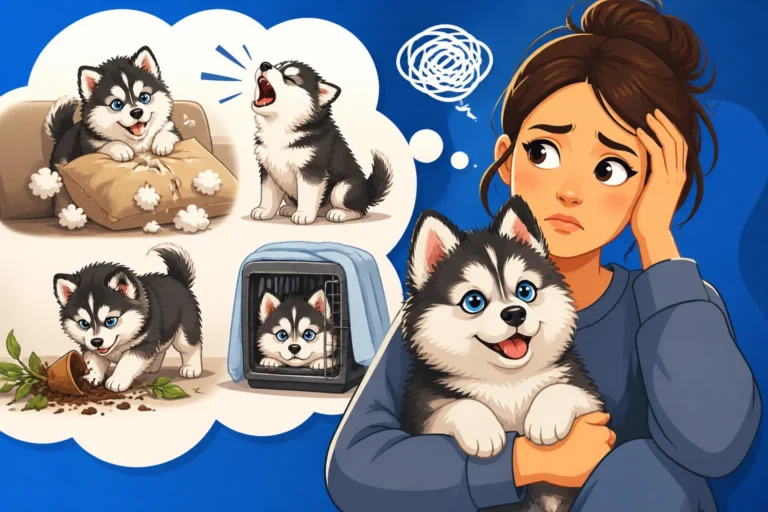
Bringing any dog into your home is a huge commitment, but with an F1 Pomsky, it comes with an extra layer of delightful uncertainty. The key to a happy life with your F1 is managing your expectations and embracing the unique individual your dog will become, rather than clinging to a specific image you might have in your head.
The Surprise Package: Embracing the Unpredictability
Many people fall in love with the idea of a Pomsky, often based on pictures of perfectly miniature Huskies found online. While some F1 Pomskies might closely resemble that ideal, many will not. You might end up with a dog that has the size of a smaller Husky but the coat of a Pomeranian, or a dog that looks more like a robust Pomeranian than a tiny Husky. The beauty of the F1 generation is that no two are exactly alike, and that individuality is something to cherish.
- Beyond the "Mini Husky" Image: It's important to understand that your F1 Pomsky may not be the "miniature Husky" you envisioned. They might have floppy ears, a straight tail, or a different facial structure than the classic Husky mask. Accepting and loving your F1 for the unique dog they are, rather than for a preconceived notion, is crucial for both your happiness and theirs. Some F1s indeed grow to be much larger than anticipated, often resembling a robust husky-mix. This is a common experience that often leads people to understand Whether Most Pomskies Look Like Big Pomeranians.
- Embracing Individuality: Every F1 Pomsky is a true one-of-a-kind. Their blend of traits means they often have quirky personalities, a unique look, and a special way of interacting with the world. Instead of chasing a specific aesthetic, focus on finding a puppy with a temperament that meshes well with your lifestyle. This open-minded approach will lead to a much more fulfilling relationship with your unique F1 companion.
Training and Management Considerations
Because F1 Pomskies inherit such a diverse array of traits, their training and management needs can also be quite varied. There's no single "Pomsky training manual" that applies perfectly to every F1. Instead, you'll need to be observant, adaptable, and consistent.
- Consistency is Key: Whether your F1 leans more towards the Husky's independence or the Pomeranian's feistiness, consistency in training is paramount. Early socialization, puppy classes, and clear boundaries from day one will help shape a well-behaved adult. High-value treats and positive reinforcement methods tend to work best for these intelligent but often strong-willed dogs. If you're looking for high-quality training treats and enrichment toys, Chewy offers a fantastic selection that can keep even the most cunning F1 Pomsky engaged.
- Addressing Breed-Specific Tendencies: Be prepared for potential Husky traits like a strong prey drive, a desire to roam, and impressive escape artist skills. A secure yard is non-negotiable, and leash training is vital. The Pomsky Escape Artist in a Twenty Pound Body is a must-read for F1 owners. Similarly, some F1s might inherit the Pomeranian's suspicion of strangers or tendency towards alert barking, requiring extra focus on positive exposure and counter-conditioning. Understanding The Suspicion a Pomsky Gets From the Pomeranian can help you prepare.
- Recall Challenges: The Husky instinct to run and explore can be very strong in an F1 Pomsky. A reliable recall often takes significant time and effort to build, and many F1 owners find that their dogs can never truly be trusted off-leash in an unfenced area. Always prioritize safety, perhaps using a long line for controlled freedom in open spaces. For outdoor adventures, ensuring your F1 Pomsky has a comfortable, well-fitting harness is essential, and sites like Chewy have numerous options designed for active dogs. Learn more about Recall on a Pomsky Bred From a Dog That Runs.
Why Some Breeders Prefer F2 and Beyond
Given the unpredictability of F1 Pomskies, you might wonder why breeders bother with them at all. The truth is, F1s are the crucial first step in developing the breed. They establish the initial cross, and from there, breeders can work towards greater consistency and predictability in subsequent generations.
- The Foundation Generation: F1 Pomskies are the foundation stock. They prove that the cross is viable and healthy. However, because of their wide range of appearances and temperaments, F1s are often just the beginning for serious breeders. The goal for many is to create a dog that "breeds true," meaning offspring consistently exhibit desired traits. This is much harder to achieve with F1s.
- Working Towards Consistency: To achieve more consistent size, coat type, and temperament, breeders typically move to F2 generations (breeding two F1 Pomskies together), F1b (an F1 Pomsky bred back to a purebred Pomeranian or Husky to emphasize certain traits), or even multi-generational (Multigen) crosses. These later generations allow breeders to selectively breed for specific characteristics, leading to a more predictable outcome for buyers seeking a particular look or personality. This is the primary reason Why an F1 Pomsky Is Not the One Breeders Want for consistency, but rather as the essential starting point. Finding high-quality food for a growing F1 Pomsky, one that supports their varied genetic needs, is simple when browsing the extensive options available on Chewy.
| Trait | Siberian Husky Influence (Possible) | Pomeranian Influence (Possible) | F1 Pomsky Range Example |
|---|---|---|---|
| Size | Medium (40-60 lbs) | Toy (3-7 lbs) | 10-35 lbs (Wide variation) |
| Coat | Dense double coat, short-medium hair | Fluffy double coat, long hair | Shorter husky-like, fluffy Pomeranian-like, or anything in between |
| Ears | Erect, triangular | Erect, small | Can be upright or sometimes drop/floppy |
| Eyes | Blue, brown, bi-colored | Brown, sometimes blue | Any color, including heterochromia |
| Vocalization | Howling, talking | Alert barking, yapping | Combination of both, often very vocal |
| Energy | High, needs vigorous activity | Moderate, bursts of energy | High energy, needs consistent exercise |
| Stubbornness | High, independent | Moderate, can be demanding | Highly independent, requires patience |
Disclaimer
This article is for general informational purposes only and does not constitute professional advice. Laws, prices and regulations vary by location and change over time. Consult a qualified professional for guidance on your specific situation.