Why Most Pomskies Look Like Large Pomeranians
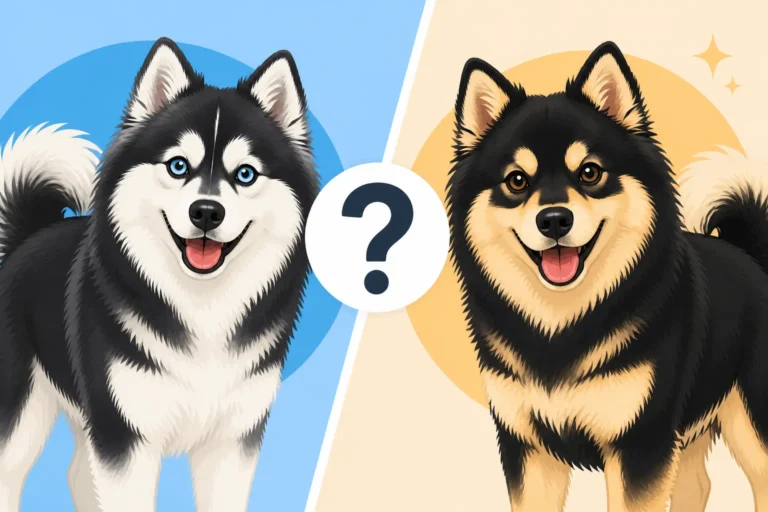
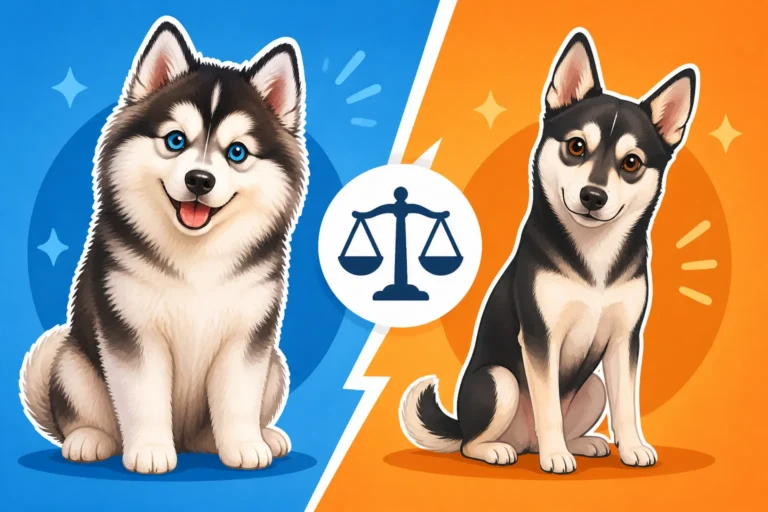
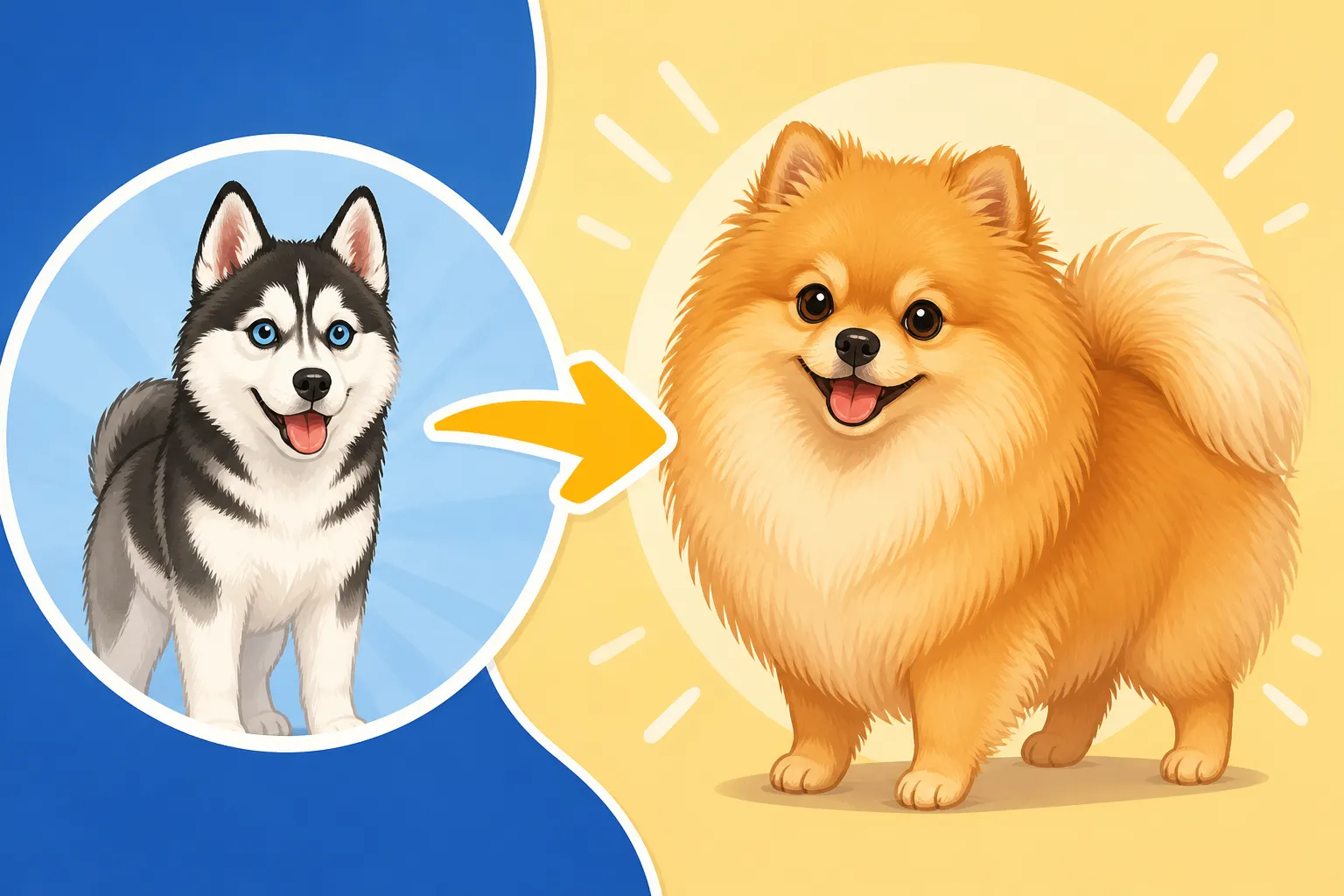
It's incredibly common to fall in love with the idea of a miniature Husky, a pint-sized version of those magnificent, wolf-like dogs, only to find that the reality of a Pomsky can be quite different. Many Pomsky hopefuls imagine that iconic Husky face, the piercing blue eyes, and the sleek build, but in a smaller package. However, a significant number of Pomskies grow up to look less like a tiny Husky and much more like a larger version of their Pomeranian parent, a fluffy, often stockier, and equally charming, but distinctly different dog. This guide will help you understand why this happens and what to realistically expect from a Pomsky's appearance.
The Genetic Lottery: Understanding F1 Pomsky Appearance
The very first generation of Pomskies, known as F1s, are a true genetic crapshoot. When you cross a Siberian Husky and a Pomeranian, you're essentially flipping a coin on every single gene. You get a mix of traits from both parents, and there's no predicting which genes will be dominant or how they'll combine to create the final look of the puppy. This unpredictability is a huge part of the Pomsky journey, and it’s often where the "mini Husky" dream meets the "large Pomeranian" reality.
The Dominance of Pomeranian Traits
While many prospective owners hope for the Husky features, it's fascinating how often certain Pomeranian traits can express themselves quite strongly in the resulting Pomsky. Think about the Pomeranian's dense, often plush coat that stands away from the body, their small, erect ears, and that signature tail that curls tightly over the back. These aren't just subtle nuances; they're defining characteristics.
For instance, a Pomsky might inherit the incredible density of the Pomeranian's double coat, giving them a much more "fluffy" or "poofy" silhouette than the sleeker Husky. Even if the Pomsky gets some Husky length in their legs, that abundant Pomeranian coat can make them appear lower to the ground or stockier. The small, pointed Pomeranian ears tend to be quite dominant as well, often sitting high on the head and contributing significantly to the overall facial expression, making the dog look less like a wild wolf and more like an animated fox. And that tail? It's a dead giveaway. Many Pomskies proudly sport a tail that curls tightly over their back, just like a Pomeranian, rather than the more open, sickle-shaped tail common in Huskies. All these elements combined can result in a dog that, while beautiful, strongly favors its smaller parent.
Unpredictability of First Generation Crosses
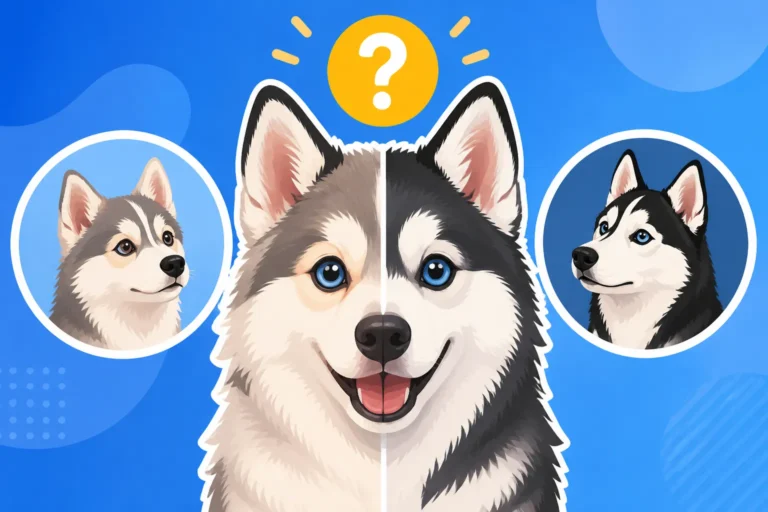
The idea that an F1 Pomsky is a perfect 50/50 blend, guaranteeing an even mix of both parents' looks, is a common misconception. In reality, it’s closer to a grab bag of genetic possibilities. You might have a litter where one puppy is a dead ringer for a tiny Husky, while its sibling looks almost entirely like an oversized Pomeranian. This wide spectrum of appearances within a single litter is a hallmark of F1 crosses.
It’s not unusual for F1 Pomskies to vary wildly in everything from size and build to coat type and facial structure. Some might inherit the Pomeranian's compact body and shorter snout, while others might get the longer legs of a Husky but with the Pomeranian's fluffy coat. This genetic gamble means that if you're set on a very specific "mini Husky" look, an F1 Pomsky might not deliver. The beauty of F1s lies in their uniqueness, but that also means accepting that the outcome is far from predictable. For a deeper dive into this, you might find Why an F1 Pomsky Varies So Much incredibly insightful. Breeders often struggle to predict the adult appearance of F1 puppies, leading to significant variations even within the same litter, which can sometimes surprise even seasoned owners.
Beyond the "Mini Husky" Myth: Realistic Expectations
The Pomsky is a relatively new crossbreed, and its rise to popularity was largely fueled by compelling images online. But like many internet sensations, the reality doesn't always live up to the initial hype, especially when it comes to appearance. Setting realistic expectations from the start is crucial for any potential Pomsky owner.
The Origin of the Miniature Husky Image
Let's be honest, the internet played a massive role in creating the "mini Husky" phenomenon. Back in the early 2010s, viral photos of what appeared to be tiny, perfect Huskies started circulating, capturing hearts worldwide. People instantly imagined a playful, energetic Husky, scaled down to a more manageable size for apartment living or smaller spaces. The demand skyrocketed almost overnight.
The truth, however, was a bit more complex. Many of those initial viral images weren't even Pomskies! Some were Alaskan Klee Kais, a distinct breed developed to look like a miniature Husky, or even just cleverly Photoshopped images. Other photos might have shown exceptionally Husky-like F1 Pomskies that were outliers, not representative of the average. This initial visual misdirection set an unrealistic standard. When people finally started seeing actual Pomskies, many were surprised by how much more Pomeranian influence they exhibited. Understanding this historical context helps temper expectations and appreciate the Pomsky for what it truly is, rather than a perfect replica of those early, often misleading, online images. You can learn more about this in The 2011 Photos That Were Not Pomskies.
The "Designer Dog" Dilemma
The term "designer dog" often conjures images of perfectly engineered canines, meticulously bred to display specific traits. While responsible Pomsky breeders do strive for certain characteristics, the reality of genetics is far less precise, especially in early generations. The goal might be a miniature Husky, but the genetic blueprint doesn't always cooperate.
Breeders face a dilemma: fulfilling the demand for a specific aesthetic while working with the inherent variability of a crossbreed. They might select parent dogs with traits they hope will carry over, but there's no guarantee. For instance, a breeder might use a Husky dam with strong Husky markings and a Pomeranian sire known for a good temperament, but the puppies might still end up with more Pomeranian-like faces or fluffy coats. This isn't a failure on the breeder's part; it's simply the nature of genetics. Consumers need to understand that buying a "designer dog" doesn't mean you're guaranteed a specific look, especially when dealing with such distinct parent breeds. The charming variability is part of the package, and accepting that your Pomsky might look more like a larger Pomeranian is key to a happy ownership experience.
Diving Deeper into Physical Traits: Why Pomeranian Features Prevail
When we dissect the individual physical characteristics, it becomes clearer why the Pomeranian's influence can be so pronounced in a Pomsky. It's not just about overall impression; it's about specific features that often tip the balance away from the Husky and towards the Poms.
Coat Type and Texture
Both Huskies and Pomeranians boast luxurious double coats, but they are distinctly different in texture and how they lie. Huskies have a dense, soft undercoat for insulation and a relatively straight, somewhat coarser outer coat (guard hairs) that lies flatter against their body, giving them a sleek, athletic appearance. Pomeranians, on the other hand, are famous for their incredibly profuse, fluffy double coat that stands off from their body, creating a round, ball-of-fluff silhouette.
When these two coat types combine in a Pomsky, the Pomeranian's stand-off coat frequently makes a strong appearance. Many Pomskies inherit a plush, thick coat that mimics the Pomeranian's density and tendency to fluff out rather than lie flat. This can be particularly true for "wooly" coated Pomskies, whose longer, softer guard hairs contribute to a significantly more Pomeranian-like appearance, even if they have Husky markings. This profuse coat adds visual bulk and softness, shifting the perception of their build. Managing such a coat, especially during shedding seasons, means investing in the right grooming tools, often found on sites like Chewy, to keep them comfortable and mat-free. To understand the intricacies of different coats, The Wooly Pomsky Coat and Its Upkeep is a great resource.
Ear Set and Expression
A dog's ears play a huge role in its overall facial expression and perceived breed type. Siberian Huskies typically have medium-sized, triangular ears that are set high on the head but are rounded at the tips, giving them a slightly softer, almost wolf-like look. Pomeranians, however, have very small, erect, triangular ears that are sharply pointed and set high, giving them a perpetually alert, foxy expression.
In many Pomskies, the Pomeranian's ear type seems to be a surprisingly dominant trait. You'll often see Pomskies with those distinctive small, pointed ears standing upright on their heads, contributing significantly to a more "toy breed" or "spitz" appearance rather than the wilder look of a Husky. Even if other facial features lean towards the Husky, prominent Pomeranian ears can instantly change the entire aesthetic, making the dog seem more like an oversized Pomeranian. This can be one of the most noticeable features that surprises new owners who were hoping for a mini-Husky profile.
Tail Curl and Carriage
The way a dog carries its tail is another key identifier for breed enthusiasts, and it's an area where the Pomeranian influence frequently shines through in Pomskies. Siberian Huskies have a well-furred "sickle" tail that typically arcs up and over their back, but doesn't usually curl tightly or lie flat against their body. It has a graceful, flowing curve. Pomeranians, conversely, are renowned for their tail that curls up and over their back, often lying flat against it, completely covered in a plume of fluffy hair.
Many Pomskies inherit this characteristic high-set, tightly curled tail from their Pomeranian parent. This type of tail carriage instantly adds to the "fluffy and compact" look, reinforcing the Pomeranian aesthetic. Even on a Pomsky that might have a more Husky-like body, a strongly curled tail over the back can make them appear more like a larger Pomeranian. It's a charming feature, but one that visually distances them from the Husky's more understated tail. For more on this specific trait, check out Whether a Pomsky's Tail Curls Over Its Back.
Head and Muzzle Shape
The head and muzzle shape are perhaps the most critical components in determining whether a dog looks "wolf-like" or "foxy" or "cute." Huskies have a medium-sized head, a moderately rounded skull, and a muzzle that tapers smoothly to the nose, giving them a strong, athletic profile. Pomeranians have a small, somewhat wedge-shaped head with a short, rather fine muzzle that ends in a delicate nose, giving them their characteristic "foxy" or "doll-like" appearance.
In many Pomskies, the influence of the Pomeranian head and muzzle is undeniable. Instead of the longer, tapering muzzle of a Husky, a Pomsky might inherit a shorter, broader muzzle. Their skull might also be more rounded, and their overall facial structure can be more compact. This combination often results in a "cuter" or "softer" facial expression, sometimes described as a "teddy bear" face, rather than the sharp, chiseled features of a Husky. This is particularly true if they also inherit the Pomeranian's smaller ears and denser facial fur. These traits collectively contribute to the perception that the Pomsky resembles a larger Pomeranian rather than a miniature Husky.
Size Matters: When "Mini Husky" Becomes "Large Pomeranian"
One of the biggest factors that can make a Pomsky seem more like a large Pomeranian, even if it has some Husky traits, is its actual adult size. People often have a very specific, small size in mind when they think "mini Husky," and when a Pomsky exceeds that expectation, the visual shift can be quite dramatic.
The Range of Pomsky Sizes
The allure of the "mini Husky" often leads people to expect a dog consistently in the 10-15 pound range. The reality, however, is that Pomskies have a much broader size spectrum. They can range anywhere from around 10 pounds (truly tiny, and less common) up to 35-40 pounds or even more. This wide range is due to the significant size difference between the parent breeds – a 6-pound Pomeranian and a 60-pound Siberian Husky. The genetic combination is a roll of the dice.
When a Pomsky grows to be 25, 30, or even 35 pounds, it's certainly not a "mini" anything by traditional dog standards. At this size, even if it has some Husky markings or eye color, its sheer bulk, combined with potentially dense Pomeranian-like fur and body proportions, can make it feel much more like a substantial spitz breed rather than a scaled-down working dog. It becomes a question of perspective: a 30-pound dog is a medium-sized dog, and if it carries fluffy Pomeranian features, it can easily be perceived as a "large Pomeranian" rather than the miniature Husky that was initially envisioned. You can learn more about this in What a Pomsky Actually Weighs Full Grown.
Proportions and Body Structure
Beyond just weight, the actual skeletal structure and body proportions play a huge role in a Pomsky's final appearance. Huskies are built for endurance, with a lean, athletic frame, good leg length, and a relatively long body that allows for efficient movement. Pomeranians are much more compact, with shorter legs, a cobby body, and a squarer outline.
Even a larger Pomsky, if it inherits more of the Pomeranian's bone structure and proportions, can look like a beefed-up Pomeranian. This means they might have relatively shorter legs in proportion to their body length, or a more compact rib cage, making them appear stockier. The dense double coat, as we discussed, further accentuates this "fuller" look, making them seem rounder and less streamlined than a Husky. So, a Pomsky could weigh 30 pounds, but if it has shorter legs, a stockier body, and a thick, stand-off coat, it will optically lean much more towards the large Pomeranian aesthetic than the graceful, lean Husky. It's not just about the numbers on the scale, but how those pounds are distributed and clothed in fur.
| Feature | Typical Siberian Husky Trait | Typical Pomeranian Trait | Common Pomsky Outcome (often Pomeranian-leaning) |
|---|---|---|---|
| Coat Texture | Medium-length, sleek guard hairs, dense undercoat, lies flatter | Long, profuse, stand-off coat, soft, fluffy | Dense, fluffy, stand-off coat (often "wooly" or "plush") |
| Ear Shape/Set | Medium, rounded tips, set high but not overly prominent | Small, sharply pointed, set high, very prominent | Small, pointed, upright, prominent ears |
| Tail Carriage | Sickle-shaped, arcs over back, but not tight against it | Curls tightly over back, often lies flat on back | Tightly curled over back |
| Muzzle Shape | Moderately long, tapering, athletic profile | Short, fine, delicate, somewhat wedge-shaped | Shorter, sometimes broader, "cuter" or "teddy bear" muzzle |
| Body Build | Lean, athletic, moderate bone, built for endurance | Compact, cobby, finer bone, less athletic profile | Can be stockier, more compact, especially with dense fur |
| Size Expectation | 35-60 lbs | 3-7 lbs | Wide range (10-40+ lbs), often exceeding "mini" expectation |
The Role of Subsequent Generations (F2, F3, Multigen)
For many crossbreeds, breeders attempt to achieve more consistency in appearance and temperament by breeding beyond the first generation. This is also true for Pomskies, where F2 (Pomsky x Pomsky), F3, and multigen (multiple generations of Pomsky x Pomsky crosses) are common, but even these don't offer a complete guarantee.
Aiming for Consistency
After the initial F1 generation, which is essentially a 50/50 genetic toss-up between a Husky and a Pomeranian, breeders embark on a more selective process for F2 and multigen Pomskies. The primary goal in these later generations is to increase predictability. By breeding two F1 Pomskies, or an F1 with an F2, and so on, breeders can start to select for specific traits that are most desirable, such as a smaller size, a more "Husky-like" head, or particular coat patterns.
This selective breeding aims to reduce the wide variability seen in F1 litters. For example, if a breeder consistently finds that Pomskies with shorter snouts and very fluffy coats are popular, they might choose to breed F1s or F2s that exhibit these traits, hoping to produce subsequent generations that are more likely to have them. This process involves careful planning and a deep understanding of genetics, but it’s a slow and ongoing effort. These later generations are often what some breeders refer to as "designer" in the truest sense, as they are actively designing the breed's future. You can delve into this more by reading Why Pomsky Breeders Prefer F2 and Beyond.
Still No Guarantees
Despite the best efforts and intentions of responsible breeders, genetics can be a stubborn beast. Even in F2, F3, or multigen Pomskies, there are still no absolute guarantees on appearance. Recessive genes from either the Husky or Pomeranian parent can pop up unexpectedly, leading to surprises in coat type, ear set, or size, even several generations down the line.
Imagine a scenario where a breeder has been working for years to produce Pomskies that consistently have blue eyes and a classic Husky mask. Suddenly, a litter of F3 puppies comes along, and several of them have brown eyes and a distinctly Pomeranian-shaped head with a very plush, stand-off coat. This variability, while less extreme than in F1s, still exists. It means that even if you're looking at a multigen Pomsky puppy, it’s still wise to temper your expectations regarding a precise "mini Husky" look. The charm of the Pomsky continues to be its unique blend, and embracing the possibility of a "large Pomeranian" appearance is part of welcoming one of these wonderful dogs into your home.
Temperament and Personality: More Than Just Looks
While this article focuses on appearance, it's vital to remember that a dog is far more than just its looks. The blend of two distinct breeds like the Siberian Husky and the Pomeranian also creates a unique personality, which can be just as unpredictable as their physical traits. Understanding both sides of their ancestry is crucial for a happy companionship.
The Blended Personality
Just as with their looks, Pomskies inherit a mix of personality traits from both parents, and this blend is rarely 50/50. You might end up with a Pomsky that has the boundless energy and independent spirit of a Husky, but also the vocal nature and strong protective instincts of a Pomeranian. It's a delightful, sometimes challenging, combination. Huskies are known for being friendly, intelligent, but also notoriously stubborn and prone to wanderlust. Pomeranians are often described as feisty, confident, outgoing, and sometimes a bit wary of strangers.
A Pomsky might exhibit the Husky's playful mischief and intelligence, quickly learning commands but choosing whether or not to obey them based on what's in it for them. At the same time, they might inherit the Pomeranian's suspicion towards new people or situations, leading to more barking or a need for careful socialization. Understanding that these traits can combine in unexpected ways helps owners prepare for a unique and engaging personality, rather than expecting a perfectly scaled-down version of one parent or the other. For a peek into their more guarded side, read The Suspicion a Pomsky Gets From the Pomeranian.
Understanding Behavioral Traits
Regardless of whether your Pomsky looks more like a miniature Husky or a larger Pomeranian, certain behavioral traits from both parent breeds are often present and need to be understood and managed. For example, the strong prey drive of a Husky can manifest in a Pomsky, meaning they might have a natural inclination to chase squirrels, rabbits, or even cats, regardless of their size or fluffy appearance. Even a Pomsky that physically favors the Pomeranian might still possess that deep-seated instinct to pursue small, fast-moving objects.
Similarly, the vocal tendencies are often a strong trait. Huskies are famous for their "talking," howling, and melodious vocalizations, and many Pomskies inherit this trait. Even a Pomsky with a very Pomeranian face might surprise you with a full-throated Husky howl or a series of dramatic "woo-woos" when excited or bored. This can be quite endearing but also a challenge for apartment dwellers or those with close neighbors. Understanding these inherent behavioral tendencies, and preparing to manage them with training and consistent routines, is far more important than focusing solely on their looks. Delve into their unique vocalizations with The Husky Howl in a Pomsky. Proper exercise, mental stimulation, and consistent training, perhaps using tools from Chewy, will be essential for any Pomsky, no matter their outward appearance.
Disclaimer
This article is for general informational purposes only and does not constitute professional advice. Laws, prices and regulations vary by location and change over time. Consult a qualified professional for guidance on your specific situation.