Whether a Pomsky Can Be Black and Tan
A Pomsky can be black and tan, with a dark coat and lighter markings above the eyes, on the cheeks, chest, legs, and beneath the tail. But the look can vary: some dogs have crisp tan points, while others have cream or reddish markings softened by a thick double coat. Here’s how to recognize the pattern and what it can—and can’t—tell you.
What black and tan looks like on a Pomsky
Recognizing tan points
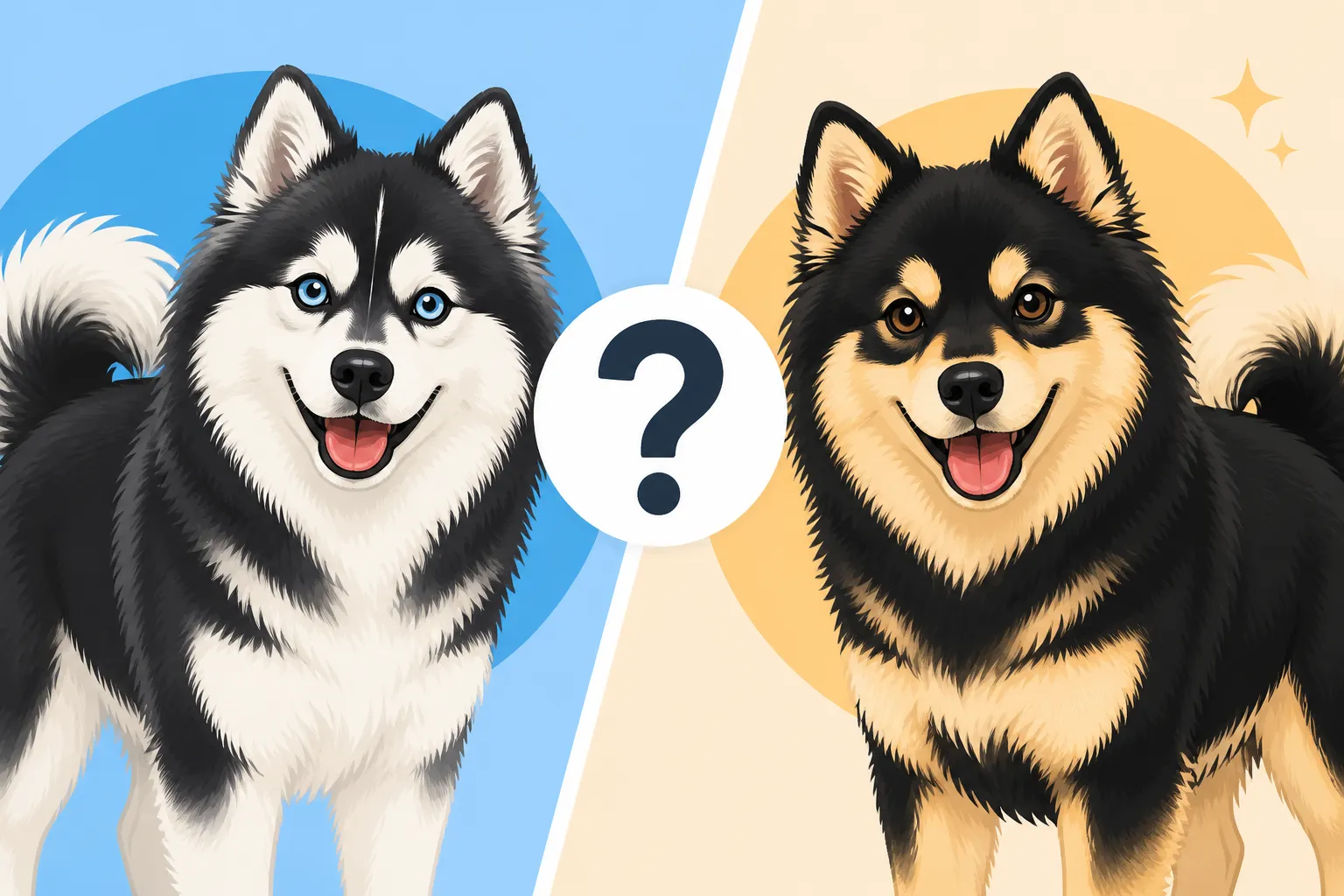
A black and tan Pomsky typically has a predominantly black or very dark coat with lighter markings in particular areas. Those markings are often called tan points. Look for small patches above the eyes, on the sides of the muzzle, across the chest, on the lower legs, and under the tail. The exact layout and shade can vary from dog to dog.
The lighter color is not always a vivid coppery tan. It may look cream, pale gold, warm brown, or rust, and the pattern can be more obvious in some areas than others. A puppy with dark legs, for instance, may still have tan showing on the eyebrows or chest. A thick coat can also make the boundaries between dark and light markings look less sharply defined.
It’s also easy to confuse tan points with other kinds of markings. A Pomsky may have a pale chest, socks, facial blaze, or Husky-style mask without being black and tan. The overall pattern matters more than one light patch. For a broader look at common markings, see The Colors and Masks a Pomsky Comes In and Whether a Pomsky Has the Husky Mask.
How the pattern differs from other dark coats
A black-and-white Pomsky usually has larger, more distinct areas of white. White may appear on the face, chest, belly, or feet, rather than being limited to the smaller, recurring patches typical of tan points. Some dogs have both dark and light areas that make the distinction less obvious at a glance, especially when their coat is long.
Sable and agouti coats can also look dark, but they have a different visual effect. Individual hairs may have bands of different colors, creating a shaded or mixed appearance instead of a solid dark base with lighter points. A Pomsky may have several colors in its coat, so a quick photo may not show the pattern clearly. Checking the markings in natural light and looking at several parts of the dog can help.
| Coat appearance | Common visual clues | What to keep in mind |
|---|---|---|
| Black and tan | Dark base with lighter patches in areas such as the eyebrows, muzzle, chest, legs, and under the tail | The light markings may range from cream to reddish tan |
| Black and white | Dark areas paired with larger white patches, often on the face, chest, belly, or feet | White markings do not automatically make a dog black and tan |
| Sable or agouti | Shaded, blended, or banded-looking hairs | A dark overall appearance may come from mixed hair colors, not tan points |
| Gray and white | Gray or silver-toned areas with white markings | Lighting and coat length can make gray look darker or warmer |
These are helpful visual descriptions, not a guarantee of how a breeder or registry will label a particular dog. Pomskies do not have one universally applied coat-color standard, and people may use color terms differently. If the exact pattern matters to you, ask for clear photos of the puppy and its parents, taken in natural light.
Why a Pomsky can inherit black and tan coloring
Coat color comes from both sides of the cross
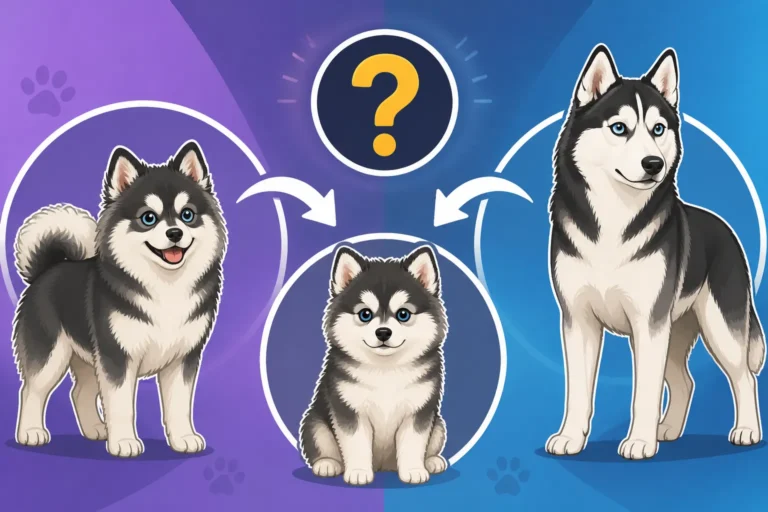
Pomskies are a Pomeranian and Siberian Husky cross, and their puppies can inherit a variety of coat colors and patterns. A black-and-tan appearance can occur when a puppy inherits the traits needed for dark coloring and tan-point markings. The outcome depends on the genes passed down by both parents; it is not as simple as one parent “having” the color and automatically producing it.
Pomeranians can come in black and tan, while Siberian Huskies are known for a wide range of coat colors and markings. A puppy’s appearance may reflect traits carried quietly by either parent, not just the colors you can see in a photograph. That is one reason two Pomsky puppies from the same litter can look strikingly different.
Generation can add another layer of variation. An F1 Pomsky has a Pomeranian parent and a Husky parent, but later-generation pairings may combine inherited traits in less predictable ways. If you are trying to understand what a generation label means, What an F1 Pomsky Is offers useful context. A generation label alone, however, does not guarantee a particular coat color.
Why a puppy’s color may change as it grows
The markings you see on a young puppy may not look exactly the same in adulthood. As a Pomsky’s coat grows and changes, the contrast can become more noticeable or seem softer. Puppy fluff can also obscure the placement of the markings, so it may take time for the adult coat to make the pattern easier to assess.
Color changes do not necessarily mean the dog is changing from one pattern to another. The underlying markings may remain while the shade, length, or texture of the hair changes around them. A dark puppy may appear more blended after its coat fills out, while lighter areas may look different as the coat matures. Whether a Pomsky's Color Changes as It Grows explains why coat color can be difficult to judge from puppy photos alone.
A breeder may be able to share pictures of older relatives, but those are clues rather than a promise. Even within the same family, inherited traits can combine differently. If an adult black-and-tan appearance is important to you, ask what the breeder can reasonably explain about the puppy’s current markings and family history, rather than relying on a single early photo.
What black and tan can—and cannot—tell you
Coat color does not prove a Pomsky’s parentage
A black-and-tan coat can be attractive, but color by itself cannot confirm that a dog is a Pomsky, identify its generation, or verify its pedigree. Similar-looking patterns occur in many breeds and mixes. A puppy’s markings are one visible trait, not a reliable substitute for information about its parents and breeding history.
If you are considering a puppy, ask to see the parents or clear, recent photos, and request a straightforward explanation of the pairing. A DNA test may provide information about breed ancestry, but its results need to be understood in context and do not replace careful breeder records. For a more detailed look at what testing can establish, read Whether a DNA Test Confirms a Pomsky and Whether Pomsky Pedigrees Can Be Verified.
Be wary of claims that a particular color automatically makes a puppy more authentic, healthier, or more desirable. Appearance cannot tell you whether the parents received appropriate health screening or whether the puppy has been raised with good care. It is reasonable to ask about health history, socialization, and the breeder’s practices separately from questions about coat color.
A color label is not a health or temperament prediction
Black-and-tan markings do not, on their own, tell you what a Pomsky’s personality will be like. Nor do they determine whether a dog will be energetic, quiet, easy to train, or suited to your household. Temperament reflects many factors, including inherited tendencies, early experiences, and ongoing training.
Coat color also does not tell you the adult size or exact coat type. A Pomsky with black-and-tan markings might have a shorter coat, a dense double coat, or a fluffier coat that needs regular brushing. If you want to understand how much appearance can vary across the cross, Whether a Pomsky Looks More Pomeranian Than Husky explores why puppies can look quite different from one another.
When assessing a puppy, focus on the whole dog rather than choosing by color alone. Ask how the puppy responds to handling and new experiences, what grooming its coat is likely to need, and what health information is available for the parents. If you are preparing for regular coat care, you can compare suitable brushes and grooming supplies at retailers such as Chewy, while checking that any tool is appropriate for the dog’s coat and skin.
Choosing and caring for a black and tan Pomsky
Questions to ask before choosing a puppy
Ask the breeder to describe the puppy’s markings in plain language. Where are the lighter points? Are they visible on the face and legs, or mostly on the chest? Could the appearance change as the puppy’s adult coat comes in? These questions help clarify what you are seeing without treating a color label as a guarantee.
Request photos in natural light and, if possible, pictures of the puppy from several angles. A single carefully posed image can make a coat appear darker, warmer, or more sharply patterned than it looks in everyday settings. Photos of parents or older relatives may help you understand the range in the family, but they cannot predict exactly how a particular puppy will develop.
It is also sensible to ask about the breeder’s documentation and health practices. The color may be what first catches your eye, but the puppy’s care, the parents’ health history, and the breeder’s willingness to answer questions matter more to your long-term experience. Whether Pomsky Breeders Agree on Anything offers context on why expectations and descriptions can differ across Pomsky breeders.
Grooming a dark coat and lighter markings
A black-and-tan Pomsky does not need a special grooming routine just because of its color. Coat length, density, and texture are more useful guides. If the dog has a thick double coat, regular brushing helps remove loose undercoat and reduce tangles, particularly around areas where friction can cause mats, such as behind the ears, beneath the collar, and around the legs.
Use gentle, coat-appropriate tools and check the skin rather than brushing only the visible surface. Dark fur can make loose hair and debris harder to notice, while lighter patches may show dirt more readily. Work in small sections and pause if your dog becomes uncomfortable. A groomer can help you learn which tools suit your individual dog; Chewy can also be a place to compare basic grooming supplies, but follow product guidance and your groomer’s advice for the coat you actually have.
Avoid shaving a Pomsky’s double coat unless a veterinarian recommends it for a medical reason. The coat helps protect the skin, and clipping can change how it grows back. Keep grooming calm and gradual, especially with a puppy: short, positive sessions help make brushing a familiar part of life instead of a stressful wrestling match. Chewy’s selection of grooming basics may help you assemble a simple kit, but the right brush depends on coat texture and your dog’s tolerance.
A Pomsky can have black-and-tan markings, but the pattern may vary in shade, clarity, and placement. Treat the color as one part of the dog’s appearance—not as proof of pedigree, health, or future temperament. If you are choosing a puppy, combine what you see in the coat with questions about health, upbringing, and the dog’s likely grooming needs.
Disclaimer
This article is for general informational purposes only and does not constitute professional advice. Laws, prices and regulations vary by location and change over time. Consult a qualified professional for guidance on your specific situation.