Teaching a Pomsky to Give a Foot
It’s a common scenario for Pomsky parents: you’re trying to trim those ever-growing nails, check for a burr caught between their paw pads, or simply wipe muddy paws after a fun outing, and your sweet, fluffy companion suddenly transforms into an octopus, all four paws flailing. It can be incredibly frustrating and even a little disheartening when basic care becomes a wrestling match. But what if there was a way to make these moments less stressful, more cooperative, and even a little fun? This guide will walk you through teaching your Pomsky the "give a paw" command, turning those struggles into opportunities for positive interaction and building an even stronger bond.
Why "Give a Paw" is More Than a Trick for Your Pomsky
Many people see "give a paw" or "shake hands" as just a cute party trick, something to show off to guests. While it certainly is adorable, for a Pomsky owner, this simple command holds immense practical value that can profoundly impact daily life and your dog's overall well-being. It’s about building a foundation of cooperation and trust around handling their sensitive feet.
Easing Grooming Routines
Let's be real, grooming a double-coated Pomsky is a commitment. Their paws are often overlooked until they become a problem area. Teaching your Pomsky to offer a paw willingly can turn dreaded tasks into manageable moments. Think about nail trims, for instance. Instead of wrestling your Pomsky or having to resort to a second person to hold them still, they can offer a paw, making the process smoother and safer for everyone involved. Regular nail trims are crucial for your Pomsky’s comfort and long-term joint health, and a cooperative paw makes all the difference. We've even discussed Teaching a Pomsky to Have Its Nails Done in another post, and this command is a huge stepping stone.
Beyond nails, Pomskies often have significant fur between their paw pads that can collect debris, ice, snow, or even form painful mats. Being able to easily check and brush this area, or even trim it gently, prevents discomfort and potential infections. If your Pomsky tolerates the Getting a Pomsky Used to the Undercoat Rake on their body, extending that positive association to their feet through the "give a paw" command is a natural progression. It’s about more than just vanity; it's about preventing painful issues like foreign objects embedded in their pads or uncomfortable ice balls forming in winter.
Facilitating Health Checks and Vet Visits
Imagine finding a small cut or thorn in your Pomsky's paw pad. Without cooperation, examining it properly can be difficult, if not impossible, at home. If your dog is comfortable with you holding and inspecting their paws, you can spot issues early, potentially preventing more serious problems down the line. This skill is invaluable for routine health checks. You can check for dry, cracked pads, tenderness, or unusual lumps, especially as your Pomsky gets older and may be more prone to issues like arthritis in their joints.
When it comes to vet visits, a Pomsky that is calm and cooperative during paw handling is a dream for veterinary staff. Vets and vet techs frequently need to examine paws, check pulses, administer injections, or simply guide a dog into position. If your Pomsky trusts you and the "give a paw" command is solid, they'll likely be more relaxed when a vet needs to handle their feet, reducing stress for your dog and making the examination more efficient. A stress-free vet visit is a huge win, especially when considering The Screening a Pomsky Should Have Yearly which often includes a physical examination.
Building Confidence and Bonding
At its heart, training is about communication and building a stronger relationship with your Pomsky. Each successful training session, even for something as simple as "give a paw," reinforces your bond. Your Pomsky learns that interacting with you is rewarding and predictable, which builds their confidence in navigating the human world. They learn that cooperation leads to good things – tasty treats and praise!
Learning new commands also provides valuable mental stimulation. Pomskies are intelligent dogs, often inheriting the cleverness of both the Husky and the Pomeranian. Keeping their minds engaged helps prevent boredom, which can lead to unwanted behaviors. When your Pomsky learns to willingly offer their paw, they're not just performing an action; they're actively participating in a cooperative exercise, which deepens their understanding of your expectations and strengthens their trust in you.
The Foundation: Building Trust and Positive Reinforcement with Your Pomsky
Before you even start trying to get your Pomsky to lift a paw, you need to lay a solid foundation of trust and positive reinforcement. Pomskies can be wonderfully intelligent, but they also come with a unique blend of traits from their parent breeds – a dash of Husky independence and a sprinkle of Pomeranian sass! This means your approach to training needs to be empathetic, patient, and above all, consistently positive.
Understanding Your Pomsky's Temperament
Pomskies often inherit a strong-willed streak from their Husky lineage, making them independent thinkers. They might not be as eager to please as some other breeds, and if they don't see the value in what you're asking, they might just decide to ignore you. Add in the often-charming but sometimes mischievous nature of the Pomeranian, and you've got a dog that requires engagement and motivation rather than strict commands. It's not about being stubborn, as we discuss in Whether a Pomsky Is Stubborn or Independent, but often about having their own ideas or simply not understanding why they should do something.
Because of this, training sessions need to be short, sweet, and highly rewarding. Their attention spans, especially when they're young, can be quite brief. Trying to force a long, drawn-out session will quickly lead to frustration for both of you. Aim for multiple short bursts of training throughout the day – five to ten minutes at a time – rather than one long, arduous session. Always try to end on a successful note, even if it's just repeating something they already know perfectly.
Gathering Your Training Toolkit
To set yourself up for success, gather your training essentials. This might seem obvious, but having everything ready before you start can make a big difference in maintaining your flow and your Pomsky's attention.
First and foremost, you'll need high-value treats. These aren't just their everyday kibble; these are the treats that make your Pomsky's eyes light up. Think small, soft, and smelly options like tiny pieces of cooked chicken, cheese, or specialized training treats. The strong aroma and delicious taste will capture and hold their attention far better than bland alternatives. Many great options can be found easily through retailers like Amazon, offering a wide selection to discover what your Pomsky loves most.
Next, choose a quiet environment with minimal distractions. This is especially crucial in the beginning stages of teaching a new command. Turn off the TV, put away your phone, and make sure there aren't other pets or people constantly walking by. A simple rug or a designated training spot in a quiet room works perfectly.
Finally, consider a clicker if you're comfortable with clicker training. While not strictly necessary, a clicker can be an incredibly powerful tool for precise communication. The click marks the exact moment your Pomsky performs the desired behavior, followed immediately by a treat. This helps them understand precisely what they did right. If you're new to clicker training, resources like BAXTER & Bella offer excellent online programs and guides that can help you get started and understand the mechanics.
Setting Up for Success
Remember, consistency is key. Short, frequent training sessions are far more effective than long, infrequent ones. Aim for 3-5 sessions a day, each lasting no more than 5-10 minutes. This keeps your Pomsky engaged and prevents them from getting bored or overwhelmed. Always, always, always end on a positive note. Even if the session was challenging, ask for an easy command they know well (like "sit"), reward them lavishly, and then finish. This leaves them feeling successful and eager for the next session.
Patience is perhaps the most important tool in your kit. Some Pomskies will pick this up in minutes, while others might take days or even weeks. Celebrate every tiny step of progress. If you or your Pomsky are getting frustrated, take a break. There's no rush. Training should be a fun, bonding experience, not a chore.
| Training Element | Importance for Pomskies | Example |
|---|---|---|
| High-Value Treats | Essential for motivation; often independent learners. | Cooked chicken, soft cheese, specific training treats. |
| Quiet Environment | Reduces distractions; important for focus, especially with curious Pomskies. | A calm room, no TV/loud noises, other pets secured. |
| Short Sessions | Accommodates shorter attention spans; prevents boredom/frustration. | 5-10 minutes, multiple times a day. |
| Positive Reinforcement | Builds trust and confidence; avoids creating negative associations with training. | Praise, petting, immediate treat after desired action. |
| Patience | Individual learning pace varies; Pomskies can be clever but take time. | No rushing, celebrate small successes, take breaks. |
Step-by-Step Guide to Teaching "Give a Paw"
Alright, now that you've got your high-value treats and a quiet space, it’s time to actually get down to business and teach your Pomsky the "give a paw" command. We're going to break this down into small, manageable steps, because that's how Pomskies learn best – by building on little successes.
Introducing the Touch Cue
Before asking for a full paw lift, we want to create a positive association with touching your Pomsky's paw. This sounds basic, but it's incredibly important, especially if your Pomsky is sensitive about their feet. Start by gently touching one of your Pomsky's paws, literally just a brush of your finger or hand on their leg or paw. The moment you touch it, say "yes!" or click your clicker, and immediately give them a treat.
Repeat this several times, focusing on just one paw to start. You're not asking them to do anything yet, just associating your touch with a positive reward. Your Pomsky needs to understand that when you touch their paw, something wonderful happens. Do this in very short bursts – a few touches, then a break. If your Pomsky pulls their paw away, don't force it. Just try again with an even lighter touch, or perhaps try a different paw. You're building a foundation of acceptance, not forcing compliance. This initial stage is all about creating a pleasant, predictable experience around paw handling.
Luring the Paw
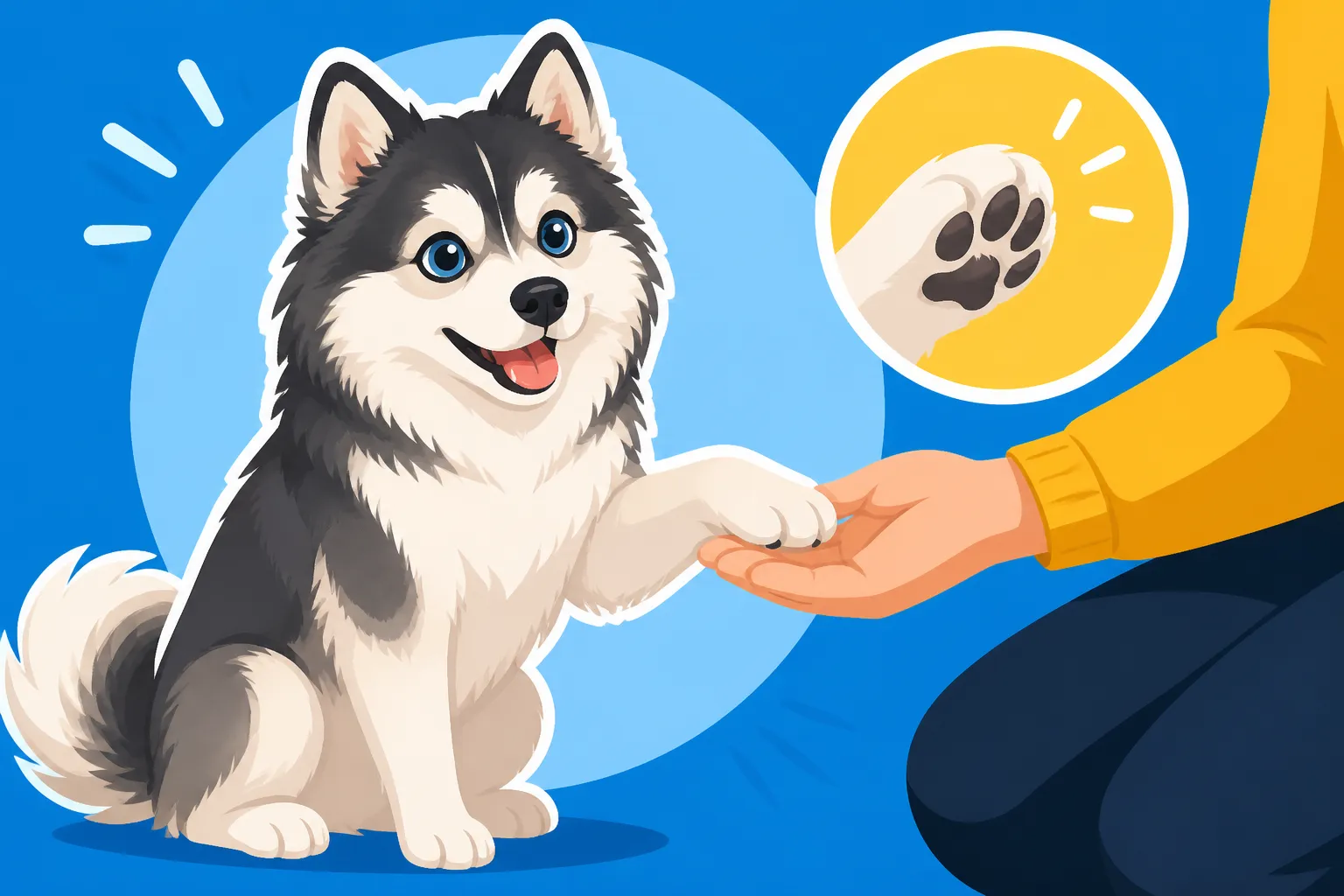
Once your Pomsky is comfortable with you touching their paw, you can start to encourage them to lift it. This is where the "lure" comes in. Have your Pomsky sit in front of you. Hold a high-value treat in your flat palm and present it near their nose, then slowly move your hand downwards and slightly backward, directly underneath one of their paws. The idea is that as they try to reach for the treat, they will naturally shift their weight and lift a paw.
The moment their paw lifts off the ground, even just an inch, mark the behavior with your verbal cue "yes!" or a click, and immediately give them the treat. Don't wait for them to place it in your hand yet. We're rewarding the initiation of the lift. Repeat this many times. Your Pomsky will quickly learn that lifting their paw, even accidentally, makes the treat appear. Once they're consistently lifting the paw, you can start adding your verbal command. Right before you move your hand to lure the paw, say "Paw!" or "Shake!" then proceed with the lure and reward. This helps them associate the word with the action.
Fading the Lure and Adding the Command
Now that your Pomsky understands the action, it's time to reduce your reliance on the treat lure. Start by using an "empty hand lure." Pretend you have a treat in your hand and go through the same motion – moving your hand down and back under their paw. The instant they lift their paw, immediately click/say yes and then produce a treat from your other hand or a treat pouch.
As they get more consistent with the empty hand lure, start making your hand motion smaller and less obvious. Eventually, you should be able to simply say "Paw!" and they'll lift their paw in response. The verbal cue should now precede the action, and the treat should appear after the action. Practice with both paws, varying which one you ask for. You can even start to name them individually, "Left Paw" and "Right Paw," if you wish, although starting with just one general "Paw" command is often easier. Remember, every success, no matter how small, gets a click and a treat!
Troubleshooting Common Challenges
Even with the best intentions and the tastiest treats, training doesn't always go in a straight line. Pomskies, with their unique personalities, can present some specific challenges when learning new commands. It's completely normal to hit a snag, so don't get discouraged! The key is to understand why your Pomsky might be struggling and adjust your approach.
My Pomsky Just Sniffs or Mouths My Hand
This is a very common hurdle, especially with food-motivated dogs like many Pomskies. You're trying to get them to lift a paw, but all they want to do is sniff the treat or try to get it directly from your hand. It's frustrating when they're so close but just not quite getting it!
The trick here is to refine your luring technique and be very precise with your timing. When you hold the treat in your flat palm, make sure it's close enough to their nose to be enticing, but not so accessible that they can easily grab it without lifting their paw. As you move your hand under their paw, the goal is to make it slightly awkward for them to reach the treat with their nose. The natural inclination to shift their weight to get a better angle should lead to the paw lift. If they repeatedly try to mouth or sniff, pull your hand back slightly and reset. Try moving your hand a little faster or in a slightly different arc. Remember, the moment the paw lifts, mark and reward. If you wait even a second too long, they might have shifted their focus back to just trying to nose the treat. Patience here is absolutely vital – don't reward the sniffing or mouthing, only the paw lift.
My Pomsky Won't Lift Their Paw
Sometimes, your Pomsky might just sit there, looking at you with a puzzled expression, or perhaps giving you a look that says, "Why would I do that?" They might be hesitant to lift their paw, or perhaps they're not quite understanding the subtle cue you're giving them. This can be especially true if they're particularly comfortable in their current position or haven't quite grasped the connection between the lure and the action.
If your Pomsky isn't lifting their paw at all, go back a step. Instead of trying to get a full lift, start by rewarding any weight shift or even just a slight twitch of the paw or leg when you lure. This is called "shaping" – rewarding approximations of the desired behavior. You can also try a very gentle physical guidance initially. As you present the lure, ever-so-lightly touch the back of their leg or their paw with your other hand, just enough to encourage a small lift. The instant the paw comes up, even if you helped, mark and reward. The goal is to make them think they initiated the movement. Keep these assisted lifts minimal and fade them out as quickly as possible, moving back to just the lure. Ensure there are no distractions around, as a focused Pomsky is a learning Pomsky.
My Pomsky Gets Frustrated or Disinterested
One minute they're engaged, the next they're wandering off, yawning, or completely ignoring you. This often signals that your sessions are too long, the treats aren't motivating enough, or they're just not "getting it" and getting frustrated. Remember, How Long a Pomsky Holds Concentration can vary greatly, but usually, it's not for extended periods.
If your Pomsky loses interest, immediately shorten your sessions. Five minutes is often plenty, especially in the early stages. It’s always better to leave them wanting more than to push them to the point of disengagement. Re-evaluate your treats – are they truly high-value? Sometimes a change of treat can reignite their enthusiasm. If they're showing signs of frustration (lip licking, turning away, growling, or snapping), stop the session immediately. End on an easy, known command, reward them, and then take a break. Come back later with a fresh mindset and perhaps simplify the steps even further. Maybe you need to go back to just rewarding a paw touch for a few sessions to rebuild their confidence and enjoyment. Never punish them for not understanding; it will only make them less likely to engage in future training.
Taking it Further: Advanced Paw Handling and Grooming
Once your Pomsky has mastered the basic "give a paw" command, you've opened up a whole new world of cooperative care. This isn't just about a neat trick anymore; it's about making essential grooming and health tasks much easier and less stressful for both of you. Now, let's look at how to build on that foundation and really make it work for you in practical scenarios.
Extending Duration and Distraction
A Pomsky that gives a paw in a quiet living room is great, but a Pomsky that holds the paw for a few seconds while you inspect it, even with some background noise, is truly valuable. Start by extending the duration. Once your Pomsky lifts their paw, instead of immediately clicking and treating, wait half a second. Then a full second. Gradually increase the time you ask them to hold the paw before marking and rewarding. If they drop it, no big deal, just try again with a slightly shorter duration. The goal is to build up to a few seconds of a steady paw hold.
Next, introduce distractions. Start small: a family member walking by, the TV on low, or practicing in a different room of the house. Gradually increase the level of distraction. Can they still give a paw reliably when a treat bag crinkles nearby? How about at the park (on leash, of course!) with other dogs in the distance? This proofing is crucial to ensure the command is solid in various real-world situations. Some Pomskies are so smart, they'll test every rule, as we discuss in Whether a Pomsky Is Too Smart for Its Owner, so practicing in different contexts is key to generalize the behavior.
Desensitization to Grooming Tools
Now that your Pomsky willingly offers their paw, you can start associating this positive behavior with the actual grooming tools. This process is called desensitization and counter-conditioning. Get out your nail clippers, nail grinder, paw trimmer, or even just a soft brush. Ask your Pomsky for "paw." When they give it, before you do anything with the tool, present the tool near their paw, then mark and treat. The tool itself is now paired with the positive experience of giving a paw and getting a treat.
Gradually increase the interaction with the tool. First, just touch the tool to their paw while they're holding it, then mark and treat. Next, pretend to use the tool – for nail clippers, just lightly squeeze the clippers without actually clipping. For a grinder, turn it on away from them, let them hear the sound, then turn it off and treat. Slowly work your way up to actually using the tool for a quick snip or a brief touch of the grinder, always following with a generous reward. The goal is to make them understand that the tools mean treats and praise, not pain or discomfort. This approach is highly effective for tasks like regular paw pad trimming, and can make grooming much less of a struggle. For example, getting them used to the noise and sensation will go a long way in Getting a Pomsky Used to a Force Dryer for their full coat.
The Ultimate Goal: Cooperative Paw Care
The ultimate goal of teaching "give a paw" is to achieve true cooperative care for your Pomsky's feet. This means your Pomsky actively participates in their own care, rather than tolerating it or fighting against it. When you say "paw," they not only lift it but allow you to hold it, examine it, and perform necessary grooming tasks like nail trims or brushing out paw fur.
This level of cooperation builds incredible trust and significantly reduces stress for both you and your dog. You’ll find that routine maintenance becomes a calm, almost meditative moment between you, instead of a battle of wills. It makes daily life easier, prevents minor issues from becoming major problems, and reinforces that deep, special bond you share with your Pomsky. It takes time, patience, and consistency, but the rewards are immeasurable – a happier, healthier Pomsky, and a much more peaceful household.
Disclaimer
This article is for general informational purposes only and does not constitute professional advice. Laws, prices and regulations vary by location and change over time. Consult a qualified professional for guidance on your specific situation.