Whether a Pomsky Is Stubborn or Independent
It's a familiar scene for many Pomsky owners: you’re trying to teach your adorable, fluffy companion a new trick, or simply get them to come when called, and they look at you with those bright, intelligent eyes, as if to say, "Nah, I'm good." This moment of seeming defiance often leads us to wonder if our Pomskies are just plain stubborn or if there's something more nuanced at play – a deep-seated independence. This guide is all about unraveling that mystery, helping you understand the unique mindset of your Pomsky, and giving you tools to build a more harmonious relationship.
The Roots of a Pomsky's "Stubborn" Streak: A Blend of Ancestry
To truly understand why your Pomsky might seem to march to the beat of their own drum, we have to look at their magnificent parent breeds: the Siberian Husky and the Pomeranian. Both of these breeds contribute distinct personality traits that, when combined, create the wonderfully complex Pomsky temperament. It's not always pure stubbornness; often, it's a deeply ingrained behavioral characteristic.
The Siberian Husky's Independent Spirit
Ah, the Husky. Majestic, strong-willed, and famously independent. If you've ever owned or spent significant time with a Siberian Husky, you know they aren't exactly known for their slavish devotion or their immediate desire to please. They were bred to pull sleds over vast distances, often making decisions independently in challenging conditions. This meant they needed to be intelligent, capable of problem-solving, and not overly reliant on constant human direction.
This history translates into a modern-day Husky (and often a Pomsky) who thinks for themselves. They might understand a command perfectly well, but choose not to execute it if they don't see the immediate benefit or if something more interesting has captured their attention. This isn't out of malice; it's simply how their brains are wired. They're not looking to defy you; they're just prioritizing their own perceived best interest, whether that's sniffing an intriguing smell or investigating a rustle in the bushes. This strong sense of self-preservation and curiosity is a hallmark of the breed, and it's a big part of what makes them so captivating – and sometimes, frustrating – to live with. It’s why topics like Recall on a Pomsky Bred From a Dog That Runs are so important for owners to explore.
The Pomeranian's Assertive Personality
Then we have the Pomeranian, often underestimated due to their tiny stature. Poms are not delicate wallflowers; they are confident, intelligent, and can be surprisingly assertive. They carry themselves with an air of importance, often believing they are much larger than they actually are. This boldness means they're not afraid to express their opinions, whether through a spirited bark or a pointed refusal to cooperate if they feel they're not being properly motivated or respected.
Pomeranians can be quite clever and quick to learn, but they also have a strong sense of what they want to do. If a Pomeranian doesn't see the point in a command, or if they're not in the mood, they can simply switch off, giving you that classic "I hear you, but I choose not to listen" vibe. This isn't quite the same as a Husky's broad independence; it's more about a proud little dog who knows their own mind and isn't afraid to show it. When you mix this assertive confidence with the Husky's independence, you get a Pomsky who truly understands what you're asking, but might just politely (or not-so-politely) decline if it doesn't align with their current agenda.
How Genetics Influence Trainability
Understanding these genetic predispositions is key. When you bring a Pomsky into your home, you're not getting a blank slate; you're getting a fascinating genetic cocktail. Some Pomskies might lean more towards the Husky's free-spirited nature, while others might inherit the Pomeranian's confident assertiveness, and many will be a delightful mix of both. This means that expecting a Pomsky to be an eager-to-please, instantly obedient dog like some other breeds is setting yourself up for disappointment.
Their intelligence is not in question; Pomskies are incredibly smart. However, their intelligence often manifests as problem-solving in ways that benefit them, rather than always seeking to please you. This can make traditional obedience training feel like a battle of wits. You might find yourself thinking your Pomsky is being stubborn when, in reality, they're simply being true to their ancestral instincts – weighing the reward against the effort, or simply finding the squirrel more interesting than your "sit" command. Recognizing this inherent trait allows you to adjust your training methods and expectations, moving from frustration to a more understanding and effective approach.
Decoding the Difference: Stubbornness Versus Independence
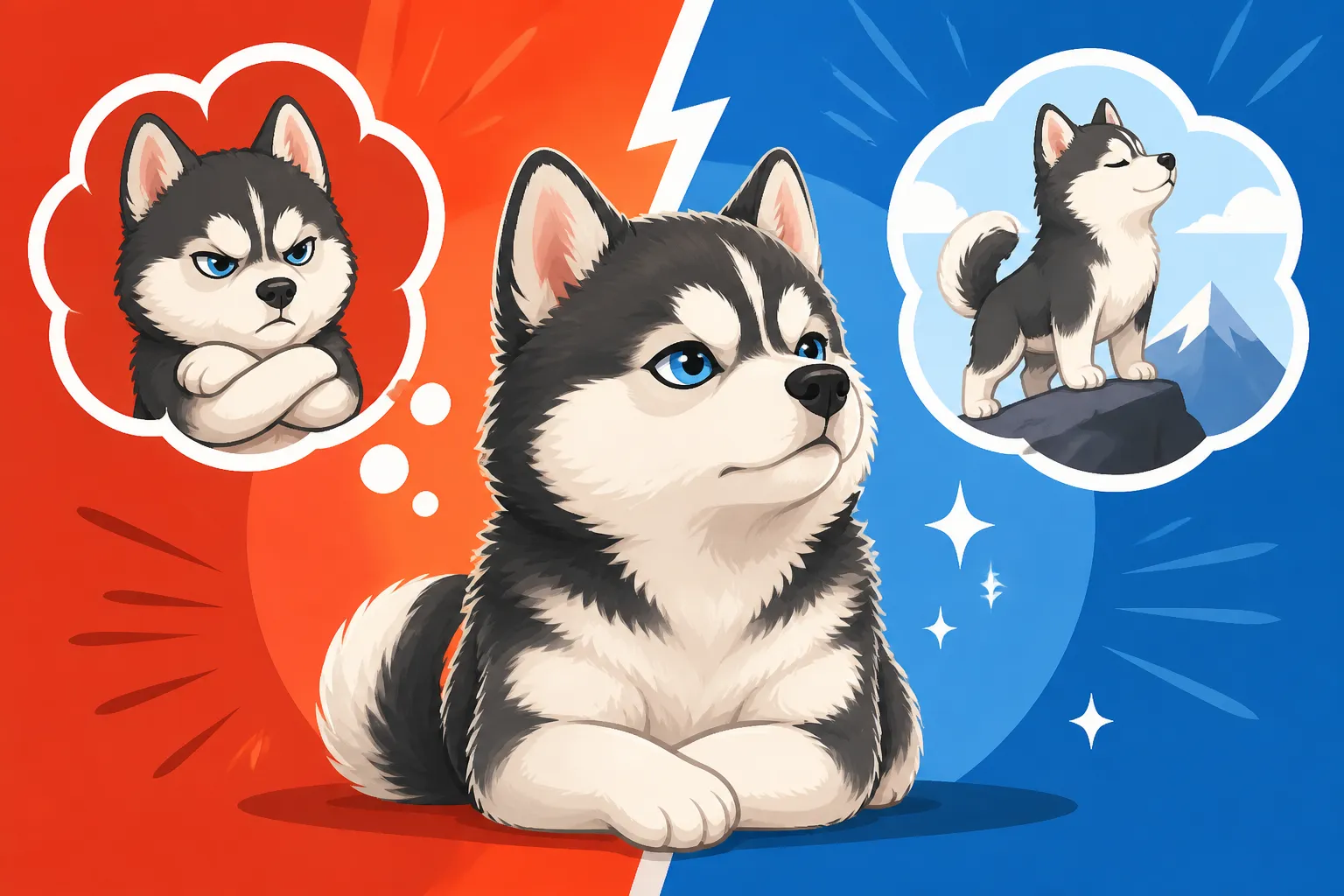
It's easy to label a dog "stubborn" when they don't do what we ask. But for a Pomsky, it's often more accurate to think of it as independence. Understanding this distinction isn't just semantics; it fundamentally changes how you approach training and communication with your dog.
What "Stubbornness" Really Looks Like in a Pomsky
When we say a dog is "stubborn," we often picture a dog who knows exactly what we want, has the capability to do it, but deliberately chooses not to, simply to be difficult. In a Pomsky, this "stubbornness" often manifests as selective hearing – they might respond perfectly when there’s a treat involved, but suddenly go deaf when you’re just asking them to come in from the yard. It can also look like a refusal to engage in repetitive training drills, lying down during a walk when they decide they're done, or simply staring at you blankly when you give a command they’ve mastered a hundred times before.
This isn't necessarily defiance. Instead, it's often a calculation: "What's in it for me?" If the perceived reward isn't high enough, or if their internal motivation (like chasing a leaf or sniffing a fascinating spot) is stronger, they might opt out. It’s also important to consider if they truly understand what you're asking in that specific context. Dogs don't generalize commands easily; a "sit" in the living room isn't always the same as a "sit" at a busy park. What seems like stubbornness to us might be a genuine lack of motivation or context-specific understanding on their part, coupled with their strong independent streak. This is why many owners will ask themselves Whether a Pomsky Is Too Smart for Its Owner.
Embracing the Independent Thinker
An independent dog, especially a Pomsky, is a thinking dog. They process information, make choices, and don't always blindly follow. This trait can be incredibly valuable – it makes them resourceful, adaptable, and often excellent problem-solvers. If you have a Pomsky, you know they can figure out latches, open doors, or find ingenious ways to get to a coveted toy. This isn't stubbornness; it's intelligence applied to their own agenda.
Embracing their independence means recognizing that your Pomsky isn't a robot, nor are they simply trying to annoy you. They are individuals with their own desires, motivations, and priorities. Instead of fighting against this independence, a successful Pomsky owner learns to work with it. This means making yourself more interesting and rewarding than the distractions, and framing commands in a way that makes your Pomsky want to comply, rather than just forcing them. It’s about building a partnership where mutual respect and clear communication pave the way for cooperation.
The Importance of Motivation and Reinforcement
Given their independent nature, motivation and consistent, clear reinforcement become absolutely crucial for Pomskies. They need a compelling reason to engage. For some, that might be a super high-value treat (think cooked chicken or cheese), for others, it's a favorite toy, or even exuberant praise and a good game of fetch. What one Pomsky finds motivating, another might ignore, so it's a journey of discovery to find your individual dog's ultimate reward. Many people often wonder What a Pomsky Will Work For.
Moreover, reinforcement needs to be immediate and consistent. If your Pomsky performs a desired action, the reward should follow within seconds so they can clearly connect their behavior to the positive outcome. Inconsistency, on the other hand, is a death knell for training an independent breed. If sometimes "come" means a treat and sometimes it means getting ignored, why would they bother? Regular, positive reinforcement builds a history of successful interactions and teaches your Pomsky that listening to you often leads to good things. This is a continuous process, not a one-and-done lesson, especially with a dog that constantly evaluates the situation.
| Behavior Observed | Common Interpretation (Stubbornness) | Alternative Interpretation (Independence) | Training Approach |
|---|---|---|---|
| Ignores "Come" command | "My dog is deliberately disobeying me." | "My dog prioritizes the environment over my request." | Increase reward value, practice in low-distraction environments, use a long line for safety. |
| Stops during a walk | "They're being difficult and don't want to move." | "They've reached their mental or physical limit, or found a scent." | Check for physical discomfort, offer high-value treats to re-engage, vary walk routes/duration. |
| Refuses to do a known trick | "They know it, they just don't feel like it." | "The current motivation isn't high enough for them to engage." | Use novel, high-value rewards, shorten training sessions, make it a game. |
| "Talking back" or whining | "They're complaining or being dramatic." | "They are communicating a need or desire." | Try to understand the underlying cause (attention, food, potty, boredom), respond appropriately. |
| Escaping the yard | "They want to run away from me." | "They have a high drive to explore and roam, and found an opportunity." | Secure fencing (ensure no digging or climbing spots), supervised outdoor time, The Fence a Pomsky Actually Needs. |
Navigating Training Challenges with a Pomsky
Training a Pomsky can feel like a marathon rather than a sprint, especially when you're dealing with a dog that constantly evaluates whether your request is truly worth their effort. But don't despair! Their intelligence and independence can actually be huge assets if you learn to harness them correctly.
The Art of Positive Reinforcement and High-Value Rewards
For a Pomsky, bribery isn't a dirty word; it's a highly effective communication tool. Positive reinforcement, meaning rewarding desired behaviors, is absolutely paramount. Forget harsh corrections or dominance-based methods; these will only shut down an independent Pomsky and damage your bond. Instead, focus on making yourself the most exciting thing in their world.
This often means using high-value rewards. Your regular kibble might work for a quick "sit" in the quiet living room, but out on a walk with squirrels bounding around, you'll need something far more enticing. Think tiny pieces of cooked chicken, cheese, hot dogs, or a dollop of peanut butter. Find what makes your Pomsky's eyes light up, and reserve those super special treats for challenging situations or when introducing new concepts. The goal is to make listening to you a wildly rewarding experience, consistently. Remember, their minds are always weighing options, and you want your option to always be the most appealing.
Consistency, Patience, and Understanding Their "Why"
Consistency is the bedrock of training any dog, but it's especially critical for independent breeds like the Pomsky. If a rule applies sometimes but not others, they'll quickly learn to test the boundaries. Every member of the household needs to be on the same page with commands, expectations, and rewards. This means everyone uses the same cues and follows through with rewards or consequences (like no reward for non-compliance).
Patience is also your superpower. There will be days when your Pomsky seems to have forgotten every single thing you've ever taught them. Don't get discouraged. Reset, take a break, and come back to it later. Frustration on your part will only make your Pomsky less willing to engage. Instead of asking "Why isn't my dog listening?", try asking "What might my dog be trying to communicate?" or "How can I make this more motivating and clear for them?" Understanding their "why" – their motivation, their distraction, their comfort level – will help you tailor your approach more effectively.
When Routine Training Hits a Wall
It's common for Pomsky owners to feel like they're hitting a wall with routine training. You might master "sit" and "stay" indoors, but the moment you step outside, it all falls apart. This isn't necessarily stubbornness; it's usually a matter of proofing behaviors in different environments with increasing distractions. An independent dog needs to learn that a command means the same thing, whether they're in a quiet room or surrounded by the tantalizing smells of a dog park.
When you hit a wall, break down the training into smaller steps. If your Pomsky won't "come" at the park, go back to practicing "come" in your yard, then in a quiet cul-de-sac, gradually increasing the distractions as they succeed. Also, consider the length and frequency of your training sessions. Pomskies, like their Husky parents, can get bored with endless repetition. Short, fun, frequent sessions (5-10 minutes a few times a day) are often far more effective than one long, tedious session. Exploring topics like How Long a Pomsky Holds Concentration and Whether Short Sessions Suit a Pomsky can provide deeper insights. Keep it light, keep it positive, and always end on a success.
Building a Stronger Bond and Better Communication
The relationship with your Pomsky is less about strict obedience and more about a deep, trusting partnership. Building that bond is crucial for navigating their independence and fostering better communication.
Establishing Clear Leadership (Not Dominance)
When we talk about leadership, we're not talking about old-school, dominance-based training methods that are now widely discredited. Instead, it's about being a reliable, consistent, and fair guide for your Pomsky. This means setting clear boundaries, enforcing rules kindly but firmly, and providing for all their needs – physical, mental, and emotional. Your Pomsky needs to see you as the benevolent provider of all good things: food, playtime, walks, and affection.
A clear leader also provides structure and predictability. Dogs thrive on routine. When your Pomsky knows what to expect, they feel more secure and are often more willing to cooperate. This consistent leadership helps them understand their place in the household, not as a subordinate, but as a cherished member of the pack who looks to you for guidance and safety. This foundation of trust is what encourages an independent dog to choose to listen to you, even when there are tempting distractions.
Enrichment Activities for the Pomsky Mind
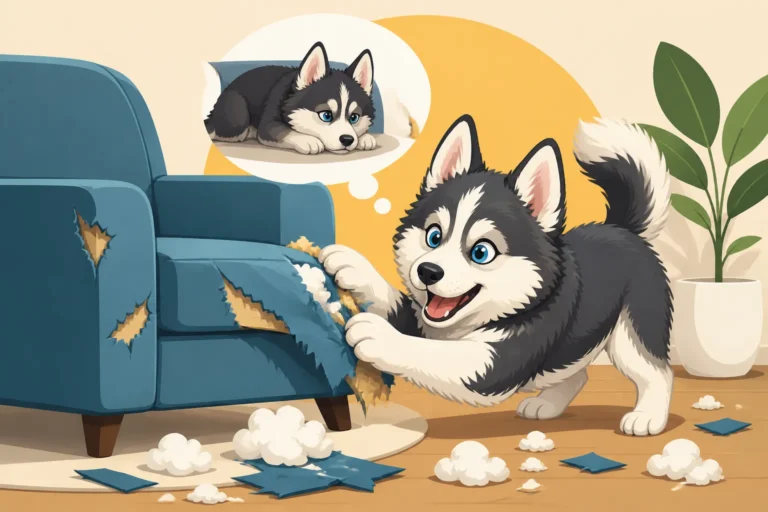
An independent and intelligent dog like a Pomsky needs more than just physical exercise; they need mental stimulation to thrive. A bored Pomsky is a creative Pomsky, and their creativity often manifests in ways we might label as "naughty" or "stubborn" – like digging up the yard, chewing furniture, or finding ways to escape. Think of their independent thinking as a powerful engine that needs fuel and direction.
Incorporate puzzle toys, snuffle mats, and scent games into their daily routine. These activities tap into their natural instincts and challenge their brains, providing a constructive outlet for their intelligence. Teaching new tricks, engaging in canine sports like agility (even just for fun in your backyard), or simply practicing "find it" games with treats around the house can make a huge difference. A mentally satisfied Pomsky is generally a much calmer and more cooperative companion. Consider reading Whether a Pomsky Needs a Job for more ideas.
Seeking Professional Guidance When Needed
Sometimes, despite your best efforts, you might feel like you're not making progress, or your Pomsky's "stubborn" behaviors are escalating. There is absolutely no shame in seeking professional help! A certified professional dog trainer, especially one experienced with northern breeds or independent small dogs, can be a game-changer. They can offer an objective perspective, identify specific triggers or communication breakdowns, and introduce new techniques tailored to your Pomsky's personality.
Look for trainers who use positive reinforcement methods and focus on building a strong, respectful relationship between you and your dog. Online training programs, like those offered by BAXTER & Bella, can also provide structured guidance and support from the comfort of your home, which can be a great option for Pomsky owners looking for flexible learning. A good trainer doesn't just train your dog; they train you to better understand and communicate with your furry friend, turning potential frustrations into celebrated breakthroughs. You might find a class or private sessions invaluable for topics like Whether a Pomsky Needs a Professional Trainer.
Living with a Pomsky: Managing Expectations and Celebrations
Ultimately, living with a Pomsky means embracing their unique personality. It’s about managing your own expectations and learning to celebrate the wonderful quirks that come with their independent and intelligent nature.
Adjusting Your Own Perspective
One of the biggest shifts you can make as a Pomsky owner is adjusting your own perspective. Instead of viewing their independence as an obstacle, try to see it as a fascinating trait that makes them unique. They might not be the dog that lives to fetch, or who sits perfectly still for every photo, but they are often highly intelligent, deeply affectionate (on their own terms!), and endlessly entertaining.
Understanding that their "stubbornness" is rooted in their breed history and an innate drive for self-reliance can help you depersonalize the experience. It’s not about them trying to annoy you; it’s about them being a Pomsky. This shift in mindset can reduce frustration and open the door to more creative and effective training solutions. It allows you to appreciate their problem-solving skills and their strong individual spirit, rather than trying to force them into a mold that doesn't fit.
Celebrating Their Unique Quirks
Every Pomsky has their own special blend of Husky independence and Pomeranian sass. Some will be more vocal, offering a range of "woo-woos" and dramatic sighs that would make a stage actor proud, as explored in Why a Pomsky Talks Instead of Barking. Others might be master escape artists, constantly looking for the next adventure. Rather than fighting these quirks, find ways to celebrate them and channel them positively.
For example, if your Pomsky loves to "talk back" or howl, you can teach them a "speak" command and then a "quiet" command, turning their natural inclination into a fun trick. If they are a relentless digger, provide them with a designated digging pit in the yard to satisfy that instinct. These traits are part of their charm and individuality. Learning to laugh at their antics and appreciating their cleverness will deepen your bond and make daily life much more enjoyable.
The Long-Term Rewards of a Pomsky Relationship
Living with an independent Pomsky requires effort, patience, and a good sense of humor, but the rewards are truly immense. These dogs often form incredibly strong bonds with their families, offering unwavering loyalty and affection, even if it's expressed in their own unique way. They challenge you to be a better dog owner, to think outside the box, and to truly understand canine behavior.
Over time, you'll develop a language with your Pomsky that transcends simple commands. You'll learn to read their subtle cues, anticipate their desires, and appreciate their thoughtful (and sometimes defiant) personality. The journey with a Pomsky is never boring, always full of surprises, and ultimately, deeply enriching. It’s a partnership built on mutual respect and understanding, where their independence isn't a flaw, but a cherished part of who they are.
Disclaimer
This article is for general informational purposes only and does not constitute professional advice. Laws, prices and regulations vary by location and change over time. Consult a qualified professional for guidance on your specific situation.