Whether a Pomsky Destroys Furniture When Bored
One of the biggest worries for any Pomsky owner, especially when you first bring that adorable, fluffy puppy home, is the possibility of coming back to a scene of destruction. You picture chewed chair legs, shredded cushions, or worse, a hole gnawed in your drywall. This guide is here to tackle that very real fear, exploring why a Pomsky might turn to destroying furniture out of boredom and, more importantly, what concrete steps you can take to prevent it and protect your home.
Understanding the Pomsky's Need for Engagement
Let’s be honest, those big, expressive eyes and fluffy tails can make it easy to forget that beneath the cute exterior of a Pomsky lies a dog with serious energy and intelligence, inherited from two very active parent breeds. When those inherent drives aren't met, boredom can quickly set in, and a bored dog is often a destructive dog.
The Husky and Pomeranian Influence on Boredom
Think about the Sibe: built for pulling sleds across vast, icy landscapes. They have boundless energy and a keen mind that needs challenges. Then consider the Pomeranian: a small dog with a huge personality, often described as feisty, intelligent, and surprisingly hardy. They might be tiny, but they're not just lap warmers; they thrive on interaction and mental puzzles. Combine these two, and you get a Pomsky—a dog that often has a significant need for both physical exertion and mental stimulation. It’s a powerful combination that, if neglected, can manifest as destructive behavior.
When a Pomsky doesn't get enough exercise or mental engagement, that pent-up energy has to go somewhere. It’s like having a highly intelligent toddler stuck in a room with nothing to do; eventually, they’ll start taking things apart just to see what happens. For a Pomsky, this might start subtly, perhaps with them persistently pawing at you for attention, or maybe a soft whine that slowly builds. If these early signals are missed, the frustration can boil over into something more tangible.
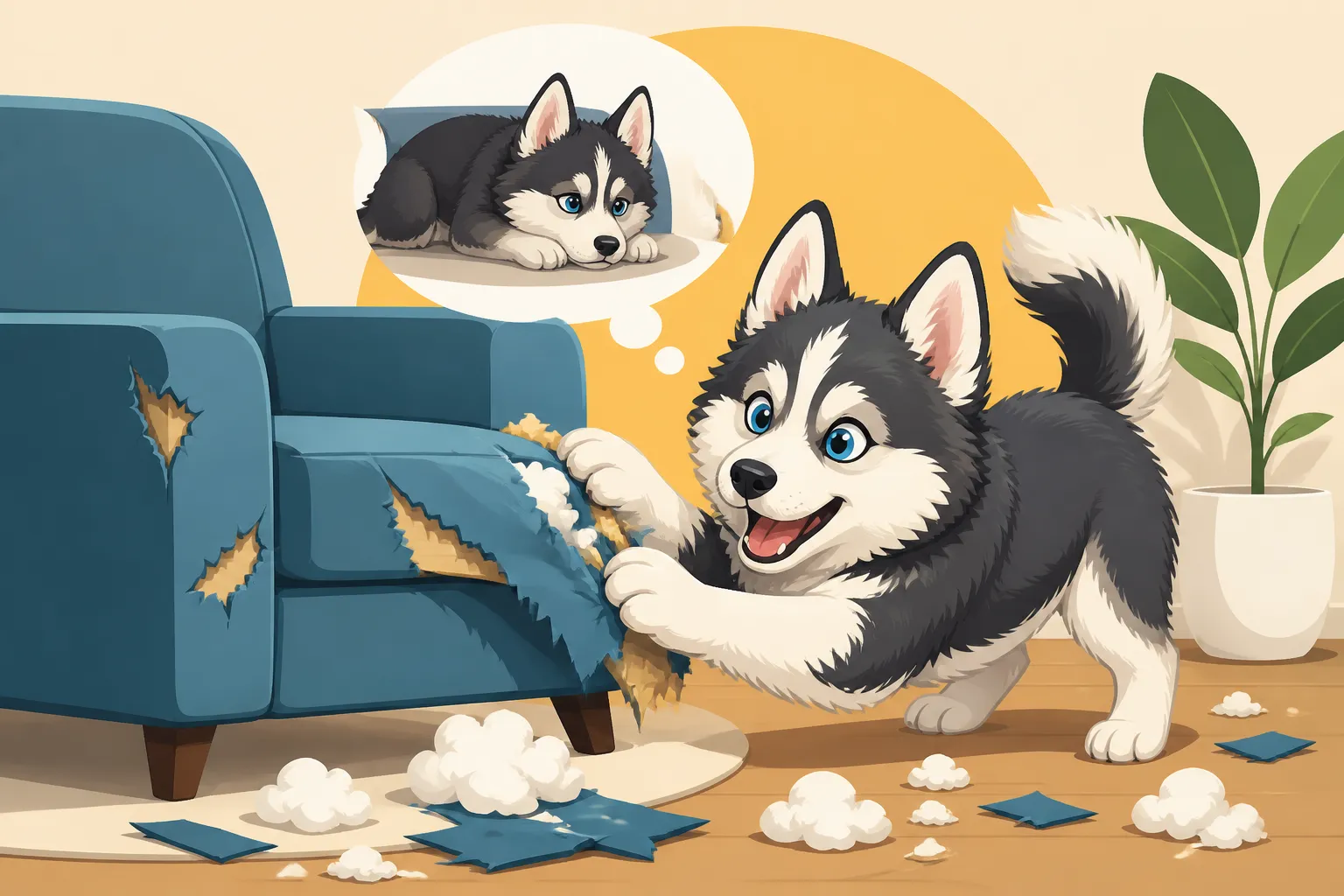
A common scenario I hear from owners is a Pomsky starting with a seemingly innocuous act, like consistently gnawing on the corner of a favorite rug. You might initially scold them or move them away, but if the underlying boredom isn't addressed, that rug corner might quickly escalate to the leg of a wooden coffee table, and then, before you know it, a plush sofa cushion becomes the next victim. It's not out of malice; it's simply a misdirected attempt to alleviate their mental and physical restlessness.
Signs Your Pomsky is Bored Before Destruction Starts
Catching the early signs of boredom is absolutely key to preventing furniture destruction. Your Pomsky won't just suddenly decide to redecorate your living room with shredded foam; there are usually precursors. Pay close attention to changes in their normal behavior, especially if it coincides with periods of less exercise or attention from you.
One of the most obvious signs is excessive vocalization. If your Pomsky starts The Husky Howl in a Pomsky more frequently, or if their whining and barking becomes incessant and seems to have no clear trigger, it's often a cry for more engagement. They might pace restlessly around the house, unable to settle down even after a meal or a potty break. This physical restlessness is a strong indicator that they have untapped energy reserves.
Another sign can be attention-seeking behaviors that feel a little too insistent. This might involve nudging your hand off your keyboard, dropping toys repeatedly at your feet, or even gently nipping at your clothes when you're trying to relax. They're trying to communicate, in the clearest way they know how, that they need something to do. Ignoring these signals is like ignoring a ticking time bomb, leading directly to the next stage of problem-solving—which often involves your furniture.
Finally, watch for things like persistent A Pomsky That Digs at carpets or bedding, chewing on non-toy items (like remote controls or shoes, which might progress to furniture), or even becoming unusually clingy or destructive with their own toys, tearing them apart faster than usual. These are all clues that their brilliant Pomsky mind isn't being used effectively, and they're looking for an outlet.
Why Furniture Becomes a Target for Bored Pomskies
It's easy to take it personally when your beloved dog gnaws on your expensive sofa or scratches at the bedroom door. But understanding why they choose furniture can help you develop more effective preventative strategies. It's rarely about being "naughty" in the human sense; it's about instinct and unmet needs.
The Urge to Chew and Shred
Both Huskies and Pomeranians, and by extension, Pomskies, have natural instincts that can lead to chewing and shredding. Huskies historically would chew on things to keep their jaws strong and to pass the time during long waits. Pomeranians, despite their small size, also love to chew. For a Pomsky, chewing is a natural, self-soothing behavior, a way to explore their environment, and a method to alleviate discomfort (especially for puppies teething).
When boredom strikes, this innate urge to chew can be misdirected. Your furniture offers a smorgasbord of textures and sensations. A wooden chair leg provides a satisfying resistance, while a fabric couch arm offers something to pull, tear, and shred. The foam inside a cushion? That's just an added bonus, often feeling like prey to a dog that's desperately seeking stimulation. They're not thinking "expensive upholstery"; they're thinking "something interesting to dissect."
Consider a hypothetical scenario: you leave for work, and your Pomsky has had a short walk and is left with one or two familiar toys. Within an hour, they're bored. They wander around, sniff the furniture, and maybe give a chair leg an experimental lick. It feels good. It has texture. They start to gnaw. The noise and sensation are stimulating. Soon, they've worked their way up to the edge of the sofa cushion. The fabric tears easily, revealing the soft, springy foam underneath. This is a jackpot for a bored dog – it shreds, it makes noise, and it releases energy. What started as a casual exploration quickly turns into a full-blown mission to deconstruct your living room. The problem isn't the dog's intent; it's the lack of appropriate alternatives.
Seeking Attention Even Negative Attention
Dogs are incredibly intelligent creatures, and they are masters at learning what gets them a reaction from their human companions. While destructive chewing might initially stem from boredom, it can quickly become a learned behavior if it consistently results in attention, even if that attention is negative.
Imagine you come home to find a cushion torn apart. Your immediate reaction is likely shock, frustration, and perhaps a loud "No!" or a stern voice. From your Pomsky's perspective, this sudden burst of interaction, even if it's scolding, is still attention. It's a powerful reinforcement. They might think, "Ah, doing this makes my human talk to me and focus on me!" Over time, if they feel neglected or aren't getting enough positive interaction, they might intentionally seek out the furniture to chew on, knowing it's a guaranteed way to get you to engage with them.
This doesn't mean you should ignore destruction (that's not realistic or advisable), but it highlights the importance of addressing the root cause rather than just punishing the symptom. If your Pomsky is resorting to destroying furniture, it's a clear signal that their needs aren't being fully met, and they're trying to communicate that in the most impactful way they know how. This behavior can be particularly common if your Pomsky feels Whether a Pomsky Can Be Left Alone for too long without adequate mental and physical engagement.
Practical Strategies to Prevent Furniture Destruction
The good news is that preventing furniture destruction in a bored Pomsky is entirely achievable with a consistent, proactive approach. It's all about redirecting that intelligent energy into appropriate channels and setting your dog up for success.
Boosting Physical Exercise and Mental Stimulation
This is probably the most crucial piece of the puzzle. A tired Pomsky is a good Pomsky! These dogs are often bundles of energy, and relying solely on a quick trip to the backyard isn't going to cut it. They need real, structured exercise every single day. This means brisk walks, runs, or active playtime. If you're a jogger, a Pomsky can often make a fantastic running buddy once they're fully grown and cleared by a vet. For those high-energy individuals, an hour or two of dedicated physical activity spread throughout the day isn't too much to ask. Think long walks around the neighborhood, trips to a secure dog park (if your Pomsky is well-socialized), or even organized dog sports. Remember to consider The Exercise a Pomsky Needs Every Day.
Beyond physical exercise, mental stimulation is equally vital. A Pomsky's brain needs a workout just as much as its body. This can involve daily training sessions, even short 10-15 minute bursts where you work on commands, tricks, or even introduce new concepts. Puzzle toys are an absolute game-changer here. These toys require your Pomsky to figure out how to get treats or kibble, engaging their problem-solving skills. You can find a huge variety of these, from simple treat-dispensing balls to more complex sniff mats and interactive feeders, on platforms like Amazon. Rotating these toys keeps them novel and interesting. Scent work, where you hide treats around the house for your Pomsky to find, is another fantastic way to tap into their natural instincts and tire them out mentally without much physical exertion.
If your Pomsky is particularly prone to being Whether a Pomsky Is Stubborn or Independent, making training fun and engaging is key. Short, positive sessions with high-value rewards will keep their attention and challenge their minds. Don't underestimate the power of brain games to prevent destructive behaviors.
Providing Appropriate Chew Outlets
If your Pomsky has an urge to chew, which they most certainly do, the goal isn't to stop them from chewing entirely, but to provide them with appropriate alternatives. Imagine trying to stop a river from flowing; it's much easier to redirect its course. The same goes for your Pomsky's chewing needs.
Invest in a variety of durable, safe chew toys. Look for toys made from sturdy rubber, nylon, or natural options like bully sticks or appropriate dental chews. The key is variety: a hard chew for grinding, a softer, more flexible one for gnawing, and maybe something with nooks and crannies for hiding treats. Rotate these toys regularly so they don't get bored of the same old things. When you leave your Pomsky alone, make sure they have access to these irresistible chew options. A classic example is a KONG toy stuffed with peanut butter, yogurt, or wet food and then frozen. This can keep a Pomsky happily occupied for a significant amount of time, diverting their attention from your furniture.
When you see your Pomsky heading for a chair leg, don't just scold them. Instead, calmly redirect them to one of their appropriate chew toys. Praise them enthusiastically when they start chewing on the right item. Consistency is paramount here. Every time they choose a toy over the furniture, they are learning what is acceptable. This is a much more effective strategy than simply punishing undesirable behavior, as it teaches them what to do instead.
Crate Training and Safe Spaces
Crate training, when done correctly, is not cruel; it's about providing your Pomsky with a safe, comfortable den. This can be an invaluable tool in preventing furniture destruction, especially when you can't directly supervise your dog. A crate should be introduced positively, never used for punishment, and made into a cozy haven with soft bedding and engaging chew toys.
When you need to leave your Pomsky unsupervised, even for short periods, a crate can prevent them from developing destructive habits. It eliminates the opportunity for them to chew on furniture. As they mature and prove trustworthy, you can gradually increase their freedom. For some dogs, particularly energetic or anxious ones, a crate might be a necessity for longer than others. If you're wondering How Many Hours a Pomsky Can Be Left alone, a crate can make a significant difference in their safety and your peace of mind.
If a crate isn't suitable or preferred, consider a dog-proofed room or a large exercise pen. This involves removing any tempting chewables like remote controls, shoes, plants, and securing furniture or blocking access to it. Think like a toddler-proofing parent. The goal is to create an environment where your Pomsky cannot get into trouble, thus preventing the formation of bad habits. This safe zone should still be equipped with plenty of appropriate toys and water.
Training and Behavior Modification
Consistent training is the foundation for a well-behaved Pomsky, and it plays a huge role in preventing destructive behaviors. Positive reinforcement is your best friend here. Reward your Pomsky generously with treats, praise, and play whenever they exhibit desired behaviors, such as chewing on their toys, settling calmly, or responding to commands.
Teaching specific commands like "leave it" or "drop it" can be incredibly useful. If you catch your Pomsky eyeing a forbidden item, a clear "leave it" command can redirect their attention. Practice these commands regularly in various environments so your Pomsky understands them reliably. It requires patience and consistency, but the payoff is immense.
For those who feel overwhelmed or are struggling with persistent destructive behavior, consider enrolling in an online training program or consulting a professional. Resources like BAXTER & Bella offer comprehensive online training programs that can guide you through everything from puppy basics to more advanced behavior modification, all from the comfort of your home. They provide structured lessons and support that can be particularly helpful for dogs with the unique blend of intelligence and independence that a Pomsky often possesses. Sometimes, an objective eye from an experienced trainer can identify subtle triggers or missed opportunities for intervention. Don't be afraid to seek help if you're feeling stuck; it's an investment in your Pomsky's happiness and your home's integrity. Plus, having a professionally guided approach can truly make a difference, especially if you're dealing with a Pomsky that seems to Whether a Pomsky Tests Every Rule.
When to Seek Professional Help
Even with the best intentions and consistent effort, some destructive behaviors can be deeply ingrained or stem from underlying issues that are difficult for an owner to identify and address alone. Knowing when to call in the cavalry—a professional dog trainer or veterinary behaviorist—is crucial for your Pomsky's well-being and your own sanity.
Recognizing Persistent or Escalating Behavior
It's one thing for a puppy to chew on a table leg occasionally; it's another for an adult Pomsky to systematically shred cushions every time you leave the house. If, despite your best efforts with increased exercise, mental stimulation, appropriate chew toys, and consistent training, the furniture destruction persists or even escalates, it's a red flag. This might indicate that the behavior is more complex than simple boredom.
One common underlying issue is separation anxiety. Dogs with separation anxiety don't just chew out of boredom; they chew as a coping mechanism for extreme distress when left alone. Signs of separation anxiety can include excessive drooling, frantic pacing, persistent howling or barking (even when you're gone for only a few minutes), destructive chewing specifically around exit points (doors, windows), or even house-soiling, all occurring only when you're absent. If you suspect your Pomsky might be experiencing this, it's a serious matter that requires a different approach than just redirecting boredom. Whether a Pomsky Suffers Separation Anxiety is a very real concern for many owners.
Another less common but important consideration is a potential medical issue. While rare, pain, dental problems, or even certain neurological conditions could sometimes manifest as unusual chewing or destructive behaviors. If the destructive behavior is sudden, severe, or accompanied by other concerning symptoms (like changes in appetite, energy levels, or temperament), a vet visit to rule out any physical causes is always the first step.
Consulting a Certified Professional Dog Trainer or Behaviorist
If you've tried all the standard prevention methods and your Pomsky is still turning your home into a construction zone, it's time to seek expert help. A certified professional dog trainer can assess your Pomsky's individual situation, observe their behavior, and help you pinpoint the specific triggers and motivations behind the destruction. They can then develop a tailored behavior modification plan that's unique to your dog and your household.
For more complex issues, particularly if separation anxiety or other anxiety-related behaviors are suspected, a veterinary behaviorist might be recommended. These are veterinarians who have specialized in animal behavior and can offer a more in-depth diagnosis, potentially including medication in conjunction with behavior modification if absolutely necessary. They approach the problem from both a medical and behavioral standpoint, offering the most comprehensive care. Remember, Whether a Pomsky Needs a Professional Trainer isn't a sign of failure; it's a sign of a responsible owner committed to their dog's well-being and finding the right solution. They can provide invaluable strategies and support to transform your Pomsky from a potential furniture menace into a calm, content companion.
Disclaimer
This article is for general informational purposes only and does not constitute professional advice. Laws, prices and regulations vary by location and change over time. Consult a qualified professional for guidance on your specific situation.