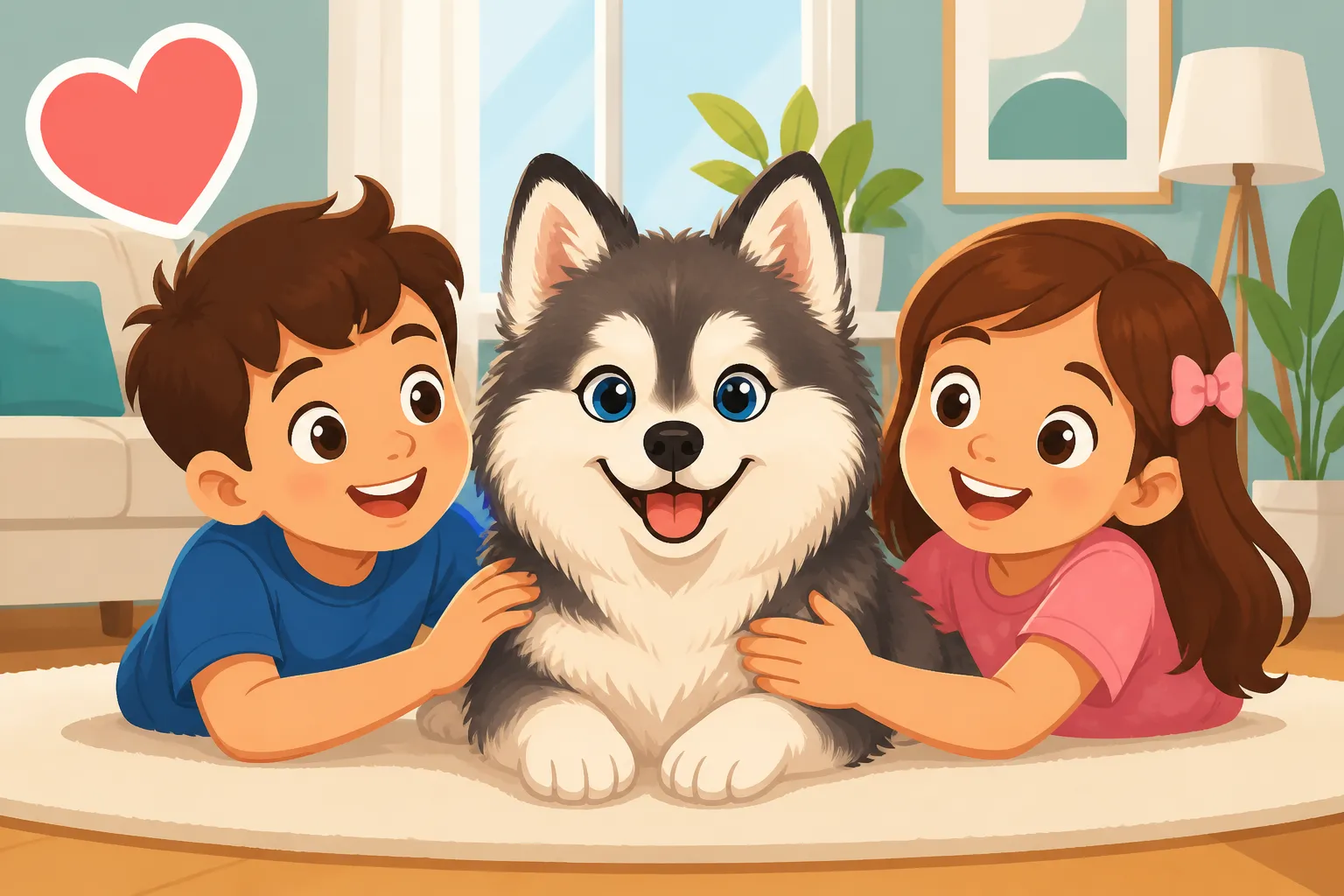
A Pomsky in a House With Children
Bringing a new dog into a home with children can feel like navigating a minefield – you adore your kids, you want a furry companion, but the thought of mismatched personalities, accidental nips, or even serious misunderstandings between them can be incredibly stressful. Many families dream of that picture-perfect image of a child and a dog playing gently, but the reality can be much more complex, especially with a breed as unique as a Pomsky. This guide is here to walk you through the realistic steps, common challenges, and essential strategies to foster a safe, loving, and respectful relationship between your Pomsky and the children in your life, setting everyone up for success from day one.
Understanding the Pomsky Temperament with Children
Pomskies are a fascinating blend, inheriting traits from two very distinct breeds: the Siberian Husky and the Pomeranian. This mix means their temperament can be a bit of a mixed bag, making predictability a challenge, especially when it comes to living with children. It's not a one-size-fits-all situation, and understanding the potential leanings from each parent breed is your first step.
The Husky Influence: Playfulness and Energy
From the Husky side, Pomskies often inherit a vibrant, playful energy and a love for interaction. Huskies are known for being generally good-natured with children, often viewing them as smaller pack members or playmates. This can translate into a Pomsky who enjoys romping, playing fetch, and being involved in family activities. They might be quite tolerant of the hustle and bustle that comes with kids, and their intelligence means they can often pick up on social cues, to an extent.
However, this high energy can also be a double-edged sword. A young, exuberant Pomsky might inadvertently knock over a small child during a burst of zoomies, or mouth playfully a bit too hard during excitement. Their natural exuberance needs careful channeling, and their strong prey drive, inherited from the Husky, means they might see quick-moving toddlers or children running as something to chase. The Prey Drive a Pomsky Gets From the Husky is a very real factor to consider, particularly if you have very young children.
The Pomeranian Influence: Sass and Sensitivity
The Pomeranian side, while smaller, contributes significantly to the Pomsky's potential temperament. Pomeranians can be a bit more aloof or even sassy, and their small size often makes them more prone to feeling overwhelmed or scared by boisterous children. They might react with a snap or a growl if they feel cornered, roughly handled, or if their personal space is invaded. This sensitivity can manifest in a Pomsky who, despite their Husky energy, also has a shorter fuse when it comes to perceived threats or annoyances.
A Pomsky leaning more towards their Pomeranian heritage might prefer quieter interactions and could be more prone to resource guarding their toys, food, or even their favorite human. This isn't to say they are inherently "bad" with children, but rather that their tolerance levels might be lower, and they may require more careful management and supervision to ensure both their comfort and the children's safety. Understanding this potential for sensitivity is crucial for setting appropriate boundaries for both dog and child.
Predicting Temperament in a Mixed Breed
The truth is, predicting a Pomsky's exact temperament is like rolling dice – you just don't know which parent's traits will dominate, or in what combination. An F1 Pomsky (first generation cross) especially can be quite varied in size and temperament. You might get a Pomsky with the gentle nature of a Husky but the small stature of a Pomeranian, making them fragile, or one with the stubbornness of a Husky and the "don't touch me" attitude of a Pomeranian.
This unpredictability means that you, as the adult, must assume full responsibility for managing all interactions. Never operate under the assumption that your Pomsky will "just naturally" be good with kids. Responsible ownership means being proactive, understanding the spectrum of possibilities, and being prepared to train, manage, and supervise diligently to ensure a harmonious household.
Preparing Your Home and Kids for a Pomsky
Before your Pomsky puppy even steps paw through the door, preparation is key. This isn't just about puppy-proofing; it's about setting the stage for respectful coexistence between your new furry family member and your existing human ones. Laying this groundwork will prevent many common issues down the line.
Setting Up a Safe Space for Your Pomsky
Every dog, especially a puppy, needs its own safe haven, a retreat where they can escape the hustle and bustle of a busy household, particularly one with children. This might be a crate, a dog bed in a quiet room, or a designated corner sectioned off with a baby gate. This space should be off-limits to children, a place where your Pomsky can eat, sleep, and chew on their toys undisturbed. Think of it as their private bedroom.
Equip this space with comfortable bedding, appropriate chew toys, and fresh water. Introducing the Pomsky to this space immediately upon arrival helps them understand it's their safe zone. This is especially important for Raising a Pomsky Puppy and helping them feel secure. For durable crates and comfortable beds, many owners find a good selection on platforms like Amazon, offering a range of options to fit your space and your Pomsky's eventual adult size.
Pre-Arrival Education for Children
Before the Pomsky arrives, sit down with your children – regardless of their age – and talk about what it means to have a dog. This isn't just a brief chat; it needs to be an ongoing conversation. Teach them about canine body language: what a happy, relaxed dog looks like versus one that's stressed, scared, or annoyed. Explain that pulling tails, poking eyes, climbing on the dog, or taking their toys are never acceptable.
Use visual aids, books, or even watch videos together about safe dog interactions. Emphasize the concept of "being a tree" (standing still and quiet) if a dog gets too boisterous, or "being a rock" (curling up and staying still) if a dog is jumping. Make sure they understand that the Pomsky is a living being with feelings, not a toy, and that respecting its space and boundaries is paramount to a good relationship.
Establishing Clear House Rules
Consistency is paramount when integrating a Pomsky into a family with children. Establish clear, non-negotiable house rules for everyone – adults and children alike. These rules should cover:
- No disturbing a sleeping or eating dog: This is critical for preventing resource guarding and startle reactions.
- Always ask permission before petting: Even for adults, this teaches children proper etiquette.
- No running or screaming around the dog: This can trigger a Pomsky's prey drive or cause over-excitement.
- Hands-off rule when the dog is in its safe space.
- Always use gentle touches, no roughhousing.
Post these rules in a visible place and enforce them consistently. Children thrive on routine and clear expectations, and so do dogs. When everyone follows the same guidelines, the Pomsky learns what's expected of them and what to expect from the children, reducing anxiety and potential conflicts.
Supervision: The Golden Rule for Pomskies and Children
I cannot stress this enough: never leave a Pomsky unsupervised with children, especially young ones. This isn't about distrusting your dog or your child; it's about being a responsible guardian and preventing accidents that can happen in a split second, even with the best-behaved animals and kids.
Why Constant Supervision is Non-Negotiable
Dogs, even the most gentle ones, can have bad days. Children, especially toddlers, are still learning impulse control and can unintentionally provoke a dog. A Pomsky might react defensively if startled, hurt, or if they feel their space is invaded. A child might trip and fall on a sleeping dog, or accidentally pull an ear too hard. These aren't malicious acts, but they can have serious consequences.
Constant, active supervision means an adult is always present, actively watching, and ready to intervene immediately if interactions become too intense, uncomfortable, or unsafe for either party. This isn't just "being in the same room"; it's paying close attention to both the dog's and the child's body language and stepping in before an issue escalates. A happy growl can turn into a snap faster than you think.
Creating Safe Zones and Management Strategies
Even with strict supervision, life happens. You need to use management strategies to prevent accidental interactions when you can't be actively supervising. Baby gates are your best friend here. Use them to section off areas of the house, keeping the Pomsky and children separate when you're busy cooking dinner, taking a phone call, or simply can't devote 100% of your attention. This also ties into the Pomsky's safe space mentioned earlier.
Consider rotating toys and providing designated dog-only chew items. If your Pomsky has a favorite chew, ensure they enjoy it in their safe space, away from curious little hands. When children are playing with their own toys, especially small ones, ensure the Pomsky is either engaged with their own toy or in a separate area to prevent accidental ingestion or resource guarding over a coveted item.
Recognizing Stress Signals in Your Pomsky
Learning to read your Pomsky's body language is probably one of the most critical skills you'll develop as an owner, especially in a home with kids. Dogs communicate constantly, and often, we miss the subtle signals until it's too late. Look for signs of stress or discomfort, such as:
- Lip licking: Often a quick flick of the tongue.
- Yawning: When not tired, it's a calming signal.
- Head turns or looking away: Avoiding eye contact.
- Body stiffening or freezing: Preparing for something.
- Tail tucked or held low.
- Ears flattened back.
- Whale eye: Seeing the whites of their eyes.
- Growling (never punish a growl!): This is a warning system, cherish it.
If you see any of these signs, immediately separate the dog and child. The Pomsky is communicating that they are uncomfortable and need space. Ignoring these signals teaches the dog that its warnings are ineffective, forcing it to escalate its communication.
Training Your Pomsky for a Child-Friendly Home
Training is not just about teaching tricks; it's about building a common language and mutual respect. For a Pomsky in a home with children, specific behaviors need to be prioritized to ensure everyone's safety and comfort. This is where dedicated effort, and perhaps even professional guidance, really pays off.
Foundation Obedience: Sit, Stay, Down, Come
Basic obedience commands are the bedrock of good behavior. A Pomsky that reliably responds to "sit," "stay," "down," and "come" is much easier to manage in a lively household. "Sit" and "stay" can prevent jumping on excited children or darting out an open door when a child is entering or exiting. Recall on a Pomsky Bred From a Dog That Runs is particularly crucial; a strong "come" can be a lifesaver if they get too close to a child's toy or food, or if they head towards an open gate.
Enroll in a reputable puppy class as soon as your Pomsky has their vaccinations. This not only provides structured training but also early socialization. Consider an online training platform like BAXTER & Bella, which offers comprehensive puppy and dog training courses. Their resources can be incredibly helpful for busy families, allowing you to train at your own pace and address specific child-related behaviors. This investment in training will create a more confident, well-behaved dog, which in turn leads to safer interactions with children.
Bite Inhibition and Nipping Management
Pomsky puppies, like all puppies, explore the world with their mouths and will nip during play. With children, this can be frightening and painful. Teaching bite inhibition – how to control the pressure of their bite – is critical from the moment you bring your puppy home. If your Pomsky is nipping too hard during play, yelp loudly (like a littermate would) and immediately withdraw attention for a few seconds. This teaches them that hard bites end the fun.
Provide appropriate chew toys (again, Amazon has endless options) to redirect their mouthing. If your Pomsky persistently nips at clothes or hands, redirect them to a toy. Never use physical punishment for nipping, as it can escalate aggression or make them fear hands. If nipping is persistent or aggressive, especially towards children, seek guidance from a certified professional dog trainer promptly. For more on puppy behavior, check out The Age a Pomsky Puppy Stops Biting.
Polite Greetings and Calm Interactions
An excited Pomsky jumping up to greet a child can easily knock them over or scratch them accidentally. Teach your Pomsky a polite greeting from day one. When a child approaches (under supervision!), ask your Pomsky to "sit" or "down" before allowing any interaction. Reward calm behavior heavily. If they jump, the interaction immediately ends.
Practice this with all family members and visitors. You want your Pomsky to understand that being calm is what earns them attention and praise, especially from children. This also includes teaching them to be gentle during petting, not just during greetings. If a child is petting your Pomsky, ensure the dog remains relaxed and accepts the touch without any signs of discomfort.
Teaching Children How to Interact Safely with a Pomsky
The responsibility for safe interactions doesn't just fall on the dog and the adults; children also need to learn how to behave appropriately. Empowering children with this knowledge helps them build a positive relationship with their Pomsky and keeps everyone safer.
Gentle Hands and Respectful Play
Children often have a natural inclination to be enthusiastic, which can sometimes translate into rough play for a dog. Teach your children to use "gentle hands" when petting the Pomsky. Show them where dogs like to be petted (cheeks, chest, shoulders, often avoiding the top of the head or tail) and how to do so calmly. No tugging on ears or tails, no riding the dog, no pulling their fur.
Encourage supervised, appropriate play, such as rolling a ball or throwing a soft toy. Engage children in games that are fun for both dog and child but maintain clear boundaries. This could involve teaching your Pomsky to "fetch" or play "hide-and-seek" with treats. Ensure the child understands that if the dog walks away, it means they want space and should be left alone.
Understanding Dog Body Language
As mentioned earlier for adults, this is equally critical for children. Teach your children to recognize when the Pomsky is happy, relaxed, or conversely, when it's uncomfortable or wants to be left alone. Simple rules like "If the dog is eating, sleeping, or in its bed, leave it alone" are easy for even young children to grasp.
You can use flashcards with pictures of dogs displaying different body languages (relaxed, yawning, lip-licking, growling) and ask your children what they think the dog is trying to say. This makes learning engaging and helps them develop empathy and awareness. By recognizing these signals, children can learn to back off before a situation escalates, preventing conflict and building trust.
No Teasing, No Chasing, No Disturbing
These are hard and fast rules. Teasing a dog with toys or food, chasing them around the house, or disturbing them when they are resting are all behaviors that can lead to fearful or aggressive reactions. Children need to understand that the Pomsky is not a toy they can manipulate or control at will.
If children are playing loudly or running, ensure the Pomsky has a safe, quiet place to retreat to, or separate them with a baby gate. This applies especially when friends visit, as children who aren't used to dogs might be less mindful. It's up to you, the adult, to enforce these rules consistently, protecting both your Pomsky and your children.
| Behavior | Child Interaction | Pomsky Reaction (Potential) | Safety & Prevention |
|---|---|---|---|
| Good Play | Gentle petting, supervised fetch, calm praise | Happy, engaged, relaxed | Always supervise, teach 'gentle hands', use soft toys |
| Over-Excitement | Loud noises, running, roughhousing | Jumping, nipping, chasing | Teach 'sit' for greetings, separate during high energy play, provide quiet space |
| Personal Space | Approaching dog in bed, disturbing while eating/sleeping | Growling, snapping, retreating | Establish 'dog's space' rules, use baby gates/crates |
| Resource Guarding | Taking toys/food, reaching into crate | Snapping, growling, biting | Never allow children to take items, trade with treats, feed dog in private space |
| Fear/Discomfort | Unexpected touch, startling the dog, pulling fur | Hiding, lip-licking, snapping | Teach body language, gentle touch, always approach calmly |
Addressing Common Challenges: Nipping, Resource Guarding, and Over-Excitement
Even with the best preparation and training, challenges will arise. Being proactive and knowing how to address these common behaviors is crucial for maintaining peace and safety in a multi-species household.
Managing Puppy Nips and Mouthing
As we touched on, puppy nipping is normal, but it needs to be managed effectively with children present. If your Pomsky puppy nips a child, even gently, the child should be taught to immediately stop interaction ("be a tree") and an adult should step in to redirect the puppy to an appropriate chew toy or remove the puppy for a short "time-out." The goal is to teach the puppy that human skin (especially a child's) is off-limits.
Consistency across all family members is key. If adults allow some mouthing but children don't, the puppy gets mixed signals. Everyone needs to reinforce the same boundaries. If the nipping is particularly persistent or seems to have an aggressive edge, don't hesitate to consult a professional trainer. Continued issues with nipping could also indicate a lack of appropriate physical or mental stimulation.
Preventing Resource Guarding Around Kids
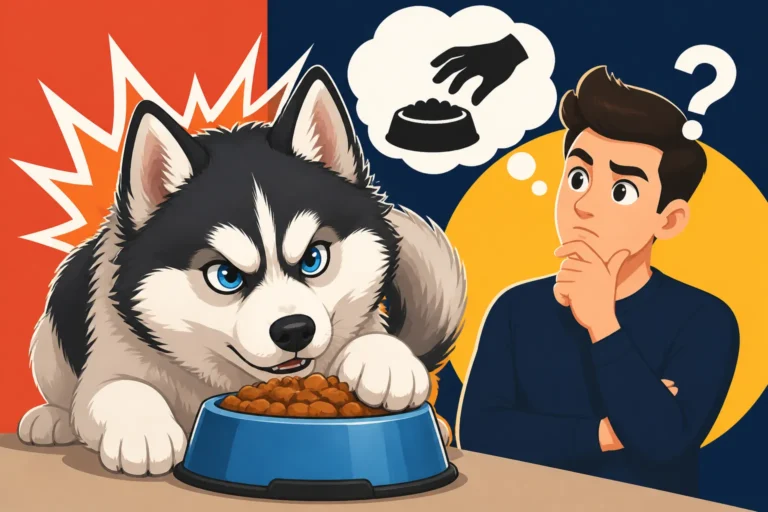
Resource guarding is a dog's natural instinct to protect valuable items (food, toys, even a favorite spot) from others. When children are in the picture, this can be incredibly dangerous. The best approach is prevention.
- Feed in a safe, private location: Your Pomsky should eat their meals in their crate or a separate room, away from children.
- Designated dog toys vs. child toys: Ensure your Pomsky has their own distinct toys, and teach children not to touch them.
- Teach "leave it" and "drop it": These commands are invaluable if your Pomsky picks up a child's toy. BAXTER & Bella offers excellent modules on teaching these commands effectively.
- Trade, don't take: If your Pomsky has something they shouldn't, teach children (and adults) to trade a higher-value treat for the item, rather than simply taking it. This builds trust.
If you observe any signs of resource guarding (stiffening, growling, gulping food quickly, turning away) when a child approaches something the Pomsky values, immediately implement strict management strategies and seek professional help. This behavior, if unaddressed, can escalate into bites.
Calming Overly Excited Pomskies
Pomskies often have bundles of energy, and that can translate into over-excitement, especially around children who often inadvertently fuel it. An over-excited Pomsky might jump, mouth, bark, or run frantically. To calm them down:
- Ignore the unwanted behavior: When they're jumping, turn your back. When they're barking for attention, walk away. Attention, even negative attention, can reinforce the behavior.
- Reward calm: As soon as they have four paws on the floor or a moment of quiet, immediately reward them with praise or a treat.
- Provide appropriate outlets: Much of this energy comes from unmet needs. Ensure your Pomsky is getting enough physical exercise and mental stimulation (more on this below).
- Teach a "settle" command: This involves teaching your Pomsky to lie down calmly on their mat or bed, even with distractions. This can be a lifesaver when company comes over or when children are particularly boisterous.
Consistent management of their energy and teaching them impulse control will lead to a more relaxed and manageable Pomsky, which is safer and more pleasant for everyone in the family, particularly the kids.
Enrichment and Exercise for a Harmonious Household
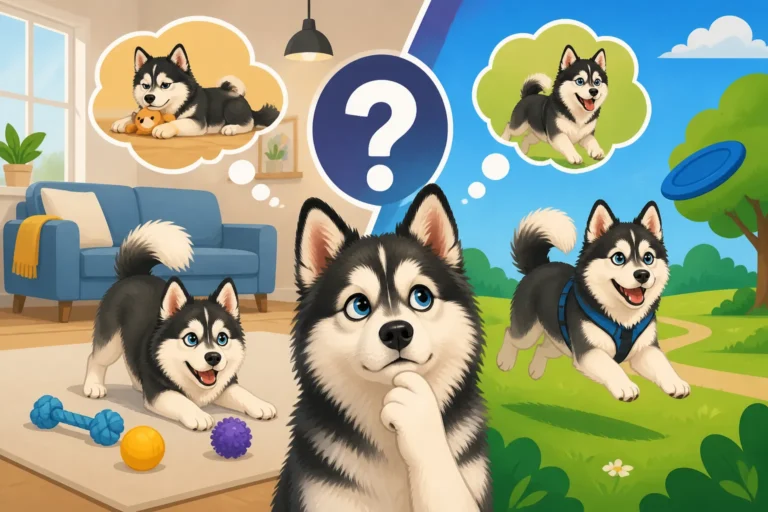
A tired Pomsky is a good Pomsky, and a mentally stimulated Pomsky is even better. Many behavioral issues, including those that cause friction with children, stem from a lack of appropriate outlets for their energy and intelligence. Neglecting these needs is a recipe for disaster in a family home.
Meeting Their Physical Exercise Needs
Pomskies are active dogs and require regular, vigorous exercise. This isn't just a quick potter around the block. They need at least one to two hours of dedicated physical activity daily, ideally broken into several sessions. This could include long walks, supervised playtime in a secure yard, trips to a dog park (if they are well-socialized), or even dog sports. The Exercise a Pomsky Needs Every Day is substantial, and ignoring it will lead to a dog with pent-up energy, more prone to destructive behaviors like A Pomsky That Digs or excessive nipping at children.
Involve older children in exercise routines where appropriate and safe, such as supervised walks or playing fetch in the yard. However, never rely solely on children to provide the Pomsky's exercise, as their attention spans and physical capabilities may not be consistent enough. Adults must ensure these needs are met daily, rain or shine.
Mental Stimulation to Keep Them Engaged
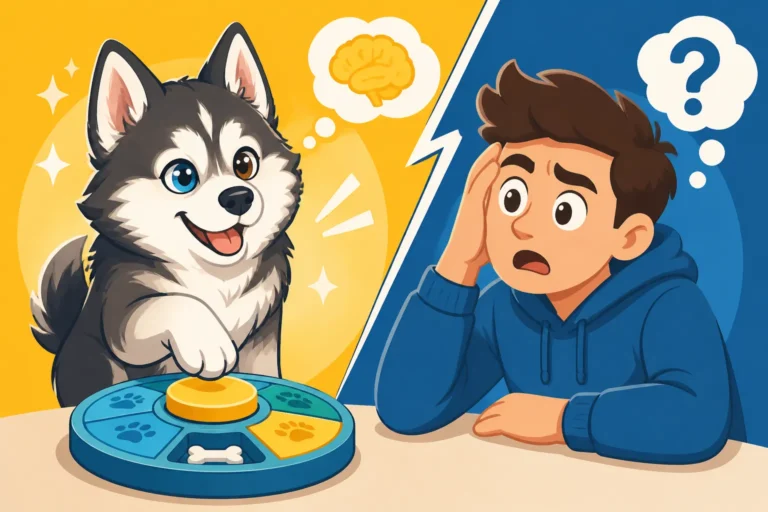
Physical exercise alone often isn't enough for the intelligent Pomsky. They need mental challenges to prevent boredom and destructive behaviors. Incorporate puzzle toys, scent work games, obedience training sessions (even short, frequent ones), and interactive toys. Many excellent mental enrichment toys are available on Amazon, from snuffle mats to treat-dispensing gadgets.
Regular training sessions, even just 10-15 minutes a few times a day, can be incredibly stimulating. Teaching new tricks or refining existing commands keeps their minds active. A mentally stimulated Pomsky is less likely to become bored and invent its own (often unwanted) entertainment, such as chewing on furniture or, worse, bothering children out of sheer restlessness.
Designated Playtime vs. Free Interaction
It's helpful to establish designated "playtime" for the Pomsky, where an adult is actively engaging with the dog, separate from the children initially. This ensures the Pomsky gets its needs met without overwhelming the kids. Once the Pomsky is calmer and has had its energy outlet, then supervised, calm interactions with children can occur.
Avoid a free-for-all approach where the Pomsky is constantly interacting with children without structure. This can lead to over-stimulation for the dog and frustration for the kids. By managing when and how these interactions happen, you can foster positive associations and prevent either party from becoming overwhelmed or stressed. Think of it like scheduling specific "lessons" and "recess" for your Pomsky, rather than just letting them run wild in the classroom all day.
When to Seek Professional Help
Despite your best efforts, sometimes you encounter behaviors that are beyond your comfort zone or expertise. Recognizing when to call in a professional is a sign of responsible pet ownership, not a failure. Early intervention can prevent minor issues from escalating into major problems.
Identifying Red Flags in Behavior
There are certain behaviors that should always prompt a call to a professional. These are not exhaustive but serve as key indicators that you need expert guidance, especially in a home with children:
- Persistent growling, snapping, or biting: Any act of aggression, even if it doesn't break the skin, must be taken seriously. Whether a Pomsky Bites the Groomer also sheds light on potential issues with handling.
- Intense resource guarding: If your Pomsky aggressively protects food, toys, or locations from children or adults.
- Excessive fear or anxiety: If your Pomsky is constantly terrified of children, hiding, shaking, or urinating when they are present.
- Uncontrollable excitement or reactivity: If your Pomsky cannot calm down around children, constantly jumping, nipping, or barking despite consistent training efforts.
- Destructive behavior linked to anxiety: If your Pomsky is causing significant damage when left alone, particularly if it coincides with child interactions. Check out What a Pomsky Destroys as a Puppy for more on this.
- Sudden changes in behavior: Any abrupt shift in temperament, aggression, or fear could indicate an underlying medical issue and warrants a vet visit first.
Benefits of a Certified Professional Dog Trainer
For most behavioral issues, a certified professional dog trainer (CPDT-KA or similar credential) is your go-to resource. They can assess your Pomsky's behavior in your home environment, identify triggers, and develop a personalized training plan. They use positive reinforcement methods to teach appropriate behaviors and manage unwanted ones.
A good trainer will work with your entire family, including your children (if age-appropriate), to ensure everyone is on the same page and reinforcing the correct behaviors. They can provide hands-on guidance, demonstrate techniques, and offer invaluable support and encouragement. Look for trainers who specialize in family dog integration or puppy socialization.
Considering a Veterinary Behaviorist
For severe cases of aggression, extreme fear, or complex behavioral disorders, a veterinary behaviorist (Diplomate of the American College of Veterinary Behaviorists, DACVB) is the highest level of professional you can consult. These are veterinarians who have gone through extensive additional training and certification in animal behavior.
A veterinary behaviorist can rule out underlying medical conditions that might be contributing to behavioral issues, and in some cases, can prescribe medication to help manage anxiety or reactivity in conjunction with a behavior modification plan. They are equipped to handle the most challenging cases and provide a comprehensive approach, combining medical and behavioral strategies, to help your Pomsky and family.
Disclaimer
This article is for general informational purposes only and does not constitute professional advice. Laws, prices and regulations vary by location and change over time. Consult a qualified professional for guidance on your specific situation.