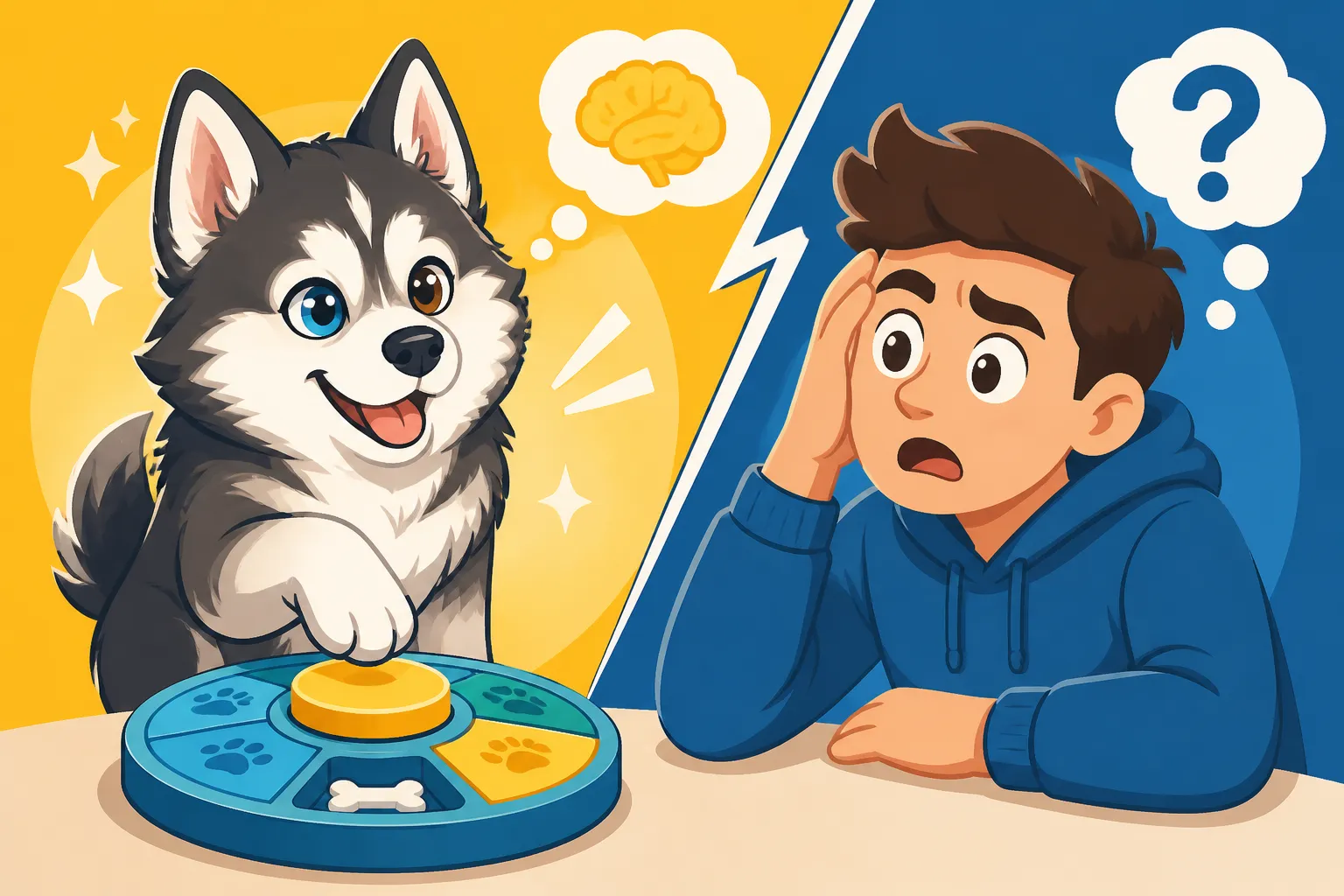
Whether a Pomsky Outsmarts Its Owner
It’s a common, often exasperating, feeling among Pomsky owners: are they being stubborn, or are they just that smart? You swear your Pomsky is deliberately ignoring you, figuring out how to open the pantry, or finding new and creative ways to avoid tasks. This guide will dive deep into the unique intelligence of Pomskies, helping you understand their clever antics and, more importantly, how to channel their brilliant minds into positive behaviors rather than frustrating ones.
Understanding Pomsky Intelligence: A Blend of Brilliant Minds
When you bring a Pomsky into your life, you're signing up for a fascinating blend of intelligence from two very distinct breeds: the Siberian Husky and the Pomeranian. Both of these parent breeds bring their own brand of smarts to the table, and the resulting Pomsky often inherits a fascinating, and sometimes challenging, combination. It's not just about learning tricks; it's about problem-solving, independence, and an innate ability to assess situations.
The Husky's Independent Mind
The Siberian Husky is renowned for its independence and incredible problem-solving skills, often honed over centuries of working in harsh environments. They're not necessarily "eager to please" in the traditional sense; they're more about figuring out what benefits them in a given situation. This means they can be incredibly clever at opening gates, escaping yards, or strategizing how to get to that forbidden snack on the counter. Their intelligence isn't about blind obedience but rather about adaptability and self-preservation. This independent streak can translate into a Pomsky who seems to weigh the pros and cons of following a command before deciding if it's worth their effort.
Consider a Husky who figures out how to open a complex latch on a kennel or a gate. This isn't brute force; it's observation, experimentation, and memory. They remember what worked and what didn't. This same level of cognitive ability often shines through in a Pomsky. They might study your routine, observe how you open doors, or watch where you hide treats. This isn't naughtiness; it's simply their brain at work, trying to understand their world and how to navigate it to their advantage.
The Pomeranian's Quick Wit
On the other side of the family tree, the Pomeranian is a small dog with a huge personality and a surprisingly sharp mind. Poms are often underestimated because of their size, but they are incredibly quick learners, excelling in obedience and agility. They're alert, curious, and often have a mischievous streak. This quick wit allows them to pick up on cues, understand complex commands, and often charm their way into getting what they want. They might not be escape artists like a Husky, but they are masters of manipulation and getting attention.
A Pomeranian's intelligence often manifests as a keen awareness of their surroundings and the ability to train their humans. They quickly learn which behaviors earn them praise, treats, or cuddles. If a certain whine gets them picked up, they'll use it. If a specific bark earns a trip outside, they'll employ it. Your Pomsky can inherit this cleverness, using their adorable looks and vocalizations to wrap you around their little paw. They're smart enough to know what works on you.
The Hybrid Vigor of Brains
When you combine these two intelligent breeds, you often get what many call "hybrid vigor" in terms of intelligence. A Pomsky can inherit the Husky's independent problem-solving abilities and the Pomeranian's sharp wit and charm. This can result in a dog that is incredibly smart, highly adaptable, and capable of learning complex tasks, but also one that is independent, potentially stubborn, and adept at finding loopholes in your rules. They're often highly observant, picking up on routines and patterns with surprising speed.
This means your Pomsky isn't just learning commands; they're learning how you operate, and how they can influence that operation. They might learn a "sit" command perfectly but decide when they want to sit. They might understand "stay" but break it if something more interesting catches their eye, because they've weighed the consequence (a stern "no") against the reward (chasing a squirrel) and decided the latter is worth it. It’s a constant mental chess match, and they are often formidable opponents.
Signs Your Pomsky is "Outsmarting" You: Common Scenarios
It's one thing to know your Pomsky is smart, but it's another to experience their intelligence firsthand as they seemingly manipulate situations or defy your expectations. These moments can be frustrating, making you wonder if you're truly in charge. Let's look at some common ways Pomskies display their cleverness in everyday life.
Door-Opening and Escape Artistry
One of the most classic signs of a truly intelligent and determined Pomsky is their knack for escape. They might not be as large as a full-sized Husky, but they inherit that ancestral drive to explore and that incredible brainpower for problem-solving. This isn't just about digging under a fence, though many are excellent at that. It extends to opening doors, gates, and even intricate crate latches. You might walk into a room to find your Pomsky casually strolling out of an area you swore was secured. This isn't accidental; it's a deliberate, learned behavior. You can read more about Whether a Pomsky Learns to Open a Door Handle to understand just how adept they can be.
I've heard countless stories of Pomskies who have figured out lever-style door handles, pushing them down with their paws or even jumping up to pull them. Some have even learned to unlatch slide bolts or twist knobs through sheer persistence and observation. They watch you do it, they experiment, and they remember. If they manage to open a door once and find something rewarding on the other side – a forgotten toy, a trip to the yard, or even just the thrill of freedom – they'll be highly motivated to try again. It's a clear sign of their problem-solving intelligence at play.
Selective Hearing and "Strategic Napping"
Ah, the infamous selective hearing. You call your Pomsky's name, give a command, and they might look directly at you, then slowly, deliberately, turn their head away as if they didn't hear a thing. Or, they might be deeply engrossed in a "strategic nap" – sudden, profound sleep that seems to descend the moment you ask them to do something they don't want to do, like come inside or stop chewing on something inappropriate. This isn't deafness; it's a conscious choice. They hear you, they understand, but they've decided the effort or the interruption isn't worth it.
This behavior stems from their independent nature. Unlike some breeds eager to please, a Pomsky often requires a compelling reason to comply. If your call isn't accompanied by a high-value treat, an exciting game, or a clear, immediate benefit, they might just decide to politely (or impolitely) ignore you. It's their way of asserting their autonomy and demonstrating that they're not just automatons. They're intelligent enough to know they can ignore you, and sometimes, they will.
Manipulating for Treats and Attention
Pomskies are masters of charming their way into your heart and, more importantly, into your treat jar. They learn very quickly what behaviors get a positive response from you. That mournful stare when you're eating dinner? That's not just hunger; it's a calculated attempt to make you feel guilty enough to share. The persistent pawing at your hand or the gentle nudge of their nose? They've learned these actions often result in pets, playtime, or a tasty reward.
They are incredibly adept at reading human emotions and body language, using this information to their advantage. They might "accidentally" knock over a toy to get your attention, or suddenly become the most angelic, well-behaved dog when they sense you're about to leave, hoping to sway your decision. This isn't malicious; it's just a highly intelligent animal using its cognitive abilities to influence its environment and get its needs met. They are truly smart enough to train you.
The Difference Between Stubbornness and Intelligence
It's easy to label a Pomsky's challenging behaviors as "stubbornness," and certainly, they can be a bit obstinate. But often, what we perceive as stubbornness is actually a manifestation of their high intelligence and independent thinking. Understanding this distinction is crucial for effective training and building a strong relationship with your clever canine companion.
The "I Know What You Want, But I Don't Care" Syndrome
This is a classic Pomsky trait, often mistaken for pure stubbornness. When your Pomsky looks at you, clearly understands your command, and then simply chooses not to comply, it's not necessarily because they're being difficult for the sake of it. It's because, in that moment, they've processed the request and decided that the reward for compliance isn't greater than the reward for doing what they want to do. Maybe chasing that leaf is more fun than sitting, or staying on the comfy couch is preferable to coming inside. They're weighing their options.
This is where their intelligence shines through. They're not just reacting; they're making a calculated decision. A truly "stubborn" dog might just freeze or not understand. A clever Pomsky understands perfectly but prioritizes their own desires. To combat this, you need to make your desires more appealing than theirs. High-value treats, exciting praise, or turning the command into a fun game can often tip the scales in your favor. What a Pomsky Will Work For often involves something incredibly enticing.
Why Repetition Can Bore a Pomsky
Unlike some breeds that thrive on endless repetition, Pomskies, with their intelligent minds, can quickly become bored with drills. If a command or trick feels meaningless or repetitive, they might disengage. They're smart enough to learn quickly, and once they've mastered something, doing it over and over again without a compelling reason can feel tedious to them. This isn't stubbornness; it's their intellect telling them, "I've got this, what's next?" This can be mistaken for resistance, when in fact, they're just craving a new mental challenge.
Think about how you'd feel if your job consisted of doing the same simple task perfectly, five hundred times a day, every day. You'd probably get bored and start looking for ways to make it more interesting, or simply tune out. Pomskies are similar. Their clever brains need engagement and variety. If training sessions are too long or too monotonous, you might find them wandering off, yawning, or suddenly having that "selective hearing." For more on this, check out Whether a Pomsky Gets Bored of Repetition.
The Art of Problem-Solving vs. Defiance
A truly intelligent Pomsky will often engage in complex problem-solving. This might look like defiance, but it's actually their cognitive abilities at work. For example, if you've put up a baby gate to block off a room, a purely stubborn dog might whine or paw at it fruitlessly. A clever Pomsky, however, might experiment: try jumping over it, nudging it with their nose to see if it moves, or even attempting to unlatch it. Their goal isn't to be disobedient; it's to overcome an obstacle to reach a desired outcome.
| Behavior | Often Perceived As | More Likely Manifestation Of | Solution Focus |
|---|---|---|---|
| Ignoring commands | Stubbornness, defiance | Calculated choice, low motivation | Higher value rewards, engaging training |
| Escaping enclosures | Naughtiness, disinterest | Problem-solving intelligence | Secure environment, mental stimulation |
| Easily bored in training | Lack of focus, disobedient | Need for variety, quick learning | Shorter, varied sessions, new challenges |
| Manipulating owner | Pestering, being a pest | Observational learning, social intelligence | Consistent boundaries, rewarding calm behavior |
| Testing boundaries | Dominance, stubbornness | Curiosity, independence | Clear rules, consistent enforcement, positive reinforcement |
Understanding this distinction allows you to approach your Pomsky's behavior with empathy and strategy. Instead of getting frustrated by what seems like defiance, you can appreciate their cleverness and pivot your approach to engage their brilliant minds in constructive ways.
Strategies to Stay One Step Ahead: Training and Management
Living with a highly intelligent dog like a Pomsky means you need to be just as smart, if not smarter! It's not about being dominant, but about being a consistent, engaging, and creative leader who can channel their natural cleverness. Staying one step ahead involves a combination of smart training, proactive environmental management, and plenty of mental enrichment.
Consistent, Engaging Training
The key to successful training with a Pomsky is consistency and making it fun. Because they get bored easily and will assess the value of a command, your training sessions need to be short, upbeat, and varied. Use high-value rewards – think tiny pieces of cooked chicken, cheese, or their absolute favorite treat – especially in the beginning or for challenging new behaviors. Mix up locations, distractions, and the order of commands to keep them on their toes. Remember, they're incredibly intelligent and will quickly figure out patterns. If you always ask for a "sit" before a treat, they'll sit before you even finish the command – which is great, but also means they've learned the pattern, not necessarily the meaning of the word.
Consider enrolling in an online training program, like those offered by BAXTER & Bella. These programs can provide structured lessons that keep both you and your Pomsky engaged, offering new challenges and insights into positive reinforcement techniques. They can help you learn how to make training feel like a game, rather than a chore, which is essential for a breed that thrives on mental stimulation. Building a strong recall is especially critical for these independent thinkers; read Building a Recall a Pomsky Answers for dedicated tips. They'll respond best when they feel like they're collaborating with you, not just obeying.
Environmental Management and Puppy-Proofing for Geniuses
Since Pomskies are natural problem-solvers and potential escape artists, environmental management isn't just about keeping them safe; it's about preventing them from "practicing" undesirable clever behaviors. If your Pomsky figures out how to open a kitchen cabinet, and then gets into something tasty, they've just been massively reinforced for their cleverness. The next time, they'll try even harder.
This means securing trash cans, using childproof latches on cabinets, and making sure gates and doors are truly escape-proof. For fences, consider extra height or anti-dig measures. If they are known for climbing, a different type of barrier might be necessary. You can find many secure gates and puzzle toys on Amazon that can help contain and engage a clever Pomsky. A robust crate with secure latches is also crucial if you use crating. The goal is to make it impossible (or at least very difficult) for them to succeed at their "clever" but unwanted behaviors, redirecting their energy instead.
Mental Stimulation is Key
A bored Pomsky is a destructive or problematic Pomsky. Their intelligent minds need constant stimulation to prevent them from creating their own entertainment, which often involves things you don't want them to do. Physical exercise is important, but mental exercise is equally, if not more, vital for this breed. Puzzle toys, snuffle mats, and engaging interactive games can keep their brains busy. Rotate these toys regularly so they don't get bored.
Think about introducing them to scent work, which taps into their natural instincts and is incredibly mentally fatiguing. Hiding treats around the house for them to sniff out, or teaching them to find specific toys, can be a great brain game. You might also consider trick training beyond basic obedience; teaching them to "find" objects, "clean up" their toys, or even weave through your legs. These activities satisfy their intellectual needs and strengthen your bond. Whether a Pomsky Needs a Job is a question many owners of these intelligent dogs face, and the answer is usually a resounding yes, in some form!
Embracing the Clever Pomsky: Channeling Their Smarts
Once you understand that your Pomsky isn't necessarily being difficult, but rather showcasing their impressive intellect, you can shift your perspective and embrace their cleverness. This isn't about giving in to their every whim, but about guiding their intelligence into productive, positive outlets that benefit everyone.
Turning Their Smartness into Strengths
That problem-solving ability that leads to escapes can be channeled into problem-solving games. Their independent thinking can make them fantastic partners in activities like agility, rally obedience, or even canine parkour, where they need to think on their feet rather than just follow a routine. If your Pomsky is quick to learn, lean into it! Teach them an endless array of tricks. Use their vocalizations as a "speak" command rather than just letting them howl whenever they feel like it.
A Pomsky's cleverness makes them incredibly rewarding companions for owners who appreciate a challenge and are willing to engage with their dog's mind. They thrive on variety and mental engagement. Instead of fighting their intelligence, find ways to harness it. If they love to dig, dedicate a specific digging pit in the yard where it's allowed. If they're obsessed with scents, explore Whether a Pomsky Takes to Scent Work. This shift in mindset transforms potential frustrations into opportunities for growth and fun.
The Joy of a Challenging Companion
Let's be real, owning a Pomsky isn't for the faint of heart or those seeking a purely biddable, robotic companion. They are thinkers, strategists, and often have their own opinions. But this very quality is what makes them so captivating and unique. The joy of a Pomsky comes from cracking their code, understanding their motivations, and building a relationship based on mutual respect and intellectual engagement. There's an immense satisfaction in successfully training a Pomsky, knowing that you've earned their cooperation, rather than just demanded it.
They will keep you on your toes, challenge your assumptions, and constantly remind you that you're living with a very capable and sentient being. For many, this is precisely the appeal. They are not just pets; they are partners in crime (the good kind, of course!), adventurers, and incredibly smart individuals. Appreciating their cleverness allows you to celebrate their unique personality and the constant mental stimulation they bring to your life.
When to Seek Professional Guidance
Even with the best intentions and strategies, some Pomsky behaviors can become truly challenging. If you find yourself consistently frustrated, or if your Pomsky's "clever" behaviors are becoming destructive, dangerous, or unmanageable, it's absolutely okay – and often highly recommended – to seek professional guidance. A certified professional dog trainer or a veterinary behaviorist can provide invaluable insights and tailored strategies for your specific situation.
They can help you decipher whether a behavior is truly stubbornness, a lack of understanding, an underlying anxiety, or simply a very smart dog testing boundaries. A good trainer understands the nuances of intelligent, independent breeds and can help you develop a training plan that works with your Pomsky's unique brain, rather than against it. Whether a Pomsky Needs a Professional Trainer is a question that many owners eventually ask themselves, and there's no shame in seeking expert help to build the best possible relationship with your smart and spirited Pomsky.
Disclaimer
This article is for general informational purposes only and does not constitute professional advice. Laws, prices and regulations vary by location and change over time. Consult a qualified professional for guidance on your specific situation.