Whether a Pomsky Gets Bored of Repetition
One of the most common frustrations I hear from Pomsky owners, especially those new to the breed, is how quickly their little fluffball seems to lose interest in training. You might be racking your brain, wondering if your Pomsky is just being stubborn, or if they genuinely get bored of repeating the same "sit," "stay," and "come" commands over and over. This guide is here to unravel that mystery, delve into the unique Pomsky psyche, and arm you with strategies to keep your intelligent companion engaged and eager to learn.
Understanding the Pomsky Mindset in Training
Let's be real, Pomskies are not your average "pleaser" breeds. They come from two distinct lineages, each bringing a unique flavor to their personality and, crucially, their approach to learning. Understanding these foundational traits is key to unlocking successful training sessions and avoiding frustration on both sides of the leash.
The Dual Ancestry of Independence and Intelligence
Your Pomsky is a charming blend of the Siberian Husky and the Pomeranian. Think about what that means for their brain! Huskies are known for their fierce independence, problem-solving skills, and a "what's in it for me?" attitude. They're intelligent, yes, but they're not always keen on doing things just because you asked. They prefer to figure things out for themselves, which often means finding creative ways to get what they want, not necessarily what you want. Then you have the Pomeranian side: often spunky, clever, and sometimes with a hint of a sassy, self-important streak. They can be incredibly quick to learn, but also quick to decide if something isn't worth their time.
This combination creates a dog that is undoubtedly smart, often quick-witted, but also highly independent and easily distracted if the reward isn't compelling enough or the activity isn't stimulating. They're not "dumb" when they ignore you; they're often just weighing their options, calculating if obeying is more rewarding than whatever exciting smell or sight has caught their attention. This intelligent independence can make them seem to get bored easily, but it's often more about their selective engagement than a true lack of mental capacity. They have brains, and they like to use them in ways that benefit them. This leads many owners to wonder Whether a Pomsky Is Stubborn or Independent, and often, it's a bit of both!
Why Repetition Can Be a Double-Edged Sword
In traditional dog training, repetition is king. We're taught to repeat a command countless times until the dog performs it reliably. And for many breeds, this works beautifully. But for a Pomsky, endless repetition can quickly turn them off. Imagine doing the same mundane task at your job all day, every day, without any variation or real challenge. You'd get bored, right? You'd probably start looking for ways to entertain yourself, or perhaps even just stop doing it effectively. Your Pomsky feels similarly.
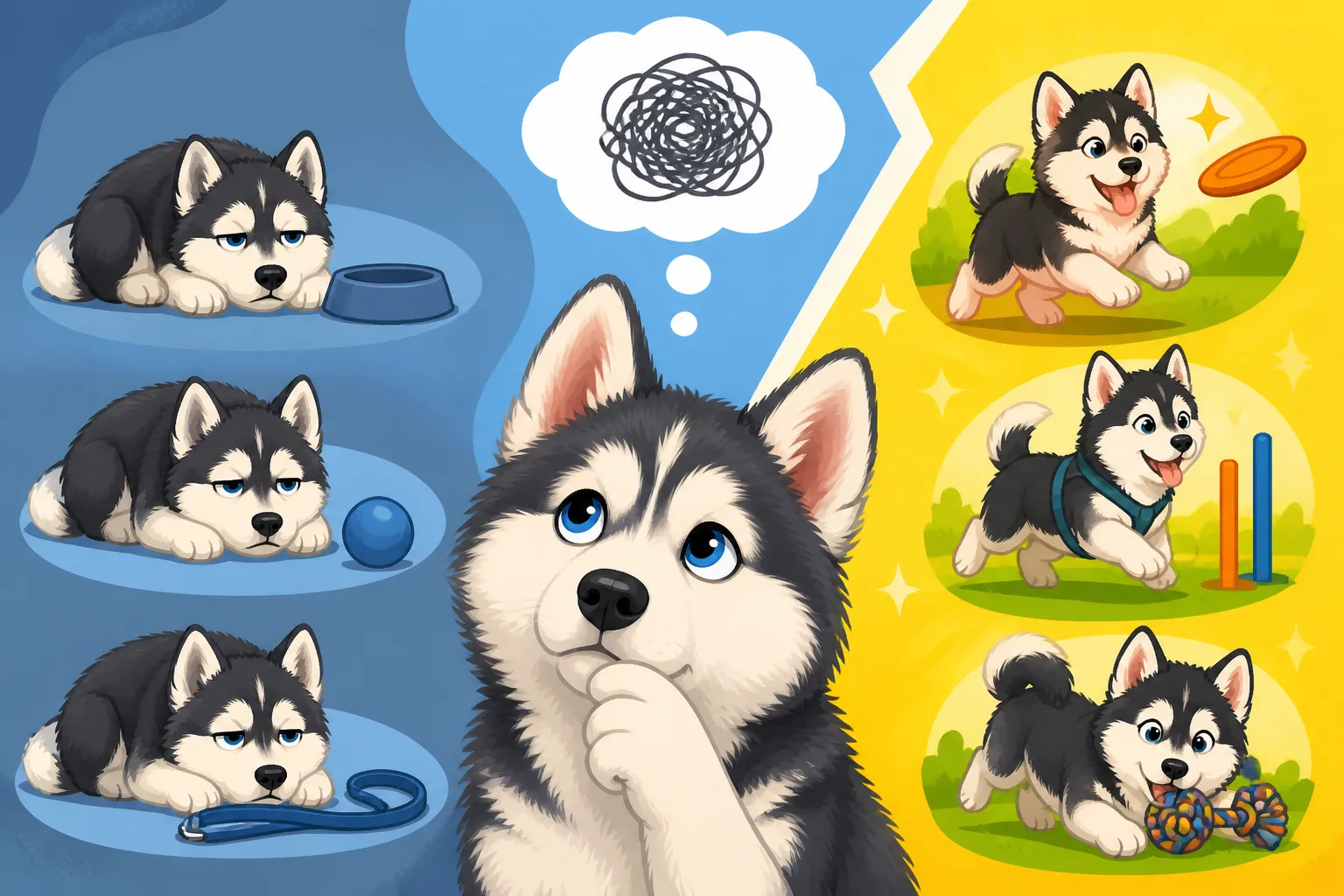
For a Husky-Pomeranian mix, once they understand a command, they often feel like, "Okay, I get it. What's next?" Repeating it twenty more times in the same session, in the same environment, for the same bland treat, can lead to them tuning you out entirely. They might offer a half-hearted "sit," or just stare at you as if to say, "Seriously? We're still doing this?" This isn't necessarily a sign of defiance, but rather a sign that their intelligent, independent minds are craving novelty and challenge. They need to feel like they're solving a puzzle, not just performing a rote action.
Signs Your Pomsky Is Bored (or Just Being a Pomsky)
Sometimes, it's hard to tell if your Pomsky is truly bored, or if they're simply exhibiting some of those classic Pomsky traits that can be mistaken for disinterest. Learning to read their body language and understanding their natural tendencies can save you a lot of headache and help you adjust your training approach.
Subtle Cues of Disengagement
When a Pomsky is getting bored, they might not just walk away (though they certainly can!). Often, their disengagement starts with more subtle cues. You might notice:
- Lip licking or yawning: These can be calming signals, indicating mild stress or boredom. They might be trying to soothe themselves.
- Averted gaze: Instead of making eye contact, they might be looking away, scanning the environment for anything more interesting.
- Slow or sloppy responses: They might eventually perform the command, but it's done without enthusiasm, maybe a slow, drawn-out sit, or a casual amble rather than a quick recall.
- Sniffing the ground: This is a classic "I'm busy, leave me alone" behavior. They might suddenly find the floor incredibly fascinating, even if it was just cleaned.
- Suddenly itchy: Scratching, licking paws, or shaking their head could be displacement behaviors, a way to release pent-up energy or discomfort from being bored.
- "Deaf ear": You call their name, ask for a sit, and they seem to have developed selective hearing. They heard you, they just chose not to respond because the motivation isn't there, or they're just over it.
These aren't always definitive signs of boredom – sometimes they can indicate stress, confusion, or even physical discomfort. But if they appear consistently during repetitive training drills, especially when you know your Pomsky understands the command, it's a strong indicator they're mentally checked out.
The Difference Between Boredom and Stubbornness
This is where many Pomsky owners get tripped up. Is my dog being stubborn, or are they just bored? The lines can blur, but there are differences.
Boredom typically manifests as a lack of engagement and a waning interest in the activity itself. Your Pomsky might initially be eager, but as the session progresses with too much repetition, their enthusiasm fades. They might still know how to do the command, but they see no compelling reason to keep doing it. Their responses become lethargic or absent. It's often accompanied by the subtle cues mentioned above.
Stubbornness, on the other hand, often implies a conscious refusal to comply, even when they know what's expected and the reward is appealing. A stubborn Pomsky might look at you, assess the situation, and then deliberately choose to do something else or just stand there, evaluating if your offer is truly better than their current plan. This isn't always negative; it's often a manifestation of their independent nature, their desire to make their own choices, and their intelligence calculating the best outcome for themselves. It's also strongly tied to What a Pomsky Will Work For – if the reward isn't high value, a stubborn Pomsky simply won't bother.
Consider this: a bored Pomsky might eventually do the command out of habit, but without joy. A stubborn Pomsky might flat-out refuse until the incentive is significantly increased or a new approach is tried. The key is to address both: vary your training to prevent boredom, and find irresistible motivators to overcome stubbornness.
| Behavior Trait | Primary Driver | Common Presentation | Training Impact |
|---|---|---|---|
| Boredom | Lack of novelty, low mental stimulation, repetitive tasks | Slow/sloppy responses, yawning, sniffing, averting gaze, disengagement | Decreased enthusiasm, gradual decline in performance |
| Stubbornness | Independence, strong will, "what's in it for me?" attitude | Direct refusal, ignoring commands, testing boundaries, assessing rewards | Consistent non-compliance, only responds to high-value motivators |
Strategies to Combat Training Boredom
The good news is that you can absolutely overcome a Pomsky's tendency to get bored with repetition. It requires a shift in your training mindset, moving from rote memorization to dynamic engagement. Think like a Husky, think like a Pomeranian: make it interesting, make it rewarding, and make it feel like their idea sometimes.
Keeping Sessions Short and Sweet
This is perhaps the most crucial strategy for a Pomsky. Long, drawn-out training sessions are a recipe for disengagement. Their attention spans, while capable of focus, are often geared towards short bursts of intense activity rather than prolonged, repetitive tasks. This is why many trainers advocate for short, frequent sessions for breeds like the Pomsky.
Instead of one 30-minute session, try three 5-7 minute sessions spread throughout the day. These mini-sessions keep things fresh and prevent mental fatigue. End each session on a high note, even if it's just after a successfully executed "sit" or "down." You want your Pomsky to walk away feeling successful and eager for the next session, not relieved it's finally over. This principle is directly addressed in Whether Short Sessions Suit a Pomsky. It truly makes a world of difference for their retention and enthusiasm.
Varying Rewards and Reinforcement
Pomskies, with their independent streak, often need higher-value rewards than some other breeds. Kibble might work initially, but if you're trying to maintain interest in repetition, you'll need to level up.
- High-Value Treats: Think small pieces of cooked chicken, cheese, hot dogs, or commercial training treats specifically designed to be irresistible. Rotate these so your Pomsky never knows exactly what delicious morsel is coming.
- Toy Play: If your Pomsky is toy-motivated, use a quick game of tug or fetch as a reward. A successful "come" might earn a 30-second burst of fetch, making the act of coming back incredibly exciting.
- Praise and Affection: While not always enough on their own, enthusiastic praise and a good scratch behind the ears can supplement other rewards. Make your praise genuinely exciting and joyful.
- Environmental Rewards: Did your Pomsky sit nicely at the door? The reward is getting to go outside! Did they settle calmly? The reward is getting to jump on the couch with you. These real-world motivators can be incredibly powerful.
Don't be afraid to experiment to find What a Pomsky Will Work For. What one Pomsky finds motivating, another might barely tolerate. Keep them guessing, keep them excited.
Incorporating Play and Real-World Scenarios
Training doesn't have to happen in a sterile, structured environment. In fact, for a Pomsky, it shouldn't.
- Hide-and-Seek: Turn recall practice into a game! Hide around the house and call your Pomsky. When they find you, it's a party with treats and praise. This makes coming to you exciting and unexpected.
- Obstacle Courses: Use household items or dedicated agility equipment to create fun mini-courses. Have them weave through cones, jump over a broomstick, or crawl under a chair. This taps into their athletic side and makes commands like "come," "stay," and "through" feel like part of an adventure. Many Pomskies truly thrive when engaging in activities like these, which ties into Whether a Pomsky Can Do Agility.
- Walks as Training Grounds: Every walk is a training opportunity. Practice "sit" before crossing the street, "leave it" when passing interesting smells, or "heel" for short bursts. The changing environment adds novelty and helps generalize commands.
- Interactive Toys: Puzzle toys, sniff mats, and treat-dispensing toys can keep their minds engaged and prevent boredom when you're not actively training. You can find a huge variety of these on platforms like Amazon. These toys require problem-solving and provide mental stimulation, which is vital for an intelligent breed.
By making training a dynamic and integrated part of their daily life, you're tapping into their natural curiosity and desire for activity, preventing the monotony that leads to boredom.
Making Repetition Work: The Art of Disguised Drills
While we want to avoid mindless repetition, some degree of practice is necessary for reliability. The trick is to make that practice feel less like a drill and more like an ongoing, evolving game. It's about how you frame it and how you vary the context.
"Gamifying" Basic Commands
If your Pomsky already knows "sit" perfectly, asking for it twenty times in a row in the kitchen is boring. Instead, integrate it into games:
- "Simon Says": This classic children's game can be adapted for dogs. "Simon says sit!" "Simon says lie down!" "Simon says paw!" If you don't say "Simon says," and they do it, no reward (but no punishment either). This adds an element of mental challenge.
- "Find It": Have your Pomsky "stay" (or simply wait) while you hide a treat or toy. Then release them with "find it!" This uses their natural scent drive and turns a stationary command into an exciting precursor to a hunt.
- "Command Chain": Link several known commands together. Instead of just "sit," try "sit, then down, then stay, then come!" This increases the cognitive load and makes them think about the sequence, rather than just one isolated action.
- Distraction Training: Once they know a command, practice it with increasing levels of distraction. Start in a quiet room, then move to a slightly busier room, then the backyard, then a park. This is vital for real-world reliability and prevents boredom by constantly changing the environment.
Remember, a Pomsky is often very smart, and they can sometimes Whether a Pomsky Is Too Smart for Its Owner. They pick up on patterns quickly, so you need to be smarter and more unpredictable than they are! Keep them on their toes.
The Power of Proofing in Different Environments
Proofing is the process of practicing known behaviors in various environments, with different distractions, and at varying distances and durations. This is where repetition becomes useful, but it's varied repetition, not identical repetition.
- Location, Location, Location: Practice "sit" in the living room, then the hallway, then the kitchen, then the yard, then the sidewalk outside, then at the pet store. Each new location presents fresh sights, sounds, and smells, making the same command feel like a new challenge. This is how you build a truly reliable response, not just one that works in your living room.
- Adding Distractions: Start with low distractions (e.g., you clapping your hands lightly while they stay). Gradually increase them (e.g., someone walking by, a ball rolling, another dog in the distance). This teaches your Pomsky to focus on you even when the world is full of interesting things.
- Varying Duration and Distance: Once they can "stay" for 10 seconds, try for 15, then 20. Once they can "come" from 5 feet away, try 10, then 20. This progressively builds their endurance and reliability without being boring, because the challenge is constantly increasing.
Online resources like BAXTER & Bella offer structured programs that can guide you through proofing and help you find new ways to engage your Pomsky. Their programs often break down training into manageable steps, making it easier to introduce novelty and progression without overwhelming your dog (or yourself!). This kind of systematic approach is invaluable for maintaining interest. Learning How Long a Pomsky Holds Concentration will also help you determine the right duration for these proofing sessions.
When to Seek Professional Guidance
Sometimes, even with all the best intentions and strategies, you might find yourself hitting a wall. Your Pomsky might seem completely uninterested, or you might feel like you're not making any progress. This is perfectly normal, and it's okay to ask for help!
Recognizing When You're Stuck
There are several signs that indicate it might be time to bring in a professional:
- Consistent Lack of Progress: You've been diligently working on a command for weeks, trying different methods, and your Pomsky still isn't getting it, or is actively resisting.
- Escalating Behavior Issues: Beyond simple boredom, if you're seeing increased barking, destructive chewing when bored, or outright defiance during training, it's a red flag. These could be symptoms of deeper issues that a professional can help diagnose. As mentioned in What a Pomsky Destroys as a Puppy, boredom can often lead to destructive behaviors around the house.
- Frustration on Both Sides: If you find yourself consistently getting frustrated or angry during training, and your Pomsky is clearly not enjoying it either, the relationship is suffering. A trainer can help rebuild that positive connection.
- Safety Concerns: If your Pomsky's lack of reliable recall or tendency to bolt in new environments is becoming a safety issue, immediate professional intervention is warranted.
Don't view seeking professional help as a failure. It's an investment in your Pomsky's well-being and your relationship.
The Value of a Fresh Perspective
A good dog trainer brings a wealth of experience and a neutral, objective eye to your situation. They can spot subtle cues you might be missing, or suggest techniques you haven't considered.
- Identifying Root Causes: A trainer can help determine if your Pomsky's "boredom" is truly boredom, or if it's actually due to a lack of understanding, an underlying anxiety, or simply that irresistible independent streak of a Pomsky. They can also tell you if your Pomsky needs The Exercise a Pomsky Needs to Stay Sane, as insufficient physical activity can lead to a dog who acts bored when they're simply brimming with untapped energy.
- Customized Strategies: They can develop a training plan specifically tailored to your Pomsky's personality, your lifestyle, and your goals. This isn't a one-size-fits-all approach.
- Hands-On Guidance: A trainer can demonstrate techniques, observe you and your Pomsky, and provide real-time feedback, helping you refine your timing and mechanics.
- Motivation Boost: Sometimes, just knowing you have an expert in your corner can re-energize your training efforts. They can show you how to truly motivate your unique Pomsky.
Whether it's in-person classes, private sessions, or even highly structured online programs, a professional can provide the tools and confidence you need. Remember, even the most dedicated owners can benefit from an outside perspective when trying to manage a smart, independent dog like a Pomsky. It's often not about Whether a Pomsky Needs a Professional Trainer, but when you might need one to refine your approach.
Training a Pomsky is a journey, not a destination. Embrace the quirks, celebrate the successes, and remember that keeping it fun and engaging is the key to a happy, well-behaved companion.
Disclaimer
This article is for general informational purposes only and does not constitute professional advice. Laws, prices and regulations vary by location and change over time. Consult a qualified professional for guidance on your specific situation.