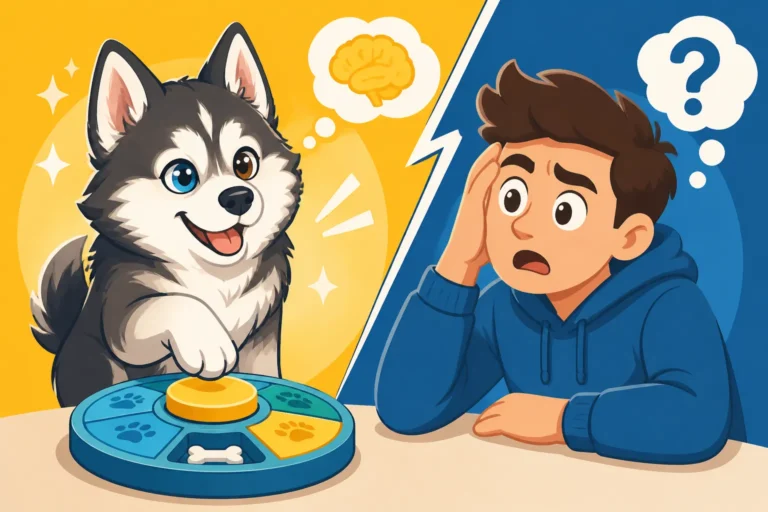
How Long a Pomsky Holds Concentration
It's a question many Pomsky owners grapple with: how long can this furry bundle of energy actually focus? You start a training session, full of hope, only to find your adorable fluffball is more interested in a dust bunny under the couch or the distant chirp of a bird than the "sit" command you're patiently repeating. It can be incredibly frustrating when you feel like you're talking to a brick wall, especially when you know how smart these dogs can be. This guide is here to shed some light on the reality of a Pomsky's concentration, what influences it, and practical strategies to help your dog tune into you for longer.
The Reality of a Pomsky's Attention Span
Let's be honest, Pomskies aren't typically known for their unwavering, laser-like focus, especially when they're young or if there's anything more exciting happening around them. Owners often find themselves wondering if their Pomsky is being stubborn or genuinely just has a short attention span. The truth is, it's often a bit of both, rooted deeply in their unique genetic makeup and developmental stages.
Why Pomskies Aren't Your Typical Obedience Student
Think about the parent breeds. You have the Siberian Husky, a breed renowned for its intelligence, sure, but also its intense independence, boundless energy, and a strong will that can easily override a desire to please. Then you have the Pomeranian, a bright, often sassy little dog with a bold personality that sometimes borders on bossy, capable of intricate tricks but equally prone to deciding when it wants to perform. Combine these, and you get a Pomsky: a dog that's incredibly smart and learns quickly, but might also decide that listening to you isn't the most stimulating activity on offer. They can be incredibly distractible, with an internal monologue that probably goes something like, "Squirrel! Oh, a leaf! Wait, did I hear a crinkle? Food?"
This isn't to say they can't concentrate, but rather that their concentration is highly selective and often fleeting. They often possess a keen sense of observation and are quick to learn patterns, which is why they can pick up commands rapidly one minute, then completely ignore you the next. The challenge for us as owners is to make ourselves, and the tasks we set, the most compelling thing in their world. Understanding this inherent trait is the first step in setting realistic expectations and tailoring your training approach. The Pomsky the Internet Ordered Before It Existed probably didn't come with a manual on their unique focus issues!
The "Puppy Brain" vs. the "Teenage Rebel"
Just like human children, a Pomsky's attention span changes dramatically as they grow. A young Pomsky puppy, say around 8-12 weeks, might have short bursts of intense curiosity and learning, followed by quick exhaustion. Their "puppy brain" is a sponge, but it’s a very small sponge that fills up and empties rapidly. You might get 2-5 minutes of solid focus from a very young puppy before their mind wanders, they get nippy, or they simply flop over for a nap.
As they enter their adolescence, often between 6 months and 2 years, things can get even more challenging. This "teenage rebel" phase is when their independent streaks really start to show. They might understand a command perfectly but choose to test boundaries. Their attention span might technically lengthen, but their willingness to give you that attention can plummet. They're more interested in exploring the world, asserting their independence, and engaging with novel stimuli. This is when consistency and patience become your absolute best friends. It’s also a time when many Pomskies find their way into rescues because owners weren't prepared for the challenges, leading to situations like Why Pomskies Reach Rescue at Two.
Factors That Dictate Your Pomsky's Focus
It's not just age that determines how long your Pomsky will pay attention. There's a whole cocktail of factors, from their inherited traits to their environment and even their daily routine, that play a huge role. Understanding these can help you set your Pomsky up for success.
The Push and Pull of Husky and Pomeranian Traits
As we touched on, the Husky contribution to the Pomsky brings that strong independent streak, a desire to run and explore, and sometimes a "what's in it for me?" attitude when it comes to training. Huskies are bred to pull sleds for miles, often making their own decisions, not to perform intricate obedience routines in a ring. This means your Pomsky might have a natural inclination to be easily distracted by scents, movement, and the sheer joy of running. The Pomsky Escape Artist in a Twenty Pound Body isn't just a clever phrase; it describes a deeply ingrained trait that directly impacts focus.
The Pomeranian side, while contributing intelligence and a playful spirit, can also bring a certain stubbornness and a low tolerance for boredom. If a task isn't engaging or exciting, a Pomeranian (and by extension, a Pomsky) might simply decide it's not worth their time. They're smart enough to learn, but also smart enough to know when they can get away with not listening. This combination means that maintaining focus requires constant novelty and high-value reinforcement to keep them engaged.
Environmental Distractions and Their Impact
Imagine trying to concentrate on a difficult task while a parade is going past your window, your phone is ringing, and someone is constantly tapping you on the shoulder. That's often what a training session feels like for a Pomsky in a distracting environment. Every new sound, sight, or smell can pull their attention away like a magnet.
- Sights: A bird flying by, a person walking down the street, another dog, or even just a leaf blowing across the yard can immediately break their focus. Those keen Husky eyes are always scanning for movement.
- Sounds: A car horn, a distant siren (which might trigger The Husky Howl in a Pomsky), a knock at the door, or even household noises can be incredibly distracting. Their excellent hearing picks up everything.
- Smells: This is a big one. Dogs live in a world of scent. A new smell on the sidewalk, residual scent from another animal, or even the aroma of dinner cooking can completely hijack their attention. Their powerful noses make the world a fascinating place, but not always conducive to listening to "stay."
Starting training in a quiet, low-distraction environment, like a calm room in your home, is crucial. As their concentration improves, you can gradually introduce more distractions, but always be aware of what might be pulling their attention away.
The Role of Mental and Physical Stimulation
A bored Pomsky is a distracted Pomsky. Period. These dogs are intelligent and energetic, and if their needs for mental and physical stimulation aren't met, their "concentration" will often manifest as finding their own entertainment – which might be chewing on your furniture, digging up your yard (A Pomsky That Digs), or developing destructive habits.
- Physical Exercise: A well-exercised Pomsky is much more likely to have the mental calm to focus. A brisk walk, a good game of fetch in a secure area, or some off-leash running (where safe and appropriate) can help burn off excess energy that would otherwise make them fidgety and distracted during training. You might be surprised at The Exercise a Pomsky Needs Every Day to stay sane.
- Mental Engagement: Beyond physical exercise, Pomskies need their brains worked. Puzzle toys, interactive feeders, scent work, or learning new tricks can be just as tiring, if not more so, than a long walk. When their minds are tired, they are often more willing to settle and focus on structured tasks. Ignoring this need is a surefire way to have a dog that can't concentrate for more than a few seconds.
Strategies to Build and Sustain Your Pomsky's Concentration
Okay, so we know Pomskies aren't naturally inclined to long bouts of intense focus. But that doesn't mean you can't improve their concentration! With the right strategies, consistency, and a healthy dose of patience, you can absolutely help your Pomsky become more attentive and engaged during training and in daily life.
Keeping Training Sessions Short and Sweet
This is perhaps the single most important piece of advice for any Pomsky owner. Forget hour-long training sessions; they just won't cut it. Your Pomsky's brain, especially when young, can only handle so much. Aim for short, frequent training sessions throughout the day, rather than one long, drawn-out one.
- 5-10 Minute Max: For puppies, keep sessions to a maximum of 5 minutes, perhaps 2-3 times a day. As they mature and their focus improves, you might extend this to 10 minutes, but rarely much longer. The goal is to always end on a high note, before your Pomsky gets bored or distracted.
- Quality Over Quantity: It's far better to have five minutes of intense, focused work where your Pomsky is actively engaged and successful, than 20 minutes of half-hearted attempts and frustration. If you notice their eyes glazing over, they're sniffing the floor excessively, or starting to wander, it's time to stop. How Long a Pomsky Holds Concentration is often directly proportional to how engaging and brief you make the session.
Mastering the Art of High-Value Rewards
Pomskies, with their independent nature, need a compelling reason to pay attention to you. Generic kibble isn't going to cut it most of the time. You need to pull out the big guns!
- What's Their Gold? Figure out what your Pomsky considers the absolute best reward. For some, it might be tiny pieces of cooked chicken, cheese, hot dogs, or liverwurst. For others, it could be a favorite squeaky toy or a quick game of tug. The higher the value, the more motivated they'll be to concentrate.
- Vary Rewards: Don't always use the same treat. Keep them guessing! Rotate through different high-value treats to maintain excitement and prevent boredom. This keeps them engaged and focused on what you might offer next. Remember, they're smart, and if they always know what's coming, it might lose its luster.
- Timing is Everything: Deliver the reward immediately (within 1-2 seconds) after they perform the desired behavior. This instantaneous feedback is crucial for them to understand what they did right. A clicker can be incredibly useful here, marking the exact moment of correct behavior, followed by the high-value treat. Many online training programs, like those offered by BAXTER & Bella, emphasize precise timing for effective positive reinforcement.
Creating a "Learning Zone"
To help your Pomsky focus, you need to minimize distractions, especially when you're first teaching a new command or working on building their attention span.
- Quiet Space: Start in a quiet room with minimal distractions. Turn off the TV, put away your phone, and ask other family members to give you a few minutes of peace. This helps your Pomsky learn to concentrate on you without external competition.
- Gradual Introduction of Distractions: Once your Pomsky can reliably focus on you and perform commands in a quiet environment, slowly introduce mild distractions. Practice in a different room, then maybe in the backyard, then a quiet park. The key is to progress gradually, ensuring success at each step. If they struggle, go back to an easier environment. A simple long line or tether in a controlled outdoor space can help manage their urge to explore while you work on focus, easily found on Amazon.
Incorporating Brain Games and Puzzle Toys
Mental exercise is just as important as physical exercise for a Pomsky, and it's a fantastic way to build their concentration. Puzzle toys, snuffle mats, and interactive feeders make them work for their food, engaging their brains and teaching them to focus on a task.
- Food Dispensing Toys: Brands like Kong, Nina Ottosson, or even simple snuffle mats available on Amazon can provide hours of engaging mental stimulation. Stuff them with kibble, treats, or a safe spread, and watch your Pomsky focus intently on getting every last morsel out.
- Scent Work: This is a natural fit for a dog with a good nose. Hide treats around a room and encourage your Pomsky to find them. This game, often called "nose work" or "find it," is incredibly mentally tiring and requires sustained focus. It builds their confidence and gives them a "job" to do, channeling some of that innate drive.
- Learning New Tricks: Even simple tricks like "shake a paw," "spin," or "touch" (touching their nose to your hand) require concentration and problem-solving. These short, fun sessions are excellent for building mental stamina.
| Strategy | Benefit for Pomsky Concentration | Example |
|---|---|---|
| Short Sessions (5-10 min) | Prevents boredom, maintains high engagement, ends on success | Practice "sit" and "stay" for 5 minutes, then play fetch. |
| High-Value Rewards | Provides strong motivation, makes you more interesting | Use cooked chicken for recall, not just dry kibble. |
| Minimize Distractions | Helps initial learning, reduces sensory overload | Start training in a quiet room, away from windows. |
| Mental Stimulation | Engages the brain, reduces boredom-driven distraction | Use a puzzle feeder for mealtime, play "find the treat" games. |
| Consistency | Establishes routine, reinforces desired behaviors | Train a few times a day, every day, even for a minute. |
Realistic Expectations for Your Pomsky's Focus
It’s crucial to understand that even with the best training, a Pomsky is unlikely to become a robot that offers perfect, unwavering attention for extended periods. They are still dogs with natural instincts and personalities. Managing your expectations will prevent frustration and help you celebrate the progress you do make.
Understanding Your Pomsky's Learning Curve
Your Pomsky's learning curve won't be a straight line up. There will be days where they seem to "get it" instantly, and other days where it feels like they've forgotten everything they ever learned. This is normal! Growth and learning happen in spurts and plateaus. Don't compare your Pomsky to breeds known for their intense focus and biddability, like a Border Collie or a Golden Retriever. Your Pomsky is a different kind of brilliant.
Celebrate the small victories: the extra two seconds they held a "stay," the moment they broke eye contact with a squirrel but still came back to you, or the single training session where they were truly dialed in. These incremental improvements are what build long-term progress. If you feel like your Pomsky is particularly resistant to training or has a difficult time focusing at all, considering a structured online program can be hugely beneficial. Resources like BAXTER & Bella offer comprehensive guidance and support that can make a real difference in navigating these challenges. They understand the unique quirks of different breeds and offer tailored advice.
When to Call It a Day and Try Again
Learning to read your Pomsky's body language is key to knowing when their attention has waned and it's time to end a session. Watch for these signs:
- Excessive Sniffing: When they start paying more attention to the floor or the air than to you, their mind has checked out.
- Looking Away/Disengagement: If their eyes are darting around, avoiding your gaze, or they turn their body away, they’re done.
- Fidgeting/Pawing: Restlessness, shifting weight, or pawing at you or the ground often means they're losing interest and getting antsy.
- Mouthing/Nipping: For puppies, this can be a sign of overstimulation or boredom leading to frustration.
- Ignoring Cues: If they consistently ignore a command they usually know, it's a clear signal their brain isn't processing your request.
It's always better to end a training session on a positive note, even if it's just after a single successful "sit." This keeps training fun and prevents them from associating it with boredom or frustration. A short, successful session reinforces good habits and leaves them wanting more. If you push too long, you risk them shutting down or developing an aversion to training altogether. Remember that sometimes a lack of focus can also be a sign of underlying discomfort or even a health issue, so always rule out anything medical if your Pomsky suddenly changes their typical behavior or concentration levels. The Screening a Pomsky Should Have Yearly covers many things, but don't overlook a general check-up if behavior changes.
Building a Pomsky's concentration is a journey, not a destination. It requires understanding, patience, high-value motivation, and a commitment to short, engaging interactions. You’ll be amazed at how much your clever Pomsky can learn when you meet them where they are and make learning irresistible.
Disclaimer
This article is for general informational purposes only and does not constitute professional advice. Laws, prices and regulations vary by location and change over time. Consult a qualified professional for guidance on your specific situation.