Whether a Pomsky Can Do Agility
Many Pomsky owners find themselves wondering if their energetic, intelligent, and sometimes mischievous companion is truly cut out for more than just cuddles and walks around the block. With their adorable looks, it's easy to forget they inherit a serious athletic streak from their Husky parentage, alongside the cleverness of a Pomeranian. This guide is dedicated to exploring whether a Pomsky can not only participate in but truly excel at agility sports, tapping into that incredible potential and fostering a deeper bond between you and your furry friend.
Understanding the Pomsky's Agility Potential
When you look at a Pomsky, you see a delightful mix of two very different breeds. But beneath the fluffy coat and often striking eyes lies an athletic engine and a sharp mind. Agility isn't just for Border Collies or Shepherds; it's a sport that can truly benefit a Pomsky, provided you approach it with understanding and patience. It's about harnessing their natural abilities and working with their unique personalities.
The Husky's Athletic Legacy
The Siberian Husky is a breed renowned for its endurance, speed, and incredible athleticism. These dogs were bred to pull sleds over vast distances, and that drive to move, to work, and to be active is very much present in their Pomsky descendants. You’ll often see a Pomsky with the powerful hindquarters and strong, springy gait of a Husky, making them natural jumpers and runners. Their lean muscle mass and robust constitution mean they can handle the physical demands of navigating obstacles, whether it's soaring over jumps or weaving through poles.
This inherent athleticism is a huge asset in agility. A Pomsky can possess the lung capacity and stamina to complete complex courses without tiring quickly, and their quick reflexes make them adept at changing direction and timing their movements precisely. If you've ever watched your Pomsky zoom across a park or leap onto a couch with surprising grace, you've witnessed this Husky legacy in action. It's not just about speed; it's about a deep-seated love for movement and a capacity for sustained physical effort.
The Pomeranian's Trainable Spirit
On the other side of the genetic coin, we have the Pomeranian. While smaller and not typically known for endurance sports, Pomeranians are incredibly intelligent, eager to please (often!), and possess a surprising amount of determination. They excel in obedience, trick training, and even rally, proving that their small stature doesn't limit their mental capabilities or their desire to engage with their human companions. This intelligence and willingness to learn are vital components of successful agility training.
A Pomsky inherits a blend of this cleverness. They can pick up commands quickly and enjoy the mental challenge of learning new tasks. Their smaller size, influenced by the Pomeranian, can actually be an advantage in agility, allowing them to navigate tight turns and small spaces with agility and speed. Plus, that inherent "sass" often translates into a vibrant, enthusiastic presence on the course, making them a joy to watch. It’s a matter of tapping into that eagerness and making training feel like a fun game, rather than a chore.
Navigating the Pomsky's Agility Challenges
While Pomskies have incredible potential, let's be realistic: they aren't always the easiest students. Their unique blend of traits can present some interesting challenges in the agility ring. Understanding these quirks upfront means you can adapt your training methods and set both you and your Pomsky up for success.
The Independent Streak and Stubbornness
Ah, the infamous Pomsky independence! Much like their Husky ancestors, many Pomskies possess a strong-willed, independent nature. This isn't stubbornness in a malicious sense; it's more of a "what's in it for me?" attitude. They're smart enough to understand what you want, but if they don't see the value or if something more interesting catches their eye, they might just decide to do their own thing. This can be incredibly frustrating when you're trying to perfect a weave pole sequence or a contact obstacle.
You might find yourself repeatedly asking for a command, only to have your Pomsky give you the "Husky side-eye" before trotting off to investigate a distant smell. This is where patience becomes your superpower. Traditional, repetitive drill-based training often backfires with a Pomsky. Instead, focus on making every session engaging, exciting, and highly rewarding. If you're struggling with getting them to focus, you might find some useful insights in Whether a Pomsky Is Stubborn or Independent, which dives deeper into managing this trait. Remember, they're not trying to be difficult; they're just being Pomskies!
Managing That Powerful Prey Drive
Both Huskies and Pomeranians can have a notable prey drive, and this trait is often magnified in the Pomsky. That tiny squirrel darting across the field, the bird chirping in the distance, or even a leaf blowing by can instantly become the most fascinating thing in the universe, completely derailing your agility run. Imagine your Pomsky flying over a jump, only to suddenly lock onto a butterfly and beeline for the edge of the course! This powerful instinct is hardwired and requires careful management, especially in an environment with many distractions.
This high prey drive means off-leash reliability is often a monumental task, and it's why many Pomsky owners struggle with things like recall. You can learn more about this in The Prey Drive a Pomsky Gets From the Husky. In agility, it means you'll need to work diligently on focus and engagement, teaching your Pomsky that you are the most exciting thing on the course, even more so than any furry critter. Training in various environments, gradually increasing distractions, and using high-value rewards are essential. Don't expect perfection immediately, and always prioritize safety by keeping them leashed or in a secure, enclosed area when not actively training.
Keeping a Pomsky Engaged
Pomskies are intelligent, but they can also get bored easily if tasks become too repetitive or don't offer enough mental stimulation. They thrive on novelty and variety. If your agility training sessions consist of doing the same obstacle in the same way, over and over, you'll quickly lose their attention. Their short attention spans, especially as puppies, mean you need to be creative and keep things moving. Many Pomsky owners find that Whether Short Sessions Suit a Pomsky offers valuable advice for keeping their dogs focused and happy during training.
The key here is to make agility feel like a giant game. Introduce new challenges, vary the order of obstacles, and always end on a high note. If you notice your Pomsky's interest waning, switch to a fun trick, a quick game of tug, or simply end the session. Pushing them when they're no longer engaged will only lead to frustration for both of you. It's about quality, not quantity, when it comes to training time.
Preparing Your Pomsky for the Agility Ring
So, you're ready to embrace the journey and guide your Pomsky into the exciting world of agility! Fantastic! But before you start setting up weave poles in your backyard, there are some fundamental steps and considerations that will make the transition smoother and more enjoyable for both of you. Agility is more than just running; it’s a partnership built on trust, clear communication, and a strong foundation.
Building a Strong Foundation
Agility is built upon solid obedience. Your Pomsky needs to have a reliable understanding of basic commands like "sit," "stay," "come," and "down" before they can safely and effectively navigate an agility course. A strong "stay" command is crucial for waiting at the start line or remaining on a contact obstacle. A solid "come" is paramount for safety, especially given their tendency to bolt or follow their noses. You can gain insights into building this crucial skill in Building a Recall a Pomsky Answers.
Beyond basic obedience, work on building a strong relationship with your Pomsky where you are seen as the leader and the source of all good things. This means consistent, positive reinforcement training from a young age. Focus on engagement games, teaching them to chase a toy or follow your hand for treats. These foundational exercises will translate directly into their ability to follow your cues on the agility course. Many owners find value in online training platforms, and resources like BAXTER & Bella offer comprehensive puppy and obedience courses that lay this essential groundwork before diving into specialized sports.
Essential Agility Skills and Equipment
Once you have a good handle on basic obedience, you can start introducing elements of agility. You don't need a full-blown course from day one! Start small and focus on building confidence and understanding.
Here’s a breakdown of initial skills and basic equipment:
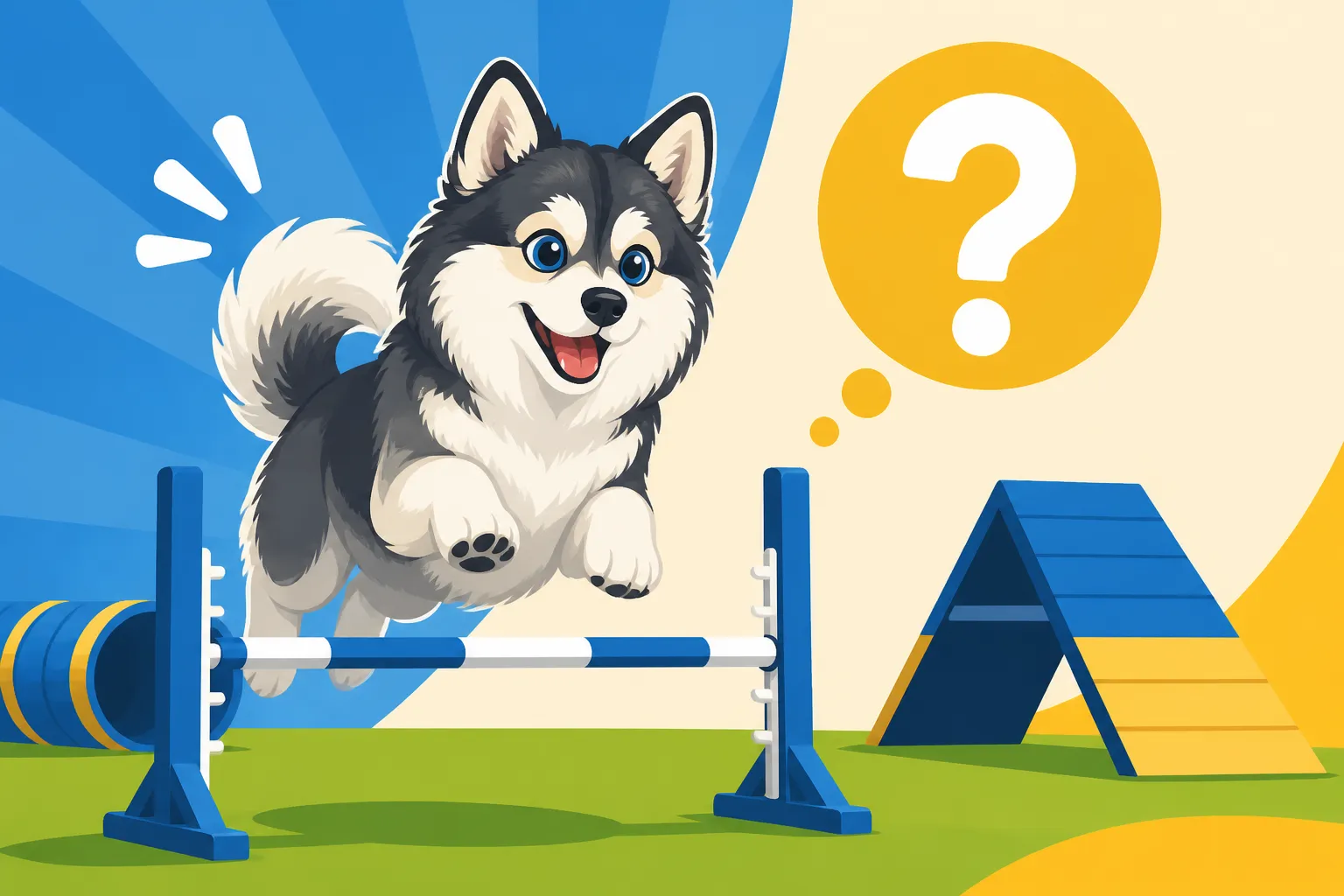
- Tunnels: These are often the easiest obstacles to introduce. Start with a short, wide tunnel and entice your Pomsky through with a treat or toy. Make it a game!
- Jumps: Begin with the bar very low or even on the ground. Teach them to run over it, then gradually raise the height. Focus on clear take-offs and landings.
- Pause Table: Teach your Pomsky to jump onto a raised platform and hold a "stay" for a few seconds. This is excellent for building control and body awareness.
- Contact Obstacles (Dog Walk, A-frame, Teeter-totter): These require your Pomsky to touch designated "contact zones" at the beginning and end of the obstacle. Start with low, stable versions and use plenty of treats to build positive associations. Safety is paramount here; never force them.
When it comes to equipment, you can find a wide range of starter kits and individual pieces on Amazon. Look for sturdy, adjustable equipment that can be safely used at home. Remember, quality equipment is an investment in your Pomsky's safety and your training progress.
| Agility Obstacle | Primary Skill Developed | Pomsky Considerations |
|---|---|---|
| Jumps | Speed, coordination, timing | Start low due to joint health, increase height gradually |
| Tunnels | Speed, confidence, independence | Great for building confidence in tight spaces |
| Weave Poles | Precision, body awareness, focus | Requires patience due to intricate footwork |
| Pause Table | Stay, control, body awareness | Essential for obedience and waiting on command |
| A-frame / Dog Walk | Confidence, contact zone targeting | Introduce slowly, focus on safe ascent and descent |
| Teeter-totter | Balance, confidence, sound desensitization | Can be intimidating; desensitize to movement and sound |
Starting with Fun and Positive Reinforcement
The most critical element in training a Pomsky for agility is keeping it fun and positive. They are intelligent, but they will shut down or become bored if training feels like a chore or if corrections are harsh. Positive reinforcement – using treats, toys, and enthusiastic praise – is the only way to go. You want your Pomsky to love agility, to see it as the best game ever invented.
Keep sessions short, especially in the beginning. Five to ten minutes of focused work is far more effective than an hour of slogging through commands. End every session on a success, even if it's just a perfectly executed "sit." This builds confidence and eagerness for the next session. Celebrate every tiny victory, whether it's a hesitant paw on a contact zone or a quick dart through a tunnel. Your enthusiasm is contagious, and a happy, confident Pomsky is a much better agility partner than a stressed or bored one.
Beyond Competition: The Benefits of Agility for Your Pomsky
Even if you never step foot in a competitive agility ring, engaging in agility-style training with your Pomsky offers a wealth of benefits that extend far beyond earning ribbons. It’s a holistic approach to their well-being, fostering a healthier, happier, and more engaged companion.
Mental Stimulation and Bonding
Pomskies are smart cookies, and if their minds aren't stimulated, they can easily become bored and destructive. Agility provides an incredible mental workout, challenging them to learn sequences, interpret your body language, and problem-solve. This mental engagement can significantly reduce behavioral issues like excessive barking, chewing, or digging, often stemming from boredom. If you have a Pomsky that seems to Whether a Pomsky Is Too Smart for Its Owner, agility might be the perfect outlet for their brainpower.
Beyond the mental challenge, agility training is a powerful bonding experience. It requires teamwork, communication, and trust. As you guide your Pomsky through a course, you're learning to read their cues, and they're learning to rely on your guidance. This shared activity strengthens your relationship, building a deeper understanding and appreciation for each other. The sense of accomplishment you both feel after a successful run is truly unbeatable and solidifies that partnership.
Physical Fitness and Outlet for Energy
It's no secret that Pomskies are energetic dogs. They inherit the boundless energy of the Husky in a smaller, more compact package, and they need a consistent outlet for that energy to stay balanced and healthy. Without proper exercise, a Pomsky can become restless, anxious, and prone to destructive behaviors. You can read more about their exercise needs in The Exercise a Pomsky Needs to Stay Sane.
Agility provides an excellent full-body workout. It engages their muscles, improves their coordination, and builds stamina. Running, jumping, weaving, and balancing all contribute to a physically fit dog. This isn't just about burning off steam; it helps maintain a healthy weight, strengthens joints (which is particularly important for a breed that can be prone to issues like Slipping Kneecaps in a Pomsky), and improves overall cardiovascular health. Whether it's a structured class or just some fun in the backyard with a makeshift course, agility helps your Pomsky stay physically sharp and active, leading to a calmer and more contented dog at home.
Remember, every Pomsky is an individual. Some will take to agility like a fish to water, while others will need more patience and encouragement. The most important thing is to have fun, celebrate their successes, and enjoy the journey of discovering what your amazing Pomsky can do!
Disclaimer
This article is for general informational purposes only and does not constitute professional advice. Laws, prices and regulations vary by location and change over time. Consult a qualified professional for guidance on your specific situation.