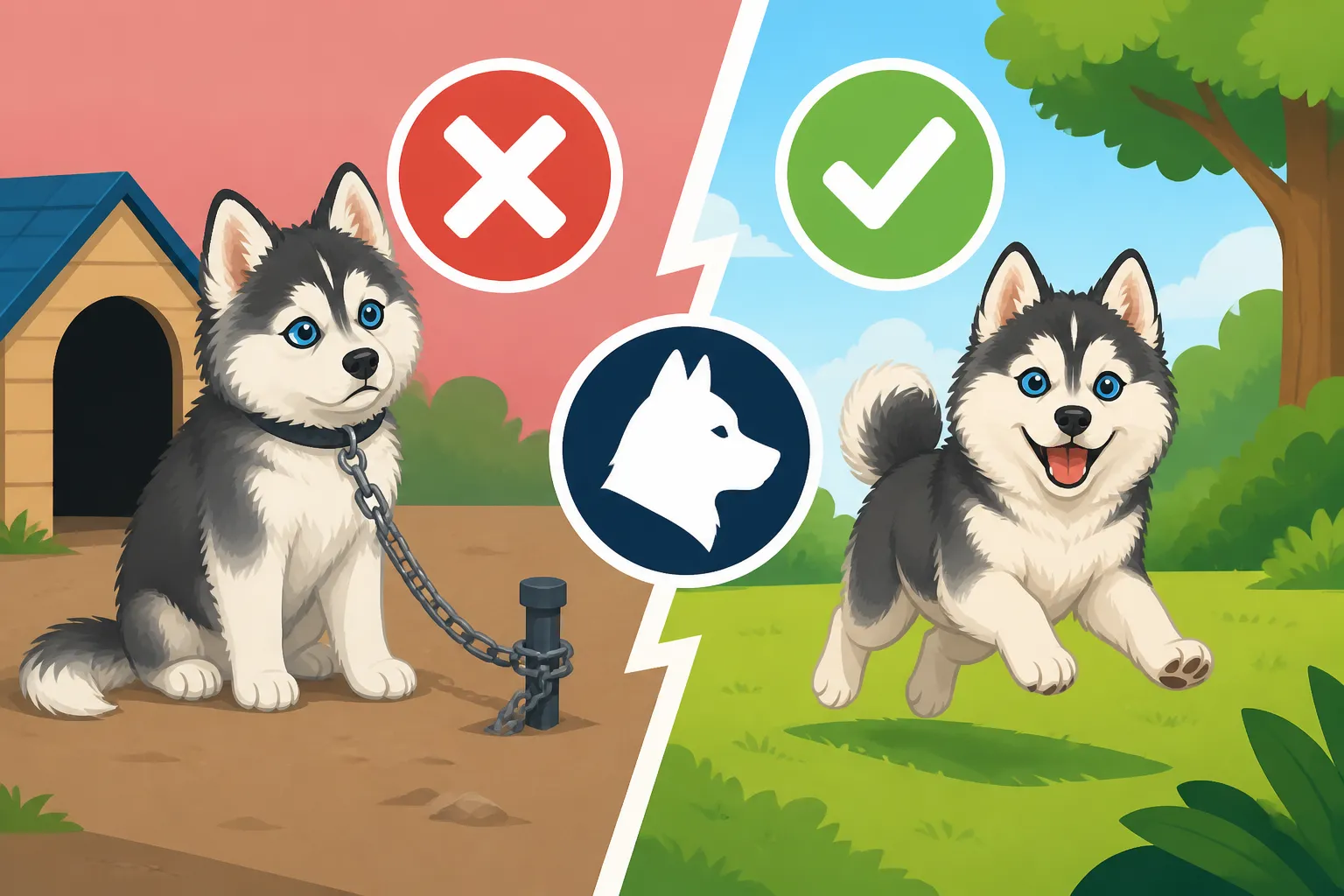
Whether a Pomsky Should Ever Be Tethered
It’s a common scenario: you want your Pomsky to enjoy some fresh air, maybe soak up the sun in the yard, but you don't have a fully secure fence or you need to keep them contained for a short period. The idea of tethering them might pop into your head as a quick, easy solution, but for a breed as unique and intelligent as the Pomsky, this seemingly simple act comes with a whole host of considerations and significant risks. This guide will explore why tethering is generally not recommended for Pomskies, the dangers it poses, and offer much safer, more effective alternatives to ensure your furry friend stays happy and secure.
Why Tethering Is a Risky Endeavor for Your Pomsky
Let's be real, Pomskies are not your average backyard dog. They inherit a potent blend of intelligence, high energy, and a significant prey drive from their Siberian Husky and Pomeranian parentage. These traits, while charming in many ways, make traditional tethering methods incredibly dangerous and often ineffective. When you combine their natural instincts with a restraint, you're often creating a recipe for disaster rather than a peaceful outdoor experience.
The Escape Artist Mentality
One of the most defining traits of a Pomsky, inherited directly from the Husky, is their uncanny ability to escape. They are problem-solvers, highly intelligent, and incredibly persistent. A simple leash or chain attached to a stake in the ground might seem secure to us, but to a determined Pomsky, it's just a puzzle waiting to be solved. They can chew through leashes, twist themselves out of harnesses, or even figure out how to unlatch clips if given enough time and motivation. They are known as The Pomsky Escape Artist in a Twenty Pound Body for a very good reason. Many owners have stories of thinking their Pomsky was secure, only to turn their back for a moment and find an empty space where their dog once was. This isn't naughtiness; it's a deep-seated instinct to explore and test boundaries.
High Prey Drive and Reactivity
Pomskies often possess a strong prey drive, another Husky inheritance. A fluttering leaf, a passing squirrel, a bird landing nearby – any of these can trigger an intense urge to chase. When tethered, this instinct becomes a huge liability. Imagine your Pomsky spotting a rabbit and bolting to chase it, only to be brought up short by the tether. This sudden, violent jerk can cause severe physical injury, from neck and spinal damage to throat trauma, especially if they are wearing a collar instead of a harness. Moreover, this constant frustration of seeing prey but being unable to act on their instinct can lead to behavioral issues, anxiety, and redirected aggression. This is especially important when considering The Prey Drive a Pomsky Gets From the Husky.
Vocalization and Nuisance
Pomskies are talkers, not barkers, much like their Husky ancestors. They howl, they "woo-woo," they make a myriad of expressive sounds. While endearing indoors, a tethered Pomsky left alone outdoors can quickly become a neighborhood nuisance. Boredom, anxiety, or the sheer frustration of being confined can trigger excessive howling, whimpering, and barking. This isn't just annoying for your neighbors; it's a sign that your Pomsky is distressed. They are telling you, in no uncertain terms, that they are unhappy with their situation. Trying to train them to be quiet while tethered is often a losing battle because the root cause—their confinement and boredom—isn't being addressed.
The Grave Dangers of Unsupervised Tethering
While even supervised tethering carries risks, leaving a Pomsky tethered and unsupervised amplifies these dangers exponentially. It's not just about them getting loose; it's about their safety, their mental well-being, and potentially, their very life. This is why many animal welfare organizations strongly advocate against continuous or unsupervised tethering for any dog breed, and particularly for those with a Pomsky's unique characteristics.
Physical Injuries and Strangulation Hazards
The most immediate and terrifying danger of unsupervised tethering is the risk of physical injury. A Pomsky, driven by boredom, fear, or prey drive, can easily get tangled in their tether. They can wrap the chain around their legs, neck, or other objects, leading to severe cuts, abrasions, broken bones, or even strangulation. Imagine them trying to chase something, getting the leash wrapped around a tree, and then struggling until they cannot breathe. These are not hypothetical scenarios; they happen far too often. Even a strong, well-fitting harness offers little protection against the physics of a sudden, violent entanglement. Using a collar for tethering, especially, is an absolute no-go, as it poses a direct and severe strangulation risk. This is why Why a Pomsky Should Wear a Harness is so often discussed by responsible owners, even for leashed walks.
Exposure to Elements and Other Animals
Leaving a Pomsky tethered outdoors, even for what seems like a short time, exposes them to uncontrolled environmental risks. Extreme temperatures, whether scorching summer heat or freezing winter cold, can quickly become dangerous for a dog left without adequate shelter, water, or the ability to move to a safer spot. Pomskies, with their dense double coats, can overheat faster than you might think in warmer climates. Whether a Pomsky Overheats More Than a Husky is a critical question for owners to consider.
Beyond the weather, there's the risk from other animals or even people. A tethered dog is defenseless. They cannot run from an aggressive stray dog, a curious child who doesn't understand boundaries, or even a malicious individual. They are a sitting target, vulnerable to attacks, harassment, or theft. Even if nothing aggressive happens, the sheer stress of being unable to escape a perceived threat can be incredibly damaging to a dog's psyche.
Behavioral and Psychological Damage
The psychological toll of prolonged or unsupervised tethering on a Pomsky can be devastating. These are social, intelligent dogs who thrive on interaction, mental stimulation, and a sense of belonging. Being isolated and confined leads to immense frustration, boredom, and anxiety. This can manifest in a range of problematic behaviors:
- Aggression: A dog constantly in a state of fear or frustration may develop fear-based aggression, lashing out at anything that approaches their limited space.
- Destructive Behaviors: To cope with boredom and anxiety, tethered dogs often resort to excessive chewing (often of the tether itself, or anything within reach), digging, or pacing. This could be even worse than What a Pomsky Destroys as a Puppy inside your home.
- Resource Guarding: Feeling vulnerable and confined can lead a dog to guard their food, water, or even their small patch of ground from anyone approaching.
- Withdrawal and Depression: In some cases, dogs simply shut down, becoming withdrawn, lethargic, and depressed due to chronic stress and lack of positive interaction.
A dog that is constantly stressed and unhappy is not a well-adjusted companion, and it goes against everything we want for our beloved Pomskies.
Safer Alternatives to Tethering Your Pomsky
Given the significant risks, the goal should always be to avoid tethering your Pomsky. Thankfully, there are many safe, humane, and often more effective ways to ensure your Pomsky gets outdoor time without compromising their safety or mental health. These solutions require a bit more upfront investment of time or money, but they are absolutely worth it for your Pomsky's well-being.
Secure Fencing Solutions
The ideal solution for any Pomsky owner who wants their dog to have unsupervised outdoor time is a truly secure fence. And I mean secure. A standard picket fence might not cut it for an escape artist like a Pomsky. Consider these aspects:
- Height: Pomskies can be surprisingly agile. How High a Pomsky Can Jump a Fence is often higher than you'd expect. A minimum of six feet is generally recommended, and for determined jumpers, even higher might be necessary.
- Digging Prevention: They are also champion diggers. Burying fencing a foot or two into the ground, or installing a "L-footer" made of wire mesh or concrete that extends inward at the base of the fence, can prevent them from tunneling out. You can also get creative with landscaping or even strategically placed large rocks to deter digging. Whether a Pomsky Digs Under a Fence is a common concern for a reason.
- Gate Security: Gates need to be as secure as the fence itself. Ensure latches are robust and consider double-latching systems or even padlocks. Some ingenious Pomskies can even figure out lever-style handles.
- Invisible Fences: These are generally not recommended for Pomskies. Their high prey drive and desire to roam often override the discomfort of a static correction, leading them to bolt through the boundary. Once outside, they may not re-enter the yard to avoid the correction, leaving them stranded. Whether an Invisible Fence Holds a Pomsky is a question with a clear answer: usually no.
A well-constructed, physical fence is by far the safest option for giving your Pomsky freedom in the yard.
Supervised Play and Long Line Training
If a secure fence isn't feasible, supervised outdoor time is paramount. This means you are actively present and engaged with your Pomsky.
- Long Lines: A long line (15-50 feet) can give your Pomsky more freedom to explore and run in an open, safe area (like a park, or a large field without roads nearby) while still keeping them under your control. It's a fantastic training tool for teaching recall and practicing commands in a more distracting environment. You can find durable long lines on sites like Amazon. Remember, this is about active training and supervision, not leaving them attached to the line while you do chores. This is also how you can work on Recall on a Pomsky Bred From a Dog That Runs.
- Playtime: Active playtime with you—fetch, tug, training sessions, or simply exploring together—provides both physical and mental stimulation, which is crucial for a Pomsky. This direct interaction strengthens your bond and fulfills their social needs. Many owners find that structured play is far more satisfying for their Pomsky than just being "outside."
Designated Secure Runs or Kennels
For situations where a full yard fence isn't possible, a secure, dedicated dog run or kennel can be a viable option for short, supervised periods. These need to be robustly constructed to be escape-proof.
- Construction: Look for heavy-gauge wire, strong frames, and secure tops to prevent climbing out. The floor should ideally be concrete or have a digging deterrent to prevent tunneling.
- Size: The run needs to be large enough for your Pomsky to move around comfortably, stretch, and relieve themselves away from their resting area.
- Shelter and Amenities: Always provide shade, fresh water, and a comfortable resting spot within the run. This isn't just a cage; it's a temporary outdoor space.
- Duration: Remember, this is for short, supervised periods. It's not a place for a Pomsky to spend hours on end. Their social and mental needs require interaction and a varied environment.
Professional Training and Enrichment
Addressing the underlying behavioral drivers that might lead one to consider tethering is key. If your Pomsky has an intense desire to bolt or exhibits excessive vocalization, professional training can make a world of difference.
- Impulse Control: Training focused on impulse control, "leave it," and a rock-solid recall can help manage their prey drive and reduce the likelihood of them bolting. Online training platforms, such as BAXTER & Bella, offer comprehensive puppy and dog training programs that focus on positive reinforcement and building a strong foundation of obedience and manners, which can prevent many of the issues that lead owners to consider restrictive measures.
- Mental Stimulation: A bored Pomsky is a mischievous Pomsky. Puzzle toys, snuffle mats, training sessions, and interactive games can burn mental energy, which is just as important as physical exercise. A Pomsky with a satisfied mind is less likely to try and escape or vocalize out of frustration. Providing jobs or tasks, even simple ones, can significantly improve their contentment.
- Adequate Exercise: Don't underestimate the exercise needs of a Pomsky. They are active dogs. Daily walks, runs, or vigorous play sessions are essential. The Exercise a Pomsky Needs Every Day is more than just a quick trot around the block. A well-exercised Pomsky is a calmer, more content Pomsky.
When Temporary, Supervised Tethering Might Be Considered (With Extreme Caution)
While generally advised against, there are extremely rare circumstances where temporary, highly supervised tethering might be considered, but only when all other safer options are truly exhausted and strict safety protocols are in place. This is not for routine use, but for emergency or very specific, short-term situations.
Specific, Short-Term Scenarios
Consider this only when you need your Pomsky to stay in a very specific spot for a matter of minutes, and you are right there watching them. Examples might include:
- Brief Clean-up: You need to quickly hose off a muddy Pomsky outside before bringing them in, and you literally have them on a leash in your hand, then attach it to a temporary anchor while you get the hose ready, all while maintaining direct eye contact.
- Veterinary Hold: In some veterinary situations, a vet tech might temporarily tether a dog for a few moments while preparing for an exam, but this is done by trained professionals in a controlled environment.
Essential Safety Protocols for ANY Tethering
If you absolutely must tether for a very brief, supervised moment:
- Harness, NOT Collar: Always use a well-fitting, secure harness, never a collar. This significantly reduces the risk of neck injury or strangulation if they pull suddenly.
- Appropriate Leash/Tether: Use a sturdy leash made of strong material that cannot be easily chewed through. Avoid bungee-style leashes that offer too much stretch and can snap back violently. The tether should be short enough to prevent tangling but long enough for comfortable standing and lying.
- Secure Anchor: The anchor point must be immovable. A lightweight stake in the ground is insufficient. Think heavy-duty, permanently installed eye bolts or a tree trunk with a secure, non-damaging wrap.
- Constant Supervision: This cannot be stressed enough: you must be actively watching your Pomsky the entire time. No going inside, no looking at your phone for extended periods, no distractions. If you need to step away for even a moment, bring your Pomsky with you.
- Environment Check: Ensure the area is free of any hazards they could get tangled in, chew on, or ingest. Provide shade and water immediately accessible.
| Tethering Method | Pros | Cons | Recommendation for Pomskies |
|---|---|---|---|
| Traditional Stake/Post | Simple, low initial cost | High risk of escape, injury, tangling, behavioral issues | Strongly Discouraged for any duration, especially unsupervised. |
| Overhead Cable Run | Allows more movement than a stake, less tangling | Still allows chewing, potential for injury if dog pulls hard | Discouraged, only with extreme supervision and a harness. |
| Secure Fenced Yard | Safest option for freedom, prevents escape | High initial cost, may require constant maintenance to be escape-proof | Highly Recommended if feasible, ensures safety and mental well-being. |
| Long Line (Supervised) | Great for training & controlled exploration, builds recall | Requires active owner participation, not for unattended use | Recommended for training and supervised exercise in safe, open areas. |
| Secure Kennel/Run | Contains dog safely for short periods, prevents escape | Can lead to boredom/anxiety if used too long, requires proper size & amenities | Recommended for short, supervised periods when other options aren't available. |
Ultimately, understanding a Pomsky's unique blend of energy, intelligence, and instinct means recognizing that tethering is rarely, if ever, a suitable long-term or unsupervised solution. Investing in secure containment, consistent training, and ample mental and physical enrichment will lead to a much happier, safer, and more integrated member of your family than any tether ever could. Your Pomsky deserves the best, and that means prioritizing their safety and well-being above convenience.
Disclaimer
This article is for general informational purposes only and does not constitute professional advice. Laws, prices and regulations vary by location and change over time. Consult a qualified professional for guidance on your specific situation.