Whether a Pomsky Overheats More Than a Husky
It's a common worry for Pomsky owners, isn't it? You've got this gorgeous dog, often looking like a mini-Husky, complete with that stunning double coat, and then summer rolls around. Immediately, you start to question if that dense fur is more of a liability for a smaller dog than it would be for its larger Husky parent. It’s a valid concern, and understanding your Pomsky's unique challenges with heat is crucial for their well-being. This guide will dive deep into whether a Pomsky actually overheats more easily than a Husky and what you can do about it.
Understanding the Pomsky's Unique Thermoregulation
When you bring a Pomsky into your life, you're essentially getting a beautifully unpredictable genetic lottery ticket. They are a designer crossbreed, a fascinating blend of the Siberian Husky and the Pomeranian. This unique parentage means that every Pomsky is a little different, and nowhere is that more evident than in how their bodies handle temperature regulation, especially when the mercury climbs.
The Husky-Pomeranian Genetic Mash-up
Imagine taking two breeds from vastly different worlds – one built for arctic tundras, the other a spirited companion with a fluffy coat – and blending them. That's your Pomsky. The hope with any hybrid is often to get the best of both worlds, but genetics don't always work that way. When it comes to things like coat density, undercoat thickness, and even subtle anatomical features that affect breathing, your Pomsky could lean heavily towards one parent or be a truly unpredictable mix. This means that while some Pomskies might inherit a more moderate coat, others could end up with a Husky-level dense coat on a much smaller frame, which is where the thermoregulation questions really start popping up. It's not just about aesthetics; these genetic contributions directly impact their physical capacity to dissipate heat, leading to legitimate concerns about their tolerance in warmer weather.
The Double Coat Conundrum in a Smaller Package
Both Huskies and Pomeranians possess a double coat, but the effect on a smaller Pomsky is something we need to consider carefully. A double coat isn't just about fluff; it's a sophisticated insulation system. You have a soft, dense undercoat designed to trap air, providing a barrier against both cold and heat, and longer, coarser guard hairs that protect against elements like snow, rain, and UV radiation. For a Husky, this system works wonderfully in its native cold environment. However, when you put that same, or a very similar, dense double coat onto a Pomsky – which is significantly smaller – the dynamics shift.
A smaller body has less surface area relative to its volume to radiate heat away. While a large Husky can pant efficiently and use its bigger frame to cool down, a Pomsky might struggle more under a thick coat, especially if it's not well-groomed. This isn't just theory; it's a very real challenge. If your Pomsky has The Pomsky That Carries a Husky Coat at Twenty Pounds, that dense insulation can quickly turn from a benefit to a burden in warm, humid conditions. It creates a sort of thermal trap, making it harder for the dog's natural cooling mechanisms to work effectively. Owners often wonder if this smaller stature makes them inherently more susceptible to overheating than their larger Husky kin, and this coat characteristic is a huge part of that equation.
The Husky's Natural Adaptations to Cold Climates
To truly understand a Pomsky's heat tolerance, we first need to appreciate the incredible design of one of its parent breeds: the Siberian Husky. These dogs are built from the ground up to thrive in some of the most unforgiving cold environments on Earth.
Built for the Arctic: Husky Coat and Physiology
Siberian Huskies are truly marvels of natural engineering, exquisitely adapted for frigid, icy landscapes. Their double coat is legendary, with a thick, soft undercoat that acts like a thermal blanket, trapping body heat and keeping them warm in temperatures well below freezing. The coarser guard hairs on top are water-repellent, shedding snow and ice to keep the undercoat dry and insulating. This isn't just a thick layer of fur; it's an intricate system designed for survival in places like Siberia.
Beyond their coat, Huskies have evolved other physiological traits to combat the cold. They have efficient metabolisms that can switch between glucose and fat for fuel, conserving energy. Their larger lung capacity allows for effective panting, which is their primary method of cooling down. However, it's crucial to remember that their cooling system is optimized for dry cold where panting can easily evaporate moisture. In hot and humid conditions, their cooling efficiency dramatically decreases because the air is already saturated with moisture, making evaporation difficult. This adaptation to extreme cold means that while they can tolerate surprisingly low temperatures, they aren't inherently fantastic at handling heat.
Heat Management in Huskies: Limitations and Risks
Despite their cold-weather prowess, Huskies are certainly not immune to overheating. In fact, their very adaptations for cold can become a disadvantage in warmer climates. That incredibly dense double coat, while a blessing in winter, becomes a significant challenge when the temperature rises. It effectively traps heat close to their body, making it harder for them to cool down. Many Husky owners in southern states or during summer months will tell you about the constant vigilance required.
Their panting mechanism, while good, has its limits. If a Husky is exposed to high temperatures, especially with high humidity, or engages in strenuous exercise, their body temperature can rapidly escalate to dangerous levels. Unlike humans, dogs don't sweat efficiently through their skin; they rely almost entirely on panting and some sweating through their paw pads. This makes them highly susceptible to heatstroke if not managed carefully. Even a purebred Husky, built for the snow, needs ample shade, plenty of fresh water, and restricted activity during hot periods to stay safe. So, if a Husky can struggle, what does that mean for a smaller Pomsky with a similar coat?
The Pomeranian's Contribution to Heat Sensitivity
Often overlooked in the "Pomsky heat tolerance" discussion is the Pomeranian side of the family. While much smaller than a Husky, Pomeranians also bring their own set of characteristics that influence how a Pomsky manages heat.
Small Dog, Big Coat: The Pomeranian's Double Layer
Yes, even the fluffy, often-pampered Pomeranian sports a double coat! It’s not as dense or as thick as a Husky’s, and it has a more "stand-off" appearance due to its texture, but it's still there: a soft, insulating undercoat and longer, harsher guard hairs. This coat was originally bred to keep them warm in the colder regions they hailed from. While their small size means they have a greater surface area to volume ratio than a Husky (which can aid in heat dissipation somewhat), their relatively dense fur can still trap heat, especially in humid conditions or during high activity.
Many people assume that because Pomeranians are small and often live indoors, they are inherently better with heat. However, their coat still requires careful management. A matted or poorly groomed Pomeranian coat can easily lead to overheating, as air circulation is crucial for the insulating properties of a double coat to work correctly. So, while their activity levels might generally be lower than a Husky's, their coat still poses a consideration for heat management, and these traits can certainly be passed on to a Pomsky.
Brachycephalic Tendencies and Respiratory Concerns
Here's a critical point where the Pomeranian's genetics can potentially make a Pomsky more susceptible to overheating than a Husky: the possibility of inheriting a shorter muzzle. While Pomeranians are not classified as a brachycephalic (short-nosed) breed like Pugs or Bulldogs, many individuals within the breed have shorter, more compact muzzles compared to a longer-nosed Husky. This subtle shortening of the snout can sometimes be passed down to Pomskies.
Why does this matter? Dogs primarily cool themselves by panting. A longer muzzle acts like a radiator, allowing for more surface area over which air can flow and evaporate moisture from the mucous membranes in the nasal passages. If a Pomsky inherits a slightly shorter muzzle from its Pomeranian parent, this efficiency is reduced. Less efficient panting means less effective cooling, making them work harder to bring their body temperature down. This anatomical predisposition, even if mild, can make a significant difference on a hot day, potentially putting them at a higher risk of overheating compared to a purebred Husky with its characteristic long, efficient snout. It's a factor that Pomsky owners definitely need to be mindful of.
Key Factors Influencing a Pomsky's Heat Tolerance
Understanding the genetic blueprint is one thing, but how those genes manifest in your individual Pomsky, combined with their lifestyle and environment, truly determines their vulnerability to heat.
Coat Type, Density, and Color Variations
Not all Pomsky coats are created equal, and this plays a massive role in their heat tolerance. You might recall there are The Three Pomsky Coat Types: the standard, the wooly, and the short-coated. A standard coat is a good balance, but a "wooly" coat, characterized by longer, softer guard hairs and an incredibly dense undercoat, can be a major disadvantage in warm weather. This extra fluff traps even more heat, making it much harder for air to circulate and for your Pomsky to cool down through panting. Owners of wooly Pomskies need to be extra vigilant.
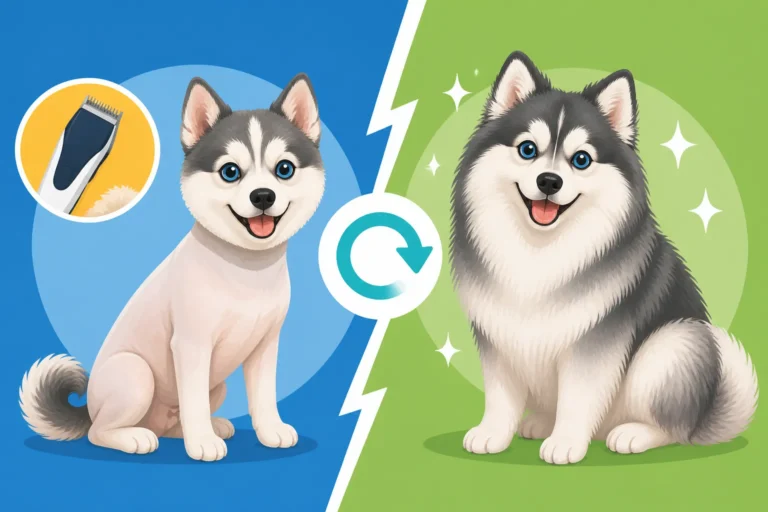
Beyond the type, the actual density of the undercoat matters. Some Pomskies will have a truly Husky-dense undercoat, while others might be a bit lighter. A denser coat, regardless of length, equates to more insulation. Even coat color plays a small part: darker coats absorb more solar radiation, making a black or dark grey Pomsky slightly more prone to heating up in direct sunlight than a white or very light-colored one. This is also Why a Pomsky Must Never Be Shaved is such crucial advice; shaving destroys the natural insulating properties of their double coat, potentially leading to skin damage from sunburn and impairing their ability to regulate temperature effectively in the future, often resulting in "post-clipping alopecia" where the coat may not grow back correctly.
Size, Activity Levels, and Environment
The physical size of your Pomsky makes a big difference. A smaller Pomsky, often marketed as a "mini" or "toy," can actually have a disproportionately dense coat for its body mass. This combination can make cooling more challenging than for a larger Pomsky that is closer in size to a smaller Husky, which has more body surface area for heat exchange. A smaller body, densely packed with insulating fur, may struggle more.
Your Pomsky's activity level also directly impacts their internal temperature. The Exercise a Pomsky Needs Every Day is substantial, drawing from their Husky heritage, but this energy needs to be managed wisely in hot weather. A highly active Pomsky running and playing intensely on a warm day will generate a lot of internal heat, far more quickly than a sedentary one. The environment itself is another critical factor. Concrete and asphalt can get incredibly hot, radiating heat directly up to your dog's body and paw pads. Humidity levels are paramount; high humidity makes it incredibly difficult for dogs to cool down via evaporative panting. Therefore, a Pomsky living in Phoenix, Arizona, will face vastly different challenges than one living in Seattle, Washington. This consideration directly ties into the question of Whether a Pomsky Can Live in a Hot State and highlights the need for constant awareness of their surroundings.
Recognizing Overheating and Essential Prevention Strategies
Knowing the risk factors is the first step; the next is being able to recognize the signs of overheating and implementing proactive measures to keep your Pomsky safe and comfortable.
Identifying the Signs a Pomsky Is Overheating
It's absolutely vital for every Pomsky owner to know the Signs a Pomsky Is Overheating. Time is of the essence when a dog's core temperature rises to dangerous levels.
Here's what to look out for:
- Excessive Panting: This is the most obvious sign. While some panting is normal, if it's continuous, heavy, and seems more strenuous than usual, it's a red flag. Their breathing might sound labored or raspy.
- Profuse Drooling: As they pant more, they'll produce a lot of saliva, which might appear thicker or stringy.
- Bright Red Gums or Tongue: Their gums might look abnormally bright red, or conversely, very pale or bluish in severe cases.
- Lethargy and Weakness: Your normally energetic Pomsky might become sluggish, reluctant to move, or collapse.
- Stumbling or Disorientation: They might appear wobbly, uncoordinated, or confused.
- Vomiting and Diarrhea: These can occur as the body struggles and internal organs are affected.
- Elevated Body Temperature: While you might not carry a rectal thermometer, a dog's ears or belly might feel unusually hot to the touch.
- Glazed Eyes: Their eyes might appear unfocused or glassy.
If you observe any of these symptoms, especially a combination, you need to act immediately. Get your Pomsky into a cool environment, apply cool (not ice-cold) water to their belly, armpits, and paw pads, and seek veterinary attention urgently. Heatstroke is a medical emergency that can lead to organ failure and death if not treated promptly. Having pet insurance, like a plan from Healthy Paws, can provide immense relief during such stressful and expensive emergencies, ensuring you can focus on your dog's recovery without the added burden of unexpected vet bills.
Proactive Measures to Keep Your Pomsky Cool
Prevention is always better than cure, especially when it comes to heatstroke. There are many steps you can take to ensure your Pomsky stays cool and safe during warmer months.
First and foremost, adjust your daily routine. This means being smart about When to Walk a Pomsky in Summer. Avoid walks, intense playtime, or training sessions during the hottest parts of the day, typically between 10 AM and 4 PM. Instead, aim for early morning or late evening when temperatures are significantly cooler.
Hydration is non-negotiable. Always have fresh, cool water available for your Pomsky, both indoors and especially when you're out and about. Consider a portable water bottle and collapsible bowl for walks. For indoor comfort, Whether a Pomsky Needs Air Conditioning is not a question for many; it's a necessity in hot climates. If AC isn't available, ensure good ventilation with fans. Cooling mats or elevated dog beds can also provide a cooler resting spot by allowing air circulation underneath.
Outdoor access requires careful planning. Always provide access to shade, whether it's from trees, an umbrella, or a covered patio. Never leave your Pomsky in a parked car, even for a few minutes, as temperatures inside can skyrocket rapidly. Many Pomskies love water, and Whether a Pomsky Should Swim to Cool Down is a fantastic option if they enjoy it and it's done safely. A kiddie pool with shallow water in the backyard can be a great way for them to splash and cool off. Remember to dry their double coat thoroughly afterward to prevent skin issues.
For Pomskies living in particularly hot areas or those prone to overheating, a cooling vest can offer additional support. These vests are designed to keep the dog's core temperature down through evaporative cooling. Ultimately, constant vigilance and a proactive approach to managing their environment and activity levels are key to keeping your Pomsky healthy and comfortable, even in challenging heat. And should an unforeseen heat-related incident occur, knowing that you have comprehensive pet insurance, perhaps through a reputable provider like Healthy Paws, can ease the financial stress of emergency veterinary care.
Direct Comparison: Pomsky vs. Husky Heat Tolerance
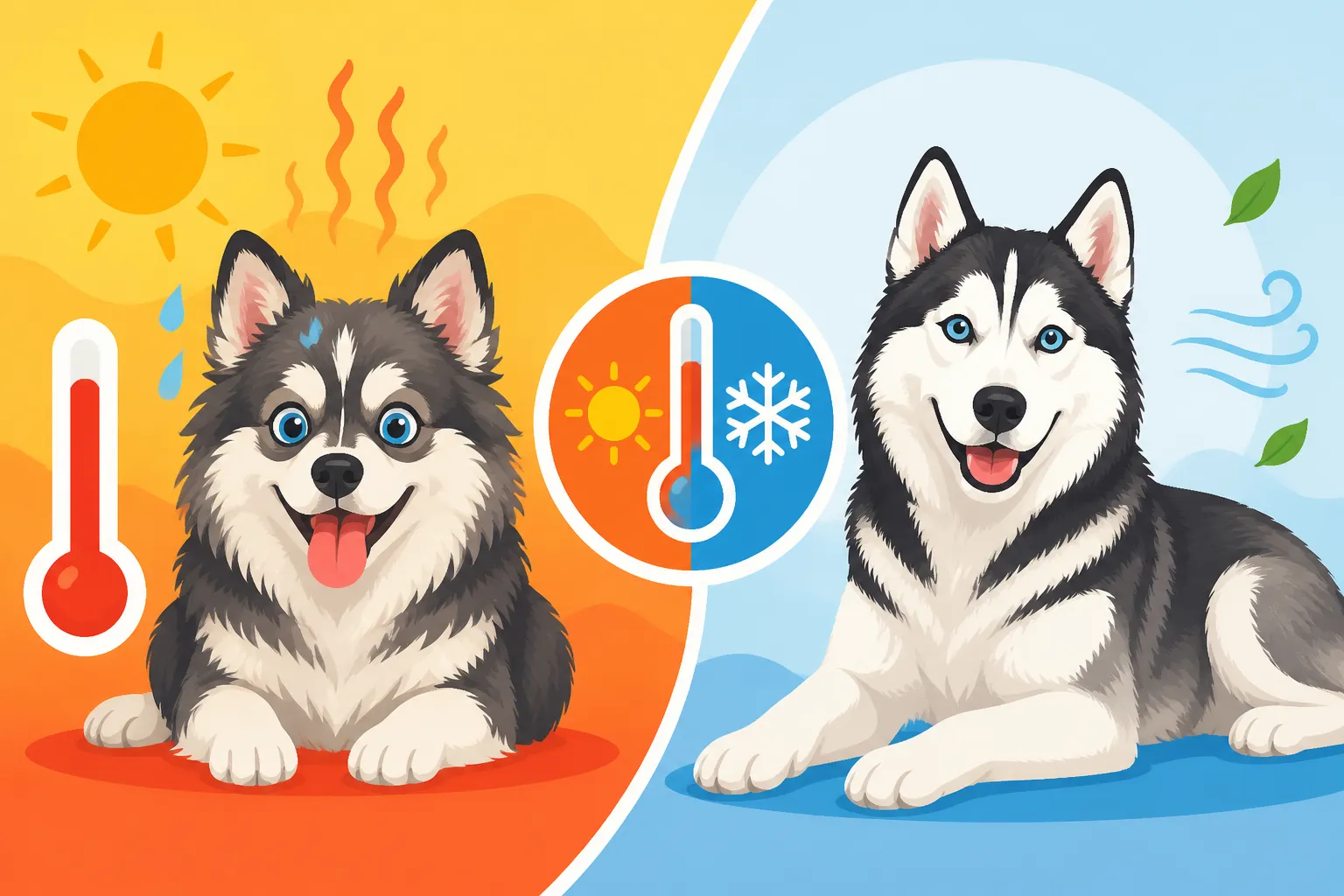
So, after all this, the burning question remains: does a Pomsky overheat more than a Husky? The answer, like much with this wonderful hybrid, isn't a simple yes or no.
The Unpredictable Middle Ground
The reality is that a Pomsky's heat tolerance exists on a wide spectrum, influenced by which traits they inherit most strongly. It's not a matter of a Pomsky being definitively "better" or "worse" than a Husky at handling heat; it's about the unique combination of factors in your individual dog.
A Pomsky could indeed overheat more easily than a Husky under specific circumstances. For instance, a Pomsky that inherits the full density of a Husky's double coat but on a much smaller body (reducing surface area for heat dissipation), combined with a slightly shorter muzzle from the Pomeranian side (impairing panting efficiency), would be at a significantly higher risk. This combination creates a "perfect storm" for heat retention and inefficient cooling. Conversely, a larger Pomsky with a slightly less dense coat might fare similarly to, or perhaps even a little better than, a Husky in moderate heat.
Therefore, the statement Whether a Pomsky Tolerates Heat Worse Than a Husky can certainly be true for many individuals. The variability is the key takeaway here. You cannot assume your Pomsky will handle heat like a Husky, nor like a small, short-coated breed. They are an unpredictable blend, making owner vigilance all the more critical.
Prioritizing Individual Needs and Owner Vigilance
Given the genetic variability, the most important strategy for any Pomsky owner is to treat their dog as an individual and err on the side of caution. You must observe your Pomsky constantly to understand their specific responses to heat. What's comfortable for one Pomsky might be dangerous for another.
Always assume your Pomsky could be susceptible to overheating, especially when conditions are warm, humid, or when they're engaging in activity. Don't push them in the heat, listen to their signals, and provide ample opportunities to cool down. Investing in tools like cooling mats, dog booties for hot pavement, and providing constant access to shade and water aren't just good ideas; they're essential for Caring for a Pomsky Past Ten and throughout their entire lifespan.
Ultimately, whether you have a Pomsky or a Husky, responsible pet ownership demands awareness of environmental conditions and how they impact your dog's health. While Huskies are designed for the cold, they are far from invincible in the heat. A Pomsky, with its mixed heritage, often presents a more complex challenge, potentially inheriting features that make heat dissipation harder. Your attentiveness and proactive care are their best defense against the dangers of overheating. And for any unexpected health issues, whether heat-related or otherwise, a reliable pet insurance policy from a provider like Healthy Paws can provide critical financial protection, ensuring your beloved Pomsky receives the best possible care without delay.
Here’s a comparative overview of how these breeds generally stack up:
| Feature | Siberian Husky | Pomeranian | Pomsky (Variable) |
|---|---|---|---|
| Origin Climate | Arctic/Siberian (Extreme Cold) | Pomerania/Germany (Cold) | N/A (Modern Crossbreed) |
| Primary Cooling | Highly efficient panting (long muzzle) | Panting (can be less efficient with shorter muzzle) | Variable panting efficiency (depends on muzzle length) |
| Coat Type | Dense double coat (optimized for cold) | Dense double coat (fluffy, stand-off) | Dense double coat (standard, wooly, or short) |
| Size/Weight | Medium-Large (35-60 lbs) | Small (3-7 lbs) | Small-Medium (10-35 lbs) |
| Heat Tolerance | Low-Moderate (prone to overheating in heat/humidity) | Moderate-Low (can overheat due to coat/muzzle) | Variable, often lower than expected; can be very prone to overheating |
| Activity Level | High endurance, needs significant exercise | Moderate, bursts of energy | Moderate-High, depends on individual drive |
| Overall Risk of Overheating | High in hot/humid conditions, strenuous exercise | Moderate to High, especially with strenuous exercise or poor grooming | Often High, especially for dense-coated, shorter-muzzled individuals. |
Disclaimer
This article is intended for informational purposes only and does not constitute veterinary advice. Always consult with a qualified veterinarian regarding your Pomsky's specific health needs and concerns.