Whether a Pomsky Comes Back on Its Own
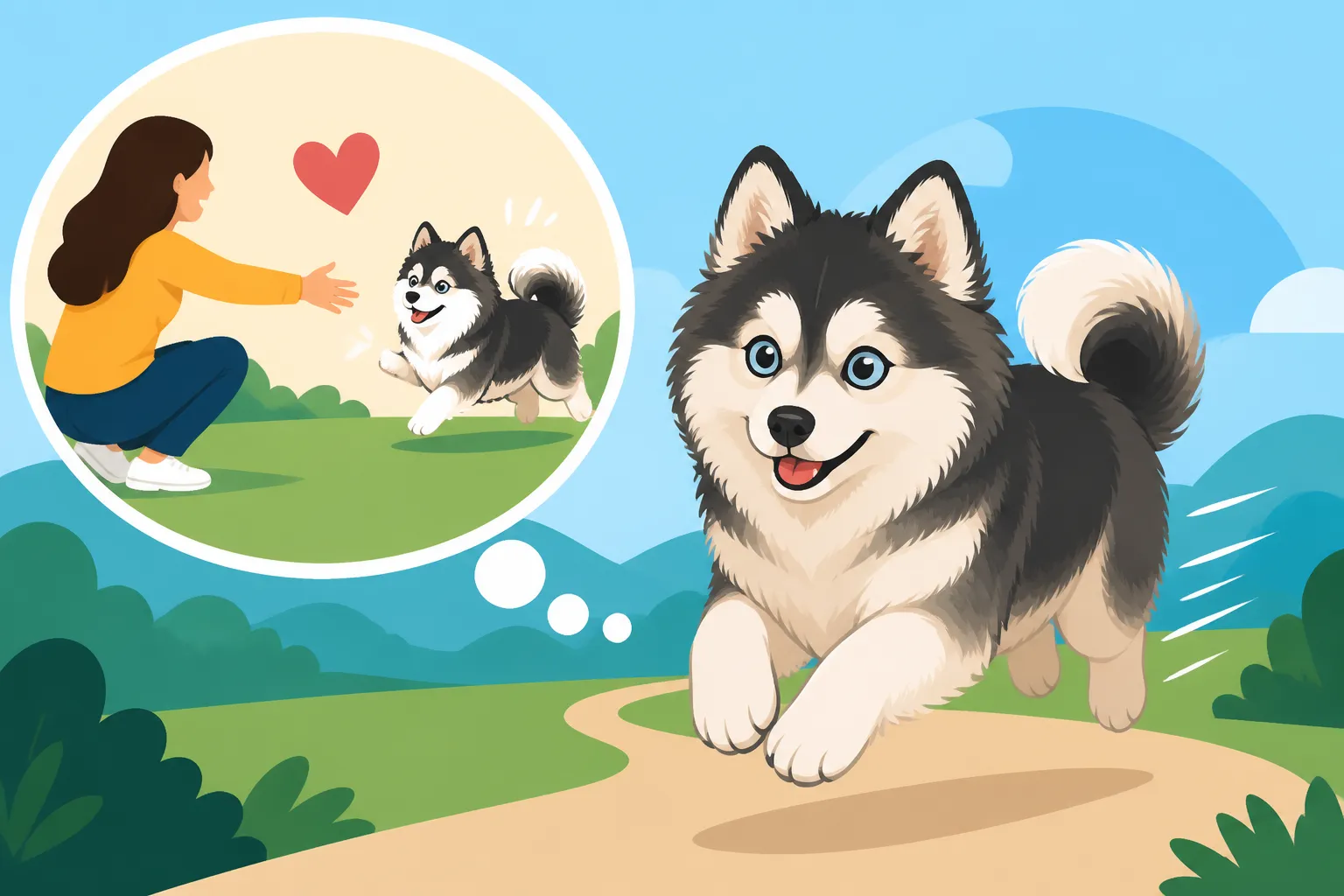
It's a common, gut-wrenching fear for any dog owner: the door accidentally left ajar, the gate unlatched, and your beloved Pomsky suddenly vanishes from sight. You stand there, heart pounding, calling their name, and you wonder, "Will they just come back on their own?" The honest, and sometimes painful, truth is that relying on a Pomsky to return by themselves is a risky gamble, and this guide will dive deep into why that is and what you can do to prevent it and react effectively if it happens.
The Instinctual Pull: Why "Coming Home" Isn't a Given for a Pomsky
Many dog breeds have been selectively bred over generations to be highly bonded to their human companions and less likely to stray. Think of breeds like retrievers or herding dogs, whose instincts are often centered around their human or their flock. Pomskies, however, are a unique blend, inheriting a fascinating and sometimes challenging set of instincts from their Siberian Husky and Pomeranian parents, which often work against the idea of them just turning around and coming back when they wander off.
The Husky's Call: The Drive to Roam and Explore
One of the most defining traits passed down from the Siberian Husky side of your Pomsky's lineage is an incredibly strong drive to roam and explore. Huskies were bred for endurance, to cover vast distances, pulling sleds through challenging terrain. This isn't just a preference; it's a deep-seated, genetic imperative. When a Husky, or a Pomsky with a strong Husky influence, gets free, their first instinct often isn't to look for you, but to stretch their legs and see what's over the next hill, down the next street, or even miles away.
This roaming instinct means that "home" isn't necessarily the anchor you might expect it to be. For them, the thrill of the chase, the new smells, and the sheer joy of running free often outweigh the desire to return to a familiar comfort zone. They aren't intentionally defying you; they are simply following a powerful internal compass that points towards adventure. This is why you'll often hear about The Pomsky Escape Artist in a Twenty Pound Body. Even in a smaller package, that big dog wanderlust is very much alive.
The Pomeranian's Prerogative: Independent Spirit and Selective Hearing
While the Husky provides the roaming drive, the Pomeranian side contributes its own twist to the "coming back" dilemma: an independent and often strong-willed spirit. Pomeranians, despite their small size, are known for their big dog personalities. They can be incredibly smart and keen, but they also possess a stubborn streak and a remarkable ability to develop "selective hearing" when something more interesting captures their attention.
Combine this with the Husky's independence, and you have a dog that truly marches to the beat of its own drum. When your Pomsky is out on an unplanned adventure, they might hear you calling, but if they've found a particularly fascinating scent or spotted a squirrel, that internal motivation to pursue their own interests can easily override any training they've received. They're not necessarily disobedient, but rather highly self-motivated and often clever enough to know what they want and how to get it, even if it means ignoring your frantic pleas.
Scent and Sight: Distractions That Override Recall
The world is an overwhelming buffet of sensory input for a dog, and for a Pomsky, certain stimuli are almost irresistible. Their powerful sense of smell, inherited from both parents but particularly honed in the Husky for tracking, means that an interesting scent trail can completely hijack their attention. A rabbit that darted across the park five minutes ago leaves an invisible path that can lead your Pomsky far from where you are, completely engrossed in tracking.
Similarly, their keen eyesight can spot a squirrel, a bird, or even another dog a surprising distance away, triggering their prey drive. The Prey Drive a Pomsky Gets From the Husky is no joke; once that instinct kicks in, it becomes incredibly difficult to break their focus. They might not even register your commands, because their brain is fully engaged in the primal act of the chase. These distractions, combined with their natural inclination to explore, make expecting them to simply "turn back" incredibly unrealistic in many situations.
The Harsh Reality: When a Pomsky Doesn't Return
It's easy to think, "My dog loves me, they'll come back." And while your Pomsky undoubtedly loves you, their instincts often dictate otherwise in an open, stimulating environment. The consequences of them not returning on their own can range from heartbreaking to tragic.
The Dangers of Being Lost: From Traffic to Wildlife
Once a Pomsky is loose and doesn't immediately return, they are vulnerable to a myriad of dangers. Traffic is arguably the biggest threat in most urban and suburban areas. A dog running loose, especially one focused on a scent or chase, is often oblivious to cars, leading to devastating accidents. They might also encounter aggressive stray animals, or, in more rural settings, become prey themselves for larger wildlife.
Beyond immediate physical threats, a lost Pomsky is also susceptible to exposure to harsh weather, dehydration, or starvation if they are out for an extended period. They might wander into unfamiliar territories where they could be mistaken for a stray, picked up by animal control, or even taken in by someone else. The longer they are gone, the harder it becomes to track them, and the more peril they face.
The Importance of Immediate Action, Not Waiting
This is perhaps the most critical takeaway: if your Pomsky gets out, do not wait for them to come back on their own. The longer you wait, the further they can travel, and the more dangerous their situation becomes. This is a common mistake owners make, holding out hope that their dog will remember the way home or suddenly decide to turn around. With a Pomsky's genetics, that hope is often misplaced.
Instead, every minute counts. What to Do When a Pomsky Bolts should be ingrained in every owner's mind, acting as a rapid response plan. The initial moments and hours after an escape are the most crucial for successful recovery. Waiting could mean the difference between a quick reunion and a prolonged, agonizing search.
The Emotional Toll on Owners
Beyond the physical dangers to the dog, the emotional impact on owners when a Pomsky goes missing is immense. The anxiety, guilt, and fear can be overwhelming, consuming your thoughts and energy. The frantic search, the sleepless nights, and the desperate calls to shelters and vets take a heavy toll. Many owners describe it as one of the most stressful experiences of their lives.
Understanding that your Pomsky's natural tendencies make self-return unlikely, and thus preparing for proactive measures, can help mitigate this distress. While no one wants their dog to go missing, having a plan and acting swiftly provides a sense of control and significantly increases the chances of a positive outcome.
Building a Lifeline: Training and Tools for Recall (and Prevention)
Given their natural inclinations, a reliable recall for a Pomsky isn't something that happens by accident; it's painstakingly trained and constantly reinforced. Moreover, prevention is always better than cure.
Laying the Foundation: Consistent Recall Training
Building a strong recall for your Pomsky needs to start early and be consistent throughout their life. It's not just about teaching them the word "come"; it's about making coming to you the most rewarding thing they can possibly do, no matter what distractions are around. Building a Recall a Pomsky Answers involves short, frequent training sessions in various environments, gradually increasing distractions.
Use happy, excited tones, and always pair their return with something incredibly positive. Practice in a secure, fenced area first, then on a long line. The long line, which you can find readily on Amazon, is a fantastic tool because it allows you to simulate off-leash freedom while still maintaining control. This way, if your Pomsky gets too distracted, you can gently guide them back, preventing them from learning that they can ignore you.
The Power of Positive Reinforcement and High-Value Rewards
When training a Pomsky, especially for something as critical as recall, positive reinforcement is your best friend. Pomskies, like their Husky parents, can be quite independent and "what's in it for me?" oriented. They won't work for praise alone for long. You need high-value treats – think small pieces of cooked chicken, cheese, or hot dogs – something they rarely get and absolutely adore.
When they come to you, even if it's grudgingly, make it a party! Give them the best treats, lavish them with praise, and maybe even engage in a quick game of tug or fetch if that's what they love. You want them to associate returning to you with immense joy and incredible rewards. The online training resources from BAXTER & Bella often emphasize these positive reinforcement methods, providing structured lessons that can be incredibly helpful for owners struggling with recall and other independent breed traits. Their focus on making learning fun and rewarding aligns perfectly with what works for a Pomsky.
Essential Safety Measures and Containment
Even with the best training, no recall is 100% foolproof, especially with a Pomsky. This means preventative measures are paramount.
- Secure Fencing: Inspect your yard regularly for weak spots or gaps. Remember that How High a Pomsky Can Jump a Fence can be surprising, and they can also be adept at digging under them. The Fence a Pomsky Actually Needs is often higher and more secure than you might initially think.
- Harness vs. Collar: A well-fitting harness is almost always safer than a collar for a Pomsky, as they are expert at slipping out of collars, particularly if they pull back when startled. Look for a harness with multiple points of adjustment and a secure fit.
- Leash Discipline: Always keep your Pomsky on a leash in unfenced areas. This might seem obvious, but it's where many escapes begin.
- Microchipping and Tags: Ensure your Pomsky is Whether a Pomsky Should Be Microchipped Immediately and that their microchip information is always up-to-date. They should also wear a collar with current ID tags, clearly stating your phone number. This is your dog's ticket home if they are found by a stranger.
- GPS Trackers: For extra peace of mind, especially if you have an escape-prone Pomsky, consider a GPS tracker. Devices like Tractive or Fi, easily found on Amazon, attach to their collar and can provide real-time location tracking if they do manage to get out. Whether a Pomsky needs a GPS tracker is a question many Pomsky owners eventually answer with a resounding "yes."
What to Do in the Event of an Escape
Despite all precautions, sometimes a determined Pomsky finds a way. Knowing exactly what to do can dramatically increase your chances of a successful reunion.
Rapid Response: The First Crucial Minutes
The moment you realize your Pomsky is gone, time is of the essence.
- Stay Calm (as much as possible): Panic makes it harder to think clearly.
- Call Their Name & Shake Treats: Immediately go outside and call your Pomsky's name in a happy, excited voice. Shake a bag of their favorite high-value treats or a noisy toy. Avoid chasing them, as this often triggers their prey drive and makes them run further. Instead, try to entice them to come to you.
- Deploy Familiar Scent: Place a worn item of your clothing, their bed, or a favorite toy outside your door or where they were last seen. The familiar scent can act as an anchor, drawing them back to that spot.
- Enlist Help: Immediately contact family, friends, and neighbors to help search your immediate area. Assign specific directions for them to walk or drive while you focus on the starting point.
Utilizing Technology and Community Resources
Once the immediate area has been thoroughly checked, it's time to broaden your search.
- Social Media: Post clear photos and details about your lost Pomsky on local lost pet Facebook groups, Nextdoor, and other community forums. Include their last known location, a description, and your contact information. Ask people to share widely.
- Local Shelters and Vets: Call every animal shelter, humane society, and veterinary clinic in your area, and surrounding areas. Provide them with a description and a photo. Many facilities have online lost pet databases you can check as well. Remember, a microchip greatly aids this process.
- Post Flyers: Create physical flyers with a photo, description, and your contact information. Post them in high-traffic areas, at local businesses, and near where your dog was last seen.
- Offer Rewards (with caution): A reward can incentivize people to look, but be cautious about including the amount on the flyer, and never transfer money before your dog is safely returned to you.
- Don't Give Up: The statistics for reuniting lost pets are surprisingly high, especially with microchips and active searching. Many stories abound of dogs being found days, weeks, or even months later. Persistence is key.
Remember this crucial table about Pomsky return likelihood:
| Factor | More Likely to Return | Less Likely to Return |
|---|---|---|
| Training | Consistent, positive reinforcement recall training | Minimal or inconsistent recall training |
| Motivation | Highly food-motivated, loves specific toys | Indifferent to food/toys, easily bored |
| Environment | Familiar, quiet, few distractions | Unfamiliar, busy, lots of wildlife/other dogs |
| Temperament | More bonded, less independent, slightly anxious | Independent, highly confident, easily distracted |
| Breeding Influence | Stronger Pomeranian traits (less roaming) | Stronger Husky traits (high prey drive, wanderlust) |
| Immediate Action | Owner reacts immediately, calmly calls & entices | Owner waits, chases, or panics |
| Identification | Microchipped & ID tags present | No microchip, no ID tags, or out-of-date info |
The idea that a Pomsky will just "come back on its own" is a romantic notion that, while it might happen occasionally by sheer luck, is largely contradicted by their strong, deeply ingrained instincts. Being proactive with robust training, securing your home, and having an emergency plan in place is the most responsible way to ensure the safety and well-being of your beloved companion.
Disclaimer
This article is for general informational purposes only and does not constitute professional advice. Laws, prices and regulations vary by location and change over time. Consult a qualified professional for guidance on your specific situation.