Whether a Pomsky Roams for Miles
It's a fear every Pomsky parent knows deep in their gut: that moment your spirited, curious companion spots a squirrel, a leaf, or an interesting scent, and suddenly they're gone, a blur disappearing into the distance. Their adventurous spirit, while endearing, often comes with a strong urge to explore far beyond what we'd consider safe boundaries. This guide is here to help you understand why your Pomsky might have this wanderlust and, more importantly, how to implement practical strategies to keep your cherished little explorer safely by your side.
The Call of the Wild: Why Pomskies are Prone to Roaming
It’s easy to feel personally offended when your Pomsky seems to choose freedom over you, but it's rarely about a lack of love. Their tendency to roam is deeply rooted in the genetics passed down from their parent breeds, combined with their sharp minds and high energy levels. Understanding these underlying drives is the first step in effective management.
A Blend of Instincts: Husky's Drive Meets Pomeranian's Curiosity
Let's be honest, we love our Pomskies for their Husky-like looks in a more manageable size. But with that comes the Husky's inherent wanderlust. Siberian Huskies were bred to pull sleds over vast distances, often in challenging conditions. Their ancestors covered miles of open tundra, so the instinct to "go" and explore is hardwired into their very being. They have incredible endurance and a strong sense of curiosity that drives them to investigate every new smell and sight.
Then you add the Pomeranian's influence. While much smaller, Pomeranians are not meek lapdogs. They are bold, intelligent, and often possess a surprisingly independent streak. They can be incredibly tenacious when something catches their attention, showing remarkable bravery for their size. Combine the Husky's drive to cover ground with the Pomeranian's spirited determination, and you have a Pomsky who might genuinely believe the grass is greener on the other side of the fence, or down the street, or in the next county. They don’t see boundaries the way we do; they see challenges and new adventures. This can be incredibly frustrating for owners who feel like they're constantly on high alert, always worried their dog will bolt.
Boredom and Underexercise: The Great Motivators
A bored Pomsky is a creative Pomsky, and creativity often manifests as an escape plan. These dogs are intelligent and require a significant amount of mental and physical stimulation. Simply letting them out into a backyard, no matter how large, isn't enough to satisfy their complex needs. If they don't get enough exercise, their pent-up energy will drive them to seek an outlet. Roaming becomes their self-assigned "job" – an adventure to alleviate boredom.
Think about it from their perspective: if their day consists of lounging around with infrequent, unstimulating walks, the sudden thrill of an open gate or a slipped leash is an irresistible invitation to explore. They're not being malicious; they're simply responding to their natural drives. A Pomsky that is mentally stimulated through training, puzzle toys, and varied environments, and physically tired from regular, vigorous exercise, is far less likely to feel the urge to embark on a solo journey. Neglecting these needs can easily lead to a dog who sees every opportunity as a chance to become The Pomsky Escape Artist in a Twenty Pound Body.
Understanding the "Miles" Factor: How Far Can a Pomsky Actually Go?
When we talk about a Pomsky roaming, it's not just a quick dash around the block. Their surprising speed and endurance mean they can cover significant distances very quickly, turning a momentary lapse into a terrifying ordeal.
Speed and Stamina in a Compact Package
Don't let your Pomsky's medium size fool you. While they might not be as large as a full-grown Husky, they inherit plenty of that breed's athletic capability. A Pomsky can reach impressive speeds when motivated, often much faster than a human can run. More importantly, they have remarkable stamina. A sudden sprint can quickly turn into a sustained run, propelled by curiosity and their inherent drive to keep moving.
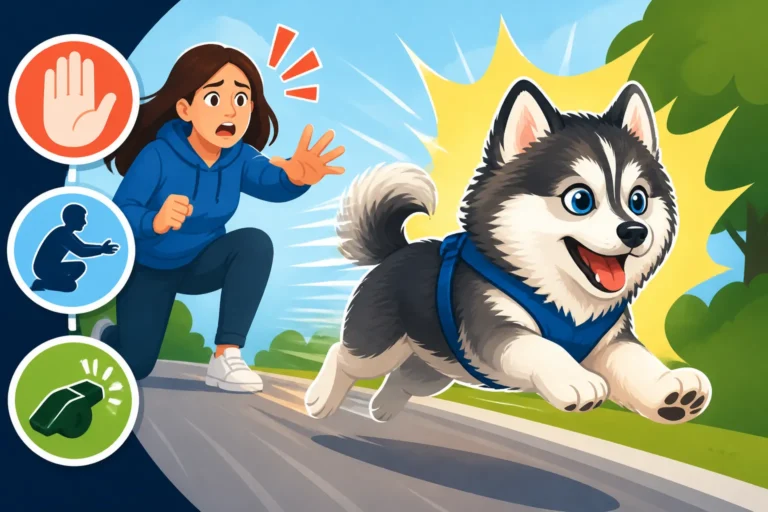
Imagine a scenario: you're distracted for just a second, the front door is left ajar, and your Pomsky sees an opportunity. In a flash, they're out, and within minutes, they could be several blocks away, perhaps even further if they hit an open stretch. Their low-to-the-ground profile can make them harder to spot in traffic or dense undergrowth, and their focused pursuit of a scent or sight means they might not even register your frantic calls. Many owners are shocked at how fast their seemingly small dog can disappear and how far they can get in such a short amount of time. It often feels like they teleported, but it's simply their inherited capacity for travel at work. It's why phrases like Whether a Pomsky Runs If a Door Opens are so often discussed in owner groups – that instant, unthinking bolt.
The Dangers of the Open Road
The reality of a Pomsky roaming for miles is grim. The world outside your secure property is full of unforeseen hazards. Traffic is perhaps the most immediate and terrifying danger. A dog darting into the street, especially one focused on a scent trail, has little chance against a moving vehicle. It's a risk no owner ever wants to face. Beyond traffic, there's the genuine threat of becoming permanently lost, unable to find their way home in unfamiliar territory.
They could encounter aggressive dogs, wildlife, or even malicious individuals. They might consume something toxic from garbage or discarded food. The elements themselves can be a danger, whether it's extreme heat, bitter cold, or heavy rain, especially for a dog suddenly exposed without shelter. These are not exaggerated fears; they are common tragedies that occur when dogs escape. This is why prevention isn't just about convenience; it's about life and death. The thought of your beloved companion facing these dangers alone is enough to send shivers down any dog parent's spine.
Fortifying Your Home and Training for Safety
Given their natural tendencies, a multi-layered approach to preventing your Pomsky from roaming is absolutely crucial. This means focusing on both physical barriers and consistent training.
Secure Fencing and Boundaries
The first line of defense against a roaming Pomsky is a physically secure environment. A standard four-foot fence might be enough for some dogs, but for a determined Pomsky, it's often an invitation to test boundaries. Many Pomskies inherit the Husky's ability to jump and climb, and even the Pomeranian's agility can contribute to clever escapes. We're talking about fences that are at least six feet high. The Fence a Pomsky Actually Needs often needs to be more robust than owners initially anticipate.
Beyond height, you need to consider depth. Pomskies, like Huskies, are notorious diggers. They can tunnel under fences with surprising speed and efficiency, especially if they're bored or have a strong motivation. Burying the bottom of the fence, adding a wire skirt, or even pouring a concrete footing can deter these subterranean escape artists. Regularly inspect your fence line for loose boards, gaps, or areas where the ground has eroded. Pay special attention to gates – ensure they latch securely, perhaps with a double-latch system, and that there's no gap underneath for a determined Pomsky to squeeze through.
The idea of an invisible fence often comes up for dogs prone to roaming. While these systems can be effective for some dogs, they have significant drawbacks for a Pomsky. Firstly, they don't physically contain the dog; they rely on pain or discomfort to create a boundary. A highly motivated Pomsky, chasing a squirrel or driven by an urgent need to explore, may easily blow through the boundary, taking the momentary shock. Once outside the boundary, the collar will continue to shock them if they try to come back in, creating immense confusion and potentially traumatizing the dog, preventing them from returning home. For these reasons, Whether an Invisible Fence Holds a Pomsky is a question usually answered with caution for this breed. Physical barriers are almost always preferred. For securing gates or reinforcing weak spots, simple, sturdy hardware purchased from a retailer like Amazon can make all the difference.
Masterful Recall and Leash Handling
Even the most secure yard can fail, so a strong recall is your ultimate emergency tool. Unfortunately, Pomskies are often described as having "selective hearing," a charming trait inherited from the Husky. They are intelligent but can be incredibly independent and easily distracted by the exciting world around them. Building a reliable recall requires immense patience, consistency, and extremely high-value rewards. Recall on a Pomsky Bred From a Dog That Runs is not an easy feat, but it is achievable.
Start recall training in a low-distraction environment, always using a happy, enthusiastic tone and immediately rewarding them with something irresistible – not just praise, but a truly special treat or a favorite toy. Gradually introduce distractions, always setting your Pomsky up for success. Never punish them for not coming when called, as this will only teach them to avoid you when they've done something "wrong." Consider professional training, or utilize structured online programs like those offered by BAXTER & Bella, which provide step-by-step guidance on building a solid foundation for obedience, including that crucial recall.
When you're out and about, a secure leash and harness are non-negotiable. A standard collar can be easily slipped, especially by a dog who suddenly pulls back when startled or eager to chase. A well-fitting harness, particularly one designed to prevent escapes, provides much more security. Look for harnesses with multiple points of adjustment and a design that makes it difficult for them to back out of. Why a Pomsky Should Wear a Harness isn't just about comfort; it's about safety. Always check clips and connections before every walk. A long line can also be a valuable tool for practicing recall in a larger, more open space while still maintaining control and preventing an escape.
Microchipping and GPS Tracking: Your Safety Net
Even with the best precautions, accidents can happen. This is where modern technology provides crucial layers of protection. Microchipping your Pomsky is an absolute must, and it should be done as soon as possible. This tiny chip, inserted under their skin, contains a unique identification number linked to your contact information. If your Pomsky is found and scanned by a vet, shelter, or rescue, you can be quickly reunited. Ensure your registration details are always up-to-date, especially if you move or change phone numbers.
For an extra layer of real-time security, consider a GPS tracker. These small, lightweight devices attach to your Pomsky's collar and allow you to track their location directly from your smartphone. While they come with a subscription fee, the peace of mind they offer is invaluable. If your Pomsky does manage to slip away, you'll have a much better chance of locating them quickly, significantly reducing the agonizing search time and the dangers they might face. You can find various reliable GPS trackers through online retailers like Amazon.
Steps to Take When the Unthinkable Happens
Despite all your best efforts, sometimes a Pomsky's adventurous spirit (or a sheer accident) leads to an escape. Knowing exactly what to do in those terrifying moments can dramatically increase your chances of a happy reunion.
Immediate Actions for a Lost Pomsky
If you realize your Pomsky is gone, immediate action is paramount. Don't waste time panicking, but act with urgency. Start by searching your immediate area thoroughly, calling their name in a calm, clear voice. If you have another dog they're bonded with, or a favorite squeaky toy, bring it along. Many dogs will return to a familiar sound or the scent of a beloved companion.
Inform your neighbors as quickly as possible, providing a clear description and a photo if you have one readily available. Check local shelters and animal control immediately. Don't just call; go in person, as descriptions can be subjective. Provide them with a detailed description and a recent photo. Post on local social media groups (Facebook, Nextdoor, etc.) specifically dedicated to lost and found pets in your area. Include high-quality photos, your contact information, the exact location they were last seen, and any distinguishing features. The faster you spread the word, the better. This immediate response is covered in more detail in What to Do in the First Hour a Pomsky Is Lost.
Leveraging Your Network and Community
Beyond the immediate search, expand your efforts by leveraging your entire network and community. Print out clear, concise "Lost Dog" flyers with a large photo, key details (name, breed, last seen, your phone number), and a reward (if applicable). Post these in high-traffic areas like local grocery stores, community centers, dog parks, and vet clinics. Ask friends and family to help you distribute them further.
Contact local vet clinics and groomers, as people often take found dogs to these establishments. Continue to regularly check in with animal shelters and humane societies, as a dog might be picked up days after going missing. Don't give up hope. Many lost Pomskies are reunited with their families thanks to persistent efforts and the kindness of strangers. Keep your microchip information updated, as this is often the fastest way home.
| Prevention Method | Effectiveness for Pomskies | Key Considerations | Where to Implement |
|---|---|---|---|
| Tall, Secure Fence | High | Must be 6ft+ with dig-proof measures, secure gates. | Backyard, outdoor containment. |
| Leash & Harness | High | Must be escape-proof harness, consistent leash handling. | Walks, public spaces, unfenced areas. |
| Recall Training | Medium-High (with effort) | Requires high-value rewards, consistency, proofing distractions. | Everywhere, especially critical for accidental escapes. |
| Mental/Physical Stim. | High | Reduces drive to seek "adventure" elsewhere. | Daily routine (walks, training, puzzle toys). |
| Microchipping | High (recovery aid) | Essential for identification if found. | Vet (one-time procedure). |
| GPS Tracker | High (real-time aid) | Provides live location, requires subscription and battery. | Collar (always on when outside). |
| Invisible Fence | Low-Medium (risky) | Relies on deterrent, Pomskies may "blow through," confuses return. | Specific property boundaries (use with caution or avoid). |
Disclaimer
This article is for general informational purposes only and does not constitute professional advice. Laws, prices and regulations vary by location and change over time. Consult a qualified professional for guidance on your specific situation.