The Weeks a Pomsky Takes to Be Clean Indoors
One of the biggest hurdles and sources of frustration for new Pomsky parents is undoubtedly house training. You bring home this adorable, fluffy bundle of energy, dreaming of cuddles and adventures, only to realize that "potty training" feels like a never-ending cycle of vigilance, cleaning, and sometimes, despair. This guide is here to walk you through the realistic timeline and common challenges you'll face in getting your Pomsky to be reliably clean indoors, helping you understand the process and set yourself up for success.
Understanding the Pomsky's House Training Journey
It’s easy to look at those perfect social media posts of pristine puppies and feel like you're doing something wrong when your own little Pomsky has yet another accident on the rug. But the truth is, house training is a journey, not a destination you arrive at overnight. It requires immense patience, consistency, and a deep understanding of your puppy's natural instincts and capabilities.
The Myth of Instant Potty Training
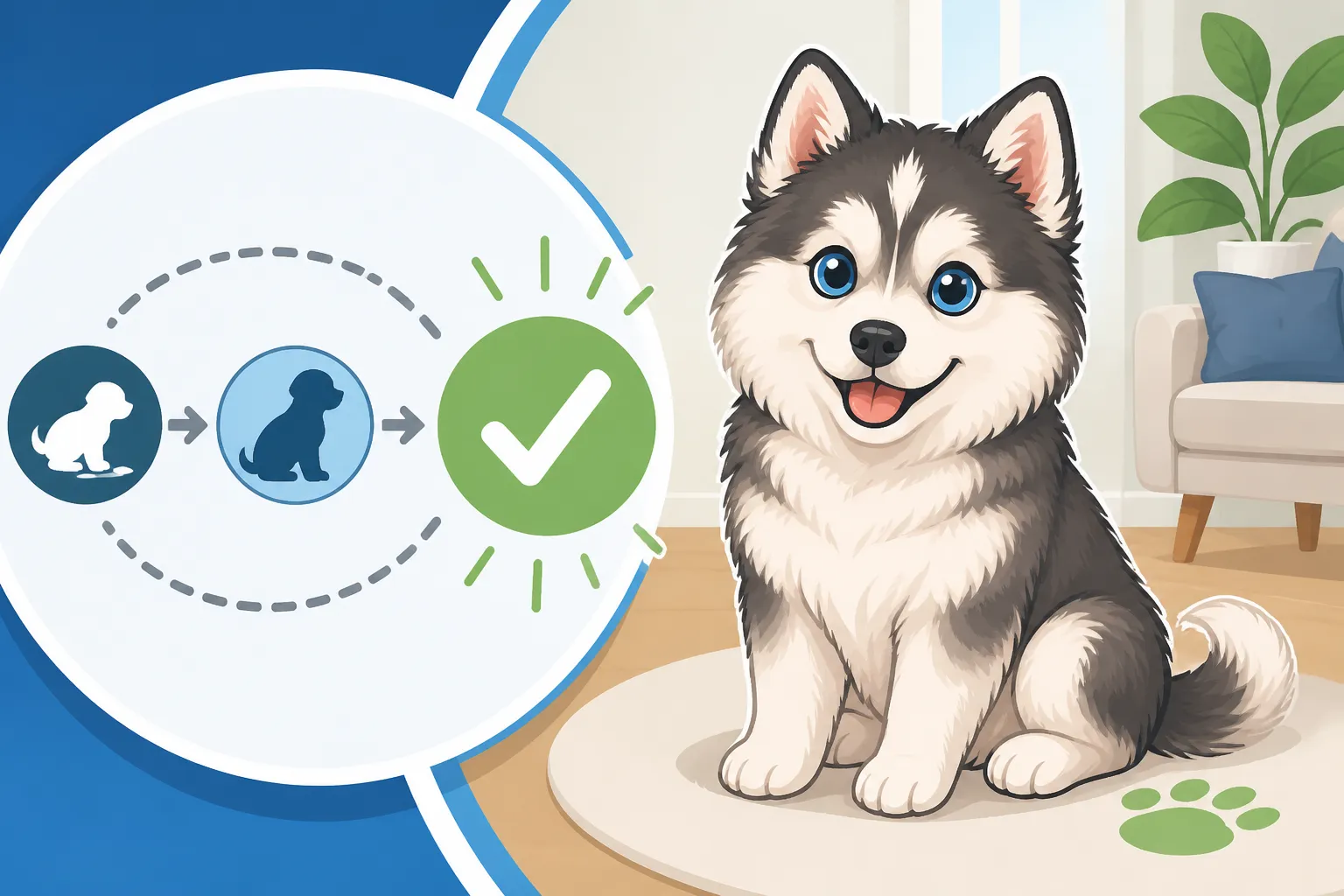
Let's debunk a common myth right away: no puppy is truly "potty trained" in a week or two, despite what some might claim. While some exceptionally diligent owners might get a puppy to grasp the concept quickly, real reliability takes time. Puppies, especially small ones like Pomskies, have tiny bladders and limited control over their bodily functions. It's like expecting a human toddler to be fully toilet trained in a few days – it's just not realistic. You're teaching a brand new language, a new set of rules, and working against millennia of instinct that says "go wherever you need to go."
For a Pomsky, with their energetic and often headstrong personalities, the process can feel particularly challenging. They have an intelligent, sometimes mischievous streak from their Husky lineage, combined with the smaller bladder capacity of a Pomeranian. This means they can learn quickly, but they might also test boundaries or get distracted easily. Expect accidents, and understand that each one is a learning opportunity for both of you, not a failure.
Individual Pomsky Differences
Just like people, every Pomsky puppy is an individual, and their house training journey will vary. Some might pick it up remarkably fast, surprising you with their quick understanding, while others might take a little longer to truly "get it." Factors like their age when you bring them home, their past experiences (was the breeder diligent about starting potty training?), and even their individual temperament play a huge role. A very confident, bold puppy might explore more and have more accidents, while a more timid one might stick closer and be easier to manage.
For instance, a Pomsky puppy from a responsible breeder who started litter training or taking puppies out frequently will likely have a head start compared to one from a less careful environment. Their early experiences shape their understanding. Also, the size of your Pomsky matters. A smaller Pomsky, leaning more towards the Pomeranian side, might have a smaller bladder and need to go out more frequently than a larger one that takes after the Husky. So, while we can give general timelines, always remember to observe your specific Pomsky and adjust your expectations and methods accordingly.
Laying the Groundwork for Potty Success
Consistency is the absolute bedrock of successful house training. Without it, your Pomsky will be confused, and you'll be frustrated. It's about establishing routines, clear communication, and making the right choice the easiest and most rewarding one for your puppy.
The Power of a Schedule
Your Pomsky thrives on routine. A consistent schedule is perhaps the most crucial tool in your house training arsenal. This means taking your puppy out frequently – far more often than you think they might need to go. Think about taking them out immediately after waking up (even from a nap!), after eating or drinking, after playing, and before bedtime. If you’re home, aim for every 30-60 minutes for very young puppies, gradually increasing the time as they get older and gain more bladder control.
A helpful strategy is to document their potty times. Keep a little journal or a simple chart on the fridge. Note when they eat, drink, wake up, and go potty. This will quickly reveal patterns and help you predict when they're most likely to need a trip outside. For example, if you notice your Pomsky typically needs to pee about 15 minutes after finishing their How Many Meals a Pomsky Puppy Needs, you can proactively take them out before an accident happens. This proactive approach is far more effective than reacting to an accident.
Crates and Confined Spaces
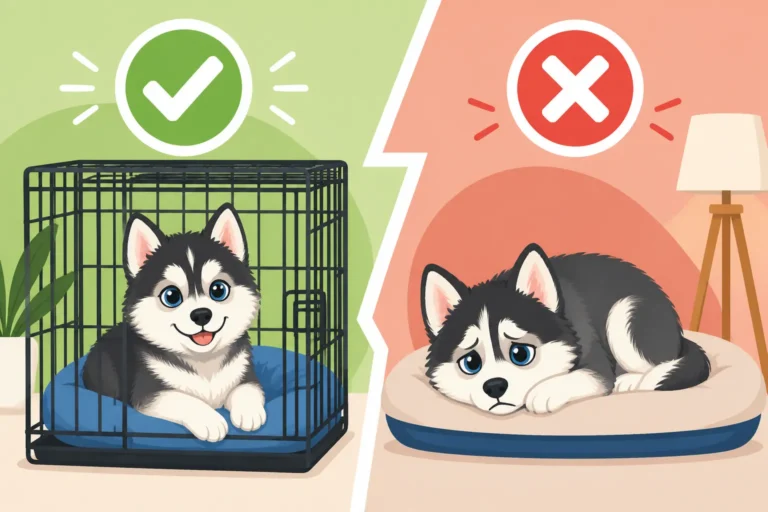
Crate training is an incredibly effective tool for house training your Pomsky because it taps into their natural instinct not to soil their den. A properly sized crate, where your Pomsky can stand up, turn around, and lie down comfortably but not have extra space to relieve themselves in one corner and sleep in another, is essential. This encourages them to hold it until they are let out. If you're wondering Whether a Pomsky Should Sleep in a Crate, the answer is almost always yes, at least during the house training phase, as it provides a secure den and aids greatly in keeping them clean overnight.
When your Pomsky is not in their crate or directly supervised, a confined, puppy-proofed area can be incredibly helpful. This might be a playpen, a kitchen with a baby gate, or a sectioned-off room. Limiting their access to your entire home prevents them from sneaking off to a quiet corner for an accident. Products like playpens available on Amazon can create these safe, contained zones. Remember, supervision is key: if you can't watch them like a hawk, they should be in their crate or a contained space. This drastically reduces the opportunities for accidents and reinforces the idea that indoor spaces are not for pottying. For longer periods, or if you work, you might be interested in Whether a Pomsky Can Be Left Alone as a puppy, but for house training, shorter, supervised periods are always better.
Immediate Rewards and Positive Reinforcement
When your Pomsky does their business outside, it's time for a party! Lavish praise, enthusiastic petting, and a high-value treat immediately after they finish are crucial. This instant reward helps them connect the act of peeing or pooping outside with something wonderful. The timing is critical; waiting until you're back inside diminishes the association. Make a specific phrase, like "Go potty!" or "Do your business!" and use it every time you take them out. Soon, they'll associate the phrase with the action.
Avoid punishing your Pomsky for accidents indoors. They don't understand "revenge peeing" or purposefully trying to upset you. Accidents are usually due to lack of bladder control, misunderstanding, or your oversight. Punishing them only teaches them to fear you or to hide their potty breaks, making the problem worse. Instead, if you catch them in the act, calmly interrupt them with a quick clap or "No!" and immediately scoop them up and take them outside to their designated potty spot. If they finish outside, praise and reward! If you find an accident after the fact, simply clean it thoroughly with an enzymatic cleaner to remove all scent, so your Pomsky isn't drawn back to the same spot. Training programs like those offered by BAXTER & Bella often emphasize this positive reinforcement approach, which is far more effective and builds a stronger bond with your puppy.
Common Challenges and Troubleshooting
Even with the best intentions and a solid plan, house training isn't always a smooth, linear progression. There will be setbacks, frustrations, and moments when you feel like you'll be cleaning up messes forever.
Accidents Happen: Why and What to Do
The most common reason for accidents is simply that your puppy isn't holding it as long as you expect, or you're not getting them out frequently enough. A good rule of thumb for bladder capacity is that a puppy can generally hold it for about one hour per month of age, plus one. So, a 3-month-old puppy might reliably hold it for 3-4 hours during the day. This is a guideline, not a strict rule. During intense play or excitement, they might need to go sooner. If you find your Pomsky is having frequent accidents, go back to basics: increase your potty breaks, ensure their crate is appropriately sized, and supervise them even more closely. Sometimes, the issue is simply that they get distracted outside and don't fully empty their bladder, so they need to go again shortly after. Give them enough time, and be boring! Just stand there until they go.
Another common issue, especially with male Pomskies, can be indoor marking. Whether a Male Pomsky Marks Indoors is a concern for many. This is different from accidents due to lack of bladder control; marking is often behavioral, driven by hormones or anxiety. Neutering can help reduce marking behavior in intact males, but it's not a guaranteed fix. If you suspect marking, continue to clean thoroughly, use belly bands indoors, and ensure your Pomsky feels secure and understands their place in the home. Sometimes, an underlying medical issue, like a urinary tract infection, can also cause frequent accidents or changes in potty habits. If your Pomsky suddenly starts having accidents after being reliably clean, a vet visit is always a good idea to rule out health problems.
| Puppy Age | Typical Potty Break Frequency (Daytime) | Typical Overnight Hold Time | Common Challenges |
|---|---|---|---|
| 8-10 Weeks | Every 30-60 minutes | 4-6 hours (with crate) | Small bladder, easily distracted, hasn't learned cues |
| 11-16 Weeks | Every 1-2 hours | 6-8 hours (with crate) | Testing boundaries, can forget if overexcited |
| 4-6 Months | Every 2-3 hours | 8-10 hours (with crate) | Adolescent stubbornness, hormonal marking starts |
| 7-12 Months | Every 3-4 hours | 10-12 hours | Solidifying habits, regression due to adolescence |
Note: These are general guidelines. Every Pomsky is unique.
When to Seek Professional Help
If you've been consistent with your schedule, crate training, positive reinforcement, and cleaning, but your Pomsky is still struggling significantly with house training, it might be time to bring in professional help. This isn't a sign of failure on your part, but rather an acknowledgment that sometimes an outside perspective and specialized expertise are needed. A certified professional dog trainer can assess your specific situation, observe your Pomsky's behavior, and identify any underlying issues you might be missing. They can help you fine-tune your techniques or address behavioral challenges.
Sometimes, issues like separation anxiety can manifest as indoor accidents. If your Pomsky only has accidents when left alone, it might be more than just a potty problem; it could be a sign of distress. In such cases, a trainer or even a veterinary behaviorist might be needed to address the anxiety itself. Whether a Pomsky Needs a Professional Trainer for house training specifically depends on the severity and persistence of the issues. Don't hesitate to reach out if you're truly at your wit's end, as getting a dog reliably house trained is vital for a harmonious life together. Remember, the goal is not just a clean house, but a happy, well-adjusted Pomsky who understands the rules of their home. What a Pomsky Destroys as a Puppy can often be linked to boredom or anxiety, and solving these underlying issues can indirectly help with house training progress.
Overall, you can expect a young Pomsky puppy to become reliably house trained somewhere between 4 to 6 months of age, with some taking a bit longer, up to 8 months or even a year for complete consistency, especially when it comes to understanding How Long a Pomsky Puppy Holds It Overnight. The key is consistency, patience, and realistic expectations. Keep at it, celebrate the successes, and learn from the mishaps. Your furry friend will get there!
Disclaimer
This article is for general informational purposes only and does not constitute professional advice. Laws, prices and regulations vary by location and change over time. Consult a qualified professional for guidance on your specific situation.