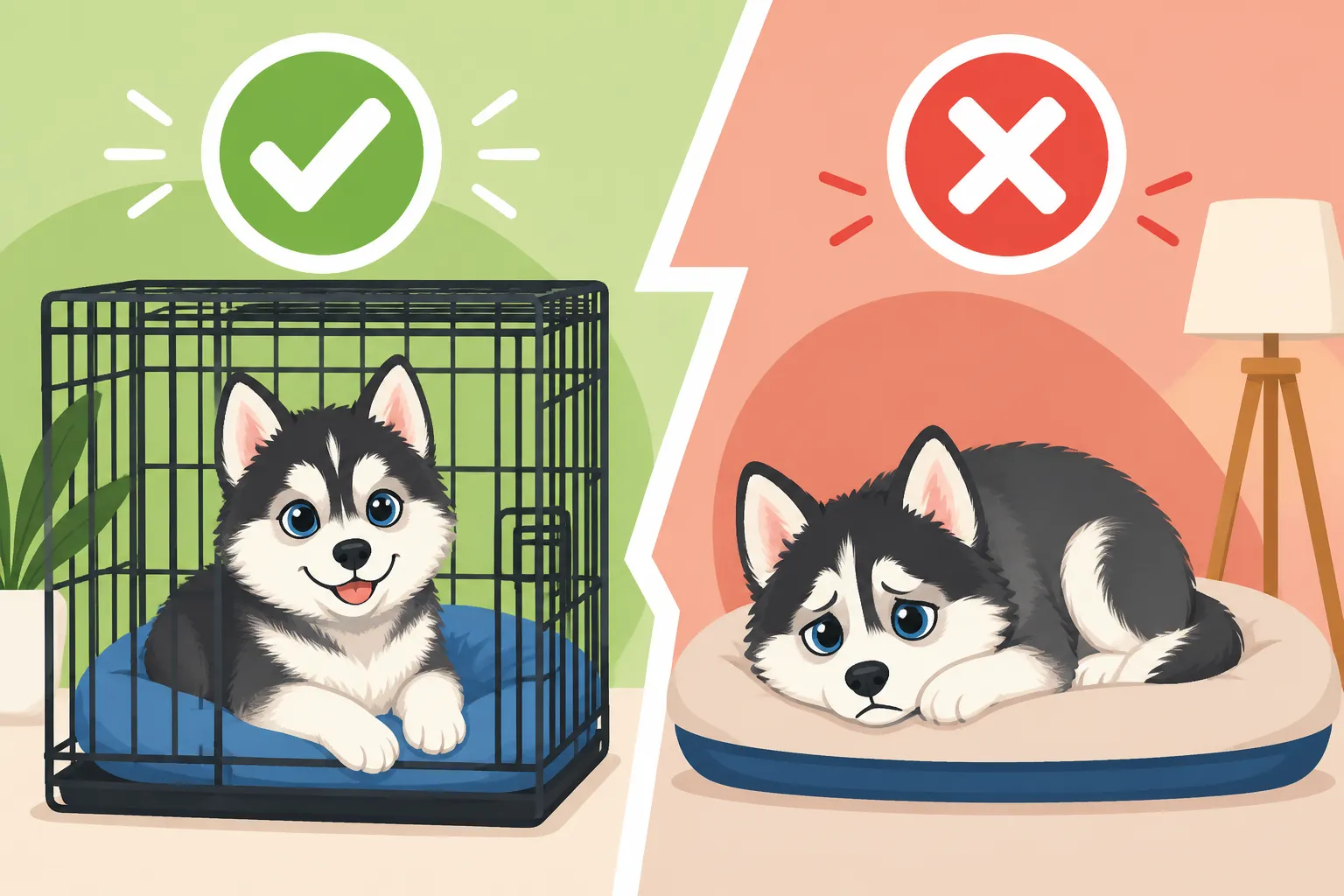
Whether a Pomsky Should Sleep in a Crate
Bringing a new Pomsky puppy home is an incredibly exciting time, but it also comes with a lot of questions about how to best set them up for success and a happy life with you. One of the biggest debates I hear from new owners, and a common source of late-night Google searches, is whether a Pomsky should be sleeping in a crate. You might feel torn, wondering if it's kind or if you're just locking your beloved furry friend away. This guide is here to walk you through the ins and outs of crate training for Pomskies, helping you understand its benefits, address common fears, and implement a strategy that works for both you and your pup.
The Purpose and Benefits of Crate Training for Pomskies
Let's be real, the idea of a crate can initially sound a bit sad, like putting your dog in a cage. But when done correctly, a crate isn't a jail cell; it's a personal bedroom, a safe haven, and an incredibly powerful tool for training and establishing good habits. For a breed like the Pomsky, which inherits both the intelligence and sometimes the independent streak of a Husky, and the confidence (and potential for barking!) of a Pomeranian, a crate can be a game-changer.
Establishing a Safe Den and Personal Space
Imagine having your own cozy, quiet room where you can retreat when the world gets a bit too much. That’s what a properly introduced crate becomes for a dog. Dogs, even domesticated ones, retain an instinctual desire for a den. In the wild, canids seek out small, secure spaces to sleep, raise young, and feel safe from predators. Your Pomsky, despite its fluffy cuteness, has this same primal urge.
When you make the crate a positive, inviting place, your Pomsky will naturally gravitate towards it for comfort and security. It becomes their space, a sanctuary away from the hustle and bustle of family life, noisy kids, or even other pets. This can be especially important for a breed that might be prone to a bit of anxiety or overstimulation, offering them a consistent spot where they know they won't be bothered. Think of it as their safe zone during thunderstorms, visitors, or simply when they need a nap without being interrupted. A good quality, comfortable bed inside the crate, perhaps one you found on Amazon, can make all the difference in making it truly appealing.
A Powerful Tool for House Training
Let's face it, house training a puppy can be one of the most frustrating parts of dog ownership. Those little puddles and unexpected surprises can test the patience of even the most devoted dog parent. This is where the crate truly shines. Dogs are naturally clean animals and instinctually avoid soiling their sleeping area. They don't want to lie in their own mess. By leveraging this natural inclination, a crate becomes an invaluable aid in teaching your Pomsky bladder and bowel control.
When your Pomsky is in their crate overnight or when you can't actively supervise them, they're far less likely to have an accident. This dramatically reduces the opportunities for them to make mistakes indoors, reinforcing the idea that your home is not a giant potty pad. It teaches them to "hold it" until they are taken outside. Coupled with a consistent schedule of potty breaks immediately after waking, before bedtime, and after meals, crate training can drastically shorten the house-training period. It provides structure and predictability, which is exactly what a young Pomsky needs to learn where and when it's appropriate to relieve themselves. For more on this, check out our guide on How Long a Pomsky Puppy Takes to House Train.
Preventing Destructive Behaviors and Ensuring Safety
Pomskies are intelligent, energetic dogs. When left unsupervised, especially as puppies or young adults, their curiosity and energy can lead to some rather creative (and often destructive) endeavors. This might mean chewing on furniture legs, gnawing electrical cords, raiding the trash, or even trying to dig through your carpet. Not only can this cause significant damage to your home, but it can also be incredibly dangerous for your Pomsky. Ingesting foreign objects or getting electrocuted are serious risks no owner wants to face.
The crate provides a safe, contained environment when you can't keep a watchful eye. This means your Pomsky is safe from household hazards, and your belongings are safe from your Pomsky. It's not about punishing them; it's about setting them up for success by removing opportunities for mischief. This is particularly crucial during the teething phase when everything becomes a chew toy. Knowing your Pomsky is securely and safely crated allows you to leave the house for errands, take a shower, or even just relax without constantly worrying about what they might be getting into. It buys you precious peace of mind.
Addressing Common Concerns and Misconceptions About Crates
Despite the many benefits, crate training often comes with a heap of questions and understandable worries. It's natural to feel a pang of guilt or concern when considering putting your furry friend in a contained space. Let's tackle some of those common anxieties head-on.
Is a Crate Cruel or Confinement?
This is perhaps the biggest misconception surrounding crate training. Many people equate a crate with a cage used for punishment or neglect, and that couldn't be further from the truth when done correctly. A crate only becomes cruel if it's used improperly – for excessive periods, as a punishment, or if the dog is not properly introduced and conditioned to view it as a positive space.
The key is positive association. The crate should never be used as a place to send your Pomsky when they've been naughty. Instead, it should be associated with good things: delicious treats, favorite toys, a cozy blanket, and quiet time. When your Pomsky willingly enters their crate, settles down, and relaxes, it's clear they don't see it as a punishment. They see it as their private retreat. A well-trained Pomsky will often choose to go into their crate on their own for a nap, demonstrating that it's a comforting spot, not a place of dread. The goal is to make it a comforting "den," not a place of isolation.
The "Cry It Out" Dilemma and Building Positive Associations
When you first introduce a Pomsky puppy to a crate, especially overnight, there's a good chance you'll hear some whining or crying. This is often the hardest part for owners, making them wonder if they're doing the right thing. The "cry it out" method can be controversial, and for good reason. Simply leaving a distressed puppy to cry indefinitely without understanding why they're crying can indeed be detrimental.
The goal is to build positive associations from day one. Start by making the crate a place of reward. Feed meals inside the crate with the door open. Toss treats inside. Leave high-value chew toys in there. Encourage them to go in, praise them, and let them come out as they please initially. Gradually close the door for short periods, extending the time as they become comfortable. Never force them in. If your Pomsky is showing signs of distress (not just a mild whine, but true panic or sustained howling), it means you've moved too fast, and you need to backtrack.
Consider online puppy training resources like BAXTER & Bella, which often offer structured guidance on positive crate training techniques, helping you understand how to make the crate a happy place without resorting to harsh methods. Addressing legitimate needs (like a potty break for a young puppy) is different from giving in to attention-seeking cries. Learning to differentiate between the two is crucial for successful, humane crate training.
Selecting the Right Crate and Setup
Choosing the right crate is essential for comfort and safety. A crate that's too large can allow your puppy to soil one end and sleep in the other, defeating the house-training purpose. One that's too small is, well, cruel.
- Size: Your Pomsky should be able to stand up, turn around, and lie down comfortably without feeling cramped. For puppies, look for crates that come with a divider so you can expand the space as they grow. This ensures the crate remains appropriately sized throughout their development.
- Types:
- Wire Crates: These are popular, offer good ventilation, and often come with dividers. They can be a bit clunky but are very practical. Many excellent options can be found on Amazon.
- Plastic/Vari Kennels: These resemble dog carriers. They offer more of a den-like feel, can be good for travel, and are generally more secure for dogs prone to escaping wire crates. Ventilation is typically good but less open than wire.
- Soft-Sided Crates: Lightweight and collapsible, great for travel or temporary use. However, they are not suitable for puppies who might chew or for dogs prone to escaping, as they offer little resistance.
- Comfort: Always provide soft, comfortable bedding. A thick, washable dog bed or a few cozy blankets will make the crate much more inviting. Make sure the bedding is safe and won't become a choking hazard if chewed. A favorite toy (non-squeaky for nighttime!) can also add to the appeal.
Implementing a Successful Crate Training Routine for Overnight Sleep
The thought of your Pomsky sleeping soundly in their crate all night might seem like a distant dream, especially if you're battling initial whining. But with consistency, patience, and the right approach, it's an achievable goal for most dogs.
Gradual Introduction and Short Stays
You wouldn't expect your child to sleep alone in their room on the first night they see it, right? The same goes for your Pomsky. Gradual introduction is key.
- Make it an inviting space: Place treats, favorite toys, or a special chew toy (like a Kong filled with peanut butter) inside the crate. Let your Pomsky explore it on their own terms.
- Mealtime in the crate: Start feeding meals inside the crate with the door open. Once they're comfortable eating inside, close the door for the duration of the meal, opening it immediately after they finish.
- Short, supervised stays: Once they're comfortable eating in the crate, encourage them to go in for short periods while you're nearby. Start with just a few minutes, praise quiet behavior, and then let them out before they get anxious. Gradually increase the time. You can try leaving them with a chew or a puzzle toy to keep them occupied.
- Naptime: Once they're okay with short stays, try having them nap in the crate during the day. This helps them associate the crate with resting.
Remember, the goal is positive association. Never use the crate as punishment, and always make it a place of reward. If you're struggling, resources like BAXTER & Bella often provide step-by-step guides for this process.
Establishing a Consistent Bedtime Routine
Dogs thrive on routine and predictability, and a consistent bedtime routine will signal to your Pomsky that it's time to settle down for the night. This routine helps manage their expectations and reduce anxiety.
- Last potty break: Always take your Pomsky out for a final potty break right before bedtime, even if they don't seem like they need to go. This significantly reduces the chances of nighttime accidents.
- Winding down: About an hour before bedtime, start winding down activities. Avoid stimulating play. Instead, engage in calm activities like gentle petting, a quiet chew toy, or a short training session focusing on basic commands.
- Calm entry: Lead your Pomsky calmly to their crate. You can offer a special "bedtime" treat or a stuffed Kong to keep them occupied as you close the door.
- Crate location: Initially, it can be very helpful to place the crate in your bedroom or very close to you. This allows your Pomsky to feel your presence and hear your breathing, which can be immensely comforting for a young puppy or a newly rehomed dog. Once they are sleeping soundly through the night, you can gradually move the crate to a more permanent location if you wish. This helps to reduce separation anxiety.
Managing Nighttime Whining and Potty Breaks
This is often the make-or-break moment for many owners. When your Pomsky whines or cries in the middle of the night, it's hard to know whether they genuinely need to go out or if they're simply seeking attention.
- For young puppies (under 4-5 months): Assume they need to go potty. Young puppies have small bladders and simply cannot hold it all night. Take them out immediately, quietly, and with as little fanfare as possible. Don't play, just business. Once they've done their business, bring them straight back to the crate. If you suspect your little one might still need overnight feedings, especially if they are very small, you might consult our guide on Whether a Small Pomsky Needs Feeding Overnight.
- For older puppies/adults: Once your Pomsky is old enough to reasonably hold their bladder for 6-8 hours, you can start to differentiate. If they whine, pause. Is it a frantic, desperate cry? Or is it more of an "I want out" whine? Often, if they just want attention, they will stop after a few minutes if ignored. If the whining escalates or sounds truly distressed, it’s always safer to assume they might need a potty break.
- Rule of thumb: If you are unsure, err on the side of a potty break. Better to be safe than sorry and deal with an accident. But keep it strictly business – no playtime, no excessive petting, just out and back in. This teaches them that crying at night only gets them a potty break, not a party.
Remember, consistency is key. Every time you give in to attention-seeking cries, you reinforce that behavior. It's tough, but firm kindness is the most effective path.
Long-Term Crate Use and Alternatives
The journey with a crate doesn't have to end once your Pomsky is house-trained and no longer chewing everything in sight. Many dogs continue to benefit from having a crate, while others may eventually transition to more freedom.
When to Transition Away from Overnight Crating (or not)
Deciding when, or if, to transition your Pomsky away from overnight crating depends entirely on your individual dog and your lifestyle. There's no hard and fast rule, as every Pomsky is unique.
- Signs of readiness: Your Pomsky might be ready for more freedom overnight if they:
- Consistently sleep through the night without accidents for several months.
- No longer engage in destructive chewing behaviors outside the crate during the day.
- Are calm and relaxed when left alone for periods, demonstrating they don't suffer from significant separation anxiety. You might find our post on How Many Hours a Pomsky Can Be Left helpful here.
- Respect boundaries and don't try to get into things they shouldn't.
- Gradual transition: If you decide to transition, start slowly. You could leave the crate door open initially, allowing them to come and go, but with the knowledge that it's still their safe spot. Then, you might try letting them sleep in a dog-proofed room with the crate accessible, before eventually giving them full run of the bedroom or other designated sleep area.
- Lifelong preference: Interestingly, many adult Pomskies actually prefer their crate. Even with the option of sleeping elsewhere, they'll often choose their cozy den for the night or for naps during the day. It’s a place of comfort and security for them, and if they love it, there's no reason to take it away. It’s also incredibly useful for travel or vet stays, as dogs who are comfortable in a crate cope much better with these situations.
Alternatives to Crating for Adult Pomskies
If your adult Pomsky has proven reliable and you decide to move away from overnight crating, there are still ways to provide them with a secure sleeping environment.
- Dog-proofed room: Designate a specific room (like a laundry room, kitchen, or spare bedroom) that has been thoroughly puppy-proofed. Remove anything they could chew, swallow, or damage. Ensure there are no accessible electrical cords, toxic plants, or small items they could choke on. This provides a larger, yet still controlled, space.
- Indoor playpen: For smaller Pomskies, an indoor playpen can be a good compromise. It offers more space than a crate but still provides containment. These are great for dogs who aren't destructive but just need a bit of boundary.
- Supervision and training: The best "alternative" to a crate is a well-trained, well-exercised, and thoroughly socialized Pomsky who understands house rules and can be trusted. This takes consistent effort in training from puppyhood, lots of mental stimulation, and ensuring they get The Exercise a Pomsky Needs Every Day.
Ultimately, whether your Pomsky sleeps in a crate for life or eventually transitions to more freedom, the key is to ensure they feel safe, secure, and loved in their sleeping arrangements. A crate, when used positively, is a fantastic tool to achieve this, laying a strong foundation for a well-behaved and happy companion.
| Crate Training Stage | Goal | Key Actions | Common Challenges |
|---|---|---|---|
| Introduction | Build positive association, familiarity | Meals in crate, treats, short door closures, favorite toys | Reluctance to enter, initial fear |
| Short Stays | Increase comfort with brief confinement | Gradually extend time, use puzzle toys, stay nearby | Whining, barking, trying to escape |
| Naptime | Associate crate with rest and relaxation | Encourage naps in crate, cover crate with blanket | Puppy resisting sleep, attention-seeking |
| Overnight Sleep | Establish full night comfort, house training | Consistent bedtime routine, last potty break, crate near owner | Nighttime whining, potty accidents |
| Long-Term Use/Transition | Maintain den, or move to more freedom | Offer crate as option, dog-proofed room, continued positive reinforcement | Developing new destructive habits outside crate |
Disclaimer
This article is for general informational purposes only and does not constitute professional advice. Laws, prices and regulations vary by location and change over time. Consult a qualified professional for guidance on your specific situation.