Where to Take a Pomsky Puppy Before Full Cover
Bringing a new Pomsky puppy home is an absolutely thrilling experience, but it often comes with a big, nagging question: how do you give your little furball the best start in life, especially when they can't yet explore the big wide world due to incomplete vaccinations? This guide is all about navigating those tricky early weeks, helping you understand where it's safe to take your Pomsky puppy and how to set them up for a well-adjusted future without compromising their health.
Understanding the Vaccination Schedule and Why It Matters
Let's be real, the first few months with a new puppy are a whirlwind. You’re trying to house-train, tackle puppy biting, and just generally survive the adorable chaos. Amidst all that, you're also tracking vet appointments and a vaccination schedule that feels like it goes on forever. But understanding why these shots are so critical is key to knowing where your Pomsky can safely go.
The Importance of Core Vaccinations
Your vet isn't just trying to get you to visit often; they're protecting your precious pup from some truly nasty diseases. The core vaccines for puppies typically include distemper, parvovirus, adenovirus (hepatitis), and rabies. Parvovirus, in particular, is a virulent, highly contagious, and often fatal disease that can live in the environment for a very long time. It can be picked up from contaminated soil, grass, or even shoes, and it attacks the gut, leading to severe vomiting, diarrhea, and dehydration. Distemper is another horrible one, affecting respiratory, gastrointestinal, and neurological systems.
Until your Pomsky puppy has completed their full series of vaccinations – usually around 16 weeks of age, depending on the vaccine and your vet's protocol – their immune system simply isn't robust enough to fight off these illnesses if exposed. Each vaccine in the series builds on the last, gradually strengthening their immunity. Missing a shot or exposing them too early can put them at serious risk. It’s a huge frustration for new puppy parents, wanting to show off their little floofball, but it’s a non-negotiable step for their safety.
The Window of Vulnerability
Think of the time before full vaccination as a crucial "window of vulnerability." Your puppy initially receives some immunity from their mother's milk, known as maternal antibodies. However, these antibodies start to wane over time, and they can also interfere with the effectiveness of vaccines. That's why puppies receive a series of shots, spaced a few weeks apart. Each shot aims to "catch" your puppy's immune system as the maternal antibodies decrease, building up their own protection.
During this period, any public place where other dogs have been – dog parks, pet stores, public walking trails, even a neighbor's yard if their dog isn't fully vaccinated or healthy – poses a significant risk. The pathogens that cause these diseases can linger in the environment, making it a minefield for an unvaccinated pup. It’s not about being overly cautious; it’s about being realistically protective of a creature whose immune system is still developing. This is also why many good breeders will ensure their puppies have their first shots before going to their new homes, giving you a head start on the schedule.
Safe Socialization: What You Can Do
The instinct to protect your Pomsky puppy from illness is strong, but so is the need to socialize them. The period between 8 and 16 weeks is often called the "critical socialization window," where puppies are most open to new experiences and less fearful. Missing out on positive introductions during this time can lead to behavioral issues like fear, anxiety, or aggression later in life. So, how do you balance safety with critical developmental needs? It's all about controlled, thoughtful exposure.
Controlled Home Environments
Your home is your puppy's sanctuary, and it can also be their first classroom. This is where the bulk of their early socialization should happen. Invite trusted friends and family members over, especially those who are calm, gentle, and understand how to interact appropriately with a young puppy. Make sure they wash their hands before handling your pup. Expose your Pomsky to different sounds (vacuum cleaner, doorbell, television), sights (different hats, coats, umbrellas), and textures (rugs, tiles, blankets) within the safety of your home.
You can also introduce them to various safe surfaces, like walking them across a tarp or a crinkly sheet indoors. Raising a Pomsky Puppy is a great resource for overall puppy care during this phase. If you have a fully vaccinated, dog-friendly resident dog, that can be a fantastic way for your Pomsky to learn appropriate canine social cues, but always supervise these interactions closely to ensure they remain positive and safe for both dogs.
Puppy Socialization Classes
This might sound counter-intuitive, but many reputable puppy socialization classes are specifically designed for unvaccinated puppies! The key is finding one that requires all participating puppies to have at least their first round of vaccinations and proof of a clean bill of health from a vet. These classes are typically held indoors on surfaces that can be easily disinfected, like linoleum or rubber mats. The environment is meticulously controlled to minimize disease transmission.
In these classes, your Pomsky can safely interact with other puppies their age, learning crucial bite inhibition, communication skills, and how to play appropriately. They'll also be exposed to new people and often basic training cues. This is an invaluable opportunity for mental and social development, making it one of the very best places you can take your Pomsky before they're fully covered. Look for trainers who emphasize positive reinforcement and focus on creating a calm, confidence-building atmosphere.
Car Rides and Observation
Even if your puppy can't put paws on the ground, they can still experience the world from the safety of your car. Take them for short car rides to different locations – a bustling town center, a quiet park (where they stay in the car), or even just through a drive-thru. The goal isn't to interact but to expose them to new sights, sounds, and smells from a distance. Make sure your puppy is securely restrained in a crate or with a safety harness, like those available on Amazon, to prevent injury in case of a sudden stop.
These car adventures help desensitize them to motion and new environments, reducing the likelihood of car sickness or fear of travel later. It’s a wonderful way to broaden their horizons without putting them at risk of picking up diseases from the ground or other animals. Think of it as "passive socialization," building positive associations with the outside world.
Bringing the Outside In
You can also get creative and bring safe elements of the outside world into your home. Gather different textures from nature (clean, dry leaves, small branches, smooth rocks – never anything moldy or potentially toxic) and let your puppy investigate them on a clean blanket or designated play mat. Play recordings of different outdoor sounds: city noises, farm animals, thunder, children playing.
For mental stimulation, puzzle toys filled with treats are fantastic, offering a safe way to keep their busy Pomsky brains engaged. Training doesn't have to stop either; enroll in an online puppy training program, such as those offered by BAXTER & Bella, which provide comprehensive guidance you can follow from the comfort and safety of your own home, preparing your pup for future adventures. This is a great way to bond and teach commands without any health risks.
Unsafe Environments and How to Avoid Them
Knowing where not to take your unvaccinated Pomsky is just as important as knowing where they can go. It’s easy to get caught up in the excitement of a new puppy and forget about the very real dangers lurking in certain public spaces.
Public Places with High Dog Traffic
The absolute no-go zones for an unvaccinated Pomsky puppy include:
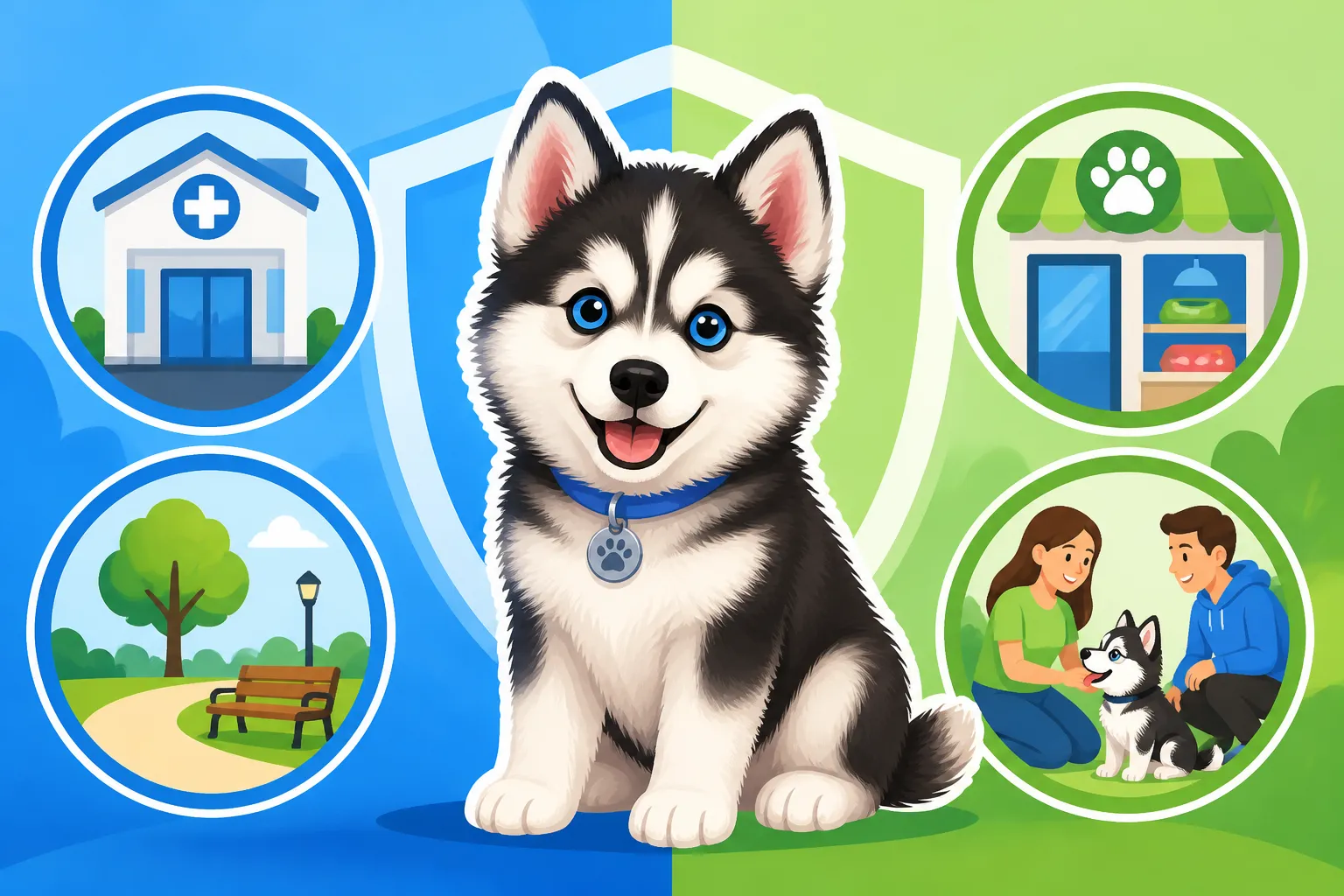
- Dog Parks: These are hotbeds for diseases like parvovirus and distemper, as well as parasites. Even if your pup won't directly interact with other dogs, the ground itself can be contaminated.
- Pet Stores (Ground Contact): While some pet stores might allow puppies, it's generally best to carry your pup if you must go, and keep them away from communal water bowls or areas where other dogs have been. Ideally, avoid entirely until fully vaccinated.
- Public Walking Trails/Parks: Any place where a large number of dogs regularly relieve themselves can harbor dangerous pathogens. It's impossible to know the vaccination status or health of every dog that has been there.
- Rest Stops/Roadside Grass Areas: These are notorious for being risky, as countless dogs from various places pass through.
It's tempting to want to show off your cute little Pomsky or let them stretch their legs, but the risk truly outweighs the benefit in these locations during their vulnerable period. A short period of strict caution will pay dividends for a lifetime of health.
The Dangers of Contaminated Surfaces
Parvovirus, in particular, is incredibly hardy. It can survive on surfaces like pavement, grass, and soil for months, even years, and is resistant to many common disinfectants. A dog doesn't even need to be actively sick to shed the virus; they can be asymptomatic carriers. This means even a quick sniff of a contaminated patch of grass could be enough to expose your puppy.
Even seemingly innocuous places like the pavement outside a coffee shop where local dog owners frequently tie up their pets can be a risk. When you bring your puppy outside, stick to your own yard if it's not frequented by other unvaccinated dogs, or carry them in a carrier or sling. If you do visit someone else's home, ensure their dogs are healthy and fully vaccinated, and that their yard is not accessible to strays or other unknown dogs.
The Table of Safe vs. Unsafe Puppy Environments
To make it easier to visualize, here's a quick guide on where you can and cannot take your unvaccinated Pomsky puppy:
| Environment Type | Safety Status (Before Full Vaccination) | Rationale |
|---|---|---|
| Your Own Home/Yard | SAFE | Controlled, known environment, low risk of unknown pathogen exposure. |
| Trusted Friends/Family Homes | SAFE (with precautions) | Ensure their pets are fully vaccinated & healthy, clean environment. |
| Reputable Puppy Classes | SAFE | Vet-checked puppies, disinfected facilities, supervised interactions. |
| Car Rides (Pup Stays Inside) | SAFE | Exposure to sights/sounds without ground contact. Use secured carrier/harness. |
| Clean, Private Patio/Balcony | SAFE | Isolated from public ground, minimal exposure risk. |
| Public Parks/Walking Trails | UNSAFE | High traffic from unknown dogs, ground contamination risk. |
| Dog Parks | UNSAFE | Extreme risk of disease transmission and potential for negative interactions. |
| Pet Stores (On Ground) | UNSAFE | Common area for many dogs, potential for contaminated floors/items. |
| Grooming Salons (Regular) | UNSAFE | Unless specifically a puppy-only, disinfected session. |
| Kennels/Daycare (Before Shots) | UNSAFE | Group environments with unknown health statuses. |
| Any Area with Stray Animals | UNSAFE | Strays are often unvaccinated and may carry diseases or parasites. |
Creative Solutions for Puppy Development
So, you're mostly confined to home, but your puppy still needs stimulation, training, and exposure. This is where you get to be creative! Remember, this limited period is a short sacrifice for a lifetime of health and happiness for your Pomsky.
Focused Training at Home
Use this time to really dive deep into foundation training. Basic commands like sit, stay, come, and down can all be taught indoors. Work on house-training diligently, establishing a consistent schedule for potty breaks in a designated, safe outdoor area (like your own clean yard). How Long a Pomsky Puppy Takes to House Train can give you realistic expectations.
You can also start leash training indoors, getting your Pomsky comfortable with wearing a collar and a lightweight leash before they even set paw outside for a walk. This is also the perfect time to work on polite manners, like greeting people without jumping and discouraging puppy biting. The Age a Pomsky Puppy Stops Biting is a good read to understand this common puppy behavior. Utilizing online resources, like those offered by BAXTER & Bella, for structured lessons can be incredibly beneficial during this period. They often have modules specifically for early puppy development and problem-solving.
Enrichment Activities
A bored Pomsky puppy is a destructive Pomsky puppy, so keep that brain busy!
- Puzzle Toys: As mentioned, these are fantastic for mental stimulation. Fill them with kibble or healthy treats and let your pup work for their food. You can find a huge variety of these on Amazon.
- Scent Games: Hide treats around a room and encourage your puppy to sniff them out. This taps into their natural instincts and is a low-impact way to burn energy.
- Texture Exploration: Set up a "sensory path" in a clean, contained area with different safe materials like crumpled paper, bubble wrap, a soft towel, or a cardboard box to walk through.
- Appropriate Chew Toys: Pomskies, like both parent breeds, love to chew, especially when teething. Provide a variety of safe, durable chew toys to redirect that natural urge away from your furniture.
These activities not only keep your puppy entertained but also build confidence and problem-solving skills, all within a safe environment.
Responsible "Puppy Playdates"
If you have close friends or family with fully vaccinated, healthy, and calm adult dogs or puppies of a similar age and temperament, supervised playdates at your home or theirs can be beneficial. However, strict precautions are necessary:
- Verify Vaccination Status: Always ask for proof of current vaccinations for any dog your puppy will interact with.
- Clean Environment: Ensure the play area is thoroughly cleaned and disinfected beforehand, and that no unknown dogs have recently been there.
- Supervision is Key: Monitor all interactions closely to ensure they are positive and appropriate. Avoid any rough play that could be intimidating for your small Pomsky.
- Health Checks: Make sure the other dog has no signs of illness (coughing, runny nose, diarrhea).
These controlled interactions can be incredibly valuable for your Pomsky's social development, teaching them canine etiquette and building their confidence around other dogs. Just remember, when it comes to puppy health, an abundance of caution is always the best approach. Once your Pomsky has full vaccination cover, the world opens up, and you can explore more public spaces together, but until then, safety first!
Disclaimer
This article is for general informational purposes only and does not constitute professional advice. Laws, prices and regulations vary by location and change over time. Consult a qualified professional for guidance on your specific situation.