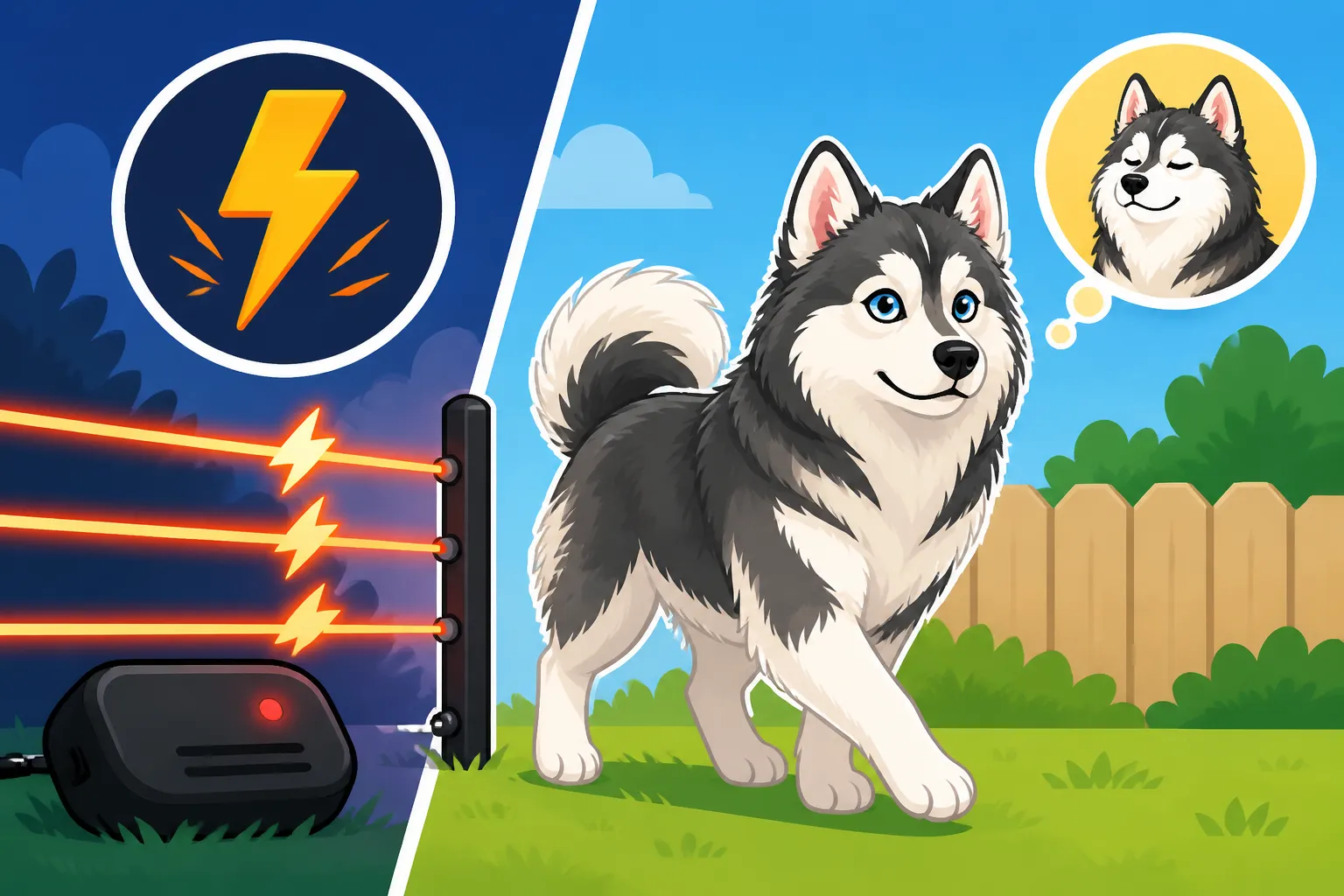
Whether a Pomsky Ignores a Shock Boundary
Many Pomsky owners, out of a desire to keep their beloved escape artists safe, often wonder if an electronic or "shock" boundary system could be the answer. The truth is, while the idea of an invisible fence sounds convenient and effective, for a Pomsky, these systems frequently fail to provide reliable containment and can, in fact, create more significant behavioral problems than they solve.
The Powerful Drive Behind a Pomsky's Wanderlust
Pomskies are a captivating blend of two distinct breeds, and while their small to medium size might suggest a sedentary lifestyle, their genetics tell a very different story. These dogs carry a powerful legacy of independence, intelligence, and an innate desire to explore, making them particularly challenging candidates for invisible fence systems.
Tracing the Husky's Instinct for Exploration
From their Siberian Husky parent, Pomskies inherit a deeply ingrained nomadic spirit. Huskies were bred to cover vast distances, often without direct human supervision, following scents and instincts. This means that a Pomsky often possesses a strong urge to run, to investigate, and to follow a trail once their nose hits the ground. When that instinct kicks in, especially if a squirrel darts across the yard or a tantalizing smell wafts by, the perceived "pain" of a static correction often becomes a secondary consideration. The drive to pursue, to explore, or to simply go is often much stronger than the deterrent. You might think a little zap would stop them, but for a dog bred to endure harsh conditions and push through discomfort, a minor shock is often just a momentary inconvenience on the path to adventure. This is why you'll often hear stories of huskies, and by extension many Pomskies, running right through an invisible fence. They might yelp, but they'll keep going, driven by their powerful internal compass. This instinct is often too strong for a simple static correction to overcome, leading to situations where a Pomsky learns that if they run fast enough, the pain is brief and freedom awaits.
The Pomeranian's Unexpected Boldness and Confidence
While the Pomeranian is a much smaller breed, it contributes its own set of traits that complicate the use of invisible fences. Poms are known for their feisty, confident, and often fearless personalities. They are not shy, and they possess a surprising amount of tenacity for their size. This means that a Pomsky, inheriting this bold streak, might not be easily intimidated by an invisible barrier. Instead of learning to respect the boundary, they might test it repeatedly. They might learn exactly how much static correction they can tolerate to get to what they want on the other side. This isn't fear; it's a calculated risk assessment in their canine brain. Furthermore, a Pomsky with Pomeranian lineage can be incredibly clever and quick-witted. They can observe patterns, and if they discover that the static correction is only at a specific line and not beyond it, they might develop strategies to dart through or circumvent the boundary when their motivation is high enough. It's not uncommon for these smart dogs to outwit systems that rely purely on aversion.
Understanding the All-Consuming Prey Drive
Both parent breeds, in their own ways, contribute to a Pomsky's significant prey drive. Huskies, while not traditionally hunters of small game for sport, have an instinct to chase and often catch smaller animals. Pomeranians, though small, are still dogs with an innate predatory sequence – the urge to spot, stalk, chase, and potentially capture. Combine these, and you have a Pomsky who can be utterly consumed by the sight or scent of a squirrel, rabbit, cat, or even a blowing leaf. When a strong prey drive is activated, a Pomsky's focus narrows intensely. The world outside their target fades away. In this heightened state, the unpleasant sensation of a shock boundary often registers as little more than a fleeting distraction. They are so fixated on the chase that they will push through discomfort without hesitation. This makes an invisible fence highly unreliable for preventing escapes, especially if your yard borders an area with wildlife or other tempting distractions. You might hear them yelp as they cross, but by then, they're already gone, completely focused on the exhilarating pursuit.
Why Shock Boundaries Often Fall Short for Pomskies
When considering an invisible fence for a Pomsky, it's crucial to understand that these systems come with a host of practical and ethical issues, particularly for a breed with such unique characteristics. They rarely offer the peace of mind or consistent containment that owners hope for.
The Calculated Risk: When a Pomsky Weighs Pain Against Freedom
For a smart, independent Pomsky, the static correction from an invisible fence often isn't a definitive deterrent; it's merely a variable in their decision-making process. Imagine a tempting squirrel just outside the boundary, or another dog to play with. Your Pomsky, with its innate drive to run and chase, quickly learns to weigh the momentary sting against the immense satisfaction of achieving their goal. Many Pomskies, especially those with a strong Husky heritage, have a surprisingly high pain tolerance. They're not deterred by a quick zap if the reward on the other side of the line is compelling enough. They might yelp, but they'll burst through the boundary, experiencing a brief discomfort, only to find themselves free and pursuing whatever caught their attention. Once they've crossed, there's often no deterrent to bring them back into the yard, meaning you have to go retrieve them, or they roam until they decide to return or get lost. This creates a highly dangerous situation, as they could end up in traffic or disappear entirely. For an independent dog, the freedom often outweighs the fleeting pain. This is a common frustration for owners who initially invested in these systems, only to find their The Pomsky Escape Artist in a Twenty Pound Body is still living up to their name.
The Psychological Toll: Anxiety, Confusion, and Aggression
Beyond simply being ineffective, shock boundaries can cause significant psychological harm to a sensitive and intelligent dog like a Pomsky. The corrections are often delivered without context that makes sense to the dog. They don't understand that the "pain" is associated with a specific, invisible line. Instead, they might associate it with anything else that happens to be present at the moment of correction: a child playing nearby, a passing car, another dog, or even you, the owner. This can lead to fear-based aggression, general anxiety, or phobias. A Pomsky might become fearful of their own yard, refusing to go outside to potty or play. They might develop "barrier frustration," displaying aggression towards anything on the other side of the invisible line, as they feel trapped and stressed. This isn't teaching them good behavior; it's creating a negative emotional state. Rather than fostering a trusting relationship, it introduces an element of fear and unpredictability, undermining the bond you share. This method completely disregards the principles of positive reinforcement training, which is far more effective for Building a Recall a Pomsky Answers and overall obedience.
The "Barrier Frustration" Phenomenon
Barrier frustration is a serious behavioral issue that can arise from invisible fence systems, and Pomskies are particularly susceptible. This occurs when a dog is constantly stimulated by things they can see and hear outside their designated boundary but are prevented from reaching them by an unseen, painful force. Imagine seeing a person you love, or a delicious treat, just out of reach, and every time you try to get closer, you receive a painful shock. This creates immense frustration, which can manifest in various ways. Your Pomsky might bark incessantly at passersby, lunge aggressively at other dogs or people walking past, or even redirect their frustration onto objects or other pets within the yard. They are experiencing a constant state of arousal and inability to complete an action (like greeting, playing, or chasing), leading to stress and potential aggression. This is fundamentally different from a physical fence, where the barrier is clearly visible and understood, allowing the dog to process boundaries more effectively without invisible punishment. The ongoing stress and lack of resolution in these situations can profoundly impact a Pomsky's temperament and well-being.
Building Reliable Containment Through Positive Methods
For a dog as intelligent, energetic, and independent as a Pomsky, reliance on painful deterrents is not only unkind but ultimately ineffective. True, reliable containment comes from understanding their needs and implementing consistent, positive training and physical barriers.
The Unmatched Security of a Physical Fence
When it comes to keeping your Pomsky safely contained, nothing beats a robust, physical fence. This is the gold standard for a reason. A solid, tall fence provides a clear, visible boundary that your Pomsky can understand. They can see where their territory ends and the outside world begins, reducing the confusion and anxiety that invisible fences often cause. For a Pomsky, who might have a penchant for digging or climbing, this often means a fence that is at least six feet high, potentially with additions to prevent digging underneath, such as a buried wire mesh or concrete footing.
Think about the psychological impact: with a physical fence, your Pomsky knows their limits. They can run, play, and explore their designated space without the fear of an invisible, painful shock. This freedom within a secure perimeter builds confidence and happiness. While installing a proper fence might be a significant investment initially, it offers unparalleled peace of mind and safety for your furry family member. You can find many of the materials for a DIY fence project on Amazon, from durable galvanized wire to sturdy fence posts, allowing you to create a secure environment tailored to your Pomsky's needs. This investment truly pays off in the long run by preventing escapes and safeguarding your Pomsky. A physical fence is particularly vital given The Fence a Pomsky Actually Needs to truly keep them safe.
Mastering Recall: A Lifeline Beyond the Boundary
Beyond physical barriers, one of the most powerful tools in a Pomsky owner's arsenal is a rock-solid recall. Teaching your Pomsky to come back to you reliably, regardless of distractions, is not just a trick; it's a life-saving skill. This requires consistent, positive reinforcement training, starting in a low-distraction environment and gradually increasing the challenge. Always make coming to you the most rewarding thing your Pomsky can do. Use high-value treats, enthusiastic praise, and exciting games to make recall a joyful experience.
You'll want to practice this every single day, in various locations, and with different levels of distraction. Start indoors, then move to a fenced yard, and finally, consider a long line in a safe, open area. Whether a Pomsky Should Be Walked on a Long Line is an excellent way to practice recall in a more open environment while still maintaining control. Platforms like BAXTER & Bella offer comprehensive online puppy and dog training programs that focus heavily on positive reinforcement and building a strong foundation of obedience, including a reliable recall. Their approach emphasizes building a cooperative relationship with your dog rather than relying on fear or punishment. Investing time in this kind of training not only keeps your Pomsky safe but also deepens your bond and makes outdoor adventures much more enjoyable. Remember, a reliable recall means that even if an escape happens, you have a far greater chance of getting your Pomsky back safely.
Essential Tools and Training Aids for Safety
While a physical fence and strong recall are paramount, there are other tools and practices that can enhance your Pomsky's safety and well-being.
- Secure Harnesses and Leashes: Always use a well-fitting, escape-proof harness for walks, especially if your Pomsky is known to slip out of collars. A sturdy leash is equally important. Many owners find front-clip harnesses helpful for managing a pulling Pomsky, which you can easily find on Amazon along with robust leashes designed for strong, active dogs.
- Microchipping and ID Tags: This is non-negotiable. Even with the best precautions, accidents can happen. Ensure your Pomsky is microchipped and wears an ID tag with current contact information at all times. This dramatically increases the chances of a reunion if they ever do get lost.
- Mental and Physical Enrichment: A bored Pomsky is a mischievous Pomsky. Provide plenty of puzzle toys, chew toys, and interactive games to keep their intelligent minds engaged. Daily walks, runs, or play sessions are crucial for burning off their abundant energy. A well-exercised and mentally stimulated Pomsky is less likely to seek "adventure" outside the yard. The Exercise a Pomsky Needs Every Day goes a long way in preventing boredom-induced escapes.
- "No Excuses" House Rules: Implement consistent rules from day one. Don't leave doors ajar, secure gates with multiple latches, and always supervise your Pomsky in unfenced areas. Every lapse in vigilance reinforces their escape tendencies.
Fostering a Secure and Engaged Pomsky Life
Ultimately, keeping a Pomsky safe and happy goes far beyond just physical boundaries. It’s about understanding their unique nature and providing an environment that caters to their specific needs, building trust, and engaging their clever minds.
Meeting the Daily Needs for Physical and Mental Stimulation
A Pomsky is not a sedentary lap dog; they are bundles of intelligent energy wrapped in a fluffy coat. One of the biggest reasons Pomskies become escape artists or develop destructive behaviors is simply a lack of adequate physical and mental stimulation. They crave activity and a "job" to do, echoing their working Husky heritage. Ignoring this fundamental need is like trying to put a cap on a boiling pot – eventually, the pressure will find a way to escape.
Daily, vigorous exercise is non-negotiable. This means more than just a quick stroll around the block. Aim for at least 60-90 minutes of dedicated activity, which can include brisk walks, jogging, playing fetch in a secure area, or even dog sports like agility or canicross. Beyond physical exertion, their minds need a workout too. Puzzle toys, scent work games, obedience training sessions, and learning new tricks can tap into their intelligence and satisfy their innate curiosity. A Pomsky who is mentally and physically tired at the end of the day is a much happier, calmer, and less inclined to seek thrills beyond your property. Think of it this way: if their need for adventure and exploration is met within their safe confines, they'll have less reason to test the limits of any boundary. Failing to provide this can lead to frustrated behaviors that make them more likely to ignore any sort of boundary, perceived or real.
Strengthening the Bond Through Trust and Consistency
The relationship you build with your Pomsky is the most powerful "invisible fence" you can ever construct. A dog that trusts you, respects your guidance, and sees you as the source of all good things is far more likely to listen to your commands and stay close than one whose environment is filled with confusing or painful deterrents. This bond is forged through consistent positive reinforcement, clear communication, and mutual respect.
Avoid punitive training methods, especially shock collars, which can erode trust and teach your Pomsky to fear your presence or specific situations. Instead, focus on rewarding desired behaviors. Celebrate when they choose to stay close, praise them enthusiastically when they come when called, and make every interaction a positive one. Consistency in rules and expectations is also key; a Pomsky thrives on predictability and understanding what is expected of them. If the rules of the house or yard change frequently, or if they receive mixed signals, they are more likely to make their own decisions, which often involves exploring beyond boundaries. A well-socialized Pomsky who feels secure in their home and with their family is less prone to neurotic behaviors that can lead to escapes. Building this deep connection is not only crucial for their safety but enriches both your lives.
Seeking Expert Guidance for Persistent Challenges
Despite your best efforts, some Pomskies may still present significant challenges when it comes to containment or other behavioral issues. This is where professional help becomes invaluable. A certified professional dog trainer or a veterinary behaviorist can offer tailored strategies and insights that account for your individual Pomsky's personality, history, and specific triggers. They can help you identify underlying causes for escape attempts, such as anxiety, insufficient exercise, or a particularly high prey drive, and develop a comprehensive plan.
A good trainer will never recommend punitive tools like shock collars. Instead, they will focus on positive reinforcement techniques, environmental management, and behavior modification. They can assist with advanced recall training, impulse control exercises, and strategies for managing specific triggers. Sometimes, even Whether a Pomsky Is Stubborn or Independent can be channeled positively with the right guidance. Don't view seeking help as a failure; it's a responsible and proactive step towards ensuring your Pomsky lives a safe, happy, and well-adjusted life.
Here's a comparison of common containment methods for Pomskies:
| Containment Method | Initial Cost (General) | Effectiveness for Pomskies | Psychological Impact | Key Considerations |
|---|---|---|---|---|
| Invisible Fence (Shock Boundary) | Moderate (Installation, Collar) | Low to Unreliable | High risk of anxiety, confusion, fear, barrier frustration, aggression. | Does not physically stop the dog; relies on aversion. Can lead to "running through" if motivation is high. |
| Physical Fence (6ft+ solid) | High (Materials, Installation) | High | Positive, clear boundary promotes security and confidence. | Needs to be secure against digging and climbing. Ongoing maintenance. |
| Long Line (for supervised use) | Low (Line, Harness) | Moderate (under direct supervision) | Neutral to positive, if used for training; builds recall. | Not a permanent containment; requires constant human presence. Can tangle. |
| Crate Training | Low to Moderate (Crate) | High (when used appropriately) | Positive, den-like space if introduced correctly; reduces destructive behavior. | Not for extended periods. Must be a positive experience, not punishment. |
Disclaimer
This article is for general informational purposes only and does not constitute professional advice. Laws, prices and regulations vary by location and change over time. Consult a qualified professional for guidance on your specific situation.