Whether a Pomsky Chases Cats
It’s a common scenario for many Pomsky owners: you adore your energetic, fluffy companion, but you also have a beloved feline friend, and the thought of them coexisting peacefully can feel like a high-stakes gamble. The worry about whether your Pomsky will constantly chase, harass, or even harm your cat is a very real and valid concern, and this guide is here to walk you through understanding your Pomsky's natural instincts and practical strategies to foster a harmonious, or at least safe, multi-species household.
Understanding the Pomsky's Instinctual Drives
The Pomsky is a captivating blend of two very different, yet equally charismatic, breeds: the Siberian Husky and the Pomeranian. Both parent breeds contribute unique genetic traits that can influence a Pomsky's behavior, especially when it comes to their interactions with smaller animals, including cats. Understanding these foundational instincts is the first step in managing and training your Pomsky effectively.
The Husky Influence on Prey Drive
Ah, the Husky! Majestic, beautiful, and often, a living, breathing testament to their ancestral purpose. Siberian Huskies were bred to pull sleds over long distances, but their genetic lineage also includes a strong instinct for hunting small game to supplement their diet in harsh environments. This inherent drive, often referred to as "prey drive," is what makes them such captivating hunters of squirrels, rabbits, and sometimes, unfortunately, even the family cat if not properly managed. This isn't aggression; it's an instinctual response to movement and size, triggering a chase-and-capture sequence.
Many Pomsky owners are surprised by the strength of this drive, especially when their "mini Husky" acts much like its larger counterpart. It's not a flaw in their character; it's simply how they are wired. When a Pomsky locks onto a cat darting across the room, that Husky lineage can kick in, making the chase feel irresistible. It’s important to acknowledge that this is a powerful, deeply ingrained behavior, and while it can be managed and modified, it's rarely completely erased. You might notice your Pomsky's intense focus, a stiff body posture, and sometimes even a low growl or whine when observing something that triggers this drive. It’s their internal hunter responding. The Prey Drive a Pomsky Gets From the Husky is a good resource if you want to dive deeper into this specific trait.
The Pomeranian's Contribution to Chasing Behavior
While the Husky brings the more pronounced prey drive to the Pomsky mix, let's not overlook the Pomeranian's contribution to high energy and sometimes, a feisty nature. Pomeranians are toy dogs, but they carry a huge personality in a tiny package. They can be incredibly bold, confident, and, yes, prone to chasing. While their chasing might look more like a game than a hunt, it can still be distressing or dangerous for a cat. A smaller Pomeranian might not be able to physically harm a cat, but a Pomsky, often much larger and stronger, certainly can.
Pomeranians were originally larger dogs, working as herders and companions, and some of that busy, energetic drive remains. They are quick, agile, and love to be involved in everything. This means your Pomsky might inherit a Pomeranian's zest for life and a tendency to investigate and pursue anything that moves, often with boundless enthusiasm. Combine this with the Husky’s more intense prey drive, and you have a dog that is naturally inclined to chase and engage with fast-moving objects, including a curious cat.
What "Prey Drive" Actually Means for Your Pomsky
So, what does "prey drive" truly mean for you and your furry family members? It's not necessarily about your Pomsky being inherently "mean" or "aggressive." Instead, it's a sequence of behaviors: searching, stalking, chasing, biting to capture, and then biting to kill. Most domestic dogs, even those with strong prey drive, won't complete the entire sequence with a household pet, especially if raised with them. However, the chasing and capturing parts are very real and can be terrifying or injurious to a cat.
For a Pomsky, this drive manifests as an intense desire to pursue anything that runs or moves quickly. Think squirrels, rabbits, even a remote-controlled car. A cat's natural movements—darting, pouncing, stretching, even just walking across a room—can unfortunately mimic prey behavior. The intensity of this drive varies greatly between individual Pomskies, even within the same litter. Some might show a mild curiosity, while others have an almost insatiable need to chase. It's crucial for owners to accurately assess their individual Pomsky's level of prey drive and never assume that simply because they are part Pomeranian, they are too small to be a threat. When dealing with another creature's safety, caution and proactive management are always the best policy.
Assessing Your Pomsky's Individual Prey Drive Towards Cats
Every Pomsky is an individual, and while their breed heritage gives us clues, it doesn't write their entire behavioral script. It's essential to observe your specific dog closely to understand their unique tendencies regarding prey drive, especially towards cats. What one Pomsky sees as a fun game, another might view with a more serious, predatory intent.
Puppyhood Behaviors and Early Warning Signs
The signs of a strong prey drive can often be seen even in puppyhood. Does your Pomsky puppy chase after dust bunnies with fervent focus? Does a falling leaf elicit an excited pounce? Do they stalk and pounce on toys with a distinct intensity, perhaps even shaking them vigorously as if to "kill" them? These are all indicators of a budding prey drive. If your puppy nips or mouths excessively during play, especially when excited, it's another sign that their natural instincts might be strong.
Even if you don't have a cat yet, pay attention to how your Pomsky puppy reacts to other small, fast-moving objects or creatures during walks. A sudden lunge towards a squirrel, an intense stare at a bird, or a determined effort to dig after a perceived rodent could all be early warning signs. The earlier you recognize these tendencies, the sooner you can start implementing management and training strategies. Remember, what's cute in a small puppy can become a significant challenge in a larger, stronger adult.
Observing Interactions with Small Animals and Toys
Beyond just observing, actively engage your Pomsky in various scenarios to gauge their reactions. If you have friends with small, dog-savvy animals (not necessarily cats, but perhaps a small, calm dog or even a well-socialized ferret if you know one!), observe how your Pomsky responds. Do they try to chase, nip, or simply investigate? How do they react to small, squeaky toys or toys that you "hide and seek" around the house? Their play style with toys can often be very telling.
Some Pomskies, especially those that are heavily influenced by their Husky lineage, will have a strong desire to dissect or "kill" plush toys, ripping them apart with gusto. While this is normal dog behavior, the intensity and focus behind it can be indicative of a higher prey drive. On the flip side, if your Pomsky is more interested in retrieving a ball or engaging in tug-of-war without the intense "shake and kill" component, their prey drive might be less pronounced. Be honest with your observations, as this assessment will guide your approach to introducing them to a cat. Whether Small Pets Are Safe Around a Pomsky offers more insights into this broader topic.
The "Chasing Game" Versus Actual Predation
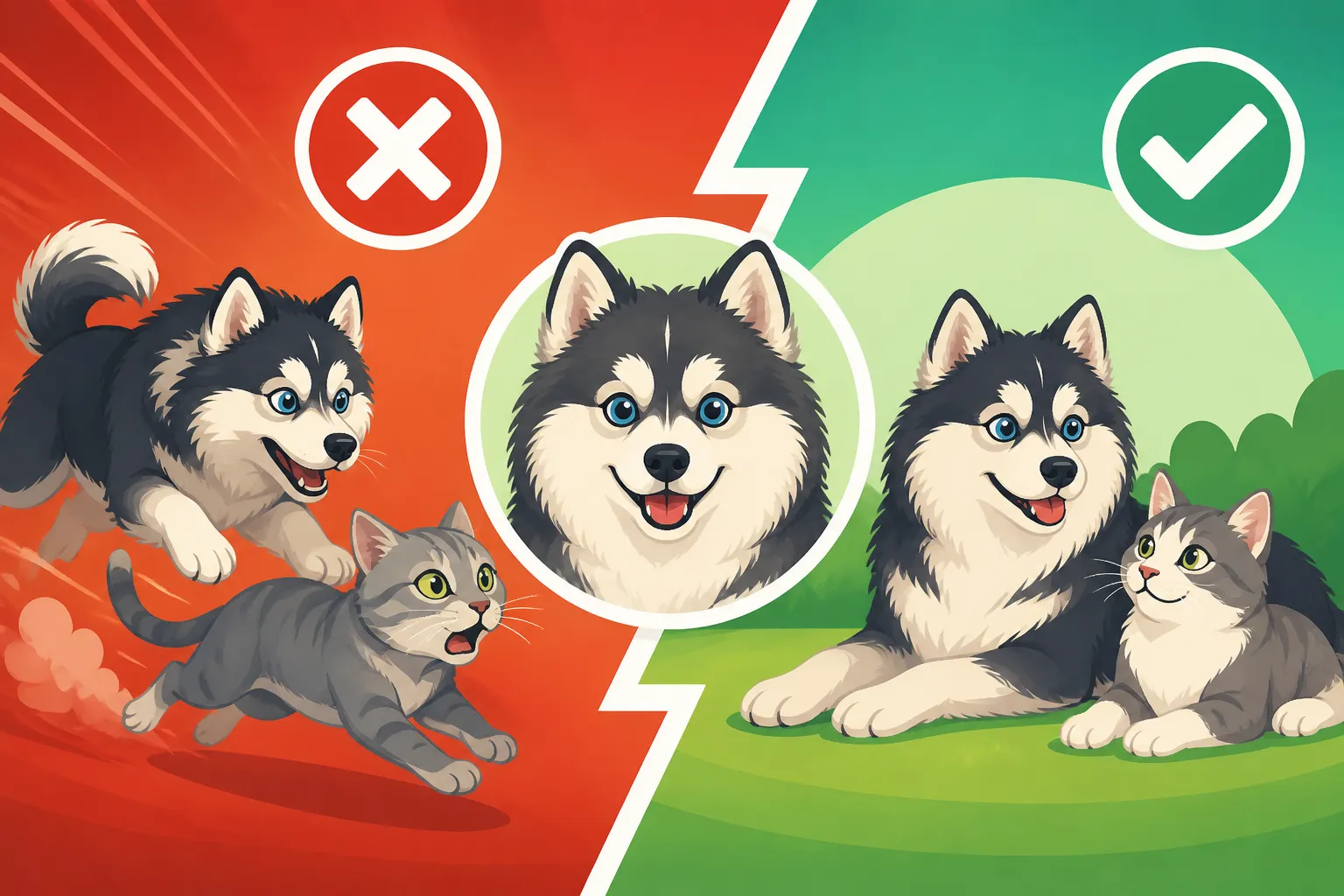
This is where many owners get confused, and it’s a critical distinction to make: is your Pomsky playing with the cat, or is their behavior veering into predatory territory? Playful chasing often involves a loose, wiggly body, play bows, exaggerated movements, and takes turns in being chased. The dog might bark playfully, but there's no serious intent to harm. The cat might even engage in the play, batting at the dog's tail or running to entice a chase.
Predatory chasing, however, looks very different. The Pomsky's body will be stiff, low to the ground, with focused, often unblinking eyes. The tail might be held straight out or tucked. The chase will be relentless, with no reciprocal play from the cat (who will likely be terrified or actively trying to escape). There might be silent stalking, sudden lunges, and an intent to corner or capture. If you see these signs, it's not play; it's a serious behavioral concern that requires immediate intervention and stringent management. It’s better to err on the side of caution and assume the latter until proven otherwise, especially if the cat is showing signs of stress or fear.
Strategies for Safe Introduction and Coexistence with Cats
Bringing a Pomsky and a cat together, especially if one or both are new to the household, requires patience, careful planning, and a strong commitment to management. You're aiming not just for tolerance, but for a safe and, ideally, peaceful coexistence.
Creating a Controlled and Structured First Meeting
Never, ever just "throw them in together" and hope for the best. A successful introduction is gradual and controlled. Start by allowing them to experience each other's scent without direct contact. Keep the cat in a separate room with food, water, and a litter box, and swap blankets or toys between the two animals so they can get used to each other's smell. This is foundational for reducing novelty and anxiety.
When you move to visual introductions, use a barrier like a baby gate or a sturdy crate for the Pomsky. This allows them to see each other without direct interaction. Keep these sessions short and positive. Distract your Pomsky with high-value treats or toys, rewarding calm behavior. If your Pomsky gets overly excited, redirect them. These early interactions should be carefully supervised and end before either animal becomes stressed. Some excellent training programs, like those offered by BAXTER & Bella, emphasize controlled introductions and positive reinforcement, which can be invaluable here.
| Management Strategy | Description | Ideal for | Potential Pitfalls |
|---|---|---|---|
| Separation | Keeping dog and cat in entirely separate areas of the house, often with physical barriers like doors or sturdy baby gates. | Initial introductions, when unsupervised, or if the Pomsky has a very high prey drive and proven attempts at harm. Ensures absolute safety for the cat. | Can be impractical in smaller homes. Prevents any chance of positive interaction. Requires diligent door/gate management. Can lead to frustration in either animal if not enough enrichment is provided in their separate spaces. |
| Leash & Harness | Keeping the Pomsky on a leash and harness during supervised interactions, allowing the handler full control over movement and preventing chasing. | Controlled introductions, early training phases, or for short, supervised periods when the cat is present. Allows for immediate correction and redirection. | Requires constant vigilance from the owner. Can be frustrating for the Pomsky if used excessively without appropriate release/reward. The cat may still feel threatened by the restricted dog. Why a Pomsky Should Wear a Harness is important here. |
| Vertical Space | Providing cats with ample high perches, shelves, and cat trees to escape to, ensuring they always have a safe retreat away from the dog. | Homes with active Pomskies, or cats who prefer solitude. Empowers the cat to manage their own safety. | Does not prevent chasing on the ground. Some cats may not utilize vertical space if they are too afraid to move or if the dog is too relentless. Requires cat-friendly home modifications. |
| Crate Training | Using a crate as a safe, quiet space for the Pomsky, especially when unsupervised or when the cat needs undisturbed access to common areas. | For puppies learning boundaries, during owner absence, or when calm downtime is needed. Also useful for initial controlled greetings. | Can lead to frustration or anxiety if used as punishment or for excessively long periods. Requires the Pomsky to be positively conditioned to the crate. The cat must also learn to respect the crate as a safe zone for the dog. |
| Controlled Access | Allowing the Pomsky and cat limited, supervised time together in the same room, often with the Pomsky on leash or with high-value treats to distract and reward calm behavior. | After initial barrier introductions, when both animals show signs of reduced stress. A stepping stone towards greater freedom. | Still requires active supervision. One bad interaction can set back progress significantly. |
Management Techniques to Prevent Chasing
Management is your best friend when coexisting with a Pomsky and a cat. It's about preventing opportunities for undesirable behavior rather than solely relying on training to stop it mid-action. This is especially true for a breed mix that can be quite Whether a Pomsky Is Stubborn or Independent.
- Physical Barriers: This is non-negotiable, especially early on or when you can't actively supervise. Install sturdy pet gates (tall ones, as Pomskies can be agile climbers!) to section off areas. Ensure your cat has "dog-free zones" where they can eat, sleep, and use their litter box undisturbed. Many effective gate systems can be found on platforms like Amazon.
- Vertical Space for Cats: Cats are natural climbers. Provide plenty of cat trees, shelves, and other high perches where your cat can escape, observe, and feel safe. This gives them agency and a sense of security, knowing they always have an out.
- Leash Supervision: For initial supervised interactions, keep your Pomsky on a leash and harness. This allows you to immediately interrupt any unwanted chasing attempts and redirect their attention. This isn't forever, but it's crucial for establishing good habits.
- Scheduled Interactions: Don't just let them roam freely. Schedule specific, short periods for them to be in the same room, always supervised. Reward calm behavior from your Pomsky with treats, and ensure the cat has an easy escape route.
Positive Reinforcement and Desensitization Training
Training plays a huge role in shaping your Pomsky's behavior and helping them understand what's acceptable around the cat. The key is consistency, patience, and making good choices rewarding.
- "Leave It" Command: This is perhaps the most critical command for a multi-pet household. Teach your Pomsky to "leave it" with various distractions, working up to leaving the cat alone. Start with treats on the floor, then toys, then moving objects, and finally, the cat. Reward heavily when they disengage from the cat and look to you.
- "Come" (Recall): A strong recall is vital. If your Pomsky starts to focus too intently on the cat, being able to call them away reliably can prevent a chase before it begins. Practice recall in low-distraction environments first, then gradually introduce distractions. Building a Recall a Pomsky Answers is a great place to start.
- Reward Calmness: Whenever your Pomsky is calm in the presence of the cat, reward them. This could be a quiet sniff, ignoring the cat, or simply lying down while the cat moves about. You're teaching them that calm, non-chasing behavior around the cat leads to good things (treats, praise, quiet toy time).
- Redirection: If your Pomsky starts to fixate on the cat, redirect their energy immediately to an appropriate activity. This could be a puzzle toy, a short training session, or a game of fetch in another room. The goal is to break their focus on the cat and engage them in something else.
Training to Mitigate Prey Drive and Impulse Control
Training isn't just about teaching commands; it's about building a foundation of impulse control and appropriate outlets for your Pomsky's natural drives. This takes time and commitment, but it's incredibly rewarding for both you and your pets.
Building a Solid "Leave It" and "Stay" Command
These two commands are your superpowers in a multi-pet home. A solid "leave it" means your Pomsky can ignore something tempting, like a cat walking by, and focus on you instead. Start by holding a treat in your closed fist. When your Pomsky tries to get it, ignore them. The moment they back away or look at you, say "Yes!" and reward them with a different treat from your other hand. Gradually increase the difficulty: treat on the floor, then moving the treat, then using higher-value distractions. Apply this to the cat: if your Pomsky is fixated, say "Leave it!" and reward them for breaking their gaze and looking at you.
The "stay" command teaches patience and self-control. Practice "stay" in progressively more distracting environments. Start with short durations in a quiet room, then move to longer stays with mild distractions, eventually practicing with the cat in the room (always safely contained or at a distance initially). Reward your Pomsky generously for holding their stay, even for short periods. This teaches them that resisting immediate impulses, like chasing, results in a positive outcome from you. Remember that What a Pomsky Learns in a Week often varies widely by individual dog, so be patient and consistent.
Engaging in Alternative, Appropriate Outlets for Prey Drive
You can't extinguish prey drive, but you can redirect it. Your Pomsky needs to satisfy this instinct in a safe, acceptable way.
- Flirt Poles: These are excellent tools. A flirt pole is essentially a long stick with a lure (a toy or rag) attached to a rope. You can wave it around, letting your Pomsky chase, pounce, and "catch" the lure. This mimics hunting behavior without involving your cat. It's a fantastic way to burn off energy and satisfy their chase instinct.
- Interactive Toys and Puzzle Feeders: Toys that encourage mental engagement and problem-solving can also help. Hide-and-seek games with treats, puzzle feeders, or durable chew toys can keep their minds occupied and reduce boredom, which can often lead to mischievous behavior like cat chasing. Search for a variety of options on Amazon to see what your Pomsky enjoys most.
- Scent Work and Fetch: Engaging your Pomsky in scent work (finding hidden treats) or vigorous games of fetch can be incredibly fulfilling. These activities tap into their natural desire to seek, track, and retrieve, providing an outlet for energy and mental stimulation that doesn't involve the cat. Make sure these activities are distinct from any interaction with the cat. The Exercise a Pomsky Needs to Stay Sane is critical, and providing structured play can fulfill many of these inherent drives.
Professional Help and Online Resources
Sometimes, despite your best efforts, managing a Pomsky with a high prey drive towards cats can feel overwhelming. Don't hesitate to seek professional help.
- Certified Professional Dog Trainers: A certified professional dog trainer (CPDT) who specializes in positive reinforcement and behavior modification can assess your specific situation and provide a tailored training plan. They can help you refine your "leave it" and "stay" commands, teach you better management techniques, and offer insights into your Pomsky's specific motivations. Look for trainers with experience in multi-pet households.
- Veterinary Behaviorists: For more severe cases, or if you suspect underlying anxiety or aggression contributing to the chasing, a veterinary behaviorist (a DVM with specialized training in animal behavior) can be invaluable. They can diagnose behavioral issues and, if necessary, prescribe medication as part of a comprehensive behavior modification plan.
- Online Training Platforms: Resources like BAXTER & Bella offer comprehensive online puppy and dog training programs that cover foundational obedience, impulse control, and managing specific behaviors. While not a substitute for in-person help for severe issues, these platforms can provide structured guidance and support for building the necessary skills to manage your Pomsky's interactions with cats. Their structured approach can be particularly helpful for new owners. Whether a Pomsky Needs a Professional Trainer is a legitimate question, and for inter-species harmony, it's often a resounding yes.
Living with a Pomsky and Cats: Long-Term Considerations
Even after successful introductions and consistent training, living with a Pomsky and cats requires ongoing vigilance and adaptation. It's a lifestyle choice that prioritizes the safety and well-being of all your furry family members.
Recognizing When Coexistence Isn't Possible
This is a tough one to face, but sometimes, despite every effort, a Pomsky's prey drive towards cats is simply too strong to manage safely. If your Pomsky shows signs of genuine predatory intent (not just playful chasing), repeatedly injures the cat, or causes the cat chronic stress and fear, you must consider the possibility that they cannot live together. Signs of chronic stress in a cat include hiding constantly, loss of appetite, inappropriate urination/defecation, excessive grooming, or aggression towards you or the dog.
It's heartbreaking, but the cat's safety and quality of life must be the priority. This might mean rehoming one of the animals to a more suitable environment where they can thrive without constant fear or risk. It's a decision no pet owner wants to make, but it's sometimes the most responsible and humane choice. Don't blame yourself; you've given it your all. Sometimes, personalities and instincts simply don't align, and that's okay.
Ensuring the Cat's Safety and Well-being
If coexistence is possible, your primary responsibility is to ensure the cat feels safe and secure in their own home.
- Escape Routes: Always provide multiple escape routes and high places for your cat. This means open doors to cat-only rooms, cat trees, shelves, and clear pathways. Cats need to know they can always get away if they feel threatened.
- Separate Resources: Ensure the cat has their own food, water, and litter boxes in locations inaccessible to the dog. Elevated feeding stations for the cat or litter boxes in dog-proof areas are crucial. Your Pomsky, with their curious nature, will likely investigate any cat resource left out in the open.
- Positive-Only Interactions: Never force interactions. Let the cat initiate contact, or at least feel they have the choice to engage or retreat. Reward your Pomsky for ignoring the cat rather than fixating. You want the cat to associate the Pomsky with calm, peaceful energy, not a relentless chase.
- Enrichment for Both: Ensure both your Pomsky and your cat receive adequate exercise, mental stimulation, and one-on-one attention from you. A bored Pomsky is more likely to create their own "fun" by bothering the cat, and a stressed cat needs reassurance and safe spaces.
The Importance of Ongoing Management and Training
Living harmoniously with a Pomsky and a cat is not a "one and done" situation. It requires continuous effort.
- Never Assume: Even if they've been living together peacefully for years, never assume the prey drive is completely gone. Always supervise interactions, especially when things get exciting, like during playtime or when new visitors arrive.
- Consistency is Key: Continue reinforcing good behavior from your Pomsky. Regularly practice "leave it," "stay," and a strong recall. Reward calm interactions and redirect any signs of over-excitement or fixation. This reinforces the boundaries and expectations you've set.
- Adapt as They Age: As your Pomsky (or cat) ages, their needs and tolerance levels might change. An older cat might be less tolerant of a boisterous young Pomsky, or an aging Pomsky might become more irritable. Be observant and adjust your management strategies accordingly.
- Be Prepared for Slip-Ups: Every dog and cat has an off day. If a chase happens, don't punish your Pomsky, but calmly separate them and reassess your management plan. What led to the incident? Was supervision lax? Was your Pomsky under-exercised? Use it as a learning opportunity to tighten up your routine. While not specifically about cats, Whether a Pomsky Can Be Left Alone touches on how much supervision they require generally, which ties into managing multi-pet homes.
Successfully integrating a Pomsky into a cat-owning household is challenging but absolutely achievable for many. It hinges on deep understanding of their innate drives, meticulous management, consistent positive reinforcement training, and a whole lot of patience and love.
Disclaimer
This article is for general informational purposes only and does not constitute professional advice. Laws, prices and regulations vary by location and change over time. Consult a qualified professional for guidance on your specific situation.