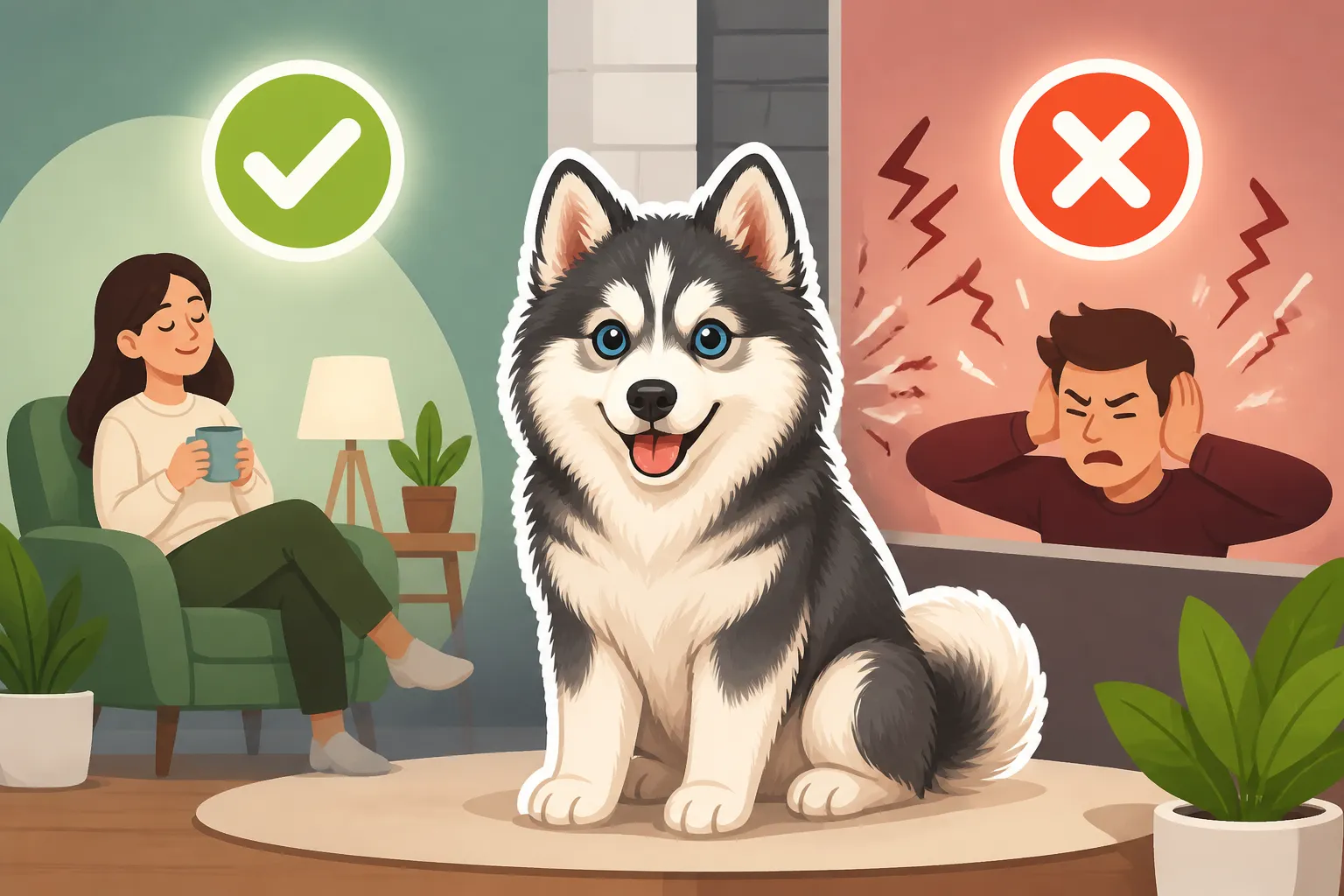
Whether a Pomsky Suits Shared Walls
Bringing a Pomsky into your life, especially when you live in an apartment, condo, or any space with shared walls, can feel like navigating a minefield of potential noise complaints and restless energy. Many aspiring Pomsky parents dream of a miniature Husky companion, but the reality of their vocal nature and boundless enthusiasm in close quarters often leads to genuine worry about disturbing neighbors or finding themselves overwhelmed. This guide is here to honestly address those concerns, offering practical insights and strategies to help you determine if a Pomsky is truly a good fit for your shared-wall lifestyle and how to make it work if you decide to take the leap.
The Reality of Pomsky Vocalizations in Shared Living Spaces
One of the biggest hurdles for Pomsky owners in apartments or townhouses is managing their dog's vocal repertoire. Pomskies inherit a fascinating mix of communication styles from their parent breeds, and not all of them are conducive to peaceful coexistence with thin walls. It's not just barking; it's the whole symphony.
The Husky Howl and Pomeranian Bark
Let's be real: Pomskies are talkers. They get a generous dose of the Husky's infamous "woo-woo" and melodious howls, combined with the often-alert and sometimes yappy bark of the Pomeranian. This means you’re not just dealing with one type of noise; you're dealing with a dynamic range. A Husky-like howl can carry far, often sounding mournful or like a siren, which can be particularly jarring for neighbors. I've had owners tell me their Pomsky starts howling every time a fire truck goes by, and suddenly, the entire building knows about it. Whether a Pomsky Howls at Sirens is a very real question for apartment dwellers. Then there's the Pomeranian influence, which can manifest as persistent, high-pitched barking at every perceived threat or interesting sight outside the window. This isn't a dog that quietly observes; a Pomsky often feels the need to announce its findings.
These vocalizations aren't always malicious; they're often a natural expression of their breed traits. They howl when they're bored, when they're excited, when they hear certain sounds, or even just to communicate with you. They might bark at squirrels out the window, at someone walking down the hall, or at the delivery person. Understanding that this is part of their genetic makeup is the first step. It helps to differentiate between attention-seeking barks and genuine expressions of their breed. Many owners wonder Whether a Pomsky Is Loud, and the answer is usually a resounding "yes" compared to many other breeds.
Managing Noise Triggers and Excessive "Talking"
Living with shared walls means you need to be proactive about identifying and managing noise triggers. This involves a lot of observation and consistent training. For instance, if your Pomsky barks at every sound in the hallway, you might need to desensitize them to those sounds. This could involve playing recordings of hallway noises at a low volume and rewarding calm behavior, gradually increasing the volume over time. If they bark at people walking by the window, restricting access to that window with frosted film or blinds can be incredibly helpful. This removes the visual trigger and often reduces the need for them to "alert."
Teaching a "quiet" cue is also essential. This takes time and patience, but it's a valuable tool. Start by encouraging a bark, then say "quiet" and immediately reward them when they stop, even for a second. Over time, they'll associate the word with ceasing vocalizations. For more intense howling or sustained barking, positive reinforcement training methods found in resources like those from BAXTER & Bella can provide structured programs to address specific vocal challenges. Consistency is key here; every family member needs to be on board with the training plan. Teaching a Pomsky a Quiet Cue early on can prevent a lot of headaches later.
Managing Energy and Exercise Needs in a Smaller Footprint
Pomskies are energetic little bundles, and their exercise needs don't shrink just because your living space does. Failure to meet these needs is a recipe for a bored, destructive, and noisy dog, which is precisely what you don't want when you have neighbors just a few feet away.
Daily Physical Outlets and Mental Stimulation
Despite their smaller size compared to a full-grown Husky, Pomskies have significant energy levels that demand consistent outlets. Two short walks around the block each day simply won't cut it. They need vigorous exercise, typically at least 60-90 minutes daily, ideally broken into two or three sessions. This could be long, brisk walks, active play sessions at a dog park, or even canine sports like agility or flyball if you're really dedicated. Remember, these are dogs bred from working lines; they crave activity. Without adequate physical exertion, that pent-up energy will find an unwelcome release, often through destructive chewing, incessant barking, or hyperactive behavior. The Exercise a Pomsky Needs to Stay Sane really cannot be overstated, especially for apartment living.
Beyond physical exercise, mental stimulation is equally crucial. A tired dog is a good dog, but a mentally tired dog is an even better one. This means puzzle toys, treat-dispensing toys, and training sessions that challenge their intelligent minds. Rotating toys keeps things fresh, and you can find a wide variety of engaging puzzle toys on Amazon that can keep a Pomsky occupied for a good chunk of time. Snuffle mats and KONGs stuffed with frozen treats are also excellent for solo enrichment. Even five to ten minutes of focused trick training can be as tiring as a long walk for their brains.
Creative Solutions for Apartment-Friendly Exercise
Living in an apartment means you might not have a private yard for your Pomsky to zoom around in. This just means you need to get creative and commit to getting out and about. Regular trips to a secure dog park (if your dog is well-socialized) can be a lifesaver for burning off steam. Exploring new walking routes keeps things interesting for them, engaging their powerful sense of smell. You can also incorporate indoor games that don't involve too much running or jumping to protect their joints, such as hide-and-seek with treats, or teaching them to fetch toys from one room to another.
Consider structured activities like obedience classes, which provide both physical and mental exercise in a controlled environment. Some communities offer indoor dog training facilities or doggy daycares that can be fantastic for burning energy during the day while you're at work. It might seem like an added expense, but a well-exercised and stimulated Pomsky is far less likely to cause damage or noise issues. Whether Indoor Play Is Enough for a Pomsky is a question that depends entirely on the intensity and duration of that play; a quick game of fetch once a day is likely insufficient.
Dealing with Separation Anxiety and Destructive Tendencies
Being left alone is a big deal for many dogs, and Pomskies, with their strong desire for companionship and potential for independent thinking, can sometimes struggle with separation anxiety. This manifests as noise, destruction, and distress, all of which are amplified in a shared-wall environment.
The Challenges of Being Alone
Pomskies thrive on companionship. They are often deeply bonded with their families, a trait inherited from both parent breeds. Being left alone for extended periods can trigger significant stress and anxiety for some individuals. When a Pomsky experiences separation anxiety, it's not just "being naughty"; it's a genuine panic response. This can lead to incessant barking, howling, or whining, which can quickly lead to neighbor complaints. Whether a Pomsky Suffers Separation Anxiety is a crucial consideration for anyone in an apartment. Imagine trying to work from home with a neighbor's dog howling for hours, or coming home to notes on your door.
Beyond the noise, anxious or bored Pomskies can become destructive. They might chew on furniture, doors, baseboards, or anything they can get their paws and teeth on. This isn't just about damage; it's a sign of their distress. A Pomsky can cause significant damage in a short amount of time if they're not properly managed when left alone. This isn't just a hypothetical scenario; many surrender stories for Pomskies often involve destruction due to boredom or anxiety. Whether a Pomsky Destroys Furniture When Bored is something many owners discover the hard way.
Training for Independence and Building Confidence
The good news is that separation anxiety and destructive behaviors can often be mitigated with consistent training and management. Crate training from a young age is incredibly beneficial, providing them with a safe, den-like space where they feel secure. The crate should never be used as punishment, but rather as their personal sanctuary. Gradual desensitization to your departure is key: start with very short absences (just a few seconds), slowly increasing the time you're away, always returning before they show signs of distress.
Enrichment is also vital when they're left alone. Provide a variety of engaging toys, especially long-lasting chews or frozen KONGs, to keep them occupied and mentally stimulated. Consider using a dog camera to monitor their behavior while you're out, which can help you understand their triggers and gauge their progress. For more advanced cases of separation anxiety, consulting with a professional dog trainer or a veterinary behaviorist is highly recommended. Online training platforms, like those offered by BAXTER & Bella, can provide resources and virtual support for these complex behavioral issues.
Here's a quick comparison of apartment challenges and solutions:
| Pomsky Trait/Challenge | Impact on Shared Walls Living | Mitigation Strategies |
|---|---|---|
| Vocalization | Howling, barking, "talking" disturbs neighbors. | Desensitize to triggers, teach "quiet" cue, use white noise, manage window access, consider professional training. |
| High Energy | Boredom leads to noise and destruction. | 60-90+ mins vigorous exercise daily, puzzle toys, dog parks, structured classes, mental stimulation. |
| Separation Anxiety | Excessive noise, destructive chewing when alone. | Crate training, gradual desensitization, long-lasting enrichment toys, dog camera, consider professional behaviorist. |
| Shedding | (Indirectly) Requires more diligent cleaning to maintain a clean environment, important in compact spaces. | Regular grooming, high-quality vacuum, robot vacuum, professional deshedding services. |
| Intelligence | Can be stubborn or outsmart owners if not trained. | Consistent, positive reinforcement training, mental games, varied training sessions to prevent boredom. |
Strategies for Success: Making Shared Walls Work for Your Pomsky
Successfully living with a Pomsky in an apartment isn't just about managing problems; it's about creating a lifestyle and environment that sets both you and your dog up for success. It requires commitment, consistency, and a deep understanding of the breed's needs.
Establishing a Routine and Consistent Training
A predictable daily routine can work wonders for a Pomsky in an apartment setting. Dogs thrive on routine, and knowing what to expect can reduce anxiety and undesirable behaviors. This means consistent feeding times, walk times, and potty breaks. If your dog knows when their next outdoor adventure is, they might be less likely to demand attention through barking indoors. Early and consistent training is non-negotiable. Positive reinforcement methods are most effective for these intelligent and sometimes stubborn dogs. Focus on basic obedience commands like "sit," "stay," and "come," but also on impulse control exercises. Teaching your Pomsky to settle on command can be invaluable in a small space. Many owners benefit from puppy classes or even advanced obedience to keep their Pomsky engaged and well-mannered.
Beyond formal training, simple daily interactions can reinforce good behavior. Reward calm behavior when guests arrive instead of chaos. Teach them to wait patiently at the door before going out. These small moments build up to a well-behaved dog who understands boundaries, which is paramount in a shared living space. A well-trained Pomsky is less likely to react excessively to external stimuli, making them a much better neighbor. Whether a Pomsky Is Trainable at All is a common question, and while they can be stubborn, they are indeed highly intelligent and capable of learning.
Creating an Enriched and Comfortable Indoor Environment
Even without a huge yard, you can make your apartment a rich and stimulating environment for your Pomsky. Provide a variety of toys, rotating them regularly to keep their interest. Invest in sturdy chew toys to redirect any destructive chewing tendencies – products available on Amazon offer a vast selection. Consider a comfortable dog bed in a quiet corner where they can retreat and feel secure. Some owners even use calming pheromone diffusers or quiet classical music designed for dogs to create a more serene atmosphere when they're home alone.
Think about how you use your vertical space too. A sturdy cat tree (yes, for dogs!) or elevated dog beds can give them a perch to observe their surroundings without having direct access to windows that might trigger barking. During times when you need quiet, like during a neighbor's quiet hours or if you're hosting, employing long-lasting chews or filled KONGs can keep them happily occupied. Ultimately, it's about making your apartment a sanctuary, not a cage, for your Pomsky, one where their needs for comfort, stimulation, and security are met. Whether a Pomsky Suits Shared Walls often comes down to the owner's dedication to creating this kind of environment.
Community Considerations and Being a Responsible Neighbor
Being a responsible Pomsky owner in an apartment building extends beyond just your dog's behavior; it also involves being considerate of your neighbors. This means being mindful of noise, especially during early mornings or late evenings. Promptly cleaning up after your dog on walks is not just good etiquette; it's often a lease requirement. Introduce your dog to neighbors in a controlled, positive way, so they see your Pomsky as a friendly member of the community, not a nuisance. If you anticipate your Pomsky will be vocal, consider giving your immediate neighbors a heads-up or even a small gift with an apology if there's an occasional noisy spell.
Many apartment complexes have breed restrictions or weight limits, so always check your lease agreement thoroughly before committing to a Pomsky. While they are a mixed breed, some landlords might classify them under Husky or Pomeranian restrictions. Whether an Apartment Building Tolerates a Pomsky often depends on these rules. Ultimately, while Pomskies can thrive in apartments, it requires an owner who is deeply committed to their daily exercise, mental stimulation, consistent training, and proactive management of their vocalizations. It's a significant commitment, but for those who embrace the challenge, it can be an incredibly rewarding experience.
Disclaimer
This article is for general informational purposes only and does not constitute professional advice. Laws, prices and regulations vary by location and change over time. Consult a qualified professional for guidance on your specific situation.