Whether a Pomsky Chases Squirrels
Many Pomsky owners find themselves watching their adorable, fluffy companion suddenly transform into a laser-focused predator at the sight of a bounding squirrel. It's a common, often frustrating, experience that leaves many wondering just how strong this instinct is and what, if anything, can be done about it. This guide delves deep into the inherent prey drive of the Pomsky, exploring its origins, its manifestations, and practical strategies to manage it for a harmonious home and safer walks.
Understanding the Pomsky's Instincts
The first step to managing any behavior in your Pomsky is understanding why they do what they do. When it comes to chasing small, fast-moving creatures like squirrels, it's not a matter of disobedience; it's a deep-seated instinct passed down through generations. These aren't just cute habits; they are primal urges that contribute significantly to their overall personality.
The Husky's Hunter Heritage
The Siberian Husky, one half of the Pomsky's genetic makeup, was originally bred for endurance and pulling sleds in harsh, often food-scarce environments. This meant they needed to be highly resourceful, and that included hunting small game when opportunities arose. Their ancestors weren't just content to wait for a dinner bowl; they were active participants in their own survival, relying on keen senses and quick reflexes. This strong predatory instinct, often referred to as "prey drive," is deeply etched into their DNA. It manifests as an intense focus on movement, a quick burst of speed, and the sheer joy of the chase. You'll see this in many Huskies, where a squirrel, a rabbit, or even a blowing leaf can trigger an immediate, powerful reaction. This is not something they can simply "turn off" on command.
Think of your Husky-mix Pomsky inheriting this drive. Even if your little Pomsky never had to hunt for its dinner, that hardwired impulse is still very much there. They might not be bringing down caribou, but a squirrel darting across the yard ignites the same ancient circuitry. It's exhilarating for them, a natural outlet for their energy and an echo of their wilder lineage. This is why The Prey Drive a Pomsky Gets From the Husky is such a fundamental aspect of their personality, influencing their reactions to anything that moves quickly.
The Pomeranian's Small Dog, Big Game Mentality
While the Pomeranian might seem like the antithesis of a hunter, don't let their fluffy, toy-sized appearance fool you. Pomeranians descend from larger Spitz-type dogs and retain a surprising amount of terrier-like tenacity and boldness. They might be small, but they often act like they're ten times their size, demonstrating remarkable confidence and sometimes stubbornness. This "small dog, big personality" often includes a keen interest in small, scurrying creatures. They were historically used to keep vermin down in homes and on farms, so chasing and even catching small animals isn't entirely foreign to their genetic background or instinctual makeup.
So, when you combine the energetic, chase-oriented Husky with the alert, sometimes feisty Pomeranian, you get a Pomsky who is almost genetically predisposed to find a darting squirrel utterly irresistible. It's a potent mix where both sides of their lineage contribute to this strong attraction to movement and the thrill of the pursuit. Your Pomsky isn't being "bad" or disobedient when they lunge; they are simply being a dog, fulfilling deeply ingrained instincts that have served their ancestors for centuries. Understanding this inherent drive is crucial for effective management.
The Manifestation of Prey Drive in a Pomsky
Understanding the roots of prey drive is one thing, but recognizing how it actually plays out in your Pomsky's daily life is crucial for effective management. It's not always a full-blown chase; sometimes it's more subtle, but it's always there, waiting for the right trigger, ready to spring into action.
Signs Your Pomsky Has High Prey Drive
A Pomsky with a strong prey drive will exhibit a range of behaviors when encountering potential "prey," whether it's a squirrel, a bird, or even a dust bunny under the couch. The most obvious sign is intense focus: their ears might prick up, their body stiffens, and their eyes lock onto the moving object. They might emit a low growl or a high-pitched whine, almost vibrating with anticipation as they prepare to act. Then comes the lunge, the pull on the leash so strong it feels like your arm might be dislocated, the frantic barking, or the sudden bolt if they're off-leash and the opportunity presents itself. Many owners relate to the feeling of their dog suddenly becoming a lead-sled dog, despite their small stature.
Beyond the actual chase, you might notice other indicators of this ingrained instinct. Does your Pomsky obsessively watch birds from the window, tracking their movements across the sky? Do they stalk toys as if they're real prey, adopting a low crouch and sudden pounces? Do they exhibit "zoomies" and suddenly take off running for no apparent reason, mimicking a chase across the living room? Do they dig enthusiastically in the yard, perhaps trying to unearth a critter or create a den? These are all expressions of that inherent drive. It's important to remember that this drive is not always about killing; for many domestic dogs, especially those bred away from active hunting roles, the thrill is purely in the chase itself. However, it's always safer to assume they could catch something if given the opportunity, particularly with smaller, less agile creatures.
The Difference Between Chasing and Catching
It's a common misconception among dog owners that if their Pomsky chases a squirrel and the squirrel always gets away, their dog isn't truly serious about hunting or doesn't have a strong prey drive. While it's true that many domestic dogs, including Pomskies, are not particularly adept at catching agile wild animals like fully grown squirrels, the intent to chase is still rooted in powerful prey drive. For your Pomsky, the act of pursuit is often its own reward. The burst of speed, the surge of adrenaline, the intense focus on the moving target, and the pure physical exertion are all incredibly stimulating and satisfying. It’s like a canine sport for them.
However, just because they haven't caught anything yet doesn't mean they won't. A young, inexperienced squirrel, a bird that lands too close, or a rabbit that hesitates could quickly become a victim. The speed and agility of a Pomsky, combined with its tenacity, should not be underestimated. This is why it's vital never to underestimate the potential danger and to always prioritize safety and control. A Pomsky might not look like a hardened hunter, but the instinct is there, and accidents can happen surprisingly quickly. This potential applies not just to wildlife but also to smaller domestic animals, which often leads to concerns like Whether a Pomsky Chases Cats.
Managing and Training a Pomsky's Prey Drive
Since you can't erase a deeply ingrained instinct, the goal isn't to eliminate prey drive but to manage it effectively. This means teaching your Pomsky to control their impulses and to look to you for guidance, even when a squirrel presents itself. It requires immense consistency, patience, and realistic expectations, as this is one of the most challenging behaviors to modify in high-drive dogs.
Leash Training and Control
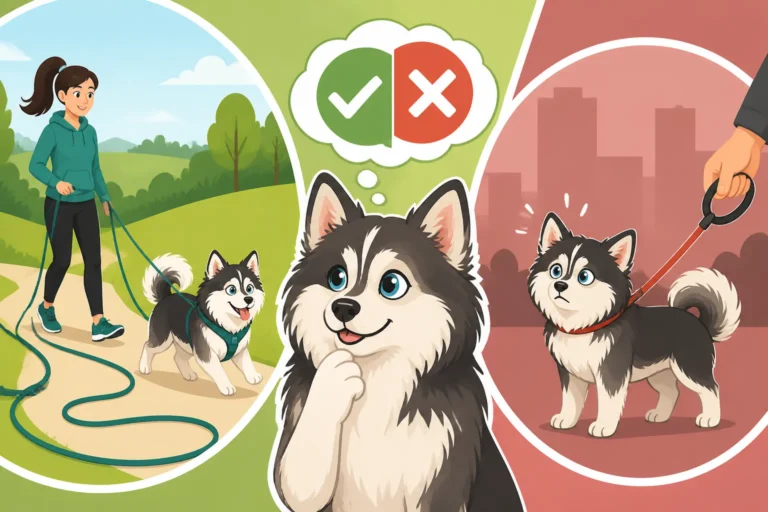
The leash is your primary tool for managing prey drive in public spaces and during walks. A strong, well-fitting harness (rather than just a collar, which can put dangerous pressure on their delicate trachea, especially when they lunge) and a sturdy, non-retractable leash are non-negotiable items for any Pomsky owner. Many Pomskies, thanks to their Husky lineage, are excellent escape artists, so a secure setup is absolutely vital to prevent them from bolting. Training your Pomsky to walk politely on a leash, without pulling, is a lifelong endeavor, especially when distractions are as high as a darting squirrel. Start training in a low-distraction environment, like your quiet backyard, and gradually introduce more challenging situations, like a park during off-peak hours.
Techniques like "engage-disengage" can be very helpful in these situations:
- Engage: When your Pomsky spots a squirrel or other distraction, but before they react fully, immediately use a high-value treat to get their attention. Hold the treat near their nose or mouth.
- Disengage: The very moment they look away from the squirrel and make eye contact with you, mark that precise moment with a verbal cue (a sharp "yes!" or a clicker sound) and reward them generously with that high-value treat.
- Repeat: Gradually increase the duration of eye contact or the level of distraction before you offer the reward. The ultimate goal is for them to associate seeing a squirrel with looking at you for a reward, rather than immediately bolting or fixating. Consistency is absolutely key here, and tools like a front-clip harness can help manage pulling while you're still working on these crucial skills.
Recall Challenges and Strategies
A reliable recall is the holy grail for any dog owner, but it's especially challenging with a Pomsky's strong prey drive. The call of a squirrel or the scent of a rabbit is often far more enticing and rewarding than your voice, especially if your Pomsky is already halfway across the park. This is why many experts emphasize that Whether a Pomsky Can Ever Be Off Leash is a serious consideration, and for many, the answer is a firm "no" outside of securely fenced areas where you have complete control. The risk of them disappearing after a scent or a movement is simply too high.
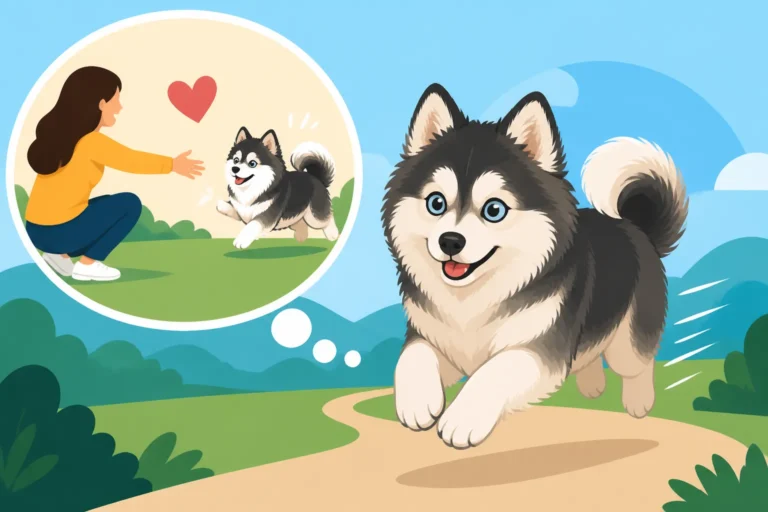
To build a truly bomb-proof recall, you need to make coming back to you the most rewarding thing ever. This means using incredibly high-value treats (think cooked chicken, cheese, hot dogs, or whatever your Pomsky absolutely adores), not just boring kibble. Practice in progressively distracting environments. Start in your home, then a quiet yard, then a park with minimal distractions, always using a long line (a 30-50 foot lead found on Amazon is perfect) or a secure, empty field initially. Call your Pomsky, reward lavishly when they come to you, and then release them to go back to what they were doing, rather than immediately clipping on the leash and ending the fun. This teaches them that coming to you doesn't mean the end of their freedom; it often means a treat and more playtime. Consider investing in online dog training programs like those offered by BAXTER & Bella, which provide structured lessons and personalized support for recall and other impulse control issues, making it easier to integrate consistent training into your daily routine.
Distraction and "Leave It" Commands
The "Leave It" command is an invaluable tool for any Pomsky owner, particularly one dealing with strong prey drive. It teaches your Pomsky to ignore something tempting, whether it's a dropped crumb on the floor or a darting squirrel in the park. Start practicing "Leave It" with low-value items indoors, gradually increasing the difficulty. Place a treat on the floor, cover it with your hand, and confidently say "Leave It." When your dog looks at you, even for a split second, reward them immediately with a different, higher-value treat from your other hand. This teaches them that ignoring the first thing leads to an even better reward from you, building their impulse control.
Once mastered indoors, take it outside. Practice with stationary objects first, like a leaf or a stick, gradually progressing to more distracting items. Eventually, you can introduce movement, perhaps with someone else gently tossing a toy nearby while you practice "Leave It" and reward heavily for compliance when your Pomsky chooses you over the distraction. The goal is to interrupt their focus on the prey before they're fully committed to the chase. Having a variety of engaging toys readily available, such as durable chew toys or interactive puzzle toys from Amazon, can also be a game-changer for distraction, allowing you to redirect their energy from squirrels to appropriate and safe play.
Creating a Safe Environment for Your Pomsky and Wildlife
Even with the best training, consistent management is paramount when dealing with a strong prey drive. You can significantly reduce the risks associated with this instinct by creating physical barriers and providing alternative, safe outlets for your Pomsky's natural urges. Environmental control plays a huge role in their safety and your peace of mind.
Secure Fencing and Yard Management
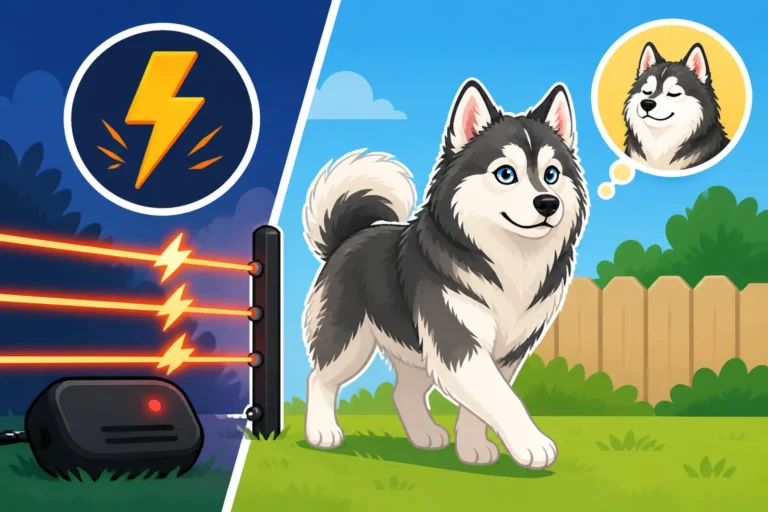
If you have a yard, a secure fence is absolutely non-negotiable for a Pomsky. These dogs, thanks to their Husky lineage, are notorious escape artists. They possess an impressive combination of intelligence, agility, and determination. They can jump surprisingly high, dig remarkably well, and even figure out gate latches given enough time and motivation. A standard 4-foot fence might be easily cleared by a determined Pomsky, especially if there's a squirrel or another enticing scent on the other side. Consider a fence that is at least 6 feet high and, ideally, has a barrier along the bottom (like concrete footings or buried wire mesh) to prevent digging out. Understanding The Fence a Pomsky Actually Needs is often more robust than many owners initially anticipate.
Beyond the fence itself, regularly inspect your yard for potential escape routes. Fill in any holes, secure loose boards, and ensure gates are always latched and, if possible, locked or secured with additional clips. Keep the yard clear of anything that might give your Pomsky a boost, like trash cans, stacked firewood, or outdoor furniture they can climb. Also, be mindful of the wildlife in your yard. If you have bird feeders, place them in areas your Pomsky can't easily access. Minimizing the visible presence of small animals can help reduce the constant temptation for your Pomsky and keep the peace.
Indoor Enrichment to Redirect Instincts
Since your Pomsky's natural instincts are always running in the background, it's crucial to provide appropriate outlets for their mental and physical energy. Boredom and pent-up energy can exacerbate prey drive, leading to more intense reactions when a squirrel does appear, and potentially more destructive behaviors indoors. Puzzle toys that dispense treats, snuffle mats where they can "hunt" for their food, and interactive toys can all engage their minds and satisfy their foraging and problem-solving instincts. These activities are particularly important during bad weather or when you can't provide extensive outdoor exercise.
Tug-of-war games, fetch, and flirt poles (a stick with a lure on the end, like a giant cat toy, but for dogs) can provide safe and controlled opportunities for them to chase and "catch" something without harming live animals. This allows them to express that powerful predatory sequence from stalking to pouncing, within safe boundaries. These activities don't just tire them out; they also strengthen your bond and reinforce that you are the provider of fun and excitement. A Pomsky that is well-exercised and mentally stimulated is generally a calmer, more manageable dog, less likely to become fixated on outdoor distractions. Remember, a tired dog is a good dog, and a dog whose instincts are met through appropriate play is less likely to seek out inappropriate outlets for their energy. The Exercise a Pomsky Needs Every Day goes beyond just physical activity; it includes mental challenges too.
Living with a Pomsky and the Reality of Squirrels
Ultimately, living with a Pomsky means embracing their unique blend of traits, including their undeniable prey drive. It's about finding a realistic balance between their natural inclinations and your need for a well-behaved, safe companion. This often requires a shift in perspective and a commitment to ongoing management.
Accepting What You Can't Change
The truth is, you will likely never completely eliminate your Pomsky's instinct to chase squirrels. It's as much a part of them as their fluffy coat or their expressive eyes. This powerful drive is genetically ingrained, a relic of their ancestral past, and it's simply not something that can be trained out of them entirely. Accepting this reality is the first step towards a less frustrating coexistence. Instead of striving for an impossible ideal of a Pomsky who completely ignores wildlife, focus on consistent management and training that allows you to control the behavior and keep your dog safe, rather than trying to eradicate the instinct itself. There will be days when a squirrel appears out of nowhere, your Pomsky lunges, and you feel like all your training has gone out the window. Don't get discouraged; this is a normal part of the journey with a high-prey-drive dog.
Your job is to be the consistent, patient leader who provides structure and safe outlets for their energy. This means always being vigilant on walks, using a reliable leash and harness, and never assuming your Pomsky will "just ignore" a squirrel, especially if they are usually good. It also means celebrating the small victories – the times they looked at you for a split second before bolting, or when they redirected their attention to a toy you offered. This is where patience truly shines, as recall training for a Pomsky with strong prey drive can feel like an uphill battle. Just keep working on Building a Recall a Pomsky Answers and celebrate every little step forward, no matter how small.
When to Seek Professional Help
If you're finding your Pomsky's prey drive overwhelming, or if you're concerned about their safety or the safety of other animals, don't hesitate to seek professional help. A certified professional dog trainer, particularly one experienced with Northern breeds or working dogs, or a veterinary behaviorist can provide tailored strategies and hands-on guidance. They can help you accurately assess the intensity of your Pomsky's drive, identify specific triggers you might be missing, and develop a comprehensive, realistic training plan that addresses your unique situation and your dog's individual personality. Sometimes, what seems like pure prey drive might also be fueled by underlying anxiety, boredom, or a significant lack of appropriate physical and mental stimulation. A professional can help differentiate these factors and address them holistically, ensuring all contributing elements are considered. They can also introduce advanced techniques, specialized tools, or management strategies that might be more effective for particularly high-drive individuals. Don't view seeking help as a failure; view it as a responsible and proactive step toward ensuring your Pomsky lives a happy, fulfilling, and safe life, both for them and for the wildlife around you. This expertise can be invaluable, particularly when your Pomsky demonstrates independence or seems Whether a Pomsky Is Stubborn or Independent.
Here's a table summarizing strategies for managing prey drive:
| Strategy | Description | Key Benefits | Considerations |
|---|---|---|---|
| Secure Leash & Harness | Utilizing a robust, well-fitting harness (e.g., front-clip) and strong leash. | Prevents escapes, provides immediate physical control during sudden lunges. | Requires consistent handling; harness fit is crucial to prevent rubbing/chafing. |
| "Leave It" Command | Teaches your dog to disengage from and ignore tempting objects or creatures. | Builds impulse control, redirects your Pomsky's focus back to you. | Needs consistent, positive-reinforcement practice with high-value rewards. |
| Reliable Recall | Intensive training to ensure your Pomsky comes immediately when called. | Essential for off-leash safety in controlled, designated areas; reduces risk of bolting. | Highly challenging with strong prey drive; requires extremely high-value rewards and gradual distraction levels. |
| Secure Fencing | Physical barriers (tall, dig-proof fences) to prevent yard escapes. | Ultimate safety measure for unsupervised yard time; peace of mind for owners. | Must be regularly inspected for vulnerabilities (digging, climbing points, loose gates). |
| Enrichment & Play | Providing mental and physical outlets like puzzle toys, flirt poles, fetch, tug. | Satisfies natural hunting instincts safely, reduces boredom and pent-up energy. | Needs daily effort and variety to maintain your Pomsky's interest and engagement. |
| Professional Training | Consulting with a certified dog trainer or veterinary behaviorist. | Offers tailored plans, advanced techniques, and addresses underlying behavioral issues. | Requires an investment of time and financial resources; choose a qualified professional. |
Disclaimer
This article is for general informational purposes only and does not constitute professional advice. Laws, prices and regulations vary by location and change over time. Consult a qualified professional for guidance on your specific situation.