Whether a Pomsky Can Ever Be Off Leash
There's a beautiful vision many of us dog owners share: watching our beloved companion gallop freely across an open field, ears flopping, tail wagging, coming instantly when called. For Pomsky owners, this dream often bumps up against the reality of a breed packed with unique instincts, leaving many wondering if their adorable, energetic fluffball can ever truly be trusted off-leash. This guide is here to explore the deep-seated drives that make off-leash freedom a complex challenge for Pomskies and to help you navigate the safest and most realistic path forward for your adventurous companion.
The Lure of Off-Leash Freedom Versus Pomsky Reality
The allure of a dog running free is powerful. It conjures images of unbridled joy, natural expression, and a bond so strong that a simple call brings them bounding back to your side. But for Pomsky owners, that picture often remains just that – a picture, or perhaps a fleeting moment in a perfectly contained space. The reality of owning a Pomsky is that their heritage equips them with a set of instincts that make true, consistent off-leash reliability a mountain to climb, if not an impossible summit for many.
The Dream of a Frolicking Pomsky
We've all seen the videos: dogs playing fetch in vast, unfenced meadows, splashing in lakes without a lead in sight, exploring forests with their human companions strolling calmly behind. It looks idyllic, doesn't it? As Pomsky parents, we naturally want to offer our dogs the best possible life, and that often includes the freedom to run and explore without the physical constraint of a leash. We imagine them burning off that boundless energy, sniffing every interesting scent, and engaging with the world on their own terms, knowing they'll always choose to come back to us. It's a testament to the love we have for our pets, wanting them to experience that ultimate sense of canine liberty. This desire for off-leash adventures is often a primary motivation for seeking out breeds known for their intelligence and athleticism, mistakenly believing that a smart, active dog will automatically be a reliable one.
However, the vision of a blissfully off-leash Pomsky can often lead to heartbreaking situations if not grounded in a deep understanding of their unique behavioral blueprint. Many first-time Pomsky owners, charmed by their puppy's innocent demeanor, might underestimate the strength of their inherent drives. They might try a local park, thinking "my dog loves me, they'll come back," only to find their Pomsky's nose glued to a scent, or their eyes locked on a distant squirrel, rendering their recall utterly useless. The heartbreak of calling and calling, only to be ignored as your furry friend disappears over the horizon, is a common fear, and for good reason.
The Instinctual Drive of a Pomsky
Unlike some other breeds specifically developed for close-working partnerships with humans, such as retrievers or herding dogs, Pomskies carry a different ancestral legacy. Their lineage is a fascinating blend of the Siberian Husky, a magnificent sled dog known for its endurance and independence, and the Pomeranian, a spirited toy dog with a surprising amount of assertiveness and a keen awareness of its surroundings. Neither of these parent breeds was originally selected for unwavering off-leash obedience in uncontrolled environments. In fact, many of their traits actively work against it.
A Siberian Husky, for instance, was bred to run for miles, often ahead of its human, making decisions independently. Their drive to explore and follow scent trails is profound. The Pomeranian, while small, possesses a feisty "big dog" attitude and can be incredibly alert, prone to barking at anything it perceives as new or out of place. When these two genetic blueprints combine, you get a Pomsky: a dog that often has the Husky's wanderlust and prey drive packaged in a smaller, yet equally energetic, body. This blend means that their instinct to chase, explore, and follow their nose can easily override any training they've received, especially when novel stimuli present themselves. It's not a matter of disloyalty or stubbornness; it's a matter of deeply ingrained genetic programming.
Understanding the Pomsky's Heritage: A Tale of Two Breeds
To truly understand why off-leash reliability is such a challenge for Pomskies, we need to delve into the fascinating, sometimes contradictory, traits they inherit from their parent breeds: the Siberian Husky and the Pomeranian. It's like having two very different strong personalities packed into one adorable, fluffy package. Each brings a set of instincts that, when combined, create a dog that is uniquely wonderful but also uniquely challenging when it comes to off-leash freedom.
The Siberian Husky's Independent Spirit
The Siberian Husky is a creature of magnificent beauty and boundless energy, originally bred to pull sleds over vast, frozen distances in harsh conditions. This wasn't a job for a dog that constantly looked back to its handler for instructions. Instead, Huskies were selected for their ability to think for themselves, to make decisions about the safest path, and to keep going even when the musher was out of sight or incapacitated. This independent spirit is perhaps the most significant factor influencing a Pomsky's off-leash behavior.
Think about it: a dog bred to run for miles, to ignore distractions in pursuit of a distant goal (like reaching a checkpoint), and to be driven by instinct rather than constant human direction, is inherently not designed for a perfect recall in a suburban park. Huskies have an incredibly strong prey drive – a genetic inclination to chase and capture small animals. A fluttering leaf, a scurrying squirrel, or even a distant bird can trigger this instinct, sending them off in hot pursuit. Once that prey drive is activated, their focus narrows, and the human voice often becomes nothing more than background noise. For a Pomsky, inheriting this strong drive means that no matter how much you train them, the sight of a rabbit or a deer can be an irresistible temptation, leading to them taking off without a second thought. The Prey Drive a Pomsky Gets From the Husky is a very real, very powerful force.
Furthermore, Huskies are renowned escape artists. They can jump fences, dig under them, and even figure out how to open gates and doors. This intelligence, combined with their desire to explore, makes containing them a constant challenge. A Pomsky often inherits this same ingenuity and wanderlust. Just imagine that spirit applied to an unfenced area – it's a recipe for them to vanish in a flash, eager to see what's just over the next hill or around the next corner.
The Pomeranian's Alert and Busy Nature
On the other side of the family tree, we have the Pomeranian. While tiny, Poms are far from docile lapdogs. They are intelligent, curious, and incredibly alert, often acting as diligent little watchdogs with a surprising bark. They are aware of everything happening around them and tend to be quite opinionated about it. Poms can be charmingly bossy and have a "big dog" personality in a small body. They are often quite attached to their people but also have a mischievous streak and a tendency to investigate anything new or interesting.
The Pomeranian side contributes to the Pomsky's intelligence and quick wit, but also to their potential for being easily distracted. A Pomeranian might not run miles like a Husky, but they certainly have their own agenda and can be surprisingly fast and agile when they want to be. They might choose to ignore a recall simply because they're deeply engrossed in sniffing a particularly fascinating patch of grass or investigating a sound only they can hear. This alertness, combined with the Husky's exploratory drive, means a Pomsky has double the reasons to ignore you when something more captivating grabs their attention. They might not be running off into the woods to hunt, but they could very well be off on a grand sniffing expedition, utterly absorbed and oblivious to your increasingly frantic calls.
The Blended Instincts in a Pomsky
When these two distinct personalities merge in a Pomsky, you get a dog that is often highly intelligent, energetic, curious, and incredibly adept at problem-solving, sometimes to their owner's chagrin. They often exhibit a delightful mix: the Husky's striking looks and athleticism, combined with the Pomeranian's compact size and spirited demeanor. But along with these appealing traits come the less convenient ones.
A Pomsky might have the Husky's drive to run and explore, coupled with the Pomeranian's tendency to be acutely aware of every rustle and movement. This makes them excellent at spotting potential "prey" or interesting distractions from a distance. They are often incredibly confident and, while loving towards their families, can possess a strong independent streak. This independence means they often weigh the perceived reward of coming back to you versus the perceived reward of chasing that squirrel, sniffing that new scent, or simply exploring further. More often than not, in an open, stimulating environment, the latter wins.
This blend of ancestral traits means that for most Pomskies, the urge to roam, chase, and explore far outweighs the desire for consistent, instantaneous recall in an unfenced, uncontrolled setting. It’s not a reflection of your training ability or your bond; it's a reflection of who they are, deep down in their genetic code. It's why The Pomsky Escape Artist in a Twenty Pound Body is a common description, and why the question of off-leash freedom is such a prevalent concern.
The Risks of Off-Leash Adventures for Pomskies
Thinking about the risks associated with off-leash freedom for a Pomsky isn't about being overly cautious or pessimistic; it's about being realistic and responsible. The unfortunate truth is that a lost or injured dog is a common consequence when breed-specific instincts are underestimated. For a Pomsky, these risks are amplified by their unique combination of intelligence, speed, and often, an independent nature that can make them seem "deaf" to commands when their instincts kick in.
The Elusive Nature of the Prey Drive
The prey drive in Pomskies, inherited predominantly from their Husky lineage, is not a simple "sometimes they chase" trait. It's a deep-seated, instinctual urge to pursue, capture, and, if successful, kill small animals. This isn't about being mean; it's pure, unadulterated instinct. When a Pomsky spots a squirrel, a rabbit, a bird, or even a cat, their entire focus narrows to that one objective. Their ears might become selectively deaf, their eyes might glaze over, and their usually endearing personality is temporarily overridden by this primal urge.
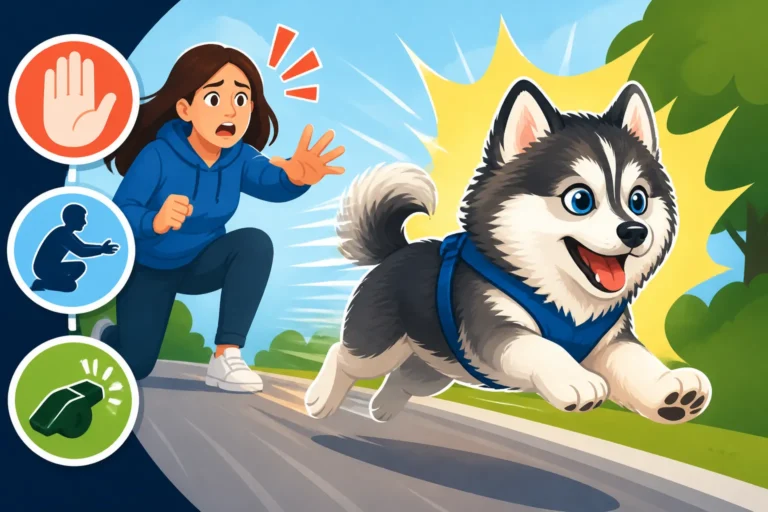
Imagine you're walking in a supposedly safe, open field. Suddenly, a rabbit darts across the path 50 yards ahead. In a fraction of a second, your Pomsky, who was just politely walking beside you, transforms into a blur, bolting after the perceived prey. At that moment, no amount of calling, whistling, or even shouting their name with the most enticing tone will likely bring them back. They are literally "in the zone." This isn't stubbornness; it's biology. The potential consequences range from them getting lost and disoriented, to running into traffic, injuring themselves in pursuit, or even harming another animal or person's pet. This isn't a risk to be taken lightly, and it's why Whether a Pomsky Can Be Trained Off Prey Drive is a constant question among owners.
The "Deaf Ear" Phenomenon
Many Pomsky owners lament what they affectionately, or sometimes exasperatedly, call the "deaf ear" phenomenon. This is when your Pomsky, who knows commands perfectly well in your living room or even a quiet yard, suddenly acts as if they've never heard their name or the word "come" in their life when faced with an exciting outdoor environment. It's not that they don't know the command; it's that the reward of ignoring you, whether it's the thrill of a chase, the intrigue of a new smell, or the sheer joy of unbridled running, far outweighs the reward of complying.
This phenomenon is directly tied to their independent nature and high intelligence. Pomskies are smart, perhaps too smart for their own good sometimes. They quickly learn what they can get away with and what's genuinely rewarding. If ignoring your recall often leads to a fun chase or an interesting discovery, they learn that the "fun" is out there, not necessarily by your side. This selective hearing is a significant hurdle for off-leash reliability. It means that even with excellent training in controlled environments, the unpredictability of the real world can shatter that reliability in an instant. This also links back to Recall on a Pomsky Bred From a Dog That Runs, making it a perpetual challenge.
Environmental Dangers and Their Consequences
Beyond the immediate risk of them running away, there's a whole host of environmental dangers that an off-leash Pomsky can encounter.
- Traffic: This is perhaps the most immediate and tragic risk. A Pomsky focused on a scent or a chase will not look both ways before crossing a road. Their speed and small-to-medium size can make them difficult for drivers to see or react to in time.
- Other Animals: An off-leash Pomsky could encounter aggressive dogs, wildlife (which could injure them or transmit diseases), or even livestock, leading to altercations or injuries. If your Pomsky's prey drive kicks in and they chase someone's cat or chickens, you could be facing legal and financial repercussions.
- Getting Lost: Even in seemingly familiar areas, a Pomsky can quickly become disoriented if they chase something too far. Their adventurous spirit means they'll keep going, and without a leash, tracking them can be incredibly difficult. A lost Pomsky faces exposure, hunger, dehydration, and the trauma of being alone. This is where a GPS tracker like the ones available on Amazon or other pet supply stores can be an absolute lifesaver, providing a crucial layer of safety even if off-leash isn't your primary goal. Whether a Pomsky Should Have a GPS Tracker is a smart question to consider.
- Ingesting Harmful Substances: From toxic plants to discarded food, antifreeze, or rat poison, the world is full of things that can be dangerous for a curious, off-leash dog to sniff and potentially ingest. A leash provides you with the immediate control to prevent such incidents.
- Injury: Running full tilt through uneven terrain, over rocks, through thorny bushes, or even just colliding with something unseen can lead to sprains, cuts, broken bones, or worse. Their exuberance can sometimes be their undoing without human guidance.
Given these serious risks, it becomes clear that considering off-leash freedom for a Pomsky requires an incredibly high level of confidence in their training, a deep understanding of their individual temperament, and an absolutely foolproof environment. For many, the peace of mind that comes with a secure leash or long line simply isn't worth trading for the potential dangers.
Building a Foundation: Training for Reliability (Not Just Obedience)
Given the inherent instincts of a Pomsky, achieving true off-leash reliability isn't just about teaching them commands; it's about building a profound level of engagement, trust, and a consistent habit of choosing you over distractions. This requires a different approach to training, one that focuses on motivation and proofing in real-world scenarios, rather than just rote memorization in a quiet living room. We're aiming for a dog that wants to come back, not one that has to.
The Power of Positive Reinforcement
When training a Pomsky, especially for something as critical as recall, positive reinforcement is your most potent tool. These dogs are intelligent and can be sensitive, and they thrive on clear communication and rewarding experiences. Harsh corrections, punishment, or intimidation tactics will likely backfire, leading to a dog that fears you or simply shuts down, rather than one eager to engage and learn. Think about it: why would your dog choose to come back to a source of negativity when there's an exciting squirrel to chase?
Instead, make coming back to you the most amazing, high-value experience possible. Use treats that your Pomsky absolutely adores – not just their regular kibble, but something truly special like cheese, cooked chicken, or hot dogs. Pair this with enthusiastic praise, happy tones, and perhaps even a brief game of tug when they return. The goal is to create an association where "coming when called" means "jackpot!" every single time. Start in a quiet, low-distraction environment, like your home or fenced yard. Practice hundreds, if not thousands, of recalls in these safe spaces before ever contemplating a less controlled setting. Build a rock-solid foundation where coming to you is always more fun and rewarding than anything else in that moment. Many online programs, like those offered by BAXTER & Bella, emphasize positive reinforcement methods that can be incredibly effective for building this kind of relationship-based training. What a Pomsky Will Work For often revolves around these high-value rewards.
Mastering the Emergency Recall
Even with consistent training, a regular "come" command might not cut it when your Pomsky's prey drive suddenly kicks in. This is where an "emergency recall" comes into play. This isn't just a louder version of your regular recall; it's a completely separate, distinct command that your dog associates with the absolute highest reward and urgency.
Choose a unique word or sound that you only use for emergency situations. This could be a specific whistle, a distinct phrase like "COME NOW!", or a unique hand signal. Introduce this command in a calm environment, but immediately follow it with an even bigger jackpot than usual – a handful of those super high-value treats, a favorite toy, or an impromptu play session. The key is to never overuse it, never use it casually, and always make the reward for responding to it absolutely phenomenal. The idea is that if you use this command, your Pomsky immediately thinks, "Oh my goodness, whatever Mom/Dad has for me must be incredible, I need to get there NOW!" This command should be practiced regularly but sparingly, ensuring it retains its power. This is your ultimate safety net, but it's important to understand it's still not foolproof against every instinctual surge. This dedicated training is crucial for Building a Recall a Pomsky Answers.
Leash Manners and Impulse Control
Before even dreaming of off-leash moments, your Pomsky needs impeccable leash manners and strong impulse control. If your dog pulls relentlessly on the leash, lunges at squirrels, or generally disregards you while tethered, they are absolutely not ready for off-leash freedom. Leash training is not just about polite walking; it's about teaching your Pomsky to pay attention to you, to defer to your guidance, and to understand that you are the leader in all environments.
Work on basic obedience commands like "sit," "stay," and "leave it" in increasingly distracting environments. Practice walking on a loose leash in busy parks, near other dogs, and around tempting smells. The goal is to make these behaviors automatic, even when there are fascinating things happening around them. A Pomsky that can "leave it" when a dropped hot dog is on the pavement or maintain a loose leash past a barking dog has a much better foundation for off-leash reliability. This also helps develop their understanding of boundaries and expectations, which are vital when the physical boundary of a leash is removed. Teaching a Pomsky to focus on you even with distractions is key, as their natural inclination can be to investigate everything around them.
Developing strong impulse control involves games and exercises that require them to wait for a reward, like waiting for their food bowl to be put down, or waiting for a "go" cue before chasing a thrown toy. These small, consistent practices build a mental muscle that helps them resist immediate gratification in favor of listening to you.
| Training Element | Goal for Pomsky Reliability | Why it Matters for Off-Leash |
|---|---|---|
| Positive Reinforcement | Make coming to owner the most rewarding experience. | Builds desire to return, not just compliance. |
| Emergency Recall | Create an instant, high-value response to a unique cue. | Provides a critical safety net in high-distraction scenarios. |
| Leash Manners | Maintain focus on owner and polite walking in distractions. | Proves they can ignore distractions even when tethered. |
| Impulse Control | Resist immediate gratification, defer to owner's cues. | Strengthens mental discipline to override instinctual urges. |
| Proofing | Practice commands in increasingly challenging environments. | Ensures reliability translates from calm settings to real-world chaos. |
Safe Alternatives to Off-Leash Freedom
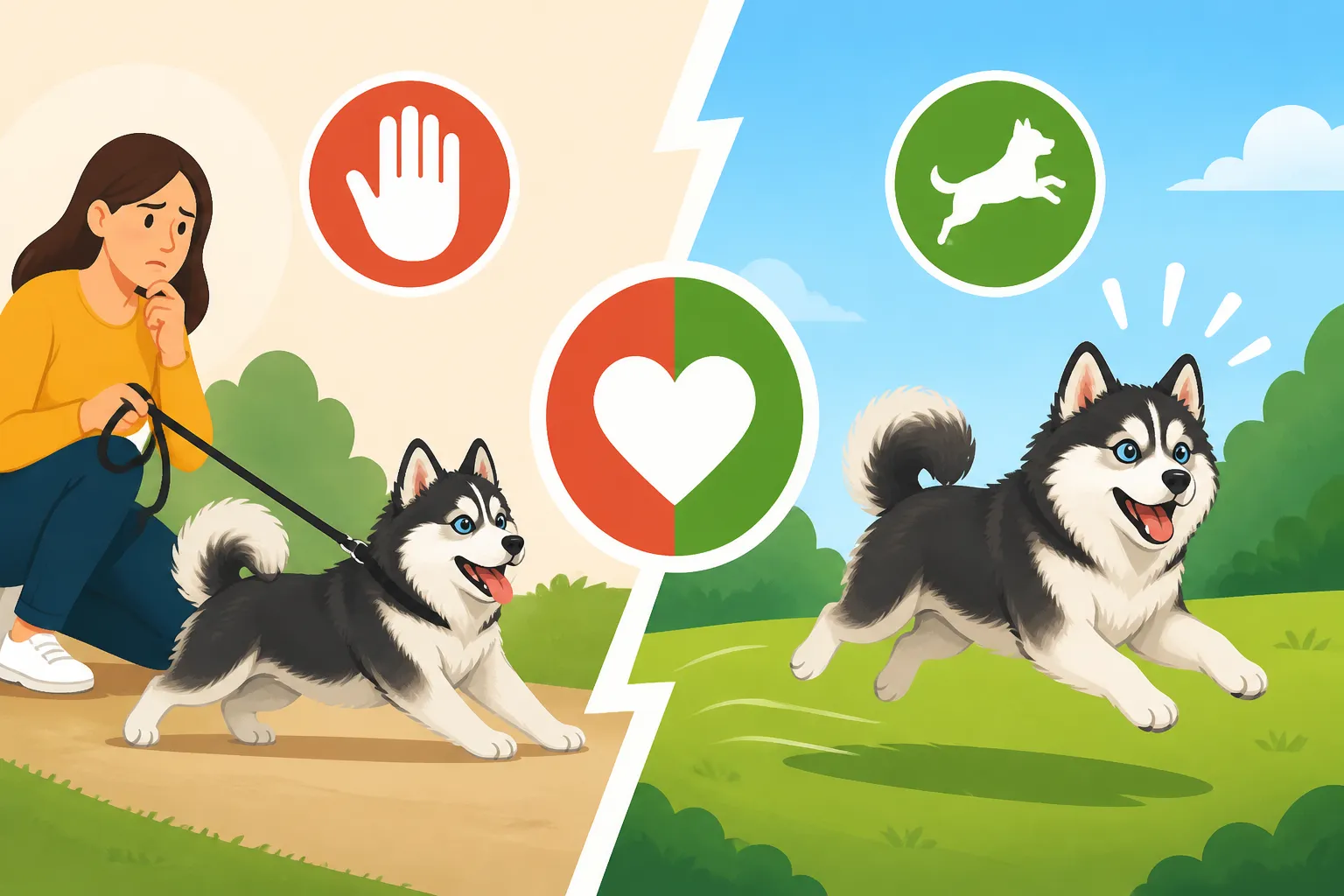
For many Pomsky owners, the dream of truly off-leash walks in uncontrolled environments remains just that – a dream. But this doesn't mean your Pomsky has to live a life confined to a short leash and a boring routine. There are many fantastic, safe alternatives that allow them to experience the joy of running, exploring, and burning off that incredible energy, all while keeping them secure and minimizing risks. It's about finding creative ways to meet their needs without putting them in harm's way.
Long Lines and Secure Play Areas
If you yearn to see your Pomsky gallop with more freedom than a standard six-foot leash allows, long lines are your new best friend. These are essentially very long leashes, ranging from 15 to 50 feet or even more, made of durable material. They allow your Pomsky a much greater range of movement to explore scents, chase toys, and run in an open space, all while you maintain a physical connection and control.
Using a long line effectively means finding a relatively open, safe area – a quiet park, a large field, or even your own backyard if it's spacious enough. Attach the long line to a well-fitting harness (never a collar, as a sudden stop on a long line could cause neck injury, especially for a breed prone to The Collapsing Trachea a Pomsky Gets From the Pomeranian). Allow your Pomsky to explore, but keep an eye on the line, ensuring it doesn't tangle around obstacles or other people. Practice your recall frequently while on the long line. This is an excellent way to proof your "come" command in a more stimulating environment, knowing you have a backup if they decide to ignore you. Working a Pomsky on a Fifty Foot Line can be incredibly rewarding for both of you.
Another fantastic option is finding securely fenced dog parks or private dog run rentals. These spaces are specifically designed for dogs to play off-leash safely. However, even in a fenced dog park, vigilance is key. Not all dogs are friendly, and not all owners are responsible. Always assess the environment, ensure the fencing is truly secure (Pomskies can be surprisingly agile and small enough to slip through gaps), and supervise your Pomsky closely. For those worried about fencing at home, understanding The Fence a Pomsky Actually Needs is crucial. Remember, some Pomskies are true escape artists, so a typical fence might not be enough.
Engaging Mental and Physical Stimulation
A well-exercised Pomsky is a happier, calmer Pomsky, and this includes both physical and mental stimulation. If your Pomsky isn't getting enough of either, they're far more likely to try to create their own excitement, which often involves running off to explore or getting into mischief.
- Daily Walks & Runs: Regular, brisk walks or runs are non-negotiable for this energetic breed. Two good walks a day, each lasting at least 30-45 minutes, can make a huge difference. If you're a jogger, a Pomsky can often make a great running companion once they're fully grown and conditioned, but always on a leash. The Exercise a Pomsky Needs Every Day goes beyond just a quick stroll around the block.
- Interactive Play: Tug-of-war, fetch (in a secure area), and flirt pole games are excellent ways to burn energy and engage their minds. These activities can also be used as high-value rewards during recall training.
- Puzzle Toys & Snuffle Mats: Pomskies are intelligent, and their brains need a workout just as much as their bodies. Food puzzle toys, snuffle mats, and lick mats can keep them engrossed for significant periods, channeling their energy into problem-solving. This helps prevent boredom, which can lead to destructive behaviors or a heightened desire to escape.
- Training Classes & Dog Sports: Enroll in advanced obedience classes, scent work, or even agility (if your Pomsky enjoys it and is physically suited). These activities provide structured mental stimulation, strengthen your bond, and offer a safe outlet for their natural drives. Learning new tricks also keeps their minds sharp and engaged.
By providing ample mental and physical outlets, you reduce the likelihood of your Pomsky feeling the overwhelming urge to "self-entertain" by bolting after perceived prey or exploring beyond your property.
Technology to Aid Safety
Even when you're being as careful as possible, technology can offer an extra layer of peace of mind for an adventurous Pomsky.
- GPS Trackers: As mentioned earlier, a quality GPS tracker is a smart investment. These small devices attach to your dog's collar or harness and allow you to track their location in real-time via a smartphone app. If your Pomsky were to get out of a gate or slip their leash, you'd have a much better chance of finding them quickly. Brands like Tractive or Fi offer excellent options that are robust and designed for active dogs. While they don't replace training and vigilance, they are an invaluable safety net. Whether a Pomsky Should Have a GPS Tracker is a question with a clear answer for many responsible owners.
- Microchipping: This is standard practice for any dog, but it's especially critical for a breed with a propensity for wandering. A microchip ensures that if your lost Pomsky is found and scanned by a vet or shelter, you can be quickly identified and reunited. Always ensure your microchip registration information is up-to-date.
- Secure Harnesses and Double Leashing: For walks in higher-risk areas, consider a secure, escape-proof harness. Some owners even double leash their Pomskies, attaching one leash to a collar and another to a harness for extra security, especially if their dog is prone to slipping out of equipment. A martingale collar can also be helpful for dogs that tend to back out of their collars. Why a Pomsky Should Wear a Harness is important for comfort and safety.
By combining diligent training, safe exercise alternatives, and smart technology, you can give your Pomsky a rich, fulfilling life without constantly worrying about the dangers of unsupervised off-leash freedom. It’s about being pragmatic and prioritizing their safety and well-being above a romanticized ideal.
When Off-Leash Might Be Possible (With Extreme Caution)
While it's generally advised that Pomskies should not be trusted off-leash in uncontrolled environments, there are very specific, highly regulated situations where it might be considered, but only with an extraordinary level of caution, training, and continuous assessment. This is not for every Pomsky, nor for every owner, and certainly not without understanding the inherent risks involved. It requires a commitment that goes beyond standard obedience.
Highly Controlled Environments
The only places where an off-leash Pomsky could potentially be safe are those with absolutely foolproof boundaries and minimal external distractions. This means:
- Private, Securely Fenced Property: This is the most ideal scenario. If you own property with a very tall, dig-proof, and escape-proof fence, your Pomsky can enjoy supervised off-leash time there. But even here, vigilance is key. Check for weak spots, gates left ajar, or anything a clever Pomsky might exploit. Remember, they are notorious escape artists and can often clear fences surprisingly high for their size. How High a Pomsky Can Jump a Fence might surprise you.
- Designated, Fully Enclosed Dog Parks (with caveats): Some dog parks are incredibly well-maintained and fully double-gated, offering a genuinely secure space. However, the caveat is always the other dogs and their owners. You must be confident in your Pomsky's social skills and your ability to intervene if an interaction turns sour. Always scope out the park first, ensure it's not overcrowded, and leave if you feel uneasy. Even in these settings, your Pomsky's recall should still be paramount, as conflicts can arise quickly.
- Professional Training Facilities: These are typically indoors or in extremely secure, double-fenced outdoor areas. In such environments, with a professional trainer guiding you, you can safely work on advanced off-leash commands and proofing, knowing the environment is controlled. This isn't for casual play, but for specific, supervised training sessions.
It's crucial to understand that "highly controlled" means virtually no chance of escape and minimal unexpected external stimuli that could trigger their prey drive or independent streak. A public park, even if it feels quiet, is rarely "controlled" enough due to potential for unexpected wildlife, other people, or errant vehicles.
The Unwavering Bond and Training Commitment
For a Pomsky to achieve any semblance of off-leash reliability, the bond between dog and owner must be exceptionally strong, built on trust, clear communication, and consistent positive reinforcement. This bond means your Pomsky genuinely prefers to be with you and finds your presence and interaction more rewarding than fleeting distractions.
- Consistent, Lifelong Training: This isn't a "train them once and you're done" situation. Off-leash reliability, if it's ever truly achieved, requires continuous reinforcement, practice in various safe environments, and a commitment to upholding training standards throughout your dog's life. This includes regularly practicing your emergency recall and basic obedience in slightly more distracting situations.
- Extreme High-Value Rewards: As discussed, your recall has to be associated with the absolute best things in your Pomsky's world. If they value a chase more than your treat, your recall will fail. You must constantly demonstrate that coming back to you yields an unparalleled reward.
- Attention and Engagement: Your Pomsky must be deeply engaged with you, always checking in, always responsive to your voice and body language. This level of attention is built through consistent training, interactive play, and simply spending quality time together. A Pomsky that is constantly looking at you, even when exploring, is a much safer bet than one whose head is always down, nose to the ground. Whether a Pomsky Is Stubborn or Independent plays a big role here; you need to channel that independence into a desire to engage with you.
Even with an unwavering bond and extensive training, remember that instincts are powerful. A single moment of distraction can override years of effort.
Continuous Assessment and Risk Management
Approaching off-leash freedom with a Pomsky is an ongoing process of risk assessment. It's never a set-it-and-forget-it scenario.
- Know Your Individual Dog: Every Pomsky is an individual. Some might have a lower prey drive or a stronger desire to please than others. You must be intimately familiar with your specific dog's quirks, triggers, and level of responsiveness. Don't compare your Pomsky to others; assess their individual capabilities.
- Evaluate the Environment Every Single Time: Before even unhooking the leash, thoroughly scan the area. Are there other dogs? Are there people? Are there potential wildlife sightings? Is the gate truly secure? Are there any unexpected hazards? If there's any doubt, err on the side of caution and keep the leash on.
- Stay Present and Vigilant: If your Pomsky is off-leash, your attention must be 100% on them. No phone scrolling, no deep conversations with friends. You need to be aware of your surroundings, anticipate potential distractions, and be ready to act instantly if needed. This level of constant vigilance is mentally exhausting, which is another reason why true off-leash freedom is so challenging.
- Have a Backup Plan: Even with all precautions, prepare for the worst. Ensure your Pomsky is microchipped and wearing identification tags. Consider a GPS tracker. Know What to Do When a Pomsky Bolts and have a plan for finding them. This includes having recent photos, contact info, and knowing local animal control numbers.
In essence, for a Pomsky to ever be off-leash, it requires a perfect storm of environmental control, unparalleled training, an exceptional human-canine bond, and continuous, hyper-vigilant risk management. For most owners, the effort and the remaining risk simply aren't worth it, and safer alternatives provide plenty of happy exercise. Whether a Pomsky Can Be Trusted in an Unfenced Yard is a question that usually gets a resounding "no" from experienced Pomsky owners.
Realistic Expectations and Lifelong Commitment
After exploring the unique blend of instincts and intelligence that defines the Pomsky, it becomes clear that establishing off-leash reliability is a monumental task, if not an outright impossibility for the vast majority. Setting realistic expectations is paramount to both your peace of mind and your Pomsky's safety and well-being. It's about accepting your dog for who they are, understanding their genetic blueprint, and committing to a lifestyle that prioritizes their safety above a romanticized ideal of canine freedom.
Accepting the Breed's Nature
The first and most crucial step is to truly accept that your Pomsky, by virtue of their Husky and Pomeranian heritage, is predisposed to certain behaviors that work against off-leash reliability. This isn't a flaw in your dog; it's simply who they are. They are not retrievers or collies, bred for generations to work closely and consistently with a human handler, ignoring all other stimuli. Instead, they come from lines that celebrate independence, curiosity, and an innate drive to explore.
Trying to force a Pomsky into a mold that goes against their deeply ingrained instincts can lead to frustration for both you and your dog. You might feel like a failure as a trainer, and your Pomsky might become confused, stressed, or even develop behavioral issues if constantly pushed beyond their natural inclinations. Instead, celebrate their unique qualities: their intelligence, their adventurous spirit, their sometimes mischievous charm. Understand that their tendency to bolt or follow a scent is not defiance; it’s instinct. This acceptance frees you to focus on strategies that do work and allow your Pomsky to thrive safely. Whether a Pomsky Is Stubborn or Independent often boils down to this inherent nature.
Prioritizing Safety Above All Else
When it comes to off-leash freedom, safety must always be the absolute top priority. The risks associated with a lost or injured Pomsky are simply too high to disregard. A momentary lapse in judgment, an unexpected trigger, or an environmental change can have devastating, irreversible consequences.
Think of it this way: your Pomsky relies entirely on you for their safety and welfare. Choosing to keep them on a leash, use a long line, or only allow them off-leash in truly secure, private areas is an act of love and responsibility. It ensures they don't become another statistic of a lost dog or fall victim to traffic, fights with other animals, or accidental poisoning. Investing in reliable equipment, like a strong harness and a high-quality leash, is a non-negotiable part of responsible Pomsky ownership. Consider a GPS tracker for that added layer of security. Whether a Pomsky Should Have a GPS Tracker is a proactive measure that speaks volumes about prioritizing safety.
This commitment to safety also extends to how you manage interactions with the outside world. If you know your Pomsky has a strong prey drive, don't let them off-leash around cats or small children even if you think they'll be okay. If they have a tendency to be wary of strangers, don't force off-leash greetings in public spaces. Always err on the side of caution.
The Joy of a Leash-Reliant Companion
Embracing the reality that your Pomsky might always be a "leash-reliant" companion doesn't mean sacrificing joy or adventure. In fact, it often enhances it. A dog safely on a leash can explore bustling city streets, navigate crowded hiking trails, and encounter new experiences with the security of knowing you are their guide and protector. You can both relax and enjoy the outing without the underlying anxiety of wondering if they'll suddenly bolt.
Focus on making leash walks and long-line sessions incredibly enriching. Teach them fun tricks on leash, practice obedience in varied environments, and use their time on lead to bond and communicate. Explore new parks, trails, and pet-friendly establishments. A well-exercised, mentally stimulated Pomsky, even if always on lead, is a happy and fulfilled dog. They can still chase a frisbee on a 50-foot long line, engage in exciting scent games in your secure yard, and enjoy countless adventures by your side. The Full Cost of Fourteen Years With a Pomsky includes the investment in their safety and well-being through responsible choices like consistent leash use. Ultimately, the measure of a good life for your Pomsky isn't whether they can run off-leash; it's whether they are loved, safe, and fulfilled by your side, on or off leash.
Disclaimer
This article is for general informational purposes only and does not constitute professional advice. Laws, prices and regulations vary by location and change over time. Consult a qualified professional for guidance on your specific situation.