Whether a Pomsky Can Be Trained Off Prey Drive
One of the most common heartbreaks for new Pomsky parents is realizing that their adorable, fluffy mini-Husky package comes with a deeply ingrained instinct to hunt anything that moves, often to the exclusion of everything else. It can be incredibly frustrating and even dangerous when your beloved companion suddenly locks onto a squirrel, a rabbit, or even the neighbor's cat, and becomes utterly deaf to your pleas and commands. This guide will delve into what prey drive means for your Pomsky, why it's so strong, and how you can realistically manage and work with this powerful instinct to keep your furry friend safe and well-behaved.
Understanding the Pomsky's Instinctive Prey Drive
Let's be real: when you bring a Pomsky into your home, you're welcoming a dog with a rich genetic tapestry woven from two incredibly intelligent and active breeds. Both the Siberian Husky and the Pomeranian, in their own unique ways, contribute to the phenomenon we call prey drive, and understanding its roots is the first step to managing it effectively. It's not a flaw in your dog; it's a fundamental part of who they are.
What is Prey Drive in Dogs?
Prey drive isn't about aggression or wanting to harm; it's a sequence of natural, hardwired behaviors that wild canids use to find, chase, catch, and consume food. Think of it as a series of steps: orienting (spotting the "prey"), eye-stalking (focusing intently), chasing, grabbing/biting, and killing/dissecting. In domestic dogs, especially those bred for certain tasks, parts of this sequence might be exaggerated or suppressed. For example, a retriever is often bred to retrieve but not to kill, while a terrier might have a very strong "kill" bite instinct.
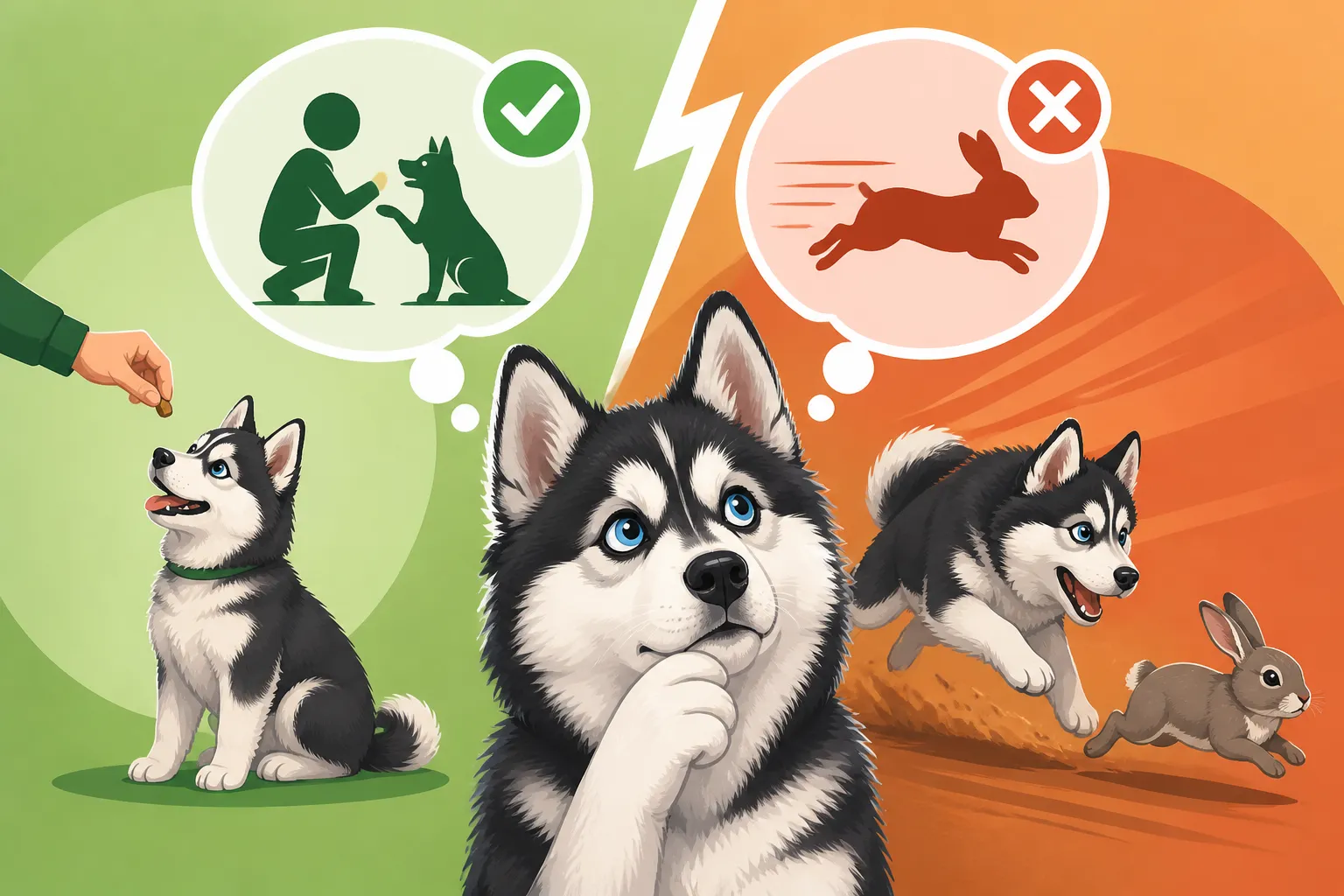
For a Pomsky, this drive usually manifests most strongly in the "orient and chase" phases. They see something small and fast, and their brain says, "Go get it!" This isn't a choice; it's an automatic, powerful reaction. It's important to understand that you cannot "train out" prey drive entirely, any more than you can train a dog not to breathe. It's an instinct, not a learned behavior, but it can be managed, redirected, and controlled through consistent training and careful handling. The key is to teach your Pomsky to respond to you even when that instinct kicks in, and to provide appropriate outlets for that drive.
The Husky and Pomeranian Influence
Now, let's talk about the unique blend that is your Pomsky. On one side, you have the Siberian Husky, a breed originally developed to pull sleds over vast, unforgiving distances. These dogs were often fed sparingly and, historically, had to supplement their diets by hunting small game like rabbits, rodents, and birds. This meant a strong, independent hunting instinct was not just desirable, but essential for survival. Huskies are known for their exceptional stamina, speed, and their ability to tune out distractions when focused on a task – or a fleeing critter. You can learn more about this in The Prey Drive a Pomsky Gets From the Husky.
Then, you have the Pomeranian. While tiny, Pomeranians are descendants of larger Spitz-type dogs and often possess a surprising amount of terrier-like grit and tenacity. They were originally used as alarm dogs and even ratters in some contexts. That small package can house a surprisingly feisty and determined spirit, with a keen eye for anything that scurries. While they might not be chasing down deer, a Pomeranian often has a high-pitched bark and an eager pursuit of a dropped crumb or a fluttering leaf. Combine these two, and you get a Pomsky: a dog with the potential for both the stamina and pursuit instinct of a Husky, and the focused, persistent drive of a smaller game hunter. It's a powerful combination that requires respect and proactive management from day one.
The Challenges of Managing Prey Drive in a Pomsky
Living with a Pomsky who has a strong prey drive can feel like a constant battle of wills, or worse, a desperate attempt to keep them safe from themselves and the world around them. Owners often describe feelings of anxiety during walks, frustration when their commands are ignored, and genuine fear for the safety of other animals. It’s a completely understandable struggle, and you are not alone in facing these particular Pomsky-specific dilemmas.
Spotting the Signs of Prey Drive in Your Pomsky
Recognizing the early warning signs of prey drive in action is crucial for intervention and management. It's not just about seeing them bolt after a squirrel; it's about noticing the subtle shifts in their demeanor and focus that precede the chase. When your Pomsky's prey drive is engaged, their body language changes dramatically. You might notice their ears swivel forward, their body stiffen and lower into a crouch, and their tail might become rigid or wag with a very specific, intense vibration, rather than a loose, happy wag. Their gaze will become intensely fixed, almost glassy, entirely focused on the "prey." They become hyper-aware of every twitch and movement of the target.
Sometimes, it’s the sudden stillness before the explosion of movement. They might stop mid-stride, nose pointed, eyes wide, completely locked on a bird across the park or a rustling bush. At this point, their hearing often becomes selective, and your voice, which moments before might have commanded their attention, now falls on deaf ears. They are in a primal zone. Understanding these indicators allows you to intervene before the full chase sequence begins, giving you a better chance to redirect their focus. It's about learning to read your dog and anticipate their next move based on the environment and their reaction to it.
The Risks of Unmanaged Prey Drive
The consequences of unmanaged prey drive in a Pomsky can range from inconvenient to genuinely dangerous. On the milder side, you might experience the sheer embarrassment of your dog dragging you across the park, barking frantically at a squirrel, or becoming obsessed with every bird that lands in your yard. It can make walks a constant tug-of-war and create tension in interactions with other dogs or people who don't appreciate a dog lunging.
More seriously, an unmanaged prey drive poses significant safety risks. A Pomsky that bolts after a rabbit could run into traffic, become lost, or injure themselves in pursuit. Their focus on the "prey" means they are oblivious to their surroundings. Furthermore, if your Pomsky catches a small animal, they could seriously injure or even kill it, leading to heartbreaking situations and potential legal repercussions if the animal belongs to someone else. This is a real concern if you have other small pets at home; ensuring Whether Small Pets Are Safe Around a Pomsky is a major consideration. Even with seemingly innocent chasing, a fast-moving Pomsky can cause fear or injury to children or smaller dogs who might be mistaken for prey in their tunnel-visioned state. It’s a dangerous game of chance to leave such a strong instinct unchecked.
Strategies for Training and Management, Not Eradication
Since you can't erase prey drive, your goal as a Pomsky owner is to develop comprehensive strategies for management and redirection. This means being proactive, consistent, and endlessly patient. It’s about building a robust foundation of obedience and trust, while also structuring their environment to minimize opportunities for the drive to take over dangerously.
Focusing on Management Over "Curing" Prey Drive
Let's get one thing straight: you will never fully "cure" your Pomsky of their prey drive. It's like asking a fish to stop swimming. However, you can absolutely manage it, which means preventing undesirable outcomes and channeling that energy into appropriate activities. Think of it less as a battle and more as a negotiation. Your Pomsky’s brain is hardwired for certain actions, and your job is to create a stronger, more rewarding pathway for your desired actions.
Management starts with prevention. If you know your Pomsky is highly likely to chase a rabbit in an open field, then an open field without a long line or secure fencing is not an appropriate environment for them to be off-leash. This might sound restrictive, but it's about being a responsible owner and ensuring their safety and the safety of other creatures. This involves making smart choices about where and when you expose them to triggers. It's also about being prepared with high-value treats and engaging toys that can, in time, compete with the allure of a fleeing critter. Never underestimate the power of a delicious piece of chicken or a favorite squeaky toy to break a trance.
Foundation Training: Recall and Impulse Control
Building a rock-solid recall is arguably the single most important training goal for any dog with a strong prey drive. It could literally save your Pomsky's life. This isn't just a "come when called" command; it needs to be an emergency recall that overrides every other instinct. Start training this in a low-distraction environment, using the highest value treats your Pomsky will work for. Make coming to you the most exciting and rewarding thing in the world, every single time. Practice frequently, making a big deal out of their success. Only gradually introduce distractions as their reliability improves. For detailed steps, consider reading Building a Recall a Pomsky Answers.
Beyond recall, impulse control exercises are vital. Commands like "leave it" and "wait" teach your Pomsky to pause and look to you for direction, even when something tempting is nearby. Start with still objects (a toy, a treat on the floor) and slowly progress to moving objects (a thrown toy, someone walking by with another dog, eventually a distant bird). Again, high-value rewards for success are key. The goal is to build up their ability to disengage from a stimulating target and re-engage with you. This takes enormous patience and consistency, but the payoff in safety and peace of mind is immeasurable. A reputable online training program, like one offered by BAXTER & Bella, can provide structured lessons for these foundational skills, allowing you to work at your Pomsky's pace from the comfort of your home.
Redirecting Prey Drive to Appropriate Outlets
Since prey drive can't be eliminated, the smartest approach is to redirect it into safe, acceptable channels. Your Pomsky needs an outlet for that chase instinct, or they will find one themselves, likely in a way you won't appreciate. This means engaging them in activities that simulate the hunt but under your control.
Flirt poles are fantastic tools for this. They allow your Pomsky to chase, pounce, and "catch" a lure attached to a long stick, providing immense satisfaction without endangering real animals. Lure coursing, if available in your area, is another excellent option, letting dogs chase a mechanical lure in a safe, enclosed space. Certain dog sports, like Fast CAT (Coursing Ability Test) or even agility, can also tap into their desire to run, jump, and focus, giving them a "job" that satisfies their instincts. For individual play, interactive toys that mimic prey, like a remote-controlled car with a stuffed animal attached, can provide mental and physical stimulation. Remember that a mentally and physically tired Pomsky is less likely to be driven to chase every squirrel. The Exercise a Pomsky Needs Every Day is crucial for balancing their energy levels.
Tools and Resources to Aid in Prey Drive Management
Successfully managing a Pomsky with prey drive often requires more than just training; it involves using the right equipment and knowing when to seek additional help. The tools you choose can be the difference between a controlled walk and a terrifying dash, and external resources can provide the expertise you need to navigate trickier situations.
Leashes, Harnesses, and Secure Environments
When your Pomsky has a high prey drive, the right gear is non-negotiable for safety. A simple flat collar is almost certainly inadequate, as a determined Pomsky can easily slip out of it when fixated on prey. Instead, invest in a well-fitting, secure harness, ideally one that clips at both the front and the back, providing better control and discouraging pulling. Many owners find that a double-leash system—one leash attached to the front clip of the harness and another to the back, or even one to the harness and one to a martingale collar—provides an extra layer of security. This gives you two points of contact and redundancy should one clip or leash fail. For guidance on appropriate gear, you might find valuable options on Amazon, which offers a wide selection of harnesses and leashes designed for strong pullers and escape artists. Find out more about why certain gear is crucial in Why a Pomsky Should Wear a Harness.
Beyond walks, a secure home environment is paramount. This means your yard needs to be thoroughly escape-proof. Pomskies can be adept diggers and climbers, and even small gaps in fencing can be an invitation to explore. Regular checks of your fence line for weaknesses, and even considering coyote rollers or fence extensions, might be necessary. Never leave a high prey drive Pomsky unsupervised in an unfenced or insecure area, even "just for a minute." The consequences of them escaping to chase something are too high.
Professional Guidance and Training Programs
Sometimes, despite your best efforts, a Pomsky's prey drive can feel overwhelming, or you might encounter specific challenges that you're unsure how to tackle. This is where professional help can be invaluable. A certified professional dog trainer, especially one experienced with northern breeds or high-drive dogs, can provide personalized strategies, help you refine your techniques, and troubleshoot problem behaviors. They can offer insights into your Pomsky's body language and teach you advanced leash handling skills that can make a huge difference. Don't feel ashamed about seeking help; it's a sign of a responsible and dedicated owner.
There are many resources available, from in-person group classes to private one-on-one sessions, and even comprehensive online dog training platforms. A platform like BAXTER & Bella, for instance, offers extensive programs that cover everything from basic obedience to advanced impulse control, all tailored for home learning. These resources often include video tutorials, live Q&A sessions, and personalized coaching that can empower you with the knowledge and confidence to manage your Pomsky's prey drive effectively. Remember, consistency is key, and a professional can help ensure you're on the right track, making progress in managing this powerful natural instinct.
Managing Expectations and Celebrating Small Victories
It’s easy to get frustrated when your Pomsky seems to "forget" all their training the moment a rabbit hops by. But it’s crucial to manage your own expectations. You are not training off prey drive; you are training through it. This means there will be moments of regression, moments where the instinct is simply too powerful. Don't let these setbacks discourage you. Every time your Pomsky looks back at you, even for a second, when a bird flies by, that's a huge victory. Every time they choose a treat from your hand over a distant squirrel, celebrate it.
Progress isn't linear, and a dog's natural instincts are incredibly strong. Focus on making incremental gains. Perhaps today they only pulled half as hard when they saw that cat. That's progress! The table below offers a comparison of typical prey drive behaviors versus managed behaviors, highlighting the shift in focus you're aiming for.
| Behavior Aspect | Unmanaged Prey Drive | Managed Prey Drive |
|---|---|---|
| Focus | Tunnel vision on prey; ignores owner | Can disengage from prey; re-engages with owner |
| Recall | Non-existent when prey is present; bolts | Reliable recall even with distractions; returns quickly |
| Leash Manners | Lunges, pulls intensely; difficult to control | Walks politely; can be redirected from triggers |
| Interaction with Prey | Chases, grabs, potentially injures or kills small animals | Observes from a distance; redirected to appropriate toys/activities |
| Owner's Role | Reacts to dog's actions; feels powerless | Proactively prevents; redirects; provides outlets |
| Safety | High risk of escape, injury, or harm to others | Minimized risk through training and controlled environments |
Remember that raising a Pomsky with a strong prey drive is a journey, not a destination. It requires constant vigilance, ongoing training, and a deep understanding of your dog's nature. With patience, persistence, and the right tools and strategies, you can build a strong bond with your Pomsky and navigate their instincts safely and happily.
Disclaimer
This article is for general informational purposes only and does not constitute professional advice. Laws, prices and regulations vary by location and change over time. Consult a qualified professional for guidance on your specific situation.