Whether a Pomsky Deposit Is Refundable
Deciding to bring a Pomsky into your life is incredibly exciting, but the journey often starts with a significant financial commitment: the deposit. Many prospective owners hand over these funds with hopes and dreams of a fluffy companion, only to later wonder, "What if things change?" or "Can I get that money back if I have to?" It's a frustrating situation to be in, feeling locked into a decision, and it’s a concern we hear all the time. This guide is here to shed light on the often-confusing world of Pomsky deposits, breaking down why they're usually non-refundable and what you can do to protect yourself.
The Nature of a Pomsky Deposit
When you first start looking for a Pomsky puppy, you'll quickly learn that a deposit is almost always required upfront. This isn't just a random fee; it serves several crucial purposes for breeders, reflecting the unique effort and planning involved in bringing these special dogs into the world. It’s important to understand the breeder's perspective to grasp why these funds are typically handled the way they are.
Securing Your Spot on a Waitlist
The demand for Pomskies has been consistently high since their rise in popularity. Many reputable breeders have extensive waiting lists, sometimes stretching out for a year or more. Placing a deposit is essentially your ticket to reserving a spot on one of these coveted lists. It signals to the breeder that you are serious and committed, rather than just window-shopping. Without a deposit, it would be impossible for breeders to manage interest, leading to chaotic inquiries and unreliable prospective owners.
Think about it from the breeder's side: if they have ten potential families for a litter of five puppies, how do they know who is genuinely ready to proceed? The deposit acts as a commitment device, showing you’re serious about becoming a Pomsky parent. This commitment is particularly vital given the intricate and often expensive process of breeding Pomskies, which often involves procedures like artificial insemination. You can learn more about this in our article on why a Pomsky cannot be bred naturally.
Breeder's Investment and Time
Breeding Pomskies isn't just a hobby; it's a significant undertaking requiring immense financial and emotional investment. Before a litter even exists, breeders incur substantial costs, including health testing their parent dogs – a crucial step for ensuring the puppies are as healthy as possible. This includes comprehensive screenings for genetic conditions prevalent in the Husky and Pomeranian lines, which we discuss further in "The Health Tests a Pomsky Breeder Should Show." Beyond that, there are stud fees, veterinary check-ups throughout pregnancy, specialized nutrition for the dam, and the round-the-clock care needed for newborn puppies.
Once the puppies arrive, the breeder dedicates countless hours to their well-being, including early socialization, vet visits, vaccinations, and microchipping. Each puppy represents not just an adorable fluffball, but months of careful planning, expense, and tireless work. A deposit helps to offset some of these initial costs and guarantees that the breeder won't be left with unsold puppies if a prospective buyer backs out last minute.
Deterring Frivolous Inquiries
Let's face it, getting a puppy is a big decision, and sometimes people get caught up in the excitement without fully thinking through the responsibilities. Deposits act as a filter, separating those who are genuinely ready for the long-term commitment of a Pomsky from those who might be making an impulse decision. If deposits were easily refundable, breeders would be inundated with inquiries from people who might not be serious, wasting valuable time that could be spent on nurturing their current litters or communicating with truly committed families.
This is especially relevant because Pomskies are a designer breed with specific needs, and breeders want to ensure their puppies go to suitable, well-prepared homes. Understanding what a Pomsky needs daily or the extensive grooming bill on a double coated Pomsky can be eye-opening for many first-time owners. The deposit helps ensure that the people moving forward have done their research and are ready for the journey.
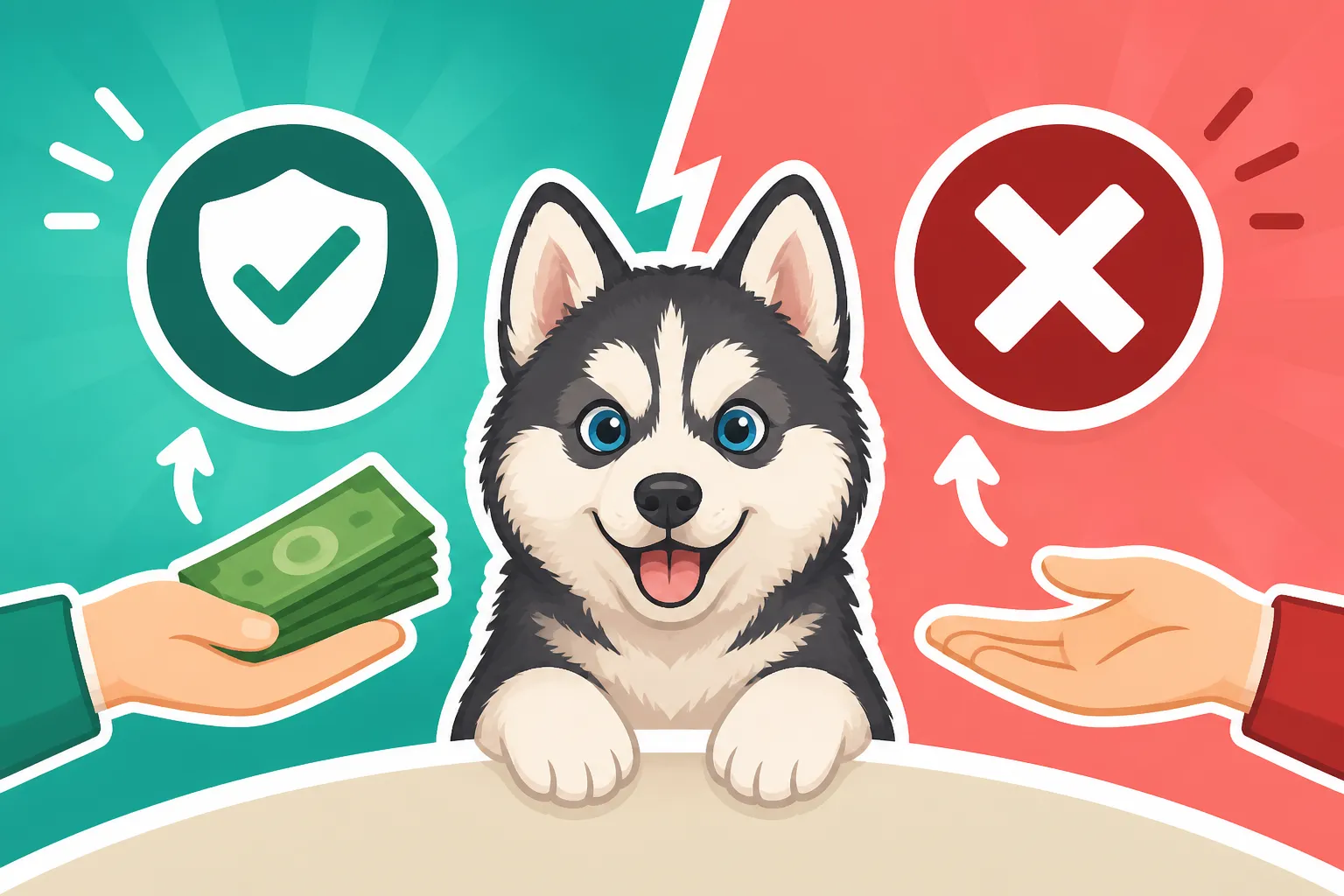
Common Deposit Policies: Refundable vs. Non-Refundable
When it comes to Pomsky deposits, you'll encounter a spectrum of policies. However, it's crucial to understand that one type is far more common, and for good reason, from the breeder's perspective. Navigating these policies upfront is essential to avoid disappointment and financial strain later on.
Non-Refundable Deposits: The Standard Practice
By far, the most common type of Pomsky deposit is non-refundable. This means exactly what it sounds like: once you've paid it, that money is typically not coming back to you if you decide to change your mind or if your circumstances shift. This can be a hard pill to swallow, especially if unexpected life events arise, but it serves a vital function for the breeder.
As we discussed, breeders invest heavily in their litters. If every buyer could get their deposit back on a whim, breeders would face unpredictable financial losses and significant administrative headaches trying to re-home puppies at the last minute. A non-refundable deposit ensures that when a breeder reserves a puppy for you, they have a solid commitment. It protects their time, resources, and the well-being of the puppies, ensuring that their efforts in breeding and raising them are not in vain. This is a practice widely accepted in the responsible breeding community for many popular breeds, including Pomskies.
Conditional Refunds: Rare Exceptions
While non-refundable is the norm, there are extremely rare instances where a breeder might offer a conditional refund. These conditions are almost always related to the breeder's inability to provide a suitable puppy, rather than the buyer's change of heart. For example, if you placed a deposit for a female with blue eyes and a specific coat pattern, and the litter doesn't produce a puppy matching those criteria, a breeder might offer a refund.
However, even in these cases, many breeders will first offer to roll your deposit over to a future litter, giving you another chance to find your ideal companion. It's rare for breeders to issue a full refund unless they simply cannot fulfill their end of the agreement at all, and even then, their contract might specify a transfer option as the primary recourse. This highlights the importance of asking very specific questions and having a clear understanding of the agreement, as covered in "What a Pomsky Deposit Costs."
Transferable Deposits: Flexibility for Future Litters
A more common concession than a full refund is the option to transfer your deposit to a subsequent litter. This is often offered in situations where:
- Your preferred puppy isn't available: If you have specific preferences for gender, color, or eye color, and the current litter doesn't produce a match.
- Your timing changes: Life happens! If you suddenly need to delay bringing a puppy home due to travel, a new job, or a home renovation, a transferable deposit allows you to postpone without completely losing your initial investment.
- The breeder has unexpected delays: Sometimes, breeding plans change, or a litter doesn't happen as anticipated. In such cases, transferring your deposit to a future litter is the standard solution.
Many buyers appreciate this flexibility, as it acknowledges that circumstances can change while still respecting the breeder's initial investment and the commitment you made. It means you don't lose your place entirely on the waitlist, even if it might mean a longer wait. Understanding "How Long Pomsky Waitlists Run" can help manage expectations if a transfer becomes necessary.
What Your Pomsky Contract Should Say About Deposits
This might sound like a formality, but I cannot stress enough how vital a clear, comprehensive contract is when you're dealing with a Pomsky deposit. This isn't just about the money; it's about setting clear expectations, protecting both you and the breeder, and outlining the terms of what will hopefully be a wonderful new addition to your family.
The Written Agreement is King
Verbal agreements are notoriously unreliable, especially when emotions are running high during the puppy-selection process. A breeder might say, "Oh, don't worry, we're very flexible," or "We'll work something out." While their intentions might be good, memories fade, understandings differ, and without it in writing, you have no legal recourse. The contract is your safety net, your roadmap, and your best friend if any disputes arise.
Insist on a written contract before placing any deposit. Read every single clause, even the small print. If anything is unclear, ask for clarification in writing, or have it added to the contract. Don't be afraid to ask questions. A reputable breeder will welcome your thoroughness, as it shows you are a serious and responsible buyer. If a breeder seems hesitant or tries to rush you through the contract, that's a red flag.
Key Clauses to Look For
When reviewing a Pomsky deposit contract, here are some critical clauses to pay close attention to:
- Deposit Amount and Refundability: This is obviously the big one. Will it explicitly state "non-refundable"? If so, understand that fully. If it mentions conditions for a refund, what are they? Be specific.
- Transferability: Does the contract offer the option to transfer your deposit to a future litter? Under what circumstances? Is there a time limit for using a transferred deposit?
- Breeder's Responsibilities: What does the breeder promise? Are they guaranteeing a certain health standard? What about vaccinations and deworming? What kind of health guarantee do they offer (check "What a Pomsky Health Guarantee Covers")?
- Buyer's Responsibilities: What are you agreeing to? Often, this includes commitments to provide proper care, nutrition, and veterinary attention. It might also specify timelines for picking up the puppy.
- Health Guarantees and Returns: What happens if the puppy develops a serious health issue shortly after coming home? Does the contract outline a process for return or compensation? This is distinct from the deposit, but often intertwined.
- Puppy Selection Process: How and when do you choose your puppy? Is it by pictures, or do you visit in person? What if your ideal puppy isn't available in the litter? This relates to "Whether You Pick a Pomsky Puppy or the Breeder Does."
- Estimated Adult Size: Given that predicting a Pomsky's adult size can be tricky, does the contract address what happens if a Pomsky grows bigger than sold? Some breeders have clauses, which you can read more about in "What Happens If a Pomsky Doubles the Estimate."
Red Flags and Ambiguity
If the contract is vague, incomplete, or uses confusing language, consider it a red flag. For instance, if it simply says "deposit required" without specifying if it's refundable or not, assume it's non-refundable until clarified in writing. Any breeder unwilling to put their deposit policy in black and white is someone you should approach with extreme caution. Similarly, if they try to pressure you into signing without reading, or dismiss your questions, it's time to walk away.
A reputable breeder will be transparent and eager to ensure you understand all aspects of the agreement. They might even encourage you to speak with previous puppy owners who can vouch for their policies and practices. Always prioritize a clear, fair contract over the immediate desire for a puppy. This due diligence early on can save you a lot of heartache and money down the road.
Scenarios Where a Deposit Might Be Lost or Returned
Understanding the nuances of deposit policies means looking at various real-world scenarios. While the general rule is "non-refundable," there are specific situations where this rule is rigorously applied, and others where a return, or at least a transfer, becomes a more likely outcome.
Buyer's Remorse or Change of Circumstance
This is, unfortunately, the most common reason a deposit is forfeited. You might have been incredibly excited about getting a Pomsky, paid your deposit, and then a few weeks or months later, life throws a curveball. Perhaps you have to move for a new job, a family member develops severe allergies, or your financial situation changes unexpectedly. It's heartbreaking, and completely understandable that these things happen.
However, from the breeder's perspective, they have held that puppy spot for you. They may have turned away other interested families, spent money on the dam's care, and dedicated time to the litter, all based on your commitment. If you back out, they then have to restart the search for a suitable home, potentially losing critical early socialization time for the puppy or causing delays for others on their waitlist. Because of this, nearly all reputable breeders will clearly state that deposits are non-refundable in these buyer-initiated scenarios. It's a tough lesson, but it underscores the importance of being absolutely certain before placing that deposit.
Breeder's Inability to Provide a Puppy
Here's where the tables often turn. If the breeder is unable to provide a puppy as agreed, then your deposit is typically either refunded or transferred to a future litter. This can happen for several reasons:
- Litter Size or Composition: Sometimes, a litter might be smaller than expected, or it might not contain puppies that match the specific criteria you had (e.g., if you wanted a female and only males were born).
- Health Issues with the Litter: Tragically, sometimes a litter doesn't survive, or puppies develop severe health issues that make them unsuitable for placement. In such distressing cases, a breeder will almost certainly offer a refund or a transfer.
- Breeder's Change of Plans: Occasionally, a breeder might decide to postpone a litter, or even discontinue breeding altogether. If this impacts your deposit, they are generally obligated to offer a refund or a transfer.
The key here is that the inability to deliver is on the breeder's side. This is why having a clear contract is so important, as it should outline these contingencies. An IPA registered Pomsky breeder, for example, typically adheres to a code of ethics that ensures fairness in these situations, offering peace of mind to buyers about their commitment. You can read more about what an IPA registered Pomsky guarantees.
Unforeseen Health Issues with the Puppy
What if you've chosen your puppy, but before pick-up, the puppy develops a health concern that makes it unsuitable? This is a more complex scenario. A responsible breeder will conduct thorough vet checks before releasing puppies. If a serious, non-treatable health issue is discovered by their vet before you take the puppy home, the breeder will typically offer you another puppy from the same or a future litter, or a full refund of your deposit. They won't knowingly send a sick puppy home.
However, it's vital to differentiate this from minor, treatable conditions or issues that arise after the puppy goes home, which usually fall under the health guarantee portion of your contract, not the deposit refund policy. For example, if a puppy gets a minor skin irritation or a case of kennel cough (which is common, and you can learn more about in "Whether a Pomsky Gets Kennel Cough Easily"), that likely wouldn't warrant a deposit refund if you've already committed. Serious conditions, like a severe congenital defect, are a different story and are usually covered by the breeder's health guarantee. This is why it's so important to have a clear understanding of the full contract, not just the deposit section.
Protecting Yourself When Placing a Pomsky Deposit
Handing over a significant sum for a Pomsky deposit requires diligence. It's easy to get swept away by cute puppy pictures, but taking proactive steps can save you from potential heartache and financial loss down the line. Remember, a good breeder will appreciate your thoroughness because it shows you're a responsible prospective owner.
Thorough Breeder Vetting
Before you even think about placing a deposit, do your homework on the breeder. This is probably the single most important step you can take.
- Reputation and References: Ask for references from previous puppy buyers. A good breeder will be happy to provide them. Reach out to these individuals and ask about their experience, the health of their Pomsky, and how the breeder handled communication and any issues.
- Transparency and Communication: Is the breeder open and willing to answer all your questions, even the tough ones? Do they provide regular updates on the puppies? Are they transparent about their breeding practices, including how often they breed their females and the health testing done on the parent dogs?
- Facility Visit or Video Tour: If possible, visit the breeder's facility in person. Observe the living conditions of the parent dogs and puppies. Are they clean, safe, and well-socialized? If an in-person visit isn't feasible, ask for a video tour. This also helps you understand the environment your future puppy is coming from and can address concerns like "Whether a Pomsky Should Be Bought Sight Unseen."
- Health Testing Documentation: Request to see verifiable health clearances for the parent dogs. These should include screening for common issues like hip dysplasia (read "Hip Dysplasia in a Twenty Pound Pomsky"), patellar luxation (explore "Slipping Kneecaps in a Pomsky"), and eye conditions (learn about "The Eyes a Pomsky Gets From the Husky"). A responsible breeder will have these readily available and understand why you're asking.
- No Red Flags: Be wary of breeders who offer extremely low prices, push for quick decisions, or refuse to provide a detailed contract. These are often signs of backyard breeders or puppy mills.
Ask Specific Questions About the Deposit
Once you've vetted the breeder, and you're seriously considering moving forward, get every detail about the deposit in writing before you pay anything.
- Is it refundable under any circumstances? If so, what are those specific circumstances?
- Is it transferable to another litter? If yes, what are the conditions for transfer (e.g., preference not met, timing change)? Is there a limit to how many times you can transfer, or a timeframe within which it must be used?
- What happens if the breeder cannot provide a puppy (e.g., litter doesn't happen, no puppies matching criteria, health issues with the litter)? Will you receive a full refund or a transfer?
- What exactly does the deposit secure? A specific puppy, a spot on a waitlist, or a puppy from a particular litter?
- What is the timeframe for puppy selection and pick-up? Understanding this can prevent situations where you might forfeit your deposit if you miss a deadline.
Have these answers written into the contract. Do not rely on verbal assurances. It’s also wise to check "Whether a Pomsky Deposit Is Held for a Year" if you're looking at a long waitlist scenario.
Consider Escrow or Partial Deposits
While rare in puppy sales, some buyers, particularly for high-value purchases, might explore options like escrow services. An escrow holds the deposit money with a neutral third party until all contractual conditions are met by both buyer and seller. This offers an extra layer of protection, ensuring the breeder fulfills their obligations before the funds are released. However, this is not a standard practice in the pet world and breeders may not be willing to engage with it.
A more common, albeit still uncommon, alternative might be a partial deposit system where a smaller initial amount secures your interest, with a larger second payment due closer to puppy selection. Again, breeders are generally looking for a solid upfront commitment, so this is not widely offered. Most breeders require a single, substantial deposit that reflects the commitment involved in "Raising a Pomsky Puppy" from day one. If you're concerned about the total investment, consider whether "What a Pomsky's First Year Costs" fits your budget, as the deposit is just the beginning.
| Deposit Type | Refundable? | Transferable? | Common Scenarios for Loss (Buyer) | Common Scenarios for Return/Transfer (Breeder) |
|---|---|---|---|---|
| Non-Refundable | No (under most circumstances) | Often, under specific conditions | Buyer's change of mind, inability to pick up, no-show | Breeder cannot provide puppy (health, no match) |
| Conditional Refund | Yes, under very specific breeder-defined terms | Usually, if refund conditions not met | Buyer's change of mind | Breeder cannot provide suitable puppy |
| Transferable Only | No refund | Yes, to a future litter | Buyer's change of mind, if no future litter chosen | Breeder's breeding plans change, no suitable puppy |
It’s also important to consider that the financial commitment extends far beyond the initial deposit. You’ll be looking at ongoing costs for food, like options from Chewy, or perhaps fresh food services like Ollie. And don’t forget the peace of mind that comes from pet insurance, with providers like Healthy Paws offering plans to help cover unexpected veterinary bills throughout your Pomsky's life, especially considering potential breed-specific health issues.
Disclaimer
This article is for general informational purposes only and does not constitute professional advice. Laws, prices and regulations vary by location and change over time. Consult a qualified professional for guidance on your specific situation.