Whether Line Brushing Reaches a Pomsky’s Skin
If you've ever owned a Pomsky, you know the absolute joy they bring — and also the unique challenge of their magnificent double coat. Trying to keep that lush fur healthy and free of mats, especially during a blowout, can feel like an endless battle, and many owners struggle with the nagging worry of whether they're truly getting to the skin beneath all that floof. This guide is dedicated to demystifying line brushing, showing you exactly how to tackle your Pomsky's dense coat so you can be confident you're reaching their skin and providing the best care possible.
Understanding Your Pomsky's Double Coat and Why It Matters
Your Pomsky's coat is truly a marvel, a direct inheritance from their Siberian Husky and Pomeranian parents. It's beautiful to look at, incredibly soft, and serves a vital purpose for their comfort and health. But this double layer also demands a specific grooming approach that can often leave owners scratching their heads, wondering if they're doing enough.
The Anatomy of a Pomsky's Coat: Guard Hairs and Undercoat
First, let's break down what we're dealing with. A Pomsky's coat isn't just one type of hair; it's a complex system designed for insulation and protection. You have the longer, coarser guard hairs on top. These are what give your Pomsky their beautiful color, pattern, and overall sleek appearance. They're water-resistant, protect against UV rays, and offer a first line of defense against dirt and debris.
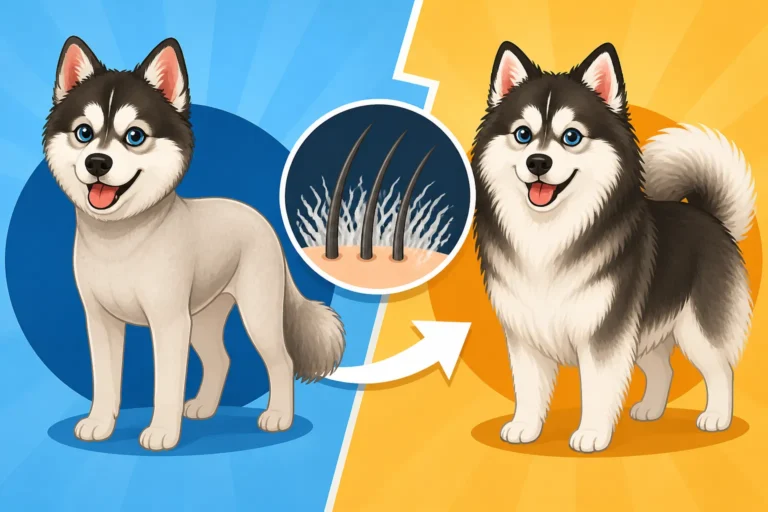
Beneath these guard hairs lies the incredibly dense, soft, and fluffy undercoat. This is the secret to their adaptability in varying temperatures, acting like a built-in thermostat. It traps air to keep them warm in winter and helps regulate their body temperature in warmer weather. The density of this undercoat can vary quite a bit, even among Pomskies, with some leaning more towards the extreme fluff of a Pomeranian, and others having the more typical dense packing of a Husky. You might have noticed The Pomsky That Carries a Husky Coat at Twenty Pounds, which really shows off this dense undercoat. During seasonal shedding, often referred to as "blowing coat," it's primarily this undercoat that your Pomsky is shedding, sometimes in shocking quantities.
The Consequences of Neglecting the Undercoat
If you only brush the top guard hairs, which is a common mistake, you're missing the most crucial part of the grooming equation. The undercoat, left unattended, can quickly become a tangled, matted mess right against your Pomsky's skin. Imagine trying to wear a wool sweater that's matted and stuck to your body – it's uncomfortable, restrictive, and can cause skin irritation.
Neglecting the undercoat can lead to several problems:
- Matting and Pelting: This is the big one. Loose undercoat gets trapped, especially in areas of friction like behind the ears, armpits, and around the tail. These mats can pull on the skin, causing pain and discomfort. Severe matting can even form a solid pelt, restricting movement and making it incredibly painful to groom. It's a real worry for owners, especially during seasonal shedding when Whether a Pomsky Blows Its Coat Twice a Year.
- Skin Irritation and Hot Spots: Trapped moisture and dirt within mats create a perfect breeding ground for bacteria and yeast. This can lead to skin infections, redness, itching, and painful hot spots. Whether a Damp Pomsky Undercoat Causes Hot Spots is a genuine concern if you can't get to the skin.
- Overheating: The undercoat is designed to regulate temperature. When it's matted, it loses its ability to insulate effectively. In warm weather, a dense, matted undercoat can trap heat against the body, making your Pomsky more prone to overheating.
- Unpleasant Odor: Dirt, dander, and moisture trapped in a neglected undercoat can contribute to a stronger, less pleasant doggy odor, no matter how often you bathe them superficially.
- Reduced Coat Health: A healthy coat starts with healthy skin. When the skin can't breathe and is constantly pulled by mats, the overall health and appearance of the coat suffer.
This is why reaching the skin is not just about aesthetics; it's fundamental to your Pomsky's overall well-being.
Demystifying Line Brushing: Technique and Purpose
So, you understand the "why," but the "how" often feels like the bigger mystery. You've probably brushed your Pomsky countless times, only to wonder if your efforts are truly penetrating that dense fluff. This is where line brushing comes in, a technique specifically designed to ensure you get right down to the skin, even on the most lavish double coats.
What Exactly Is Line Brushing?
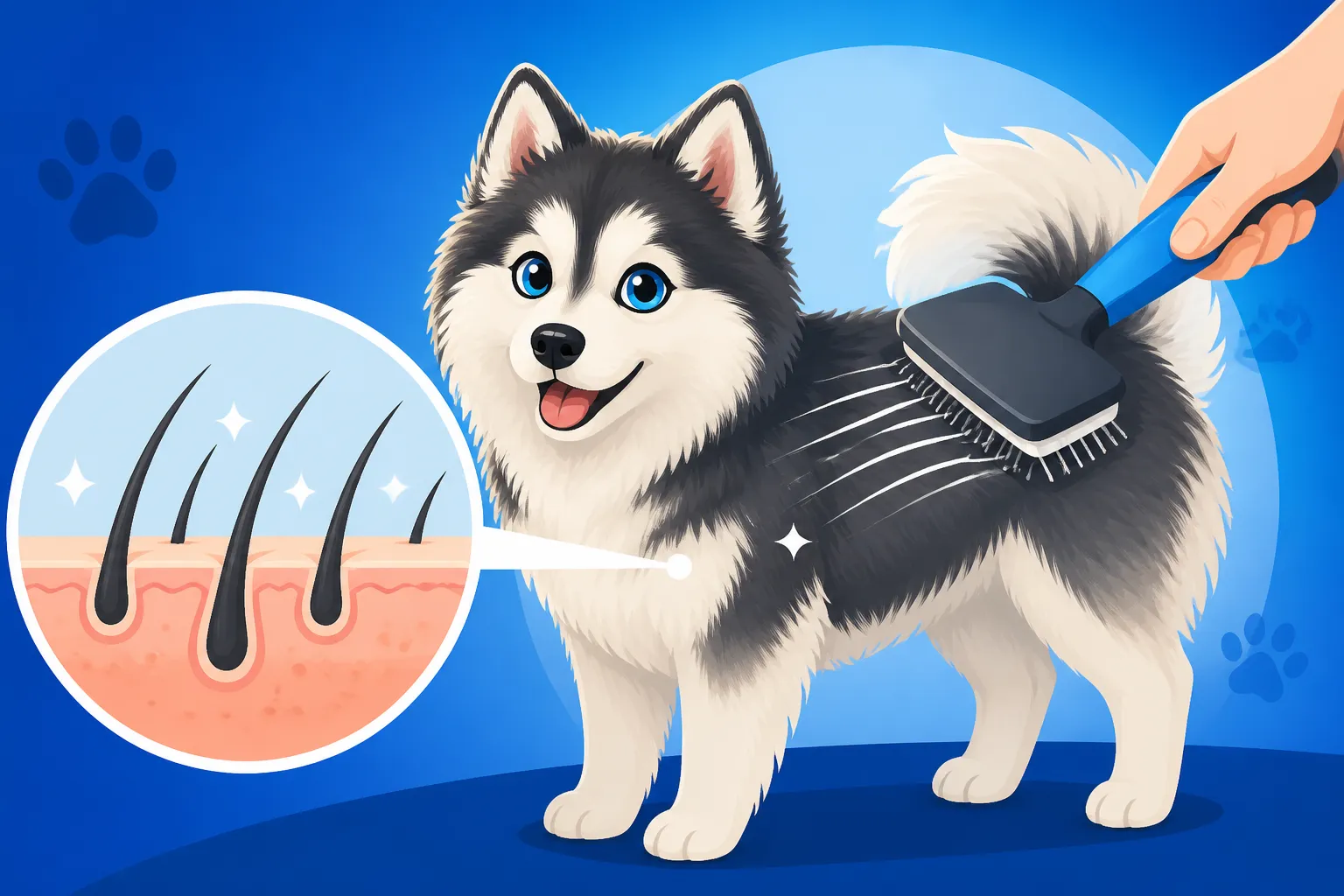
Line brushing is not just a fancy term; it's a systematic grooming method that ensures every single layer of your Pomsky's coat, from the very tips of the guard hairs down to the skin, is thoroughly brushed. Instead of just brushing over the top, you literally create a "line" across the coat and work section by section, layer by layer.
Think of it like meticulously painting a wall. You wouldn't just slap paint on the top layer; you'd ensure each stroke covered the surface beneath. With line brushing, you're essentially revealing the skin in small sections, brushing that section, and then allowing the next layer of hair to fall over it. It sounds tedious, and honestly, it can be, but it's the only way to effectively remove loose undercoat and prevent matting in a double-coated breed. Many owners find Getting a Pomsky Used to the Undercoat Rake to be a key first step in making this process smoother.
The Challenge of Reaching the Skin with Line Brushing
The core question, "Whether line brushing reaches a Pomsky's skin," really boils down to technique and tools. If done incorrectly, even line brushing can be superficial. The sheer density of a Pomsky's undercoat is the primary challenge. It can be so thick that a regular brush, or even an undercoat rake used too quickly, will glide over the top layer of hair without ever touching the skin.
Here are some common reasons why owners struggle to reach the skin:
- Improper Tool Usage: Using the wrong brush or not using the right tool for the job. A slicker brush alone might not penetrate deep enough, and a regular bristle brush certainly won't. The Rake, Slicker and Comb a Pomsky Needs highlights the importance of having the right arsenal.
- Insufficient Sectioning: Not separating the coat into small enough, manageable sections. If your sections are too large, the brush simply won't have enough leverage to get to the root.
- Lack of Patience: This isn't a five-minute job. Rushing through the process means you're likely missing vast areas of the undercoat.
- Fear of Hurting the Dog: Many owners are understandably hesitant to pull on their Pomsky's fur. This leads to very gentle, superficial brushing that doesn't effectively remove anything. Knowing how to properly hold the hair and use the tools minimizes discomfort.
- Dog's Discomfort: If your Pomsky isn't accustomed to grooming, they might squirm, bite, or try to escape, making thorough brushing nearly impossible. Starting early and making it a positive experience is key.
The goal of line brushing is to systematically brush all the dead and shedding undercoat out from the skin, preventing it from clumping and causing problems. It's a thorough method that, when performed correctly, absolutely reaches the skin.
Mastering Line Brushing for Your Pomsky's Health
Now that we understand the 'why' and the 'what', let's get into the 'how.' Mastering line brushing isn't just about owning the right tools; it's about developing a technique that ensures every strand of that beautiful Pomsky coat is attended to, right down to the skin.
Step-by-Step Guide to Effective Line Brushing
This isn't a race; it's a careful, methodical process that requires patience from both you and your Pomsky. Find a comfortable spot, ideally with good lighting, and make sure you have all your tools ready. A sturdy grooming table can make a world of difference, but a non-slip mat on the floor works too.
- Prep the Coat: Start by gently misting the coat with a detangling spray or a very light conditioner diluted in water. This helps to reduce static, protect the hair from breakage, and makes the brush glide more smoothly. You can find excellent detangling sprays on platforms like Amazon or Chewy.
- Section the Coat: This is the most crucial step. Start at the bottom of your Pomsky's body – usually a hind leg or the flank. Use one hand to hold up a large section of the coat, pinning it up and out of the way. With your other hand, create a small, manageable "line" of hair, about 1-2 inches wide, along the skin at the very bottom of the section you've held up.
- Brush the Exposed Skin and Hair: Take your undercoat rake or a high-quality pin brush. Starting from the skin, gently brush down and out from this small section of hair. You should see the skin as you brush. Work in small strokes, always brushing in the direction of hair growth. If you hit a tangle, don't yank. Stop, separate the hair with your fingers, and gently tease the knot out, working from the outside of the mat inwards. This is especially important in areas Where a Pomsky Mats First, like behind the ears or in the armpits.
- Work Your Way Up: Once that small section is brushed clean and you can easily see the skin, drop a little more hair from the section you're holding up, creating a new "line" just above the one you just finished. Repeat the brushing process. Continue this methodically, moving upwards in small horizontal lines, until you've brushed that entire section of the body.
- Move to the Next Section: Once one full section (e.g., one leg, one flank) is complete, move to an adjacent area and repeat the entire process: lift hair, create a line, brush from the skin out, and work your way up.
- Don't Forget the Tricky Spots: Pay special attention to areas prone to matting: behind the ears, armpits, inside the thighs, and under the tail. These spots often get overlooked but are prime candidates for painful tangles.
- Finish with a Slicker Brush and Comb: Once you've line brushed the entire body with the rake or pin brush, go over the coat with a slicker brush to smooth out the guard hairs and catch any remaining loose undercoat closer to the surface. Finally, take a metal comb and try to comb through the coat. If the comb glides smoothly from root to tip, you know you've successfully reached the skin. If it snags, go back with your rake or pin brush to that area and repeat the line brushing process.
Essential Grooming Tools for a Double Coat
Having the right tools is non-negotiable for effective line brushing. Skimping here will only lead to frustration and a poorly groomed Pomsky. You'll likely find these tools readily available on Chewy or Amazon.
| Tool Type | Purpose | Best For |
|---|---|---|
| Undercoat Rake | Designed with long, curved teeth that penetrate the dense undercoat and gently pull out loose, dead hair without damaging the guard hairs. Essential for seasonal blowouts. | Removing large quantities of shedding undercoat, especially during major blowouts. This is often the primary tool for How Often a Pomsky Needs Raking During a Blowout. |
| Pin Brush | Features widely spaced, smooth pins that can penetrate deep into the coat without scratching the skin. Great for overall detangling and lifting the coat. | General brushing, breaking up smaller tangles, and working on less dense areas. |
| Slicker Brush | Has fine, short wires packed closely together on a flat or curved surface. Excellent for removing smaller mats and smoothing the topcoat. | Smoothing the topcoat, removing minor surface tangles, and finishing the coat. |
| Metal Comb | Crucial for checking your work. A good quality comb with both wide and narrow teeth will help you verify that you've brushed all the way to the skin and removed all tangles. | Final check for mats and tangles, especially in delicate areas like the face and behind the ears. |
| Force Dryer | While not a brush, a high-velocity force dryer is an absolute game-changer, especially after baths. It blows out loose undercoat and can significantly reduce drying time, preventing matting. | Deshedding, drying after baths, and blasting out loose hair. Whether a Force Dryer Is Essential for a Pomsky is a definite "yes" for many owners. |
| Detangling Spray | Helps lubricate the hair, making it easier for brushes to glide through without snagging, reducing static, and preventing breakage. | Pre-brushing, especially for dry coats or when encountering minor tangles. |
When and How Often to Line Brush Your Pomsky
The frequency of line brushing depends heavily on your Pomsky's individual coat, their shedding cycle, and the time of year.
- Routine Maintenance (Weekly): For most Pomskies, a thorough line brushing session at least once a week is a good baseline. This helps prevent mats from forming and keeps the regular shedding under control. This will be more of a full body check, ensuring no small tangles are starting.
- During Shedding Season (Daily to Every Other Day): When your Pomsky is "blowing coat" – typically in spring and fall – the frequency needs to increase dramatically. You might find yourself needing to line brush daily or every other day to keep up with the sheer volume of shedding undercoat. This is when the undercoat rake becomes your best friend.
- After Outdoor Adventures: If your Pomsky loves to roll in leaves, play in tall grass, or generally get dirty, a quick line brush after these activities can prevent debris from turning into mats.
- Diet and Coat Health: Remember that a healthy coat also comes from within. A high-quality diet provides the necessary nutrients for strong, healthy hair and skin. Brands like Ollie, known for their fresh food options, can contribute to overall skin and coat vitality, making grooming a bit easier. While line brushing is hands-on, the underlying health of the coat is supported by good nutrition.
It's a commitment, but one that pays off in a happier, healthier Pomsky. By consistently applying the line brushing technique with the right tools, you'll not only effectively reach your Pomsky's skin but also foster a stronger bond with your furry companion through positive grooming experiences.
Disclaimer
This article is for general informational purposes only and does not constitute professional advice. Laws, prices and regulations vary by location and change over time. Consult a qualified professional for guidance on your specific situation.