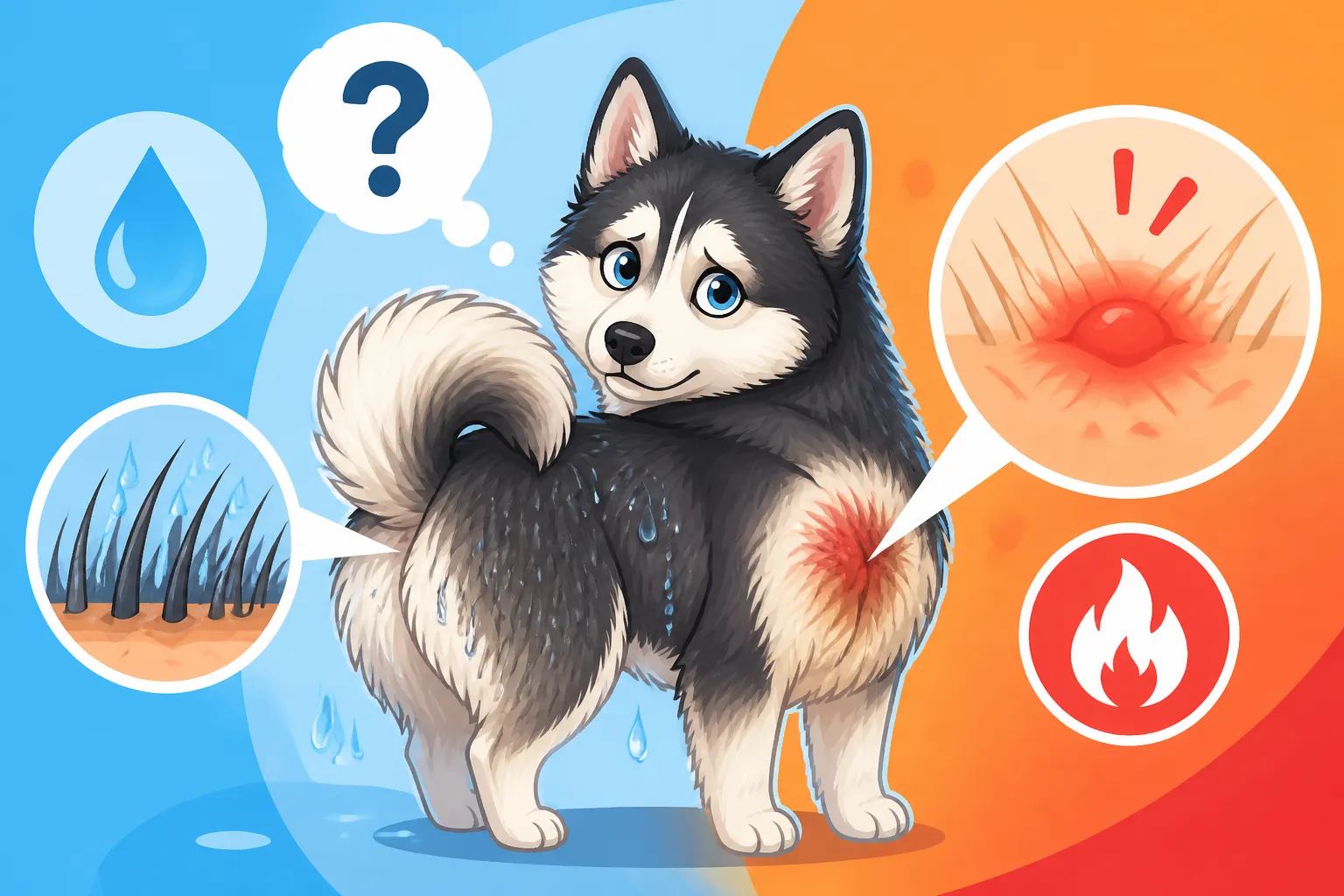
Whether a Damp Pomsky Undercoat Causes Hot Spots
One of the most common worries for Pomsky parents is that persistent, slightly damp smell, especially after a bath or an unexpected romp in the rain. It's not just a minor inconvenience; that lingering moisture deep within their dense double coat can be a breeding ground for nasty skin infections. This guide is here to walk you through exactly how a damp Pomsky undercoat contributes to those miserable hot spots and, more importantly, how you can prevent and manage them to keep your furry friend comfortable and healthy.
Understanding Your Pomsky's Double Coat and Why Dampness is a Problem
Let's be honest, that gorgeous, fluffy Pomsky coat is one of their most defining features, right? It's what draws so many of us in. But it’s also a complex thing, and understanding its unique structure is the first step to truly understanding why dampness can be such a foe. Your Pomsky inherited a marvel of canine engineering: a double coat designed for extremes.
The Husky and Pomeranian Influence on the Pomsky Coat
Think about the parents. The Siberian Husky, built for arctic conditions, has an incredibly dense, soft undercoat for insulation and a coarser, weather-resistant outer coat (guard hairs) to shed snow and moisture. Then you have the Pomeranian, a fluffy little dynamo with a similar, though perhaps less extreme, double coat, known for its "stand-off" appearance due to the abundance of undercoat. Your Pomsky gets a delightful, and sometimes challenging, mix of these traits. This usually means a thick, plush undercoat and a protective topcoat. Some Pomskies might lean more towards the Husky's smooth, dense outer coat, while others get that voluminous, fluffy Pomeranian look, sometimes referred to as a "wooly" coat. No matter the exact presentation, the common denominator is that double layer, and it’s a big deal. You can read more about The Pomsky That Carries a Husky Coat at Twenty Pounds.
The density of this double coat is fantastic for keeping them warm in winter and surprisingly cool in summer (when properly cared for!), but it creates a challenge when it comes to drying. Water doesn't just sit on the surface; it penetrates deep into that fluffy undercoat, right down to the skin. And once it's there, it can be incredibly difficult to get it completely dry. This is where the trouble often begins.
The Anatomy of a Damp Undercoat and Its Consequences
When your Pomsky's undercoat stays damp for too long, especially in warmer or humid conditions, you're essentially creating a perfect little greenhouse for bacteria and yeast. The skin is warm, it’s moist, and it's dark – exactly what these opportunistic microorganisms love. Imagine leaving a wet towel folded up in a warm, dark closet; eventually, it starts to smell musty and might even grow mildew. The same principle applies to your Pomsky's skin.
The guard hairs, those longer, tougher hairs you see on the outside, are designed to protect. But if they're wet, they can clump together, trapping the moisture against the undercoat and skin. The undercoat itself, being so fine and dense, acts like a sponge. It absorbs water and holds onto it with remarkable tenacity. This isn't just about surface dampness; we're talking about moisture that’s seeped deep, almost unreachable without specific tools and techniques. This environment compromises the skin's natural barrier, making it more susceptible to irritation and infection. It's a prime setup for skin issues, and hot spots are often at the top of that list.
The Direct Link Between a Damp Pomsky Undercoat and Hot Spots
Hot spots, officially known as acute moist dermatitis, are intensely itchy, red, inflamed, and often oozing skin lesions that can appear seemingly overnight. They’re called "hot" because they literally feel warm to the touch due to the inflammation. For a Pomsky with their dense double coat, a damp undercoat is practically an open invitation for these painful sores to develop.
How Lingering Moisture Leads to Bacterial Overgrowth
The connection is quite direct. When that lush undercoat remains damp against the skin, particularly in areas where air circulation is naturally limited (like under the ears, around the neck under a collar, on the flanks, or at the base of the tail), bacteria and yeast that normally live harmlessly on the skin's surface seize the opportunity. They multiply rapidly in the warm, moist environment. This overgrowth triggers an inflammatory response, leading to intense itching.
Your Pomsky, instinctively trying to relieve the itch, will start licking, chewing, and scratching the area relentlessly. This self-trauma is the critical step that turns a minor irritation into a full-blown hot spot. The licking introduces more bacteria from their mouth, further breaks down the skin barrier, and keeps the area perpetually moist, creating a vicious cycle of itch-scratch-infection. It's incredibly frustrating to watch, as the more they try to fix it, the worse it gets. This can happen astonishingly fast; a small patch of irritation can explode into a large, raw hot spot within hours. To delve deeper into other skin concerns, check out Hot Spots Under a Pomsky's Undercoat.
Common Hot Spot Locations on a Pomsky
Given the nature of their coat and typical behaviors, certain areas on a Pomsky are more prone to developing hot spots from dampness:
- Behind the Ears: This is a classic spot. The ears themselves might trap moisture, and the skin behind them often gets overlooked during drying. Plus, if they scratch their ears, they can accidentally irritate this area.
- Neck Area (under collars/harnesses): If your Pomsky's collar or harness gets wet and isn't removed for proper drying, it can hold moisture against the skin. This is particularly common after swimming or playing in sprinklers. Consider Why a Pomsky Should Wear a Harness for other benefits.
- Flanks and Hips: When lying down on damp ground or simply from incomplete drying after a bath, moisture can persist on the sides of their body. These areas can also be prone to matting, which further exacerbates the problem.
- Base of the Tail: After a bath, the dense fur at the base of the tail can be surprisingly difficult to dry thoroughly. Dogs also tend to chew or lick here if they have anal gland issues, which can create a secondary hot spot if the area is damp.
- Underbelly and 'Armpits': These areas have thinner skin and can become damp from dew, wet grass, or incomplete drying. They also experience friction, which can worsen irritation.
Anywhere moisture can get trapped and isn't allowed to air dry completely is a risk. It highlights the absolute necessity of meticulous drying, not just after a bath, but after any situation where their undercoat gets thoroughly wet.
Preventing Hot Spots: Drying and Grooming Best Practices
Preventing hot spots starts with understanding and respecting your Pomsky's unique coat. It's not just about brushing; it's about a holistic approach to keeping their skin and fur healthy and dry. This means diligent drying, regular grooming, and maintaining a healthy skin barrier.
The Importance of Thorough Drying
This cannot be stressed enough: your Pomsky's undercoat must be completely dry, right down to the skin, after any significant wetting. Towel drying alone is rarely sufficient for a double-coated breed. It might get the top layer of guard hairs dry, but it often just pushes moisture deeper into the undercoat.
Here's how to ensure thorough drying:
- Squeeze, Don't Rub: After a bath, gently squeeze excess water from their fur with your hands. Then use highly absorbent towels to blot and pat, rather than rubbing vigorously, which can tangle the undercoat and make mats worse.
- Invest in a Force Dryer: This is hands-down the most effective tool for drying a double-coated dog. A force dryer (also known as a high-velocity dryer) blows air at a high speed, physically pushing water out of the coat rather than just evaporating it. It helps separate the hairs, allowing air to reach the skin. You can find excellent options on Chewy or Amazon. There's a reason professional groomers swear by them! If you're wondering about specifics, check out Drying a Pomsky to the Skin and What a Force Dryer Costs for a Pomsky.
- Technique: Start on a low setting and slowly increase the speed as your Pomsky gets accustomed to it. Work in sections, holding the nozzle a few inches from the skin and moving it constantly. Use your free hand to lift the fur against the direction of growth, helping the air penetrate. Focus on those prone areas like the flanks, behind the ears, and the base of the tail.
- Regular Brushing During Drying: As you're drying with the force dryer, use an undercoat rake or a slicker brush to further help open up the coat and ensure air circulation. This also helps remove loose undercoat, which can hold onto moisture. The Undercoat Rake a Pomsky Owner Lives With is a fantastic resource here.
- Air Drying with Caution: If you absolutely don't have a force dryer, and it's a warm, low-humidity day, your Pomsky might air dry, but you must constantly brush and check for dampness at the skin level. This is a much riskier approach, and I generally don't recommend relying solely on it, especially after a full bath. A light rain shower might be okay if they’re brushed well afterward, but a full soaking requires more active drying.
Regular Grooming and Mat Prevention
Beyond drying, consistent grooming plays a huge role in preventing hot spots. Mats are notorious for trapping moisture, dirt, and debris, creating another prime environment for skin issues.
- Daily or Every-Other-Day Brushing: Depending on your Pomsky's coat type and the season (especially during seasonal 'blowouts'), daily brushing with an undercoat rake and slicker brush is crucial. This removes loose undercoat, prevents mats, and allows for better air circulation to the skin. This is particularly important when A Pomsky That Fights Being Brushed needs patient training to ensure cooperation.
- Proper Bathing: While we're focusing on drying, bathing practices also matter. Use a good quality shampoo formulated for dogs with double coats. Make sure to rinse thoroughly to remove all shampoo residue, which can also irritate the skin. How often a Pomsky needs a bath can vary, but generally, it's not a weekly affair. Read How Often a Pomsky Should Be Bathed for more insights.
- Never Shave Your Pomsky: This is a common misconception – people think shaving will keep them cooler and prevent mats. In reality, shaving a double-coated dog like a Pomsky can actually damage their coat, interfere with their natural temperature regulation, and make them more susceptible to sunburn and other skin problems, including making the regrowth prone to matting and holding moisture differently. Please, read Why a Pomsky Must Never Be Shaved.
What to Do if Your Pomsky Develops a Hot Spot
Despite your best efforts, hot spots can sometimes still sneak up on you. The moment you spot one, it’s important to act quickly to prevent it from worsening. The faster you intervene, the easier it is to manage.
Initial First Aid at Home
Recognizing a hot spot early can make a huge difference. You'll likely notice excessive licking, chewing, or scratching at a specific spot. When you part the fur, you'll see a red, raw, oozing, and often painful lesion.
- Trim the Fur Around the Area: This is critical. Using blunt-nosed scissors or electric clippers, carefully trim the hair from around and over the hot spot. This allows air to reach the lesion and prevents moisture from getting trapped, which is essential for healing. It also helps you clean the area properly. Be extremely gentle, as the skin will be very sensitive.
- Gently Cleanse: Use a mild antiseptic solution recommended for dogs (such as a diluted chlorhexidine solution or an iodine scrub) to clean the area. Pat it dry very carefully with a clean cloth or paper towel. Avoid rubbing.
- Prevent Further Licking/Chewing: This is perhaps the most challenging but vital step. Your Pomsky must be prevented from continuing to traumatize the area. An Elizabethan collar (e-collar or "cone of shame") from Chewy or Amazon is often the best solution, even if they hate it. Other options like recovery suits or inflatable collars might work for less determined lickers, but a traditional cone is usually the most reliable.
- Apply a Soothing Topical Treatment (with caution): Once cleaned and dried, you might apply a veterinarian-approved topical hot spot spray or cream. Many of these contain ingredients like hydrocortisone for itching and antibiotics to combat infection. Always consult with your vet or vet tech before applying any medication, even over-the-counter options, to ensure it's appropriate and safe for your specific Pomsky and the type of lesion.
When to Seek Veterinary Care
While initial home care can be helpful, hot spots can escalate rapidly and often require professional intervention. Don't hesitate to contact your veterinarian if:
- The hot spot is large or rapidly expanding. A small irritation can become a serious infection quickly.
- It's intensely painful or causing your Pomsky significant distress.
- It’s deep, ulcerated, or doesn't show signs of improvement within 24-48 hours of home care.
- Your Pomsky has other symptoms like lethargy, fever, or loss of appetite.
- You're unsure what caused it or how to treat it.
Your vet might prescribe oral antibiotics to tackle the bacterial infection from the inside out, anti-inflammatory medications to reduce swelling and pain, and stronger topical treatments. They might also want to do a skin cytology (examining a sample under a microscope) to identify the specific bacteria or yeast involved, allowing for more targeted treatment. Sometimes, underlying conditions like allergies (you can explore Whether a Pomsky Gets Allergies) or even parasites could be triggering the initial itch, and your vet can help diagnose those too. The cost of a skin workup can vary, but it's essential for proper diagnosis and treatment. You might want to consider What a Skin Workup Costs on a Pomsky.
Taking care of that magnificent double coat is a commitment, but it's a labor of love that ensures your Pomsky stays happy, healthy, and itch-free. Keeping them dry is more than just aesthetics; it's fundamental to their dermatological well-being.
Drying Methods Comparison
| Method | Pros | Cons | Efficacy for Double Coat | Time to Dry a Pomsky |
|---|---|---|---|---|
| Towel Drying | Readily available, gentle | Ineffective for undercoat, often just pushes moisture deeper | Low | Very Long / Incomplete |
| Pet-Specific Blow Dryer | Safer heat settings than human dryers | Can still overheat if not used carefully, less powerful airflow | Medium | Long |
| High-Velocity Force Dryer | Most effective, pushes water out, reduces drying time | Can be noisy, initial investment, requires technique | High | Short to Medium |
| Air Drying | No equipment needed, natural | Very slow, high risk of damp undercoat & hot spots, coat matting | Very Low | Extremely Long / Unsafe |
Disclaimer
This article is for general informational purposes only and does not constitute professional advice. Laws, prices and regulations vary by location and change over time. Consult a qualified professional for guidance on your specific situation.