Whether a Pomsky Sheds More Than a Husky Per Pound
It's a common thought when you first meet a Pomsky: "They're so small, they can't possibly shed as much as a full-sized Husky, right?" Then you live with one for a bit, especially through their seasonal "coat blow," and you start to wonder if your tiny companion is somehow producing a disproportionate amount of fur. The truth is, many Pomsky owners feel their compact canine sheds more per pound than their larger Husky cousins. This guide will explore the fascinating and sometimes frustrating reality of Pomsky shedding, comparing it to the Husky standard, and delve into why these adorable fluff-balls might just be the champions of compact shedding.
The Surprising Reality of Pomsky Shedding Compared to Huskies (Per Pound)
When you consider a Pomsky, you're essentially looking at a smaller package of many Husky traits, and that often includes their prodigious shedding capabilities. The question of whether a Pomsky sheds more per pound is a delightful exercise in semantics and real-world experience that many owners can attest to feeling is true.
The Double Coat – A Shared Trait, A Different Scale
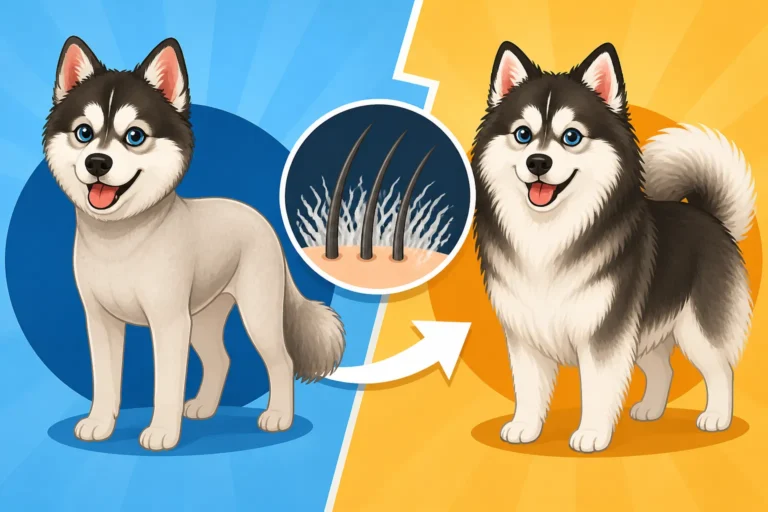
Both the Siberian Husky and the Pomsky share a defining characteristic: the luxurious, dense double coat. This isn't just a single layer of hair; it's a sophisticated insulation system. You have a soft, fluffy undercoat designed for warmth and a coarser, water-repellent outer layer of guard hairs that protect against elements. This double-layer system is what gives them that beautiful, fluffy appearance.
For a Husky, this double coat is absolutely essential for survival in cold, harsh climates. It’s incredibly thick and provides unparalleled insulation. A Pomsky, inheriting this trait, also possesses a formidable double coat. While a Husky's coat is designed for its larger body and more extreme conditions, a Pomsky's coat can often be just as dense, if not denser in some cases, relative to its smaller frame. Imagine trying to pack the same amount of insulation meant for a large house into a tiny shed; the density would be incredible. This means that pound for pound, a Pomsky can indeed have a surprising volume of hair contributing to its overall mass, especially the fluffy undercoat.
"Per Pound" – A Misleading Metric for Hair Volume
While it might seem logical to compare shedding "per pound," the reality is that the actual volume of hair shed is what impacts your home and vacuum cleaner. A 20-pound Pomsky might not shed as many total pounds of hair as a 50-pound Husky over a year, but the sheer density and type of hair can make it feel like an equal, if not greater, challenge.
Many Pomskies, especially those with woolier coats (which we'll discuss shortly), have an incredibly profuse undercoat that seems to detach in endless clouds. This light, fluffy undercoat disperses easily throughout the home, sticking to everything from your clothes to your furniture. A single "fur tumbleweed" from a Pomsky can seem just as impressive as one from a Husky, simply because it’s such a visible and pervasive part of their environment. The "per pound" metric, while scientifically interesting, often falls by the wayside when you're vacuuming for the third time in a day, wondering where all that fluff came from. It's the visual impact and the sheer volume of visible hair that leaves many Pomsky owners convinced their smaller dogs are punching above their weight class in the shedding department.
Understanding Pomsky Coat Types and Their Shedding Habits
Not all Pomsky coats are created equal, and this variation plays a huge role in how much (or how little, relatively speaking) hair you'll be managing. Understanding your Pomsky's specific coat type is key to setting your expectations for shedding.
The Standard and Wooly Pomsky Coats
When breeders talk about Pomsky coats, they generally refer to a few different types, primarily influenced by the genetics inherited from both the Husky and the Pomeranian.
The standard Pomsky coat is often described as a happy medium, much like a scaled-down Husky coat. It features a dense undercoat and a protective outer layer of guard hairs that are relatively straight and of moderate length. This coat is functional, beautiful, and sheds, predictably, in line with its Husky heritage. It will have clear seasonal shedding cycles, but generally, the hair is less prone to matting than other types.
Then there's the wooly Pomsky coat. This is where many owners find themselves overwhelmed by the sheer volume of hair. A wooly coat is typically longer, softer, and much denser than a standard coat, often resembling that of a Samoyed or a very heavily coated Pomeranian. This coat type can be incredibly fluffy and visually appealing, but it comes with significant grooming demands. If you've got a wooly Pomsky, you know the struggle: the undercoat is exceptionally thick, and the guard hairs are longer, which means more surface area for shedding and a higher propensity for matting. Managing The Wooly Pomsky Coat and Its Upkeep is a full-time job during a coat blow. Owners of these beautiful, fluffy dogs often report that their Pomskies shed a truly astonishing amount of hair, certainly making them feel like they shed "more per pound" than almost any other breed, sometimes even surpassing the visual impact of a larger Husky's shedding.
On the other end of the spectrum, you might encounter a short-coated Pomsky. These are less common but do exist, featuring a shorter, less dense coat. While they still have a double coat and will shed, the amount of hair produced is generally much less visible and easier to manage.
The Infamous "Coat Blow" Cycle
Regardless of the specific coat type, almost all double-coated breeds, including both Huskies and Pomskies, experience what is affectionately (or perhaps despairingly) known as a "coat blow." This is a significant seasonal shedding event where the dog sheds its entire undercoat in preparation for new growth adapted to the changing weather. You might wonder Whether a Pomsky Blows Its Coat Twice a Year, and the answer is usually a resounding yes, typically in spring to lighten up for summer, and again in autumn to prepare for a thicker winter coat.
During a coat blow, it can truly feel like your Pomsky is disintegrating into a pile of fluff. Handfuls of soft undercoat come out with every brush stroke, and even just petting your dog can leave you covered in a fine layer of white, grey, or red fluff. While a Husky's coat blow is certainly impressive, the fact that a small Pomsky can produce a similar visual amount of loose fur is often what leads owners to feel their compact canine is an overachiever in the shedding department. This period usually lasts for a few weeks, but it can sometimes extend longer depending on the dog and environmental factors. When a Pomsky Blows Its Coat is not a time for the faint of heart, or those who are allergic to dog hair!
Factors Influencing a Pomsky's Shedding Beyond Genetics
While genetics certainly lay the groundwork for a Pomsky's shedding potential, several other factors can significantly influence how much hair your dog loses and when. It's not just about the breed; it's about their entire lifestyle and well-being.
Diet and Overall Health
What you feed your Pomsky plays a crucial role in the health of their skin and coat, and by extension, their shedding patterns. A dog on a poor-quality diet that lacks essential nutrients, especially omega-3 and omega-6 fatty acids, can experience dull, brittle hair and excessive shedding. The skin barrier can also be compromised, leading to issues that worsen shedding.
Conversely, a high-quality diet, rich in beneficial proteins, vitamins, and healthy fats, promotes a strong, healthy coat and can help minimize non-seasonal shedding. Brands like Ollie offer fresh, human-grade food that can significantly improve coat health, while platforms like Chewy provide a vast selection of premium kibble and wet food options that focus on skin and coat benefits. If you notice your Pomsky shedding more than usual outside of their typical coat blow seasons, it might be worth evaluating their diet. Furthermore, underlying health issues can manifest as increased shedding. Allergies, hormonal imbalances (like hypothyroidism), stress, or even parasites can all contribute to unhealthy skin and coat, leading to more hair loss. It’s always a good idea to consult your vet if you observe sudden or excessive shedding, as it could be a sign of an underlying medical condition. For example, knowing Whether a Pomsky Gets Allergies can help you address diet or environmental triggers that impact skin and coat health.
Environmental Impact
The environment your Pomsky lives in also heavily influences their shedding cycle. Dogs respond to changes in light and temperature, which signal their bodies to prepare for different seasons.
Temperature and climate: If your Pomsky lives in a consistently warm climate, especially somewhere like the southern states, their body might not register distinct seasonal changes as strongly. This can lead to more continuous, year-round shedding rather than two intense, predictable coat blows. Their body is constantly trying to regulate its temperature, and shedding is part of that process. Whether a Pomsky Copes in a Southern Summer is a critical question for owners in warmer regions, as overheating can also impact coat health.
Indoor vs. outdoor lifestyle: A Pomsky that lives primarily indoors, exposed to artificial light and climate control, might have a less pronounced seasonal coat blow. Instead, they might shed a moderate amount of hair consistently throughout the year, as their bodies don't experience the dramatic cues for seasonal changes. While this might sound better than a huge blowout, it often means you're dealing with shedding daily, which can still be a challenge for cleanliness.
Grooming Routine's Role
Perhaps one of the most significant factors you have control over is your Pomsky's grooming routine. Regular, thorough grooming can dramatically reduce the amount of loose hair that ends up on your furniture and floors.
A Pomsky's double coat requires consistent attention. Brushing helps remove dead undercoat before it has a chance to shed naturally. Without regular brushing, loose hair can get trapped in the coat, leading to mats and tangles, which then exacerbate shedding and can even cause skin irritation. Tools specifically designed for double coats, like an undercoat rake, are essential. We'll delve more into this in the next section, but skipping grooming, especially during a coat blow, will undoubtedly lead to your Pomsky shedding more hair into your environment. You'll quickly discover the truth of What a Pomsky's Shedding Does to a House if you neglect their grooming! And a crucial piece of advice for all Pomsky owners: Why a Pomsky Must Never Be Shaved. Shaving their double coat can permanently damage its structure and ability to regulate temperature.
Practical Strategies for Managing Your Pomsky's Shedding
Living with a Pomsky means embracing their fluffy nature, but it doesn't mean your home has to be covered in a perpetual layer of fur. With the right strategies, you can significantly reduce the impact of their shedding.
Establishing a Consistent Grooming Schedule
Consistency is king when it comes to managing a Pomsky's double coat. Regular brushing is your first line of defense against excessive shedding.
During non-shedding periods, aiming for 2-3 thorough brushing sessions a week can keep the loose hair at bay. However, when your Pomsky is going through a "coat blow," you'll need to step up your game considerably, often to daily brushing. These sessions don't need to be hours long, but they need to be effective. An undercoat rake is indispensable for reaching deep into the coat and pulling out the dead, loose undercoat. The Undercoat Rake a Pomsky Owner Lives With isn't just a suggestion; it's a necessity. You'll also want a slicker brush and a metal comb to tackle different areas and potential tangles. Understanding The Rake, Slicker and Comb a Pomsky Needs will equip you for success.
A professional deshedding bath and blowout at a groomer can also be a game-changer, especially during peak shedding season. Groomers have high-velocity dryers that can blast out an incredible amount of loose undercoat, saving you days of brushing at home. This can be a worthwhile investment to kickstart the deshedding process. Whether a Deshedding Bath Is Worth It for a Pomsky is a question many owners answer with a resounding yes after witnessing the results.
Dietary Considerations and Supplements
Beyond just picking a good quality food, there are specific dietary considerations that can help maintain a healthy coat and reduce shedding.
Look for dog foods that list meat as the first ingredient and contain beneficial fatty acids like omega-3s and omega-6s. These are vital for skin elasticity and coat luster. If your current food isn't providing enough, you can consider adding supplements. Fish oil, specifically salmon or pollock oil, is an excellent source of omega fatty acids and can be easily added to your dog's meals. Many owners find a noticeable improvement in coat health and reduced shedding when incorporating these. You might also want to explore Whether a Pomsky Needs Supplements beyond just fish oil, but always consult with your vet before introducing any new supplement regimen. Ensure your Pomsky also has constant access to fresh water, as hydration is crucial for overall health, including skin and coat condition.
Housekeeping Hacks for Fur Management
Even with the best grooming routine, a double-coated Pomsky will still shed. The key is to minimize the impact of that shedding on your living space.
Investing in a good quality vacuum cleaner designed for pet hair is non-negotiable. Robot vacuums, like those available on Amazon, can be particularly helpful for daily maintenance, picking up loose hair before it accumulates. You'll still need a powerful upright or canister vacuum for deeper cleaning, but the daily sweep by a robot can make a world of difference. Keep lint rollers handy by every exit and in your car – you'll use them constantly! Consider washable slipcovers for furniture that your Pomsky frequents, making it easy to toss them in the laundry and remove accumulated fur. Regular washing of your dog's beds and blankets also helps capture loose hair.
Here's a quick comparison of shedding characteristics:
| Characteristic | Siberian Husky | Pomsky |
|---|---|---|
| Coat Type | Double coat, dense undercoat, medium guard hairs | Double coat, varying density/length (standard to wooly) |
| Shedding Frequency | Seasonal "coat blows" (twice a year) and moderate year-round | Seasonal "coat blows" (twice a year) and moderate year-round |
| Volume (Per Pound) | Significant, particularly during blowouts | Often feels disproportionately significant due to dense undercoat and smaller size |
| Hair Texture | Mostly coarser guard hairs, fine undercoat | Can range from coarser to very fine and fluffy (wooly coat) |
| Grooming Needs | High, regular brushing, especially during blowouts | Very high, daily brushing for wooly coats, frequent deshedding |
| Environmental Impact | Creates visible fur piles, sticks to surfaces | Creates very visible fur piles and "tumbleweeds," very pervasive |
Ultimately, whether a Pomsky sheds more than a Husky per pound is a nuanced question. While a Husky will likely shed a greater total mass of hair due to its size, the sheer density, fluffiness, and pervasive nature of a Pomsky's shedding, especially those with wooly coats, often makes owners feel like their smaller dogs are shedding a disproportionately massive amount. It's an experience that truly needs to be lived to be fully understood!
Disclaimer
This article is for general informational purposes only and does not constitute professional advice. Laws, prices and regulations vary by location and change over time. Consult a qualified professional for guidance on your specific situation.