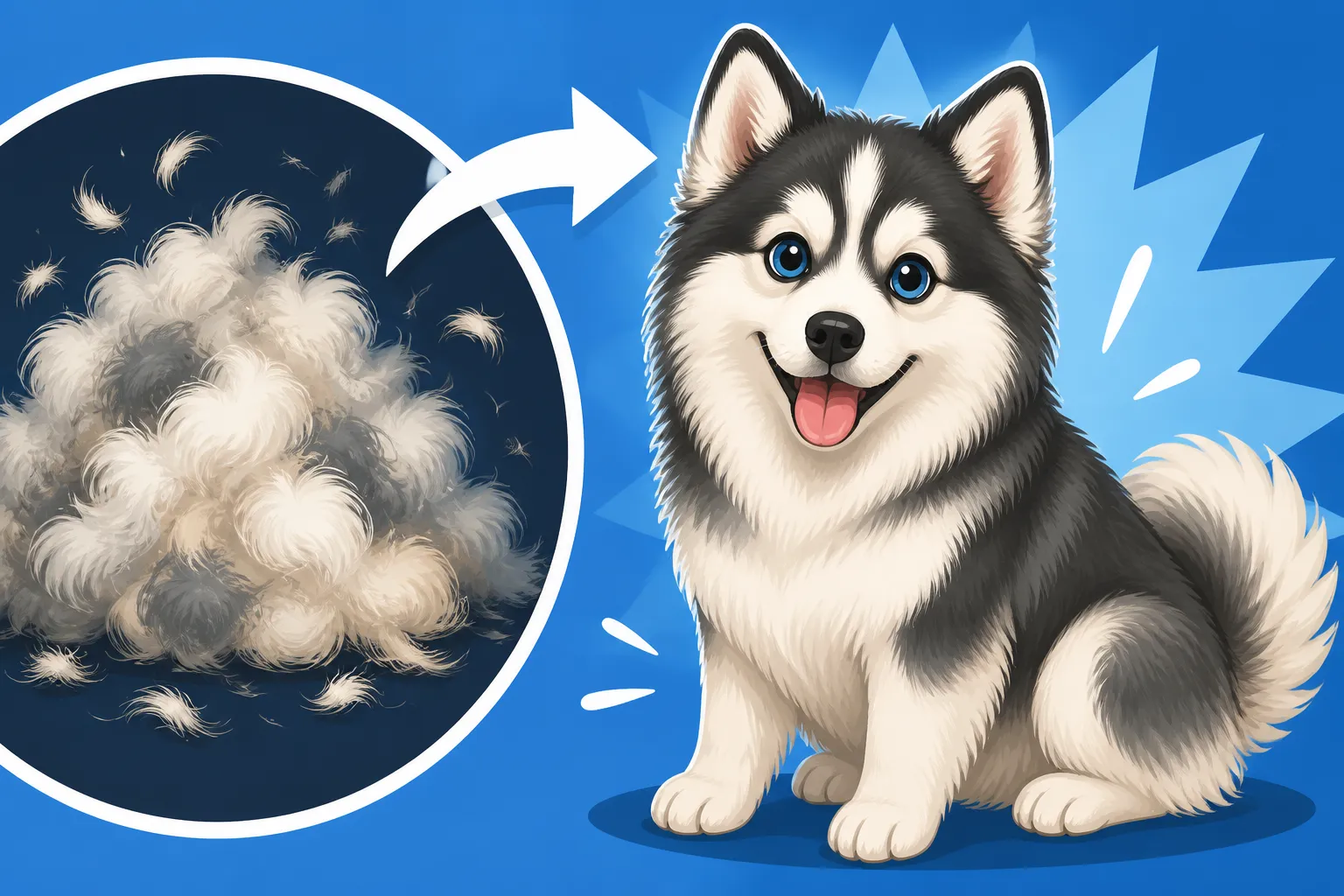
How Much Undercoat Comes Off a Pomsky
If you've ever owned a Pomsky, or are just dreaming of bringing one home, you've probably heard whispers about their shedding. But let me tell you, "whispers" don't do it justice. The reality of a Pomsky's undercoat can be a furry, overwhelming revelation, leaving you wondering if your dog is secretly multiplying its fur overnight. This guide is here to pull back the curtain on just how much undercoat comes off a Pomsky, helping you prepare for, and gracefully manage, the fluffy deluge.
The Marvel of the Pomsky Double Coat
Before we even get to the shedding, it’s crucial to understand the masterpiece that is a Pomsky's coat. They inherit this incredible insulation from both parent breeds – the Siberian Husky and the Pomeranian – and it's a defining feature, especially when you consider The Pomsky That Carries a Husky Coat at Twenty Pounds. This isn't just a single layer of hair; it's a sophisticated, dual-layered system designed for serious weather protection.
Diving Deep into the Undercoat's Purpose and Structure
At the heart of a Pomsky's impressive coat is its dense, soft, and incredibly insulating undercoat. Think of it as nature's ultimate down jacket. This layer is made up of fine, wispy hairs that grow close to the skin, trapping air to provide warmth in cold temperatures and actually helping to regulate body temperature in warmer weather by preventing direct sun exposure to the skin. It’s what gives them that plush, cuddle-worthy feel, but also what creates the significant shedding challenge. The guard hairs, which make up the outer layer, are longer, coarser, and provide protection from water, dirt, and UV rays. Both layers are essential for a Pomsky's health and comfort, making proper care of each vital. The Three Pomsky Coat Types exist, but regardless of whether your Pomsky has a "standard" or a "wooly" coat, that undercoat will be there, ready to be shed.
The Seasonal Shed: When and Why it Happens
The infamous "blowing coat" phenomenon is the primary reason for the vast amount of undercoat you'll encounter. This isn't just regular, everyday shedding – that happens all year round, albeit to a lesser degree. Blowing coat is a seasonal event, typically occurring twice a year, usually in spring to prepare for warmer weather and in fall to gear up for winter. During these times, your Pomsky will actively shed large clumps of its undercoat to adapt to the changing temperatures. The old, dead undercoat needs to be expelled to make way for a new, appropriate layer. It's a natural, necessary process, but one that can quickly turn your home into a tumbleweed farm if not managed proactively. You might even find yourself asking Whether a Pomsky Blows Its Coat Twice a Year as you stare at another pile of fluff.
The Sheer Volume of a Pomsky's Undercoat Release
So, let's get down to the nitty-gritty: how much are we talking about? It's not just a few stray hairs. When a Pomsky is blowing its coat, the amount of undercoat that comes off can be truly astounding. Prepare yourself, because this is where the reality often hits new Pomsky owners hardest.
Visualizing the Fur Fallout: More Than You Expect
Imagine running your hand through your Pomsky's coat and pulling out enough soft, cotton-like fluff to stuff a small pillow. Now, imagine doing that multiple times a day, every day, for several weeks. During a full coat blow, it’s not uncommon for owners to collect what feels like the equivalent of a small, fluffy animal from their Pomsky over the course of the shedding season. We're talking handfuls, sometimes even small mounds, of fur coming out with each dedicated grooming session. People often compare it to living in a snow globe, but instead of flakes, it's miniature fur tumbleweeds rolling across your floor, accumulating in corners, and magically clinging to every piece of dark fabric you own. If you're wondering What a Pomsky's Shedding Does to a House, the answer is, it makes it very fluffy!
What Influences the Great Undercoat Exodus?
Several factors can influence the intensity and duration of your Pomsky's undercoat shedding. Understanding these can help you anticipate and better manage the fur-nado:
- Genetics: Naturally, the density of their undercoat is inherited from their Husky and Pomeranian lineage. Some Pomskies simply have a thicker, more luxurious coat, meaning more undercoat to shed.
- Season and Climate: This is the big one. Dogs living in climates with distinct seasonal changes will experience more pronounced coat blows. If you live somewhere with milder seasons, the shedding might be more continuous but less dramatic.
- Diet and Nutrition: A healthy diet rich in essential fatty acids (like Omega-3 and Omega-6) contributes to healthy skin and coat, potentially reducing excessive, unhealthy shedding. Conversely, a poor diet can lead to a dull coat and increased hair loss. High-quality dog food brands, like those found on Chewy, often emphasize skin and coat health. Some owners even explore fresh food options like Ollie to support overall vitality.
- Overall Health: Underlying health issues, stress, allergies, or hormonal imbalances can also impact coat health and shedding patterns. If you notice unusual shedding outside of normal coat blows, or if the skin underneath looks irritated, it's always best to consult your veterinarian.
- Grooming Routine: The most significant factor you can control! Consistent and thorough grooming, especially during shedding season, will dramatically reduce the amount of loose undercoat circulating in your home. Neglecting grooming will lead to more fur accumulation both on your dog and in your living space.
It's a combined effort of nature and nurture, but knowing what to expect can ease some of the surprise when the fur starts flying.
Mastering the Art of Undercoat Management
Dealing with a Pomsky's undercoat shedding might seem like an uphill battle, but with the right tools and techniques, it's completely manageable. Think of it as an ongoing commitment rather than a sporadic chore.
Your Essential Grooming Arsenal for Battle
You wouldn't go to battle without your weapons, and dealing with a Pomsky's undercoat is certainly a battle! Having the right grooming tools is not just helpful; it's absolutely essential. Forget those flimsy brushes that just skim the surface; you need tools designed to tackle a double coat. Many of these can be easily found on platforms like Amazon or Chewy.
| Grooming Tool | Purpose During Shedding | Key Benefit |
|---|---|---|
| Undercoat Rake | Reaches deep into the undercoat to pull out loose fur | Prevents matting, reduces overall shedding, and stimulates skin oils |
| Slicker Brush | Detangles and removes loose hair from the topcoat and some undercoat | Helps smooth the coat, removes surface shed, and adds shine |
| High-Velocity Force Dryer | Blasts out loose undercoat after a bath | Drastically reduces drying time and removes massive amounts of fur |
| Wide-toothed Comb | Checks for tangles and finishes the coat | Ensures no hidden mats, particularly in feathered areas |
| Deshedding Shampoo & Conditioner | Loosens dead hair during bathing | Primes the coat for easier de-shedding with brushing and drying |
The undercoat rake is truly your best friend during shedding season. As noted in The Undercoat Rake a Pomsky Owner Lives With, it's specifically designed with long, strong teeth to penetrate the dense outer coat and gently pull out the dead, fluffy undercoat that would otherwise clump and mat. A good slicker brush is excellent for the guard hairs and for smoothing the coat, but it won't get deep into the undercoat on its own. And a force dryer? If you don't have one, consider it a game-changer. It literally blasts the loose fur right off your dog after a bath, preventing it from ending up all over your house. Without it, you might be asking Whether Any Brush Keeps Up With a Pomsky.
The Ritual of the Deshedding Bath and Brush
During peak shedding, a weekly or bi-weekly deshedding bath and brush routine can save your sanity. Start with a thorough brushing with your undercoat rake before the bath to remove as much loose fur as possible while dry. This prevents it from clogging your drain. Then, use a deshedding shampoo and conditioner, working it deep into the coat, ensuring it penetrates the undercoat. Let the conditioner sit for a few minutes to help loosen those stubborn hairs.
After rinsing completely, the real magic happens with the force dryer. While your dog is still damp, use the force dryer on a cool or low-heat setting. The sheer volume of fur that will come off is incredible, and you'll quickly see why Whether a Force Dryer Is Essential for a Pomsky is a rhetorical question for most Pomsky owners. Follow up with another session with the undercoat rake and slicker brush once the coat is completely dry. This multi-step approach is the most effective way to minimize the fur accumulation between professional grooming appointments and maintain a healthy coat. Remember, How Often a Pomsky Should Be Bathed might increase during these periods.
Living Gracefully with the Pomsky Fluff
Even with the best grooming routine, you'll still find some Pomsky fur. It's an inevitable part of living with these beautiful dogs. The goal isn't to eliminate shedding entirely, but to manage it so it doesn't overwhelm your home and life.
Keeping Your Home a Fur-Free (ish) Zone
Accepting that your home will always have a certain level of Pomsky fluff is the first step. However, there are plenty of strategies to keep it to a manageable level. Regular vacuuming, especially with a vacuum cleaner designed for pet hair, is non-negotiable. Robotic vacuums can be incredibly helpful for daily maintenance, constantly sweeping up the stray hairs. Lint rollers will become your constant companions for clothing and furniture. Investing in washable furniture covers or throws can also make a huge difference, allowing for easy removal and cleaning of fur-laden fabrics. Air purifiers can help catch airborne dander and fur, making the air quality better, especially for those with allergies. And don't forget to clean your air filters regularly!
When Professional Help Becomes a Lifesaver
Sometimes, despite your best efforts, the undercoat can feel like too much to handle on your own. This is where professional groomers truly shine. They have industrial-strength force dryers, specialized tools, and the experience to perform a thorough deshedding treatment that you might not be able to replicate at home. A professional deshedding service, often including a bath, blowout, and meticulous brushing, can remove an astonishing amount of undercoat in one session, giving you a much-needed reprieve. While it's an added cost, many Pomsky owners find it well worth the investment, especially during the peak shedding seasons. It can make a huge difference in the amount of fur you're finding around your home and prevent uncomfortable matting for your dog. Consider Whether a Deshedding Bath Is Worth It for a Pomsky by asking your groomer!
Remember, living with a Pomsky means embracing the floof. It's a small price to pay for the joy, companionship, and boundless personality these wonderful dogs bring into your life. With a proactive approach to grooming and realistic expectations, you can keep the fur under control and enjoy a happy, healthy Pomsky.
Disclaimer
This article is for general informational purposes only and does not constitute professional advice. Laws, prices and regulations vary by location and change over time. Consult a qualified professional for guidance on your specific situation.