Whether the Pomeranian’s Stand Off Coat Shows in a Pomsky
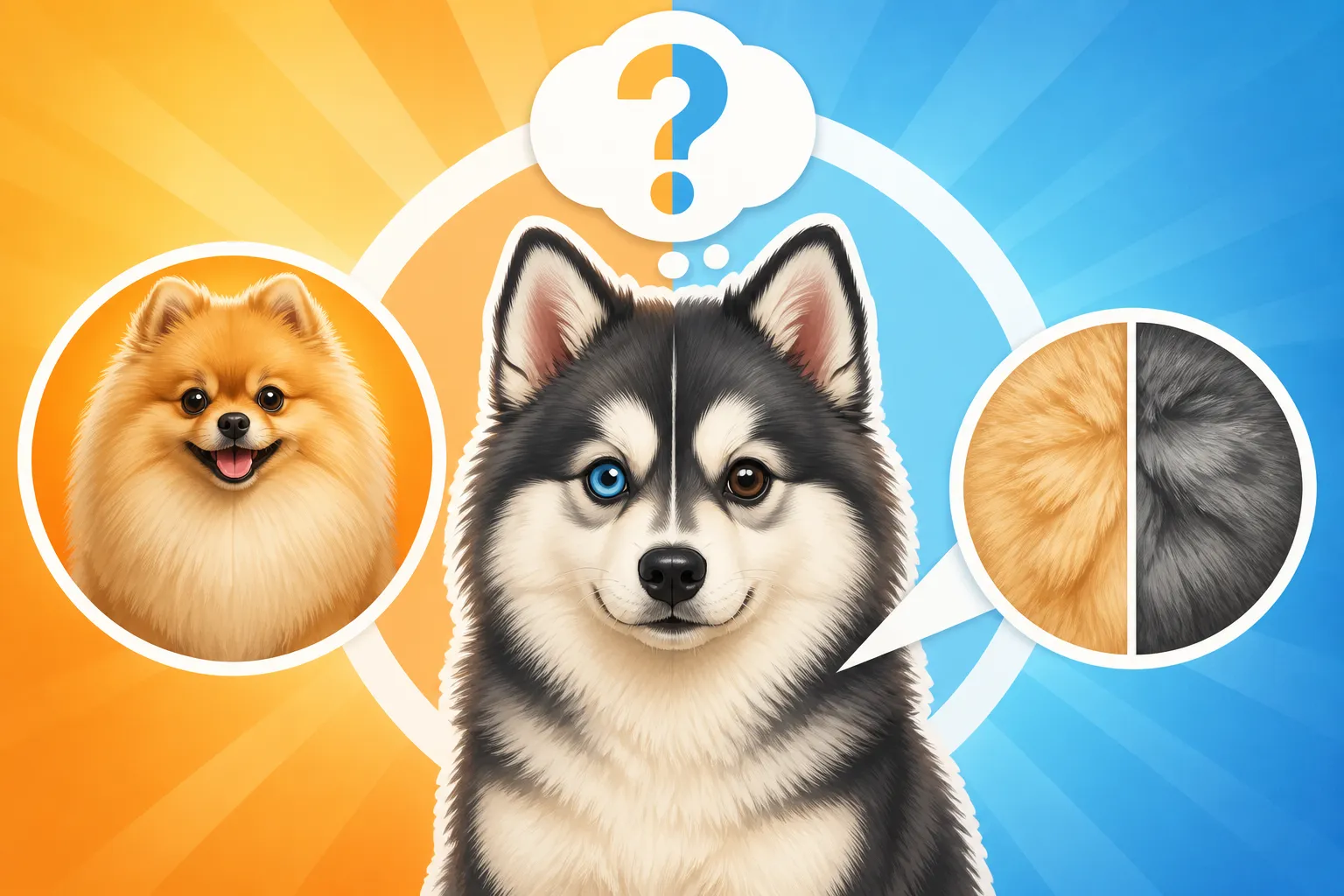
It's a question many prospective Pomsky parents ponder: will your adorable fluffball inherit that distinctive, cloud-like, stand-off coat that makes Pomeranians so undeniably charming? The truth is, while many Pomskies certainly get a glorious double coat, the specific "stand-off" characteristic of a purebred Pomeranian is far from guaranteed, leading to a wide range of coat textures and maintenance needs that can sometimes surprise new owners.
Understanding the Pomeranian's Stand-Off Coat
When people picture a Pomeranian, they often envision a tiny, walking puffball of fur. This isn't just a cute aesthetic; it's a very specific type of coat with unique characteristics that arise from generations of careful breeding.
What Exactly is a Stand-Off Coat?
The "stand-off" coat refers to the way the Pomeranian's dense undercoat and longer guard hairs combine to create an incredible volume that literally stands out from the dog's body. Imagine pushing your hand against a Pomeranian's fur – it springs back almost immediately, maintaining its shape and loft. This isn't just about length; it's about the texture and rigidity of the guard hairs, coupled with a very thick, soft, woolly undercoat. The guard hairs are coarse enough to be firm but not bristly, and they grow outward rather than lying flat against the body. This combination gives the Pomeranian its signature rounded, almost spherical appearance, making it look much larger than its actual small frame. It's a marvel of canine coiffure, and it contributes significantly to the breed's distinct look and feel.
The Genetics Behind the Pomeranian's Coat
The stand-off coat is a result of specific genetic traits that have been carefully selected for over many generations of Pomeranian breeding. These genes dictate not only the presence of a double coat (which both Pomeranians and Huskies share) but also the particular qualities of the individual hairs – their texture, thickness, growth pattern, and how they interact with each other. It’s not just about having a double coat; it’s about having a particular kind of double coat. When you breed two different types of dogs, even if both have double coats, you introduce a whole new level of genetic mixing. The offspring, the Pomsky in this case, might inherit some genes for dense undercoat from both sides, but the specific combination that creates that stiff, outward-growing guard hair might be diluted or lost entirely when mixed with the Husky's coat genetics. This is why predicting a Pomsky's exact coat type can be such a gamble, and why you can see such a variety even within the same litter.
The Husky's Influence on a Pomsky's Coat
While the Pomeranian brings the "fluff factor" to the genetic table, the Siberian Husky contributes its own distinct and equally impressive coat characteristics. Understanding both parents helps clarify why Pomsky coats are so variable.
Husky Coat Characteristics
Siberian Huskies are built for colder climates, and their double coat reflects this purpose. They have a thick, dense undercoat that provides excellent insulation, keeping them warm in freezing temperatures. Over this lies a medium-length, straight outer coat (guard hairs) that is coarser and lies relatively flat against the body. This outer layer is designed to shed snow and water, protecting the undercoat from getting wet and losing its insulating properties. Unlike the Pomeranian's coat, the Husky's guard hairs are not meant to stand off the body; their purpose is sleekness and protection, allowing them to glide through snow and resist the elements. Think of it as a waterproof, windproof shell over a thick wool sweater. While it's undeniably dense and sheds profusely, it lacks the signature "poof" of a Pomeranian. The sheer volume comes from density, not from the hairs sticking straight out.
Blending Two Double Coats
When you cross a Pomeranian with a Siberian Husky, you're essentially blending two very different types of double coats. Both breeds have the fundamental genetic instruction for a double coat, but the expression of those genes differs significantly. The Pomsky puppy is a genetic lottery, inheriting a mix of these traits. Some puppies might lean more towards the Husky's flatter, denser guard hairs, while others might get more of the Pomeranian's loftier, stand-off type. You might even get a mix where the undercoat is incredibly dense (like a Husky's) but the guard hairs have some of that Pomeranian stiffness, creating a very full, but perhaps not perfectly "stand-off," coat. This blending is why predicting a Pomsky's adult coat from its puppy fluff is notoriously difficult. A puppy might look like a tiny, fluffy bear, only to grow into a dog with a much sleeker, more Husky-like coat. The genetic cocktail can result in anything from a coat that looks like a miniature Husky, to one that resembles a larger Pomeranian, or something uniquely in between. Whether an F1 Pomsky Is Healthier Than an F2 touches on how genetics mix in different generations, and the coat is a prime example of this variability.
Pomsky Coat Types and the Stand-Off Trait
The beauty of the Pomsky, and sometimes the frustration, lies in its genetic variability. This is especially true when it comes to their coats. You’ll hear breeders and owners talk about a few main types, each with a different likelihood of exhibiting that stand-off quality.
The Variability of Pomsky Coats
Pomskies generally exhibit three main coat types, each with varying degrees of the "stand-off" characteristic:
- Standard Coat: This is often considered the most common type and usually features a blend of both parent breeds. The undercoat is dense, providing warmth, and the guard hairs are medium in length, lying relatively flat but still offering some loft. It's a wonderful, plush coat, but typically doesn't achieve the extreme "stand-off" volume of a purebred Pomeranian. Think of it as a thick, luxurious Husky coat, but perhaps a touch softer and with a bit more spring. It offers great protection and insulation without being overly prone to matting if regularly maintained.
- Plush or Wooly Coat: This is where you'll see the most significant potential for a stand-off effect, often accompanied by extra length and density. These coats tend to be much thicker, softer, and longer than the standard type, with an incredibly dense undercoat and guard hairs that have more of that Pomeranian-like outward growth. If you’re dreaming of a Pomsky that truly looks like a fluffy cloud, this is the coat type that comes closest to delivering. However, with this extra beauty comes extra responsibility. These coats are highly prone to matting and require diligent daily grooming to prevent discomfort and skin issues. What a Wooly Pomsky Looks Like can give you a better idea of what to expect with this stunning but demanding coat. You'll often find that the guard hairs here do have that unique rigidity that keeps them from lying flat, giving the dog a perpetually "fluffed" appearance.
- Short or Silky Coat: On the other end of the spectrum, some Pomskies inherit a coat that is shorter and silkier, often more resembling a short-haired Pomeranian or a very sleek Husky. These coats are less dense, shed less dramatically, and almost never have the stand-off quality. They lie flat against the body, offering a much lower-maintenance grooming routine. While still a double coat, the guard hairs here are softer and the undercoat less voluminous, making the dog appear much smaller and less "fluffy" than their plush or wooly counterparts. While perhaps not what some initially envision when they think "Pomsky," these dogs are still incredibly charming and their easier-care coats are a boon for many busy families.
Identifying the Stand-Off Trait in Your Pomsky
Observing your Pomsky's coat is key, especially as they mature beyond their puppy fluff. The stand-off trait isn't just about how much hair they have, but how it behaves. Gently part the hair on their back or flanks. Does it fall back into place immediately, creating an air pocket and maintaining volume? Or does it lie relatively flat, even when brushed?
Another tell-tale sign is the feel of the guard hairs. In a true stand-off coat, the outer hairs will feel somewhat coarse and firm, almost springy, resisting the urge to lie down. If the coat feels uniformly soft and plush, it's more likely a very dense double coat, but not necessarily one with that distinct "stand-off" quality. Puppy coats are notoriously deceptive; what looks like extreme fluff at 8 weeks might settle into a more standard coat as the adult hairs come in. Pay attention to how the fur dries after a bath; a stand-off coat will "poof" out dramatically, even if not fully force-dried, whereas a flatter coat will lie more smoothly. If you're unsure, consulting a professional groomer who specializes in double-coated breeds can be incredibly helpful. They can often tell you definitively what kind of coat your Pomsky has and what to expect in terms of maintenance.
Grooming Implications for a Pomsky with Stand-Off Coat Traits
Regardless of whether your Pomsky inherits a full-on stand-off coat or a more blended version, managing their double coat is a significant part of ownership. The density and type of coat will directly influence your grooming routine.
Brushing and Maintenance Needs
If your Pomsky has a coat that leans towards the Pomeranian's stand-off characteristics, or a plush/wooly coat, you're looking at a serious commitment to grooming. These coats are magnificent, but they demand attention to prevent matting and maintain skin health. You'll need an arsenal of tools, including an undercoat rake to reach down and pull out loose undercoat, and a good slicker brush for the topcoat and to help prevent surface mats. The Undercoat Rake a Pomsky Owner Lives With is no exaggeration – it's a vital tool.
Brushing should be a daily affair, or at least every other day, focusing on line brushing to ensure you're getting through all layers of that dense fur. Pay particular attention to areas behind the ears, under the armpits, and around the "pants" on their hind legs, as these are prime spots for tangles and mats to form. Mats can pull on the skin, causing pain and leading to skin infections. Regular brushing also helps distribute natural oils, keeping the coat healthy and shiny, and significantly reduces shedding around your home. Consider adding an undercoat deshedding tool like the Furminator, available on platforms like Amazon, for weekly use, especially during seasonal blowouts.
Professional Grooming Considerations
Even with diligent home grooming, many Pomsky owners find that professional grooming is invaluable, especially for those with wooly or plush coats. A professional groomer has the tools, techniques, and experience to thoroughly de-shed a double-coated dog, often using high-velocity dryers that can blast out an incredible amount of loose undercoat that regular brushing misses.
During seasonal "blowouts" when Pomskies shed their entire undercoat, a professional deshedding bath and blow-out can make a world of difference. This process helps to quickly remove the vast quantities of dead hair, preventing it from accumulating and causing mats, and significantly reducing the amount of fur shed around your house for weeks afterward. What Grooming a Pomsky Costs a Year can give you an idea of the financial commitment, but for many, it's a worthwhile investment in their Pomsky's health and their own sanity. Always ensure your groomer understands double coats and never shaves a Pomsky, as this can permanently damage the coat and its ability to regulate temperature. Many groomers use specialized shampoos and conditioners, some of which you can find at pet supply retailers like Chewy, to help loosen the undercoat and keep the skin healthy.
Here's a quick comparison of coat characteristics:
| Feature | Pomeranian (Typical Stand-Off) | Siberian Husky (Typical) | Pomsky (Variable) |
|---|---|---|---|
| Coat Type | Double Coat | Double Coat | Double Coat (Standard, Plush/Wooly, Short) |
| Undercoat | Very Dense, Soft, Woolly | Dense, Soft, Woolly | Dense to Moderate |
| Guard Hairs | Coarse, Rigid, Grow Outward | Medium, Straight, Lie Flat | Variable (from flat to outward-growing) |
| Overall Volume | Very High, "Poofy" | Moderate to High | Variable (from sleek to very fluffy) |
| Texture | Fluffy, Firm | Smooth, Coarse | Variable (from soft to a blend of both) |
| Matting Risk | Moderate to High (if neglected) | Moderate | Moderate to Very High (especially Wooly) |
| Shedding Level | High, Seasonal Blowouts | Very High, Seasonal Blowouts | High to Very High, Seasonal Blowouts |
Remember, the goal is not just a pretty coat, but a healthy one. Regular grooming, whether by you, a professional, or a combination, is essential for any double-coated Pomsky. For high-quality food options that contribute to overall coat health, many owners explore brands like Ollie, though consistent brushing remains the primary defense against mats and shedding. The Pomsky That Carries a Husky Coat at Twenty Pounds perfectly illustrates the grooming challenges many Pomsky owners face, as they get a lot of hair on a smaller body.
Disclaimer
This article is for general informational purposes only and does not constitute professional advice. Laws, prices and regulations vary by location and change over time. Consult a qualified professional for guidance on your specific situation.