Why a Pomsky’s Double Coat Works in Both Seasons
One of the most common worries new Pomsky parents have, especially as seasons change, is whether their furry companion will be comfortable. You look at that thick, luxurious coat and think, "How can they possibly be warm enough in winter but not roast in summer?" It's a valid concern, and many mistakenly believe a quick shave is the answer to summer heat. This guide is here to unravel the incredible science behind your Pomsky's double coat and explain exactly why it’s a perfectly designed, year-round climate control system, and how you can best support it.
Understanding the Marvel of the Pomsky's Double Coat
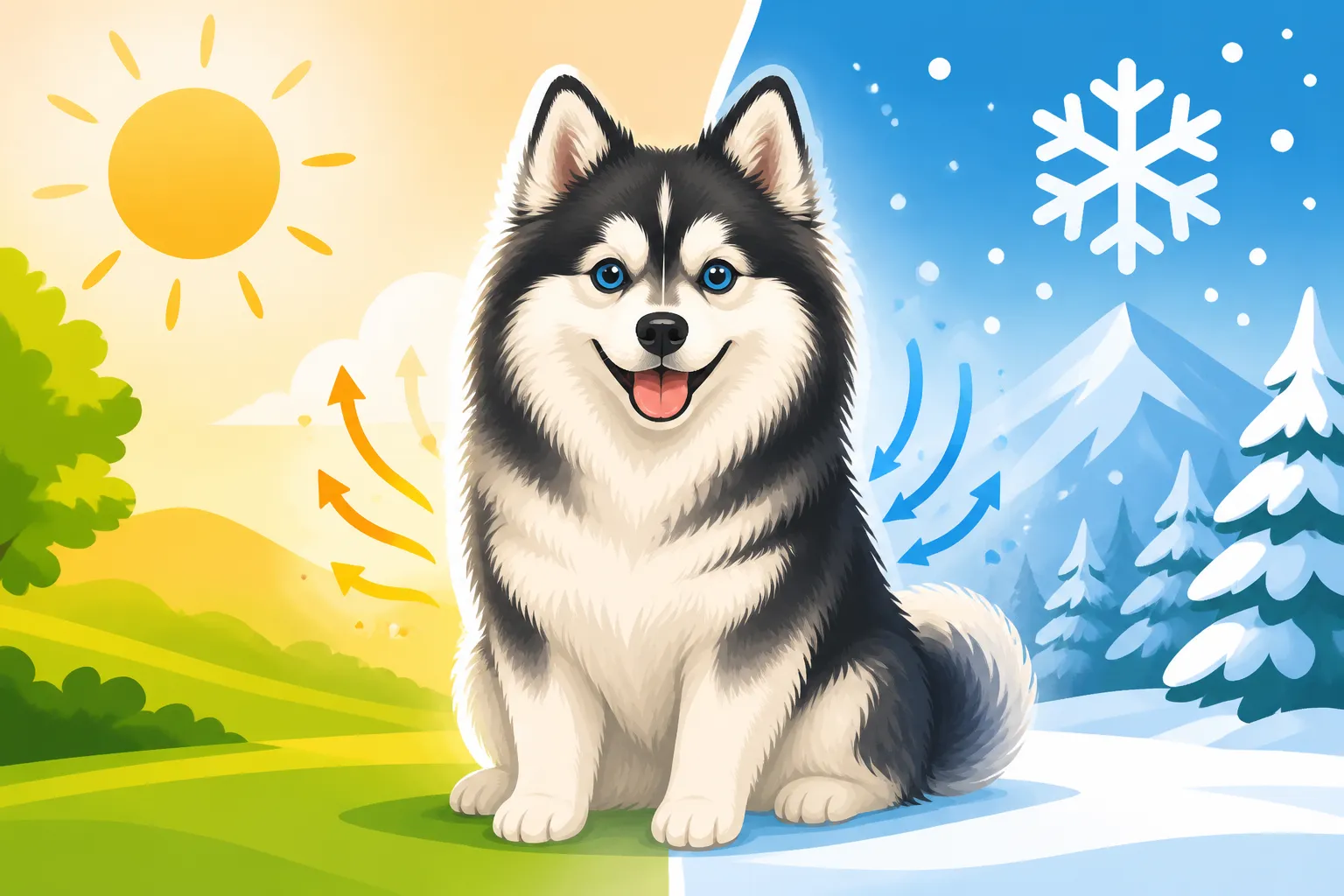
The Pomsky's coat isn't just one layer of fur; it's a sophisticated, dual-layered marvel that inherited the best (and most practical) features from its Siberian Husky and Pomeranian ancestors. This double coat is the key to their adaptability, acting as both a winter coat and a summer shield. It’s a natural, built-in system that’s far more effective than any human-made clothing or grooming intervention.
The Anatomy of a Double Coat: Guard Hairs and Undercoat
Imagine wearing a heavy wool sweater directly against your skin, and then putting on a tough, waterproof jacket over it. That's essentially what your Pomsky's double coat is doing, but it's seamlessly integrated and far more efficient. The outer layer consists of what we call "guard hairs." These are typically longer, coarser, and somewhat stiff hairs that are designed to be water-resistant and protective. They act as the first line of defense against rain, snow, dirt, and even UV rays. They also give your Pomsky that distinct, often plush, appearance.
Beneath these guard hairs lies the "undercoat." This is the real secret sauce, made up of incredibly dense, soft, and woolly fur. Think of it as a cloud of fine fibers that sit close to the dog's skin. The undercoat's primary job is insulation, trapping air to create a thermal barrier. When healthy and properly maintained, it's this undercoat that regulates your Pomsky's body temperature, keeping them warm in cold weather and, surprisingly, helping to keep them cool in warm weather. Without both layers working in harmony, the coat’s effectiveness is severely compromised.
How Both Parent Breeds Contribute to This Marvel
The Siberian Husky is renowned for its thick, resilient double coat, a necessity for surviving the harsh, sub-zero temperatures of the Arctic tundra. Their coat is a testament to natural selection, designed to shed snow, repel moisture, and provide incredible insulation. The Pomeranian, though much smaller, also hails from cold regions and boasts a similarly dense, stand-off double coat that provides exceptional warmth. Their voluminous fur isn't just for show; it's a practical adaptation.
When these two breeds are combined to create the Pomsky, the resulting offspring typically inherits a variation of this robust double coat. Most Pomskies carry a dense double coat that mirrors the functional effectiveness of their husky parent, just often scaled down to fit their smaller frame. It’s why you'll see The Pomsky That Carries a Husky Coat at Twenty Pounds still equipped with a coat built for much colder climes. This genetic inheritance is what makes their coat such a versatile tool for managing environmental temperatures year-round, giving them a natural advantage in varying conditions.
The Double Coat as a Winter Wonderland Protector
When winter descends, and you're bundling up in layers, it’s easy to look at your Pomsky and wonder if they're feeling the chill. But their double coat is truly a feat of nature, providing all the warmth and protection they need for most winter conditions. It's like they're walking around in their own perfectly tailored, high-performance winter jacket every single day.
Insulation Against the Cold: Trapping Warmth
The magic of the double coat in winter comes down to its incredible insulating properties. The dense, fluffy undercoat isn't just there for aesthetics; it's a finely tuned thermal layer. This undercoat works by trapping a layer of warm air close to your Pomsky’s body. This trapped air acts as a buffer between their skin and the cold external environment, much like the insulation in your house or the down in a winter coat. The warmer their body gets, the more heat is trapped, creating a continuous source of self-generated warmth.
You might notice your Pomsky frolicking in the snow, seemingly impervious to the biting wind or falling flakes. This isn't just their energetic spirit; it's their coat working overtime. For most Pomskies, especially those with a robust undercoat, this natural insulation is far superior to any sweater or coat you could buy them for typical winter weather. Their body is designed to generate heat and then hold onto it efficiently, making them surprisingly resilient even when the temperatures drop significantly below freezing. It's a testament to thousands of years of evolutionary engineering from their cold-weather ancestors.
Repelling Moisture and Snow: Staying Dry
Beyond warmth, the double coat offers another crucial winter benefit: protection from moisture. The outer layer of guard hairs is coarser and often has a slightly oily texture, which helps it to shed water and snow like a well-waxed waterproof jacket. When snowflakes fall on a Pomsky’s coat, they tend to sit on top of these guard hairs and don't immediately melt through to the skin. This prevents the undercoat from getting soaked, which would significantly reduce its insulating power and potentially lead to dangerous hypothermia.
Think about watching your Pomsky roll around in a fresh blanket of snow. You'll often see snow accumulate on their back and sides, almost forming a fluffy white blanket on top of their fur. But beneath that snowy exterior, their skin remains dry and their body temperature regulated. This water-shedding property is vital for active dogs who love to play outdoors, ensuring that their natural warmth isn't compromised by dampness. Maintaining a healthy, unmatted coat is key here, as mats can pull at the skin, compromise the barrier, and allow moisture to penetrate, which is why we talk about Whether a Pomsky Needs a Coat in Winter and other protections.
The Double Coat as a Summer Sun Shield
It's natural to assume that a thick, double coat would be a hindrance in warmer weather, making your Pomsky uncomfortably hot. Many people fall into the trap of thinking a shave will bring relief. However, this couldn't be further from the truth. The double coat is just as essential for managing heat as it is for combating cold, acting as an ingenious, natural cooling system.
Creating an Air Conditioning System: Regulating Body Temperature
This is where the counter-intuitive genius of the double coat truly shines. In warmer temperatures, that same dense undercoat that traps heat in winter now creates an insulating barrier against external heat. It establishes a pocket of air between the warm environment and your Pomsky's skin. This air pocket, when the coat is healthy and well-maintained, allows for natural air circulation, a process known as convection. As your Pomsky moves, air flows through the loose undercoat, helping to dissipate heat and allow evaporation from the skin to cool them down, much like an evaporative cooler.
Imagine an igloo: it’s made of ice, yet it's warm inside because the ice acts as insulation from the colder exterior. Similarly, your Pomsky’s coat acts as insulation from the warmer exterior. A properly functioning double coat allows their body to regulate its temperature more effectively than a shaved coat ever could. It’s their personal, portable air conditioner, constantly working to maintain a comfortable internal temperature. For anyone concerned about Whether a Pomsky Copes in a Southern Summer, understanding this mechanism is crucial.
Protection from Sunburn and Overheating
Beyond just internal temperature regulation, the double coat offers vital protection against direct sun exposure. Just like sunscreen, the dense fur acts as a physical barrier, shielding your Pomsky's skin from harmful ultraviolet (UV) rays. This is especially important for dogs with lighter skin or thinner fur, which would otherwise be highly susceptible to sunburn. Sunburn on a dog can be painful, leading to redness, blistering, and an increased risk of skin cancers over time.
Furthermore, the insulating properties of the coat also prevent the sun's intense heat from directly reaching the skin. If your Pomsky's skin were exposed, it would absorb solar radiation much faster, leading to quicker overheating. While no coat can prevent overheating in extreme conditions or with excessive exercise, a healthy double coat significantly reduces the rate at which your dog absorbs heat from the sun. It also helps prevent irritating Hot Spots on a Pomsky in Summer by allowing air to circulate and keep the skin dry, provided the coat is not matted.
The Dangers of Shaving a Pomsky's Double Coat
Despite the clear benefits of a double coat, a common misconception persists: that shaving a double-coated dog will make them cooler in summer. This misguided act can actually do more harm than good, disrupting their natural thermoregulation and potentially causing lasting damage to their beautiful, functional coat. It's a risk that intelligent dog owners should always avoid.
Disrupting Natural Thermoregulation
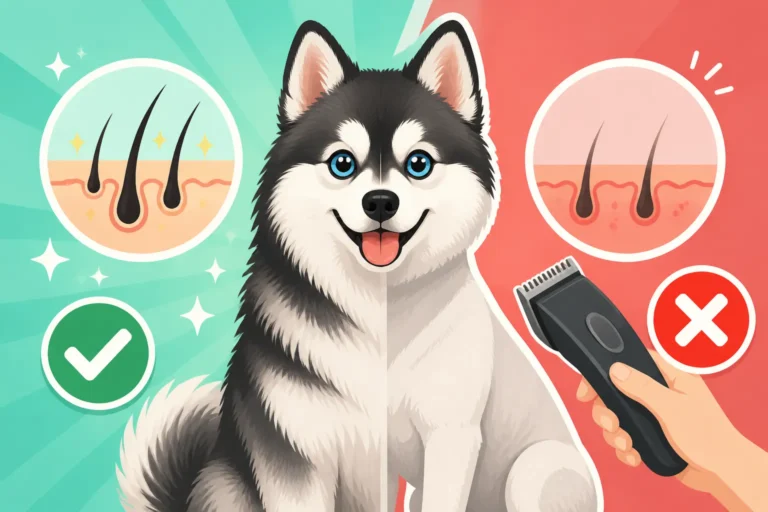
When you shave a Pomsky, you don't just remove excess fur; you strip away both layers of their finely tuned climate control system. You take away the guard hairs, which protect against UV radiation and external elements, and you eliminate the dense undercoat, which provides the crucial insulation. In winter, this means your Pomsky loses their primary defense against the cold, making them vulnerable to hypothermia much faster than an intact double-coated dog.
But the most surprising consequence for many owners is in summer: a shaved Pomsky is actually more prone to overheating and sunburn. Without the insulating undercoat, their bare skin is directly exposed to the sun's harsh rays, absorbing heat at an accelerated rate. The natural "air conditioning" system created by the circulating air within the layers is gone, leaving them without their built-in protection. Imagine replacing your home's insulation with nothing – it gets hotter faster in summer and colder faster in winter. Your Pomsky's coat works similarly, and removing it leaves them completely exposed and less comfortable.
Risks of Coat Damage and Skin Issues
Beyond the immediate disruption to their temperature regulation, shaving a Pomsky can lead to long-term and often irreversible damage to their coat and skin health. One of the most common issues is "post-clipping alopecia," where the coat simply doesn't grow back properly, or at all. It might grow back patchy, uneven, a different texture (often just the soft undercoat, without the protective guard hairs), or even a different color. This means they've permanently lost the functional advantages of their natural coat. This is a very real concern when considering Whether Shaving a Pomsky Damages the Coat.
Additionally, with their skin exposed, shaved Pomskies are far more susceptible to painful sunburn, insect bites, and various skin irritations and infections. The guard hairs provide a protective barrier, and without them, the delicate skin is vulnerable. A damaged coat can also lead to more matting in the future, as the undercoat may grow back without the support of the guard hairs, making grooming more difficult and uncomfortable for your dog. For these critical reasons, most reputable groomers and veterinarians strongly advise against shaving double-coated breeds.
Essential Grooming for Year-Round Coat Health
A Pomsky's double coat is a marvel, but it isn't maintenance-free. To ensure it can perform its job effectively, protecting your dog in all seasons, consistent and correct grooming is paramount. This isn't just about aesthetics; it's about maintaining the health and functionality of their natural climate control system.
Regular Brushing to Maintain Functionality
The most important aspect of maintaining a double coat is regular brushing. This becomes especially critical during the "blowing coat" seasons, which typically happen twice a year, as discussed in Whether a Pomsky Blows Its Coat Twice a Year. During these periods, your Pomsky will shed vast amounts of their dense undercoat. If this loose hair isn't removed, it can quickly mat and tangle, compacting against the skin. When the undercoat becomes matted, it loses its ability to trap air for insulation and circulate air for cooling, essentially ruining its natural function.
For daily or weekly brushing, especially during shedding, you'll need the right tools. An undercoat rake is indispensable for reaching deep into the coat and gently pulling out dead undercoat without damaging the guard hairs. Many fantastic options are available online through retailers like Amazon. A slicker brush can help detangle and smooth the outer coat, while a metal comb is excellent for checking for any missed mats, particularly behind the ears, in the armpits, and on the "feathers" of the legs and tail. Regular brushing not only prevents matting but also distributes natural skin oils, promoting a healthy skin barrier and a shiny, vibrant coat. This is why The Undercoat Rake a Pomsky Owner Lives With is a household staple for Pomsky owners. Proper brushing ensures that the air can flow freely, keeping the coat working as intended. How Often a Pomsky Needs Raking During a Blowout is a question you'll become very familiar with as a Pomsky owner!
Strategic Bathing and Drying Practices
While regular brushing is key, bathing also plays a role in coat health, though it should be done strategically. Over-bathing can strip essential natural oils from the coat, leading to dry skin and potentially dulling the fur. When you do bathe your Pomsky, use a shampoo specifically formulated for dogs with double coats. These shampoos are designed to clean effectively without being overly harsh. A deshedding shampoo can be particularly helpful during a coat blow to loosen and release dead undercoat.
Perhaps even more critical than the bath itself is the drying process. With a dense double coat, it is absolutely essential to dry your Pomsky thoroughly, right down to the skin. If the undercoat remains damp, it creates a perfect environment for bacterial and fungal growth, leading to skin infections, hot spots, and that dreaded "damp dog" smell. This is where a high-velocity force dryer becomes an invaluable tool. These powerful dryers blow water out of the coat rather than just evaporating it, significantly speeding up drying time and ensuring the undercoat is completely dry. You can find excellent quality force dryers from pet supply retailers like Chewy. Trying to air-dry a Pomsky, or using a regular human hairdryer, is often insufficient and can lead to problems. Proper drying is vital for preventing issues and maintaining the coat's integrity, reinforcing the importance of Drying a Pomsky to the Skin.
Supporting Your Pomsky's Coat in Extreme Climates
Even with their magnificent double coat, Pomskies aren't immune to the challenges of extreme weather. While their coat is a primary defense, owners still have a crucial role to play in supplementing its natural functions, ensuring their furry friends remain safe and comfortable, no matter the season.
Practical Tips for Hot Weather Management
Despite their coat's impressive ability to insulate against heat, Pomskies can still overheat if not managed properly during hot weather. Their double coat provides insulation, but strenuous activity in high temperatures can quickly overwhelm their cooling mechanisms. The most important step is to always provide ample shade and fresh, cool water. On hot days, limit outdoor exercise to the cooler parts of the day – early mornings and late evenings. A short walk at When to Walk a Pomsky in Summer might be all they need, rather than a long hike.
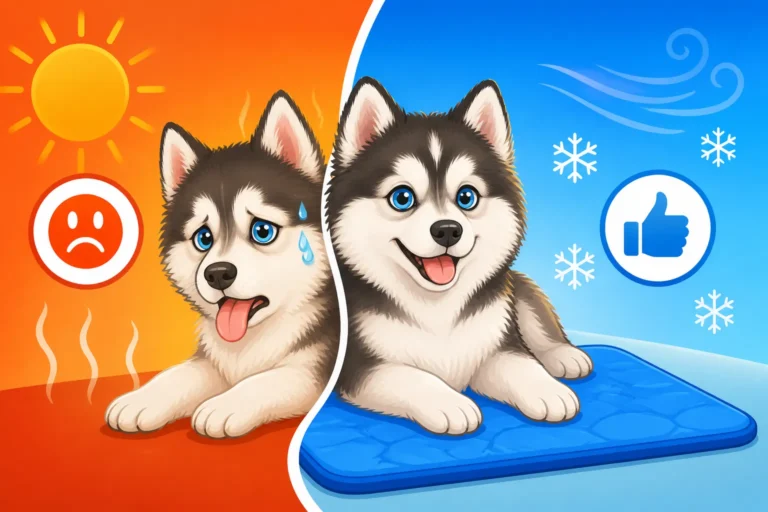
Consider using cooling mats or elevated beds that allow air circulation underneath, giving your Pomsky a cool place to rest indoors. Never, ever leave your Pomsky unattended in a car, even for "just a minute," as car interiors can heat up to dangerous levels incredibly fast. Offering cool, hydrating treats (like frozen chicken broth cubes) can also help. Some owners find that incorporating fresh food options, such as those from Ollie, helps with overall hydration and health, which indirectly supports their body's ability to cope with heat. Always be vigilant for signs of overheating, such as excessive panting, lethargy, or stumbling, and seek veterinary attention immediately if you suspect heatstroke.
Considerations for Cold Weather Care
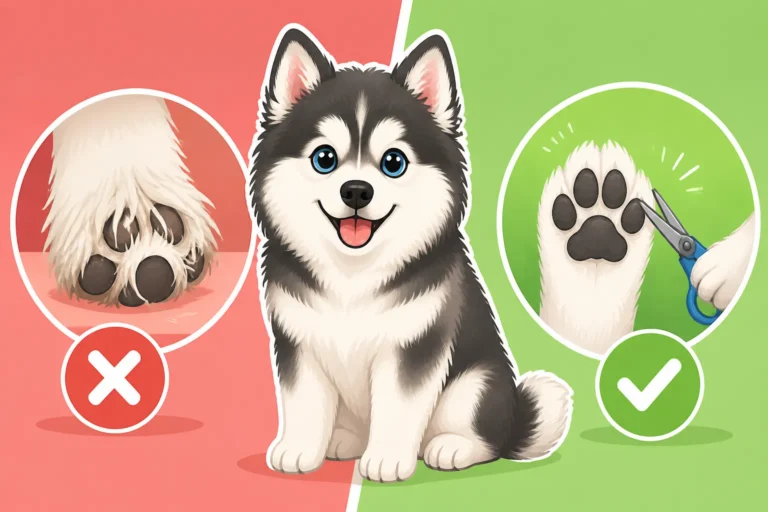
While Pomskies are built for cold, even their robust double coat has its limits in truly extreme conditions or with prolonged exposure. For most Pomskies living in typical winter climates, their natural coat is usually sufficient. However, if temperatures plummet far below freezing, or if your Pomsky will be spending extended periods outdoors, extra precautions are wise. Check their paw pads regularly for ice buildup, cracks, or irritation from road salt or de-icers. Whether Snow Balls Up in a Pomsky's Feet can be a common issue, causing discomfort. Dog booties can be a great investment for protecting their paws on salted pavements or icy trails.
Ensure your Pomsky has a warm, dry, and sheltered place to rest if they are spending any time outside. While they can tolerate cold better than many breeds, they are not outdoor dogs and should always have access to a heated indoor environment. For very small or particularly short-coated Pomskies, a well-fitting dog coat might be beneficial for short outdoor excursions in frigid temperatures, but for most, their natural fur is their best defense. Always monitor them for signs of being too cold, such as shivering, hunching, or lifting paws.
Double Coat Functions by Season
| Feature | Winter Function | Summer Function | Grooming Impact (if shaved) |
|---|---|---|---|
| Undercoat | Traps warm air for insulation | Traps cool air for insulation; promotes airflow | Lost insulation; leads to rapid heat absorption |
| Guard Hairs | Repel snow and moisture; protect from wind | Shield skin from UV rays; deflect direct heat | Exposed skin; increased risk of sunburn and heat |
| Overall Coat | Creates natural thermal barrier | Creates natural air conditioning system | Disrupts thermoregulation; increases discomfort |
| Skin Protection | Prevents frostbite to skin | Prevents sunburn and environmental irritants | Vulnerable to sunburn, insect bites, skin damage |
| Maintenance | Regular brushing prevents mats; maintains loft | Regular brushing allows airflow; prevents mats | Coat regrowth issues; potential permanent damage |
Disclaimer
This article is for general informational purposes only and does not constitute professional advice. Laws, prices and regulations vary by location and change over time. Consult a qualified professional for guidance on your specific situation.