Whether a Pomsky Suits an Older Owner
A Pomsky can be a wonderful companion for an older adult, but the fit depends less on age than on energy, mobility, support, and the individual dog. A puppy that pulls hard, barks often, or needs hours of attention can be exhausting; a settled adult may fit beautifully. This guide helps you weigh the daily realities before choosing.
What makes a Pomsky a good or difficult fit
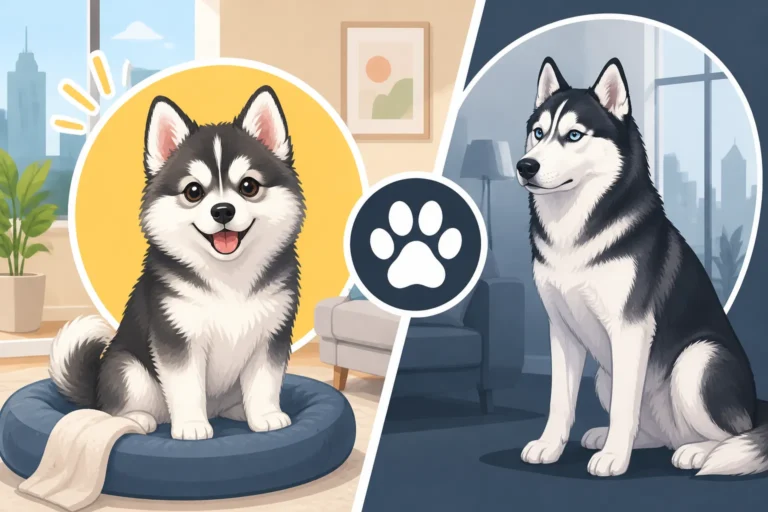
Pomskies are a cross between a Pomeranian and a Siberian Husky, and the mix can be unpredictable. Some are small and relatively easy to manage; others grow larger, energetic, vocal, or determined to chase anything that moves. Even littermates can differ in size, coat, confidence, and exercise needs. That variability matters when you’re choosing a dog to live with for many years.
A Pomsky may suit you well if you enjoy daily walks, have time for training and companionship, and can comfortably manage a lively dog on a leash. Many Pomskies are affectionate and clever, but intelligence isn’t the same as easygoing. A dog that learns quickly may also get bored quickly, test boundaries, or invent its own activities when under-stimulated. Before deciding, consider What Nobody Warns a Pomsky Buyer About and think about whether those everyday demands match your routine.
The question isn’t whether older adults can own Pomskies. Plenty do. The more useful question is whether this particular dog’s needs fit your physical abilities, home, schedule, and backup plan. Someone who walks daily, has secure outdoor access, and enjoys teaching a dog new things might find a Pomsky energizing. Someone who wants a quiet lap companion with little grooming or exercise may find the same breed frustrating.
The individual dog matters more than the label
A breed description can’t guarantee temperament. A Pomsky may inherit a Husky-like drive to run and explore, a Pomeranian-like tendency to alert-bark, or a blend that is hard to predict. Some are reserved with strangers; others want to greet everyone. Some settle after a good walk, while others need training games and regular mental activity too.
Ask about the dog’s actual behavior, not just its advertised size or generation. Does it pull on walks? Can it settle indoors? How does it respond to grooming, visitors, and other dogs? If you’re considering a puppy, ask to meet the parents where possible and talk with the breeder about adult dogs from previous litters. For a rescue, ask the foster caregiver what a normal day looks like, including barking, alone time, and leash behavior.
It also helps to remember that labels such as “mini,” “toy,” or “easygoing” aren’t guarantees of a particular adult size or personality. For a deeper look at likely variation, see How Big a Pomsky Gets. A small dog can still be strong, fast, and difficult to hold if it lunges suddenly.
Think about the whole commitment
Pomskies need companionship, exercise, training, grooming, and routine veterinary care. Those needs don’t stop when the weather is bad or you’re having a low-energy day. If you have a temporary injury, a planned procedure, or a week when you’re unwell, it’s worth knowing who can step in to handle walks and care.
A reliable support person can make dog ownership more manageable, but don’t build the plan around help that is only theoretical. Ask a friend, relative, neighbor, or paid dog walker whether they would genuinely be available. If stairs, icy sidewalks, or long walks are difficult, consider in advance whether your home and neighborhood offer safer alternatives.
| Daily consideration | Questions to ask yourself | What may make it easier |
|---|---|---|
| Walking | Can I manage a lively dog on a leash every day? | A calm adult dog, a safe walking route, or help from a walker |
| Grooming | Can I brush and handle a thick coat regularly? | A cooperative dog, accessible grooming setup, and scheduled help |
| Training | Do I have patience for consistent practice? | Short sessions, clear routines, and a qualified trainer |
| Emergencies | Who can help if I’m sick or away? | A named backup caregiver and a written care plan |
| Household safety | Can I prevent falls and escapes? | Clear walking paths, secure doors, good lighting, and a well-fitted harness |
Exercise, training, and safety in everyday life
A Pomsky doesn’t need to run a marathon, but most need more than a brief trip outside to relieve themselves. A daily routine usually includes walks, sniffing, play, and short training or enrichment activities. The right amount varies by age, health, and temperament. A young dog may be energetic and impulsive; an older adult dog may be more settled, though it still needs regular movement.
Exercise should be enjoyable and safe for both of you. If the dog pulls, bolts toward squirrels, or zigzags around other pedestrians, a walk can become a fall risk. You don’t have to accept that as an inevitable part of owning the breed: leash skills can improve with patient training, and the dog’s habits should be assessed before you commit. Still, training takes time, and early progress isn’t a promise that a dog will always be reliable off leash. See The Exercise a Pomsky Needs Every Day for more on matching activity to a Pomsky’s needs.
Leash manners can make or break the experience
A dog that walks politely is much easier to handle than one that surges at birds, bicycles, or other dogs. When meeting a potential Pomsky, ask to take a short walk together. Notice whether you can comfortably keep hold of the leash, redirect the dog, and manage unexpected excitement. A dog may behave differently in a new place, so try to learn about its usual walking habits too.
For a puppy, expect to teach leash skills gradually. Begin in a quiet area and reward calm attention before adding distractions. Short, frequent practice is usually more productive than trying to tire a puppy out with a long outing. If a dog is already difficult to control, a force-free trainer can help assess whether the behavior is manageable and teach practical handling techniques. For an overview of training challenges, read Whether a Pomsky Is Trainable at All.
A secure, well-fitted harness can be easier to manage than relying on a collar, particularly if the dog pulls or coughs when pressure is placed on its neck. The harness still needs to fit correctly, and a determined dog may back out of poorly adjusted equipment. When walking, keep the leash attached and avoid assuming a fenced yard or familiar park makes an unreliable recall safe.
A yard helps but doesn’t replace walks
A fenced yard can make bathroom breaks and play more convenient, but it isn’t a substitute for companionship or activity. Pomskies can be curious and quick. Check that gates latch securely, fence gaps are closed, and the dog can’t dig beneath or climb through the boundary. If you don’t have a yard, regular walks and enrichment can still work, but you’ll need a realistic plan for bad weather and days when getting outside is harder.
Apartment living may also be possible, but noise and exercise need thoughtful attention. Some Pomskies vocalize, especially when excited, bored, or left alone. If you share walls with neighbors, ask about the dog’s barking and how it copes when no one is home. For more on that practical question, see Whether a Pomsky Suits an Apartment.
A predictable routine can help: a morning walk, a midday bathroom break or caregiver visit, and an evening outing, with short indoor games in between. A food puzzle, scent-finding game, or brief training session can provide mental stimulation without requiring you to walk farther than feels safe. Indoor activities are useful additions, not a complete replacement for outdoor movement.
Grooming, home setup, and practical support
A Pomsky’s coat can be a substantial part of ownership. Many have dense, double coats that shed, and loose undercoat can gather on floors, furniture, and clothing. Regular brushing helps prevent tangles and lets you spot skin irritation, but it requires reaching around the dog and handling areas such as the legs, chest, and tail. If bending, kneeling, or standing for long periods is uncomfortable, grooming may become one of the hardest routine tasks.
Before adopting or buying, watch the dog being brushed if possible. Is it relaxed, or does it wriggle, nip, or resist? A cooperative dog is easier to maintain at home. Professional grooming can help, but you’ll need to arrange transport and plan for the recurring appointment. Learn more about the ongoing commitment in Whether a Pomsky Needs Professional Grooming at All.
A grooming table or raised surface may seem convenient, but lifting a dog onto it can create a safety concern. Don’t lift a dog if doing so strains your back or balance. A groomer can advise on a safe setup, and a veterinarian can help if the dog has mobility or handling issues. Regular nail care matters too: overgrown nails can affect comfort and make walking less pleasant.
Make the home easier for both of you
Set up the home before the dog arrives. Keep walkways clear of clutter and loose rugs, store leashes near the exit, and decide where food, grooming tools, and cleaning supplies will live. A dog bed should be easy to reach without climbing stairs or stepping over furniture. If you have stairs, consider whether the dog can manage them safely and whether you can help if it becomes injured or reluctant.
A secure entry routine can prevent a sudden escape. Place the leash where you can reach it, teach the dog to wait before doors open, and use a gate or closed interior door if visitors are coming and going. Microchipping and up-to-date identification are sensible precautions, but they do not replace secure handling.
It may also help to reduce the physical effort involved in routine care. For example, arranging recurring deliveries for food or litter-free cleanup supplies through a retailer such as Chewy can mean fewer heavy bags to carry. Chewy may also be one option for restocking familiar food and basic grooming supplies, but compare products and confirm that any food or supplement is appropriate with your veterinarian. If you use delivery, keep a small backup supply so a delayed order doesn’t disrupt the dog’s routine.
Budget for help, not just supplies
Ownership costs include food, routine veterinary visits, grooming, equipment, and unexpected care. If you anticipate needing help with walks, transport, or grooming, include those services in your plan rather than treating them as an occasional surprise. Think through how you would get the dog to a veterinary clinic if you couldn’t drive, and who could care for it during a hospital stay or trip.
Some owners find it useful to schedule recurring essentials from Chewy so they don’t have to remember each restock or carry bulky items home. That can ease one logistical burden, but it won’t solve the need for exercise, appointments, or hands-on grooming. A practical plan should cover the parts of care that require a person, not only the items that arrive at the door.
It’s also worth considering the dog’s size and handling needs in a real-world context. A 15-pound dog may sound manageable, but a fast lunge can still unsettle someone’s balance. Conversely, a somewhat larger dog that walks calmly may be easier to handle. Evaluate the behavior you see rather than choosing based on a number alone.
Puppy, adult, or senior Pomsky
For many older owners, an adult Pomsky is a more predictable choice than a puppy. Puppies need frequent bathroom trips, consistent supervision, socialization, and patient training. They may chew furniture, wake during the night, or nip during play. Even a confident, experienced owner can find the first months demanding.
An adult dog’s established habits can be easier to assess. A foster caregiver may be able to describe how it behaves on walks, whether it is house-trained, and how it settles at home. Adult dogs still need training and adjustment, especially after moving, but you may have a clearer picture of their energy level and grooming tolerance. Ask for a trial visit or multiple meetings when possible, rather than making a decision after a single exciting introduction.
A senior Pomsky may be a particularly good match if you want a companion with a calmer routine, though age doesn’t guarantee low energy or low care needs. Older dogs can have arthritis, dental problems, vision changes, or other medical concerns that require regular attention. Talk with a veterinarian about the dog’s health and likely care needs before adoption. More on age-related changes is available in The Birthday a Pomsky Counts as Senior.
What to check before bringing a Pomsky home
Take time to evaluate a dog in ordinary situations. A friendly greeting is encouraging, but it doesn’t tell you everything about walking, grooming, or settling. If possible, spend time with the dog indoors and outdoors, and ask the caregiver to demonstrate how it responds to handling and basic cues.
Use this checklist to guide the conversation:
- Ask how long the dog can comfortably be alone and whether it barks, chews, or becomes distressed.
- Take a short leash walk and notice pulling, sudden lunges, and how readily the dog checks in with its handler.
- Ask how often the coat needs brushing and whether the dog tolerates grooming, nail care, and bathing.
- Discuss any health history, current medication, or mobility concerns with the veterinarian.
- Identify a dependable person who can help with walks or care when you are unwell.
- Confirm that your home, entryways, yard, and daily schedule can keep the dog safe and engaged.
If you’re considering a puppy, ask who will handle care when you need rest or have an appointment. A puppy’s needs don’t pause because the day has become difficult. If you’re considering a rescue, ask what is known and what remains uncertain; an honest answer is more useful than a promise that the dog will be perfect.
The final fit depends on your support system
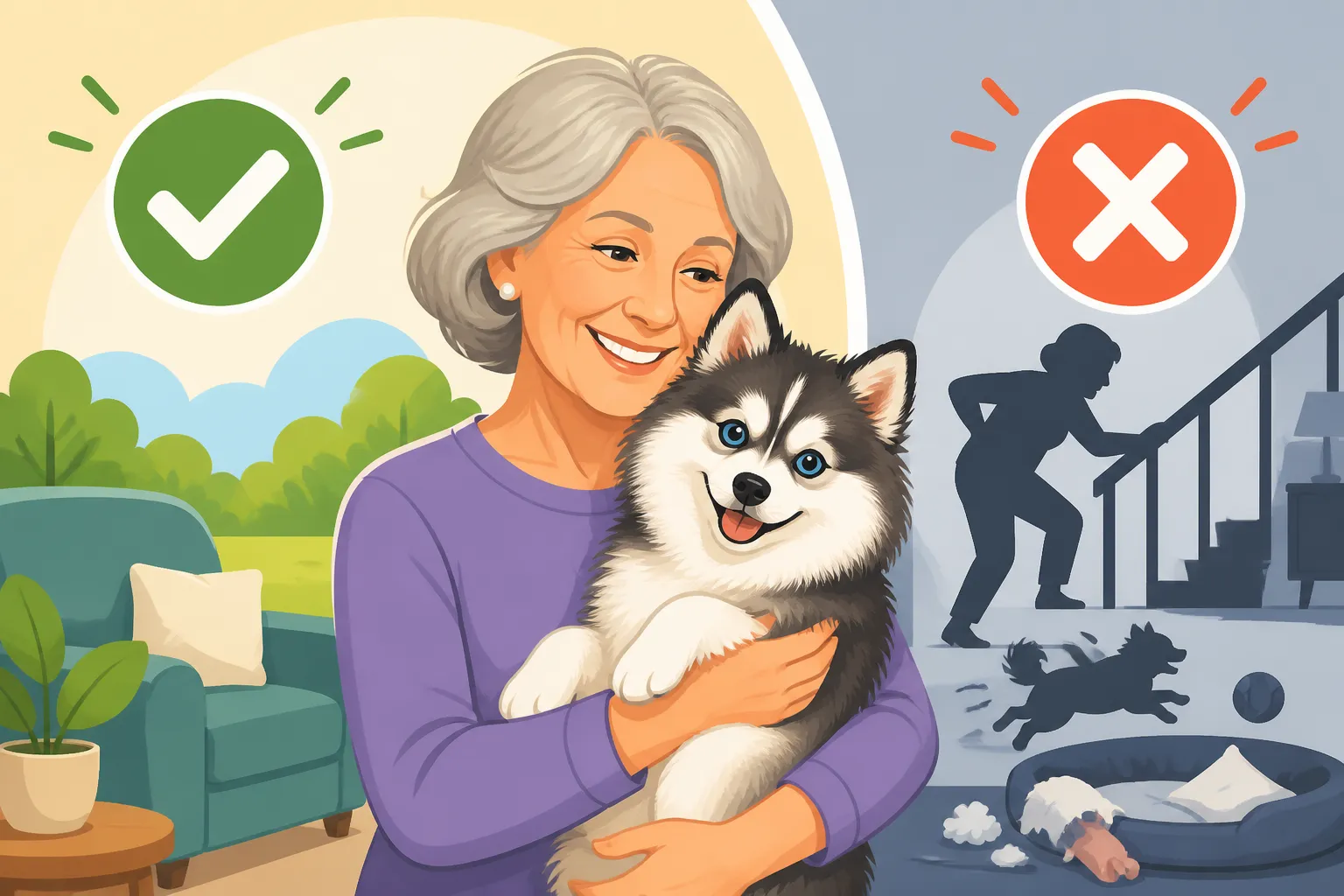
A Pomsky can suit an older owner who is active, enjoys training, and has a realistic plan for grooming and backup care. It may be a poor match if you want a quiet, low-maintenance companion, struggle to manage a dog that pulls, or have no help available during illness. Those are not judgments about age; they are practical questions that any prospective owner deserves to answer.
If you’re unsure, start by meeting adult Pomskies through reputable rescues or responsible breeders, and be candid about the kind of daily life you can offer. Consider an adult whose behavior is already known, especially if you’re not eager to raise a puppy. The best match is not the most photogenic dog or the smallest one. It is the dog whose real needs fit the life you can comfortably provide.
Disclaimer
This article is for general informational purposes only and does not constitute professional advice. Laws, prices and regulations vary by location and change over time. Consult a qualified professional for guidance on your specific situation.