Whether a Pomsky Slips a Collar
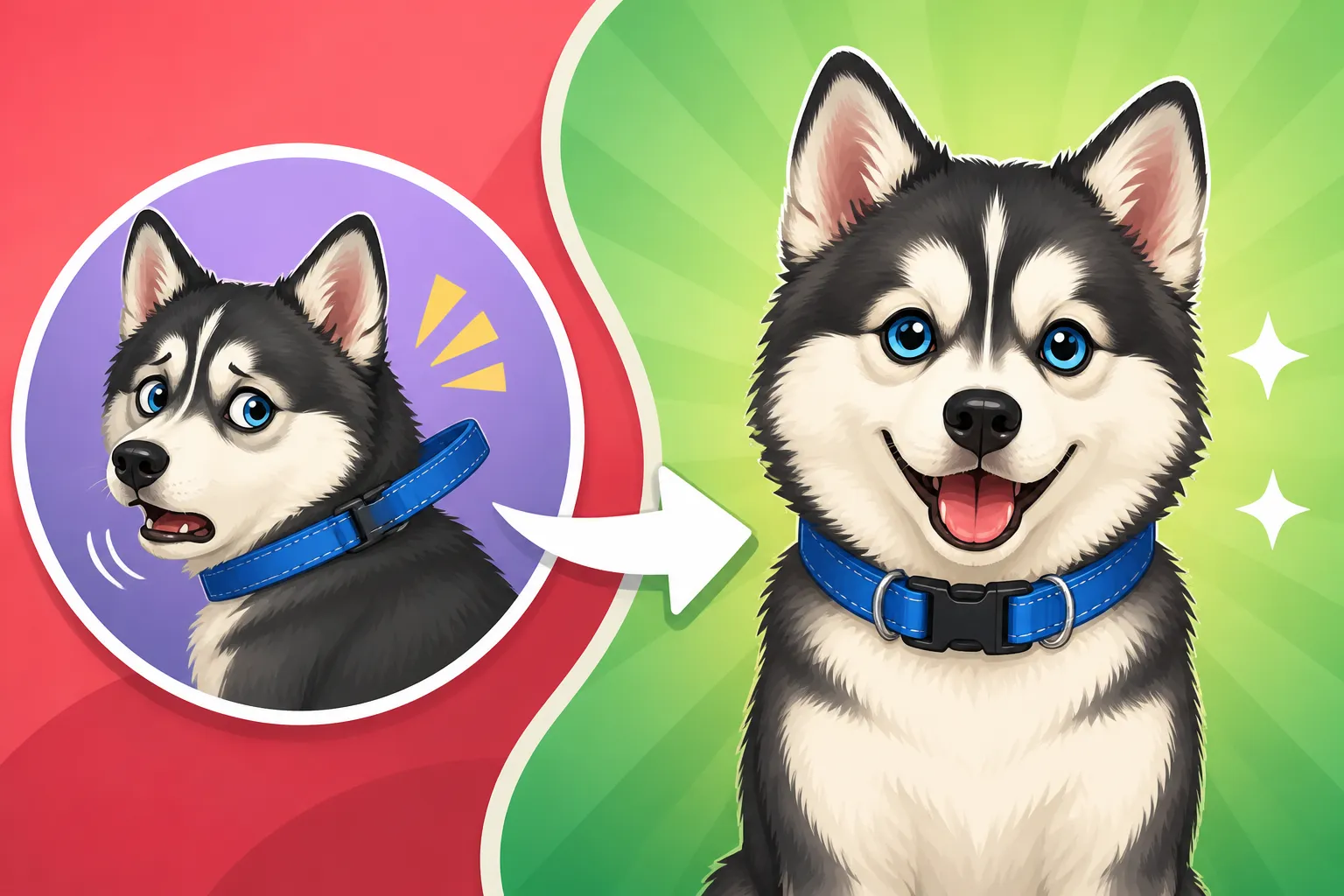
It's a fear every Pomsky owner has felt deep in their gut: that sudden lurch, the snap of the leash, and the horrifying sight of your beloved fluffy companion, collar free, dashing away into the distance. Pomskies are notorious for their intelligence, their independence, and yes, their uncanny ability to Houdini their way out of what seems like the most secure restraint. This guide is here to tackle that very real anxiety head-on, exploring why these charming little escape artists are so good at slipping collars and, more importantly, what you can do to prevent it and keep them safe.
Understanding Why a Pomsky Might Slip a Collar
Let's be honest, Pomskies are a special breed. They've got that delightful mix of Siberian Husky intelligence and wanderlust, combined with the Pomeranian's small stature and often sassy attitude. This combination, while adorable, can create a dog that's incredibly adept at getting out of things they don't want to be in – like a collar that feels restrictive or simply isn't fitted correctly. It's not usually malice; it's just pure, unadulterated Pomsky ingenuity and a strong desire to explore.
The Anatomy of an Escape Artist
When you look at a Pomsky, you see a compact, powerful little dog. Many have necks that are surprisingly thick for their overall size, often blending seamlessly into their shoulders, especially with that luxurious double coat. This "no-neck" appearance can make finding a collar that sits snugly but comfortably a real challenge. Unlike some breeds with distinct, slender necks, a Pomsky's build can allow a poorly fitted collar to slip right over their head if they pull back with enough force or wriggle just right.
Think about it: a determined Pomsky might put all their weight into backing away from you, tucking their chin, and flattening their ears. This action significantly reduces the circumference of their head and neck, allowing a loose collar to slide off. It's a natural canine instinct to try to free themselves from restraint if they feel threatened or simply want to go in another direction. For a Pomsky, with their inherent desire to run and explore, that instinct can be incredibly strong, turning them into a furry little escape artist right before your eyes. You can read more about The Pomsky Escape Artist in a Twenty Pound Body.
The Independent Nature of a Pomsky
The Husky influence in the Pomsky brings a strong sense of independence and a high prey drive. This isn't a dog that always wants to stick by your side or consistently checks in with you. If a captivating scent crosses their path – perhaps a squirrel darting up a tree, or the lingering smell of a rabbit that passed through moments before – their instincts can kick in with incredible force. That sudden surge of focus on something else can make them forget all about the leash, the collar, and even you.
When a Pomsky locks onto something, they can become oblivious to their surroundings. A sudden lunge towards that enticing smell, coupled with a perfectly executed twist and pull-back, is often all it takes for a standard collar to pop right over their head. It's not about being disobedient in that moment, but rather being driven by deeply ingrained instincts that override their training, especially if they haven't had consistent, high-level recall work. This independent streak is part of their charm, but it also means we, as owners, need to be extra vigilant about their safety.
Common Collar Fit Mistakes
One of the biggest culprits behind slipped collars is simply a poor fit. Many owners unknowingly make a few common mistakes when selecting and fitting a collar, which can have serious consequences. A collar that's too loose is an obvious problem, but even one that seems snug might not be secure enough for a determined Pomsky.
Here’s where things often go wrong:
- The Two-Finger Rule Misconception: While the "two-finger rule" (being able to comfortably slip two fingers between the collar and your dog's neck) is a good general guideline, it might not be enough for a Pomsky. Because their heads are often not significantly larger than their necks, especially when they pull back, those two fingers of space can quickly become enough room to slip free.
- Ignoring Coat Compression: A Pomsky's lush double coat can be deceptive. A collar that feels snug against their fur might actually be quite loose once their coat compresses, or if they get wet and their fur lies flat. Always check the fit against the skin, not just the fluff.
- Not Adjusting Regularly: Puppies grow rapidly, and even adult dogs can gain or lose a little weight. Collars need to be checked and adjusted frequently. What fit perfectly last month might be dangerously loose today. It's worth making it a habit to check the collar fit every week or so.
- Using Only the Smallest Loop on Adjustable Collars: Many adjustable collars have a wide range of sizes, and sometimes owners pick a collar that's simply too large for their dog, even on its tightest setting. If there's a lot of excess material or the buckle is sitting awkwardly, it might indicate the collar size isn't ideal for your Pomsky's unique build.
Making sure the collar is truly snug – to the point where it might feel a little tight to your two fingers but doesn't cause discomfort or choke the dog – is crucial. You want it tight enough that it absolutely cannot slip over their head, even with maximum effort on their part, but loose enough that it doesn't rub or restrict their breathing. It’s a delicate balance.
The Different Types of Collars and Their Effectiveness
Given the Pomsky's Houdini tendencies, not all collars are created equal. Understanding the pros and cons of different types can help you make a more informed choice for your dog's safety.
Standard Flat Collars and Their Limitations
A standard flat buckle or quick-release collar is what most people think of when they imagine a dog collar. They come in a vast array of materials, colors, and styles, and they're essential for holding ID tags and rabies tags. However, for a Pomsky, relying solely on a standard flat collar for leash security can be a gamble.
The primary limitation of a flat collar is its fixed circumference. Once it's buckled, it doesn't get any tighter. If your Pomsky decides to pull backwards, or if they suddenly lunge and then tuck their head, that fixed circumference might be just enough to allow it to slide right off. We've all seen dogs do that sudden shimmy-shake to free themselves, and for a Pomsky with their dense coat and clever maneuvers, it's a move they can master quickly. While perfectly adequate for carrying tags, when it comes to attaching a leash for walks, especially in areas with distractions or traffic, a flat collar often isn't the safest choice for a breed with a propensity for escape. It’s a great piece of jewelry for their tags, but rarely a reliable walking tool on its own.
Martingale Collars as a Secure Solution
For dogs with "slippery" necks, or those who are prone to backing out of collars, the martingale collar is often hailed as a game-changer. These collars are designed with two loops: a larger loop that goes around the dog's neck and a smaller loop where the leash attaches. When your dog pulls on the leash, the smaller loop tightens the larger loop, providing a gentle, even pressure around the neck. This prevents the collar from slipping over their head without choking them.
The beauty of a martingale is that it only tightens to the pre-set size of the dog's neck, so it can't become uncomfortably tight or cause injury if fitted correctly. When the leash is slack, the collar loosens again, sitting comfortably on the neck. They're particularly effective for breeds like Pomskies whose heads aren't significantly larger than their necks. Many owners swear by them for dogs who are otherwise escape artists. When choosing a martingale, ensure it's the right width for your Pomsky – a wider collar distributes pressure more evenly and is generally more comfortable. You can find excellent quality martingale collars on sites like Amazon, and they are a vital piece of equipment for many Pomsky owners. Learn more about Whether a Martingale Collar Holds a Pomsky.
Head Halters and Their Use
Head halters, sometimes called head collars, are another option, though often less commonly seen on Pomskies. These devices fit over your dog's muzzle and around the back of their head, much like a horse halter. The leash attaches under the chin, giving you control over the dog's head direction. Where the head goes, the body follows.
For a strong puller or a dog that is particularly reactive and needs more directional control, a head halter can be very effective. It prevents pulling by redirecting their head and makes it virtually impossible for them to slip out, as it's secured around their muzzle and behind their ears. However, not all dogs take to head halters readily. Some find them uncomfortable or restrictive on their muzzle, and they may try to rub them off, especially initially. It takes time, patience, and positive reinforcement to introduce a head halter successfully. It's crucial to make it a positive experience with treats and praise, ensuring your Pomsky associates it with good things, rather than just restraint. While perhaps not the first choice for a typical Pomsky walk, they can be a valuable tool for specific training needs or for dogs that are extremely difficult to manage on other types of collars or harnesses.
The Role of a Harness in Pomsky Safety
For many Pomsky owners, the discussion quickly moves from collars to harnesses, and for good reason. Harnesses offer a different approach to leash security and can often provide a much greater sense of peace of mind.
Why a Harness is Often Preferred
Harnesses distribute pressure across your dog's chest and shoulders, rather than concentrating it solely on their neck. This is not only more comfortable for your Pomsky, but it also significantly reduces the risk of them slipping out. With a properly fitted harness, even a determined escape artist would struggle to back out, as the straps go around the wider parts of their body. This makes a harness an excellent choice for a breed known for its cleverness and desire for freedom. Why a Pomsky Should Wear a Harness is a topic many of us Pomsky parents are passionate about.
Beyond just preventing escapes, harnesses also offer several health benefits. They protect your Pomsky's delicate trachea, which can be vulnerable, especially with sudden jerks on a collar. This is particularly important for breeds that might be prone to conditions like The Collapsing Trachea a Pomsky Gets From the Pomeranian. Furthermore, a harness gives you better control over your dog's entire body, which can be invaluable during training, especially with a breed that has strong instincts and can be quite strong despite its size. For many, a harness is simply the default for walks and any outdoor adventure, providing a much safer and more humane way to keep your Pomsky securely by your side.
Types of Harnesses and How to Choose
Just like collars, harnesses come in a variety of styles, each with its own benefits and drawbacks. Choosing the right one for your Pomsky can make all the difference in comfort and security.
Here's a breakdown of common types:
- Standard Back-Clip Harnesses: These are the most common type, with the leash attachment D-ring located on the dog's back, usually between the shoulder blades. They are generally comfortable and good for dogs who don't pull excessively. However, a determined Pomsky can still learn to pull hard with a back-clip harness, and if the fit isn't absolutely perfect, some dogs can still manage to wriggle free, especially if they are particularly flexible and skilled at backing out.
- Front-Clip Harnesses (No-Pull Harnesses): These harnesses feature a leash attachment D-ring on the dog's chest. When your Pomsky pulls, the leash redirects them to the side, turning their body and making it harder for them to pull forward forcefully. This can be a great training tool for dogs that pull on the leash. For a Pomsky, a front-clip harness also offers an added layer of escape prevention, as the redirection makes it much harder for them to gain the leverage needed to back out of the harness.
- Dual-Clip Harnesses: Some harnesses offer both front and back clip options. This versatility can be fantastic, allowing you to use the front clip for training or better control, and the back clip for casual walks once your Pomsky has learned better leash manners. These often provide the best of both worlds in terms of control and comfort.
- Escape-Proof/Three-Strap Harnesses: For the ultimate escape artist Pomsky, there are harnesses designed with an extra strap around the waist, behind the rib cage. This third strap makes it significantly harder for a dog to back out, as it secures them around a narrower part of their body. If you have a Pomsky who has truly mastered the art of harness escape, these are often the go-to solution for peace of mind.
When choosing, always prioritize fit. A harness should be snug but not restrictive, allowing for full range of motion without chafing. The material should be comfortable and durable. Brands like BAXTER & Bella offer excellent guidance on puppy training, and their philosophies often align with using positive reinforcement tools like well-fitting harnesses. To truly understand if a harness is right for your Pomsky, you might want to look into Whether a Pomsky Backs Out of a Harness.
Combining Collars and Harnesses for Ultimate Security
For those truly concerned about their Pomsky's safety, especially in high-traffic areas or during walks in unfamiliar surroundings, a double-attachment system can provide an unparalleled level of security. This means using both a collar and a harness, with two separate leashes (or a leash designed with two clips) attached to each.
Here’s how it works: you would have your Pomsky wear their well-fitted harness, perhaps a front-clip or a dual-clip style, with one leash attached to the harness. Simultaneously, they would wear a secure collar, such as a martingale, with a second leash attached to it. If one piece of equipment fails – perhaps a buckle breaks, or your Pomsky manages an unprecedented contortion to slip out of one – you still have the other attachment point to keep them safe.
This strategy might seem a little over-the-top to some, but for owners of high-flight-risk dogs like many Pomskies, it's a small price to pay for peace of mind. Imagine the sheer terror of your Pomsky bolting into a busy street. A double-leash system significantly reduces that risk. It allows you to maintain control even if the unexpected happens, ensuring that your adventurous companion remains secure. It’s an extra layer of protection that can be particularly valuable during the initial training phases or in environments where escape could be truly dangerous.
Training and Management to Prevent Collar Slipping
While the right equipment is crucial, it's only one piece of the puzzle. Effective training and smart management strategies are equally important in preventing your Pomsky from slipping their collar and keeping them safe.
Leash Training and Proper Handling Techniques
A well-trained Pomsky who walks politely on a leash is far less likely to slip their collar than one who is constantly pulling or lunging. The key here is consistent, positive-reinforcement based leash training from a young age. This means teaching your Pomsky to walk on a loose leash, rewarding them for staying by your side, and making the leash a positive experience.
One common mistake is allowing a dog to constantly pull against the leash. Not only is this uncomfortable for your dog, but it also teaches them that pulling is how they get to where they want to go. When a dog pulls constantly, the pressure on their neck is consistent, and if they suddenly stop pulling and then back up, the collar can easily lose its tension and slip. Instead, focus on teaching a "heel" or a loose-leash walk using treats and praise. If your Pomsky pulls, stop walking. Only resume when the leash is slack. This teaches them that pulling gets them nowhere, and a loose leash keeps the walk going. This requires patience, but it’s foundational for safe walks. Consider programs like BAXTER & Bella, which offer online puppy training resources that emphasize positive reinforcement and foundational leash skills.
Building a Strong Recall
Even with the most secure collar or harness, a strong recall is your ultimate safety net. If, despite all precautions, your Pomsky does manage to slip their restraint, a reliable "come" command could be the difference between a minor scare and a heartbreaking loss. Pomskies, with their Husky heritage, can have a notoriously independent streak, making recall training a consistent, ongoing effort. Building a Recall a Pomsky Answers is often an uphill battle, but it’s an essential one.
Start training recall in a low-distraction environment, like your backyard, and gradually introduce more distractions as your Pomsky improves. Always make coming to you a highly rewarding experience with high-value treats and enthusiastic praise. Never call your Pomsky to you to scold them, as this will poison the recall cue. Make yourself the most exciting thing in the environment. Practice frequently, even when it feels unnecessary, to solidify the command. Remember that a Pomsky's prey drive can be incredibly strong, overriding even the best training in a moment of high excitement. This means you can never fully trust a Pomsky off-leash in an unfenced area, but a strong recall significantly improves your chances if an accident occurs.
Dealing with Fear or Reactivity
Sometimes, a dog slips a collar not out of a desire to escape and explore, but out of fear or reactivity. A sudden loud noise, an unfamiliar dog, or an overwhelming situation can cause a Pomsky to panic and try to bolt. In these moments, their instinct is to get away, and they can thrash, twist, and pull with incredible force, making them prime candidates for collar-slipping.
If your Pomsky exhibits fear or reactivity, addressing the underlying issues is crucial. This might involve working with a professional positive-reinforcement trainer, desensitization and counter-conditioning protocols, or even consulting with your vet to rule out any medical causes for behavioral changes. Using a secure harness (like a front-clip or three-strap) is particularly important for reactive dogs, as it provides better control and prevents pressure on the neck, which can exacerbate fear in some dogs. Additionally, creating a predictable routine, avoiding known triggers when possible, and providing a safe, calm environment can all help reduce anxiety and the likelihood of a panic-induced escape. Ensuring your Pomsky feels secure and understands what is expected of them in various situations can significantly reduce their inclination to try and escape.
What to Do If Your Pomsky Slips Its Collar
Even with the best equipment and training, accidents can happen. It's terrifying, but knowing what to do in the immediate aftermath can make all the difference in getting your Pomsky back safely.
Immediate Actions to Take
The moment you realize your Pomsky has slipped their collar and is loose, a rush of adrenaline and panic is natural. But it's critical to try and stay calm. Your panic can often escalate your dog's fear or excitement, making them harder to catch.
Here’s a general sequence of actions:
- Do Not Chase: Your first instinct might be to run after them, but for most dogs, especially those with a strong prey drive or playful nature like a Pomsky, this will only make them run faster or see it as a game. Instead, try to move away from them, or sit down. Sometimes, acting disinterested or even lying down can pique their curiosity and cause them to come closer to investigate.
- Call Their Name Enthusiastically: Use your happiest, most excited voice. Squat down and clap your hands. Make kissy noises. Anything to make yourself seem approachable and fun, rather than threatening. Don't yell their name in an angry or panicked tone.
- Offer High-Value Treats: If you always carry treats (and you absolutely should, especially with a Pomsky!), scatter some on the ground near you. The scent might entice them to come closer.
- Use Their Favorite Toy: If you have a squeaky toy or ball, try to engage them in play.
- Recruit Help (Carefully): If you have someone with you, have them help create a perimeter, moving slowly to try and funnel your Pomsky towards a safe area or back to you. However, avoid too many people yelling or rushing, as this can overwhelm your dog.
- Be Aware of Surroundings: While trying to entice them back, keep a constant watch on traffic, other dogs, and potential hazards.
Remember that for some Pomskies, the initial burst of freedom might be exhilarating. It can take time, patience, and a calm demeanor to coax them back. It's often helpful to think of What to Do in the First Hour a Pomsky Is Lost, as those principles apply directly to a collar-slipping scenario.
Long-Term Prevention Strategies
After a scare, or even proactively, implementing long-term prevention strategies is key. It's about building multiple layers of safety around your Pomsky.
Consider the following:
- Microchipping and ID Tags: This is non-negotiable. Even with the best equipment, accidents happen. Make sure your Pomsky is microchipped, and that your contact information is always up-to-date with the chip registry. Additionally, a sturdy ID tag with your current phone number should always be on your Pomsky's collar, even if they wear a harness.
- GPS Trackers: For ultimate peace of mind, especially for avid escape artists, a GPS tracker can be a lifesaver. These small devices attach to your Pomsky's collar or harness and allow you to track their location in real-time via an app on your phone. Brands like Whistle or Fi are popular choices. This gives you an immediate advantage in locating your Pomsky if they do get loose. Whether a Pomsky Should Have a GPS Tracker is a consideration more and more owners are making.
- Secure Fencing: If you have a yard, ensure it is truly Pomsky-proof. These dogs can jump, dig, and even climb. A high fence with a secure bottom (perhaps buried wire or concrete footings) is essential.
- Gate Security: Double-check that all gates are securely latched and that visitors know to close them properly. Consider adding secondary latches or locks.
- Consistent Training: Continue to reinforce good leash manners and a rock-solid recall throughout your Pomsky's life. Training isn't a one-time event; it's an ongoing dialogue with your dog.
- Door and Exit Management: Be mindful of open doors and gates. Develop habits like always having your Pomsky on a leash before opening an exterior door, or using baby gates to create a secure zone near entrances.
- Regular Equipment Checks: Make it a habit to check the fit and condition of your Pomsky's collar and harness regularly. Look for frayed straps, loose buckles, or signs of wear and tear. Replace equipment when it shows signs of damage.
By combining the right equipment, consistent training, and vigilant management, you can significantly reduce the chances of your clever Pomsky ever slipping a collar and heading off on an unauthorized adventure.
Disclaimer
This article is for general informational purposes only and does not constitute professional advice. Laws, prices and regulations vary by location and change over time. Consult a qualified professional for guidance on your specific situation.