Whether a Martingale Collar Holds a Pomsky
It’s a truly disheartening experience to see your beloved Pomsky, full of joy and energy, suddenly slip free from their collar with a quick wiggle and bolt off. That heart-stopping moment, often accompanied by a frantic chase, is a reality many Pomsky parents face due to their cleverness and unique physical traits. This guide dives deep into whether a martingale collar can truly offer the security and peace of mind you need to keep your Pomsky safely by your side.
The Pomsky's Unique Neck and Houdini Tendencies
Pomskies are an incredible blend of intelligence, athleticism, and often, a mischievous streak. They inherit a lot from both the Siberian Husky and the Pomeranian, and unfortunately, this can include a propensity for becoming escape artists. Many owners find that their standard flat buckle collars just aren't cutting it, leading to constant worry during walks or when doors are accidentally left ajar.
Why Standard Collars Often Fail a Pomsky
Let's be real, most standard collars are designed for dogs with more defined necks and heads that are proportionally larger than their necks. A Pomsky, however, often has a head that isn't much wider than their neck, especially when their beautiful thick double coat is compressed. This physical trait, combined with their incredible flexibility and a natural instinct to pull back if scared or over-excited, makes them prime candidates for backing out of a traditional collar.
Imagine you're at the dog park, and a squirrel darts by. Your Pomsky, with their strong The Prey Drive a Pomsky Gets From the Husky, might lunge, and if they suddenly change direction or pull back, a regular collar can slide right over their head. It's not about the collar being faulty; it's about the design not being suited to every dog's anatomy and behavior. This isn't just a minor inconvenience; it's a genuine safety concern that can lead to a lost dog or even a dangerous encounter with traffic. For more on keeping your Pomsky secure, you might want to read The Fence a Pomsky Actually Needs.
Understanding the Pomsky's Build and Escape Motivation
Beyond their physical build, Pomskies are incredibly smart. They learn quickly what works and what doesn't. If they've successfully slipped out of a collar once, they'll often try it again. They’re not doing it to spite you; they're simply responding to instinct and what they've learned about their own capabilities. This is why addressing the issue with the right tool and training is crucial.
Their dense double coat, while beautiful, can also mask how loose a collar truly is. What feels snug against the fur can become surprisingly loose once that fur compresses under tension, allowing the collar to slide right off. Owners often struggle with finding a collar that is comfortable for their dog, yet secure enough to prevent them from slipping out when they get a sudden burst of energy or get startled. It’s a classic frustration, trying to balance comfort with security. Many Pomsky owners share experiences of their dog becoming The Pomsky Escape Artist in a Twenty Pound Body.
How a Martingale Collar Works for a Pomsky
This is where the martingale collar enters the scene as a potential game-changer for many Pomsky owners. Unlike traditional collars, a martingale is specifically designed to prevent dogs from backing out of it, providing a crucial layer of security without causing discomfort if fitted correctly.
The Mechanics of the Martingale Design
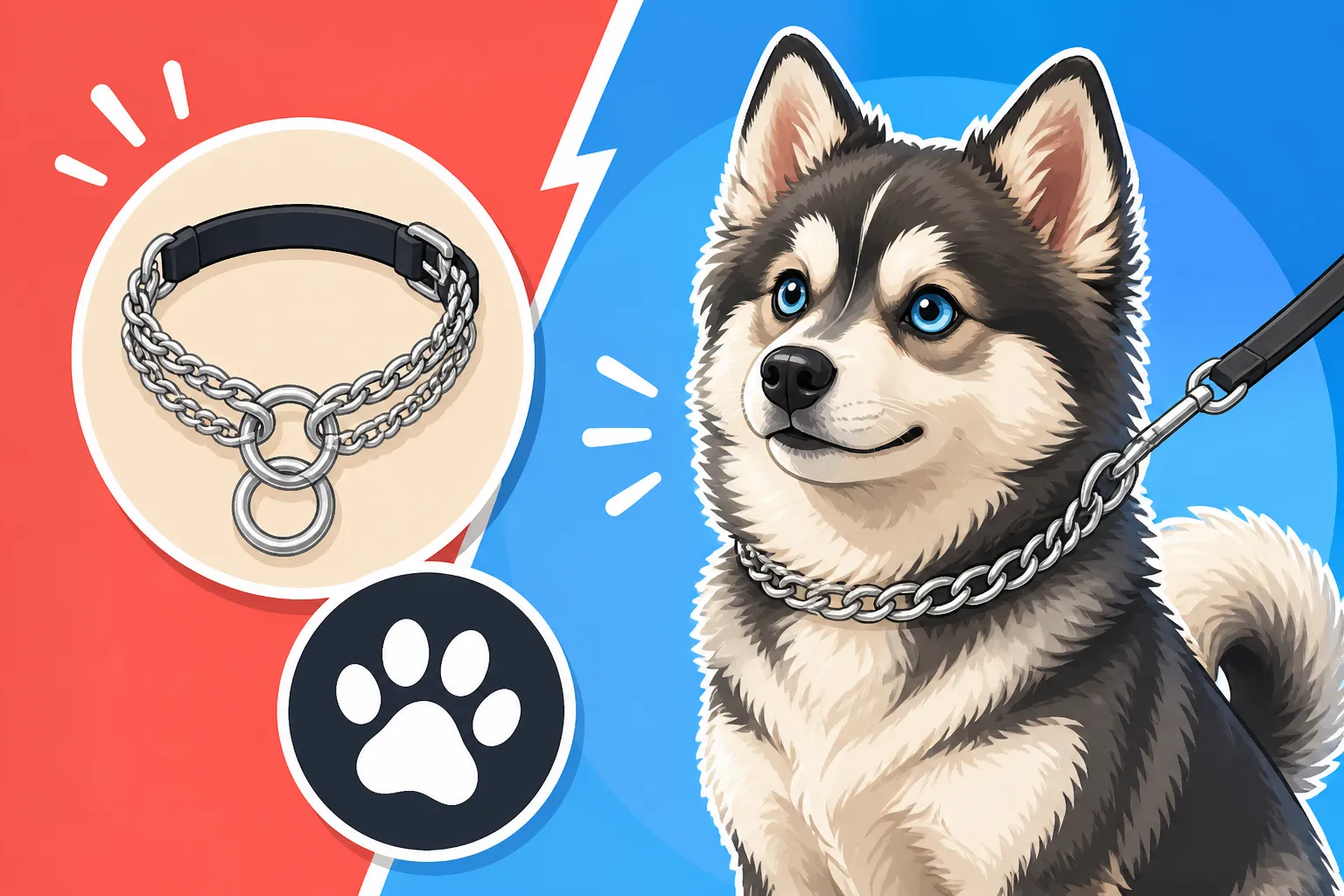
A martingale collar typically looks like a regular flat collar, but it has an extra loop of fabric or chain attached. This smaller loop is where you attach your leash. When your Pomsky pulls on the leash or tries to back out of the collar, this secondary loop tightens the main collar just enough to prevent it from slipping over their head. Critically, it tightens only to the width of the dog's neck, meaning it won't choke them like a slip chain or choke collar can if misused.
The beauty of it is that when there's no tension on the leash, the martingale collar loosens again, resting comfortably around your Pomsky's neck. This makes it a much more humane and effective tool than something that applies constant pressure. It's often referred to as a "limited-slip" collar, and that's precisely what it does: it limits how much the collar can tighten, providing a gentle signal to your dog without causing pain. This design is why it's so highly recommended for breeds with narrower heads or for dogs known to slip their collars, a common trait for our Pomsky friends.
Proper Fitting is Non-Negotiable
The effectiveness of a martingale collar hinges entirely on proper fitting. An incorrectly fitted martingale is almost as useless as a regular collar and can still allow your Pomsky to escape or, conversely, be too tight and cause discomfort. When the collar is properly adjusted, the two rings on the smaller loop should touch, or nearly touch, when the collar is tightened. This ensures that the main collar is snug against your Pomsky's neck, preventing slippage, but not so tight that it restricts breathing.
You should always be able to fit two fingers comfortably under the main collar when it's in its untightened state. The collar should sit high on their neck, just behind the ears, which is the narrowest point and where it's most secure. Many reputable brands offer fitting guides, and you can find a wide variety of quality martingale collars on platforms like Amazon, often with clear sizing charts. For general guidance on secure walking, you might also consider reading Why a Pomsky Should Wear a Harness as a complementary tool, or even as an alternative for some situations.
Here’s a quick guide to ensuring a good fit:
| Step | Description |
|---|---|
| Initial Placement | Place the martingale collar high on your Pomsky's neck, just behind their ears. This is typically the narrowest part of their neck. |
| Adjust Main Collar | Adjust the main fabric or nylon loop of the collar so that it's snug but not tight. You should be able to comfortably slip two fingers between the collar and your Pomsky's neck. This ensures comfort when not under tension. |
| Check Control Loop | Pull the D-ring (where the leash attaches) away from your Pomsky, simulating tension. The two metal rings on the control loop should come together, or nearly together, but not touch. If they touch, the collar is too large. If they are more than an inch apart, the collar is too small or too loose. |
| Verify No Slip | While the collar is tightened (with the control loop rings close but not touching), attempt to gently pull the collar forward over your Pomsky's ears. If it slips off, the main collar is too loose and needs further adjustment. |
| Observe Movement | Watch your Pomsky walk with the collar. It should move freely when not under tension and not rub or irritate their skin, especially given their The Pomsky That Carries a Husky Coat at Twenty Pounds. |
Advantages and Limitations of Martingale Collars for Pomskies
While martingale collars are highly effective for many Pomskies, it’s important to understand both their benefits and their limitations. No single piece of equipment is a magic bullet, but the right tool can make a significant difference in your daily routine.
Enhanced Security and Control
The primary advantage of a martingale collar for a Pomsky is the greatly enhanced security it offers. That dreaded moment of your Pomsky backing out of their collar becomes far less likely. This is invaluable when you're walking in busy areas, at the vet, or anywhere an unexpected distraction might cause your Pomsky to try and escape. It gives you peace of mind that their collar won't suddenly fail you, helping you maintain Recall on a Pomsky Bred From a Dog That Runs.
Beyond just security, a properly fitted martingale collar can also improve leash control. When your Pomsky pulls, the gentle tightening provides a clear, consistent signal that discourages pulling without causing pain or relying on harsher corrections. It creates a more direct line of communication between you and your dog. This makes walks more enjoyable for both of you, reducing the stress that comes from a dog constantly trying to slip their collar or dragging you down the street. It’s about building a better partnership on the leash.
Potential Drawbacks and Misconceptions
Despite their advantages, martingale collars aren't without their considerations. First, they are generally not recommended for tie-out situations. If a dog is tied out and lunges, the continuous tightening could cause injury. Martingales are walking tools, designed for active, supervised use on a leash.
Another common misconception is that a martingale collar is a substitute for training. It's a tool to aid training and provide security, but it won't magically teach your Pomsky perfect leash manners or stop them from pulling if they haven't learned to walk nicely. Training, ideally with positive reinforcement methods, remains paramount. Resources like BAXTER & Bella offer comprehensive online training programs that can integrate the use of appropriate walking tools. Moreover, ensure that the material of the collar is comfortable for your Pomsky, especially considering their thick fur. Some dogs might find certain materials irritating, so observe your Pomsky's reaction. It’s also important to remember that this collar is about preventing escape, not about solving deeper behavioral issues like anxiety that might cause them to pull or try to get away.
Integrating a Martingale into Your Pomsky's Training
A martingale collar is a powerful tool, but like any tool, its effectiveness is maximized when used as part of a comprehensive training approach. It’s not just about putting the collar on; it’s about teaching your Pomsky what you expect while wearing it.
Essential Leash Training Techniques
When you introduce a martingale collar, pair it with positive reinforcement techniques. Start by making the collar a positive experience. Let your Pomsky wear it for short periods around the house, offering treats and praise. Once they're comfortable, begin short, controlled walks in a low-distraction environment. Reward calm walking and loose-leash behavior consistently.
If your Pomsky pulls, stop walking immediately. Only resume when the leash slackens. This teaches them that pulling gets them nowhere, while walking politely gets them to their destination. Consistent, patient training is key, and the martingale's gentle correction mechanism helps reinforce these lessons. Remember, your Pomsky is smart, but they're also independent Whether a Pomsky Is Stubborn or Independent, so consistency is vital. You might also find it helpful to learn about What a Pomsky Learns in a Week to set realistic training expectations. Always ensure the collar is removed when your Pomsky is unsupervised, to prevent any snagging accidents.
When to Seek Professional Guidance
Sometimes, even with the right tools and consistent effort, you might encounter challenges. If your Pomsky continues to pull excessively, displays reactivity, or is still managing to escape despite a properly fitted martingale, it might be time to call in a professional dog trainer. An experienced trainer can observe your Pomsky's specific behaviors, identify underlying issues, and provide tailored strategies. They can demonstrate how to correctly use the martingale collar and teach you more advanced leash handling skills.
A professional can help you understand why your Pomsky is behaving a certain way – perhaps they are overstimulated, anxious, or simply haven't generalized their training across different environments. Investing in professional guidance can not only resolve immediate problems but also strengthen the bond between you and your Pomsky, leading to a much happier and safer life together. Organizations like the Association of Professional Dog Trainers (APDT) can help you find a qualified professional in your area. This collaborative approach, combining the right equipment with expert advice, is often the most successful path to a well-behaved and secure Pomsky.
Disclaimer
This article is for general informational purposes only and does not constitute professional advice. Laws, prices and regulations vary by location and change over time. Consult a qualified professional for guidance on your specific situation.